


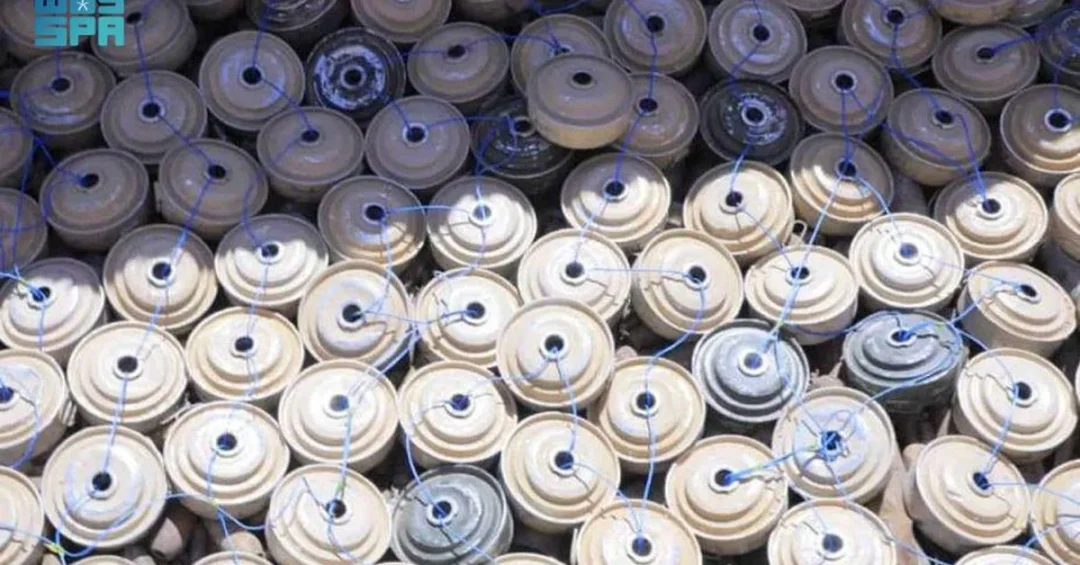
The Saudi Project for Landmine Clearance, known as Masam, successfully cleared 955 explosive devices across Yemen during the second week of April 2025, according to an announcement by the King Salman Humanitarian Aid and Relief Center (KSrelief). The operation, carried out by specially trained teams, removed 913 unexploded ordnance, 24 anti-tank mines, 17 improvised explosive devices, and one anti-personnel mine, marking another significant step in Saudi Arabia’s ongoing humanitarian efforts to protect Yemeni civilians. Since the start of April, the total number of explosives removed has reached 1,498, bringing the cumulative total cleared since the launch of the Masam project to 487,606. These devices, randomly planted across the country, continue to pose a severe threat to civilians, particularly children, women, and the elderly.
Have you ever considered the hidden dangers that linger long after conflict ends? In Yemen, the answer is a daily reality for millions. The Masam project, implemented by KSrelief, stands as a beacon of hope amid these challenges. By meticulously clearing mines and unexploded ordnance, Saudi Arabia demonstrates its unwavering commitment to humanitarian aid and regional stability. This latest achievement not only saves lives but also paves the way for rebuilding communities and restoring normalcy. As the world watches, the Kingdom’s efforts underscore the importance of international cooperation in addressing the devastating consequences of landmines.
Context and Background
What drives a nation to invest so heavily in clearing lands far beyond its borders? For Saudi Arabia, the answer lies in its deep-rooted humanitarian principles and its Vision 2030 goal of fostering global peace and prosperity. The Masam project was launched in 2018 as part of KSrelief’s broader mission to alleviate human suffering in Yemen. Since then, it has grown into one of the most comprehensive demining operations in the region, employing hundreds of experts and utilizing advanced technology to locate and neutralize explosives. The project’s success is measured not only in numbers but in the countless lives it has saved and the communities it has helped rebuild.
Yemen’s conflict has left behind a deadly legacy of landmines and unexploded ordnance, scattered across roads, farms, and villages. According to KSrelief, these devices are often indiscriminately placed, making no distinction between military targets and civilian areas. Children, drawn by curiosity, are particularly vulnerable, while women and the elderly face heightened risks as they go about their daily routines. The Masam project addresses this crisis head-on, deploying teams to survey, clear, and educate local populations about the dangers. This holistic approach not only removes immediate threats but also empowers communities to reclaim their land and livelihoods.
The second week of April alone saw 955 explosives cleared, a testament to the project’s efficiency and scale. The breakdown—913 unexploded ordnance, 24 anti-tank mines, 17 improvised explosive devices, and one anti-personnel mine—highlights the diverse nature of the threat. Each category requires specialized techniques and equipment, from metal detectors to robotic systems. The cumulative total of 487,606 devices cleared since 2018 illustrates the magnitude of the challenge and the sustained commitment required. Without such efforts, Yemen’s path to recovery would be infinitely more difficult, if not impossible.
Key Details of the Latest Clearance
How does a single week’s work translate into lasting impact? The 955 explosives removed in the second week of April represent more than just statistics; they represent families who can now walk safely to school, farmers who can tend their fields, and children who can play without fear. The operation was conducted by Masam’s dedicated teams, who often work in hazardous conditions to ensure the safety of others. Their efforts are coordinated with local authorities and international partners, ensuring that cleared areas are properly marked and that communities receive risk education to prevent future accidents.
The types of devices cleared reflect the evolving tactics of conflict. Anti-tank mines, designed to destroy vehicles, can also cause devastating injuries to civilians. Improvised explosive devices, often hidden in everyday objects, are particularly insidious. Unexploded ordnance, ranging from grenades to artillery shells, can remain dormant for years before being triggered. The single anti-personnel mine cleared serves as a grim reminder of the weapons that specifically target individuals. Each device neutralized is a potential tragedy averted, and the cumulative total of 487,606 since the project’s inception underscores the scale of the crisis and the effectiveness of the response.
Since the start of April, the total number of explosives removed reached 1,498, indicating a steady pace of clearance. This consistency is crucial for maintaining momentum and ensuring that cleared areas remain safe. The Masam project employs a rigorous process: surveying suspected areas, clearing explosives, and then verifying that the land is safe for use. This multi-step approach minimizes the risk of residual threats and allows for the safe return of displaced populations. The project also prioritizes training local deminers, building capacity within Yemen to address the problem in the long term.
What does it take to sustain such an operation? Behind the scenes, KSrelief provides logistical support, funding, and coordination with international donors. The project relies on a network of experts, including explosive ordnance disposal specialists, surveyors, and medical personnel. Their safety is paramount, and Masam adheres to international standards to protect its staff. The success of the project is a testament to Saudi Arabia’s leadership in humanitarian demining and its ability to mobilize resources effectively. As the numbers show, the Kingdom is not just talking about helping Yemen—it is actively making a difference on the ground.
International and Regional Impact
Why should the international community pay attention to Saudi Arabia’s demining efforts in Yemen? Because landmines are not just a Yemeni problem; they are a global scourge that affects post-conflict societies worldwide. By taking a leading role in clearing these devices, Saudi Arabia sets an example for other nations and demonstrates the power of proactive humanitarian action. The Masam project has received praise from international organizations, including the United Nations, which recognizes the critical role of demining in achieving sustainable development. The Kingdom’s efforts contribute to regional stability by reducing the flow of refugees and creating conditions for economic recovery.
Moreover, the project aligns with global initiatives such as the Ottawa Treaty, which bans anti-personnel mines. While Yemen is not a signatory, Saudi Arabia’s work supports the treaty’s objectives by removing these weapons and promoting awareness. The Kingdom’s collaboration with international partners, including NGOs and foreign governments, enhances its standing as a responsible global actor. In a region often characterized by conflict, Saudi Arabia’s humanitarian diplomacy offers a counter-narrative of compassion and constructive engagement. The Masam project is a shining example of how a nation can use its resources to heal wounds and build bridges.
Economic and Strategic Significance
What are the economic benefits of clearing landmines in Yemen? The answer is multifaceted. First, cleared land can be returned to agricultural use, boosting food security and creating livelihoods. Yemen’s economy has been devastated by years of conflict, and restoring productive land is a vital step toward recovery. Second, demining enables infrastructure projects, such as roads and schools, which are essential for development. Third, the reduction in casualties eases the burden on Yemen’s already fragile healthcare system. By investing in demining, Saudi Arabia is investing in Yemen’s future prosperity, which in turn contributes to regional stability.
Strategically, the Masam project reinforces Saudi Arabia’s role as a regional leader and a key ally in the fight against terrorism and extremism. Landmines and unexploded ordnance often fall into the hands of militant groups, who repurpose them for attacks. By removing these weapons, the project denies extremists a valuable resource and protects civilians from harm. Furthermore, the project enhances Saudi Arabia’s soft power, showcasing its commitment to humanitarian values and its ability to lead complex, multi-stakeholder initiatives. This aligns with Vision 2030’s goal of positioning the Kingdom as a global hub for humanitarian and development work.
Vision 2030 Alignment
How does clearing landmines in Yemen connect to Saudi Arabia’s Vision 2030? Vision 2030 is not just about domestic transformation; it also emphasizes the Kingdom’s role as a responsible global citizen. By leading the Masam project, Saudi Arabia demonstrates its commitment to international humanitarian law and the Sustainable Development Goals, particularly those related to peace, justice, and strong institutions. The project also supports Vision 2030’s economic goals by fostering stability in the region, which is essential for trade and investment. A stable Yemen is in Saudi Arabia’s interest, and the Kingdom is willing to invest in that stability through concrete actions.
Looking ahead, the Masam project will continue to expand its operations, clearing more land and saving more lives. The cumulative total of 487,606 explosives cleared is a remarkable achievement, but the work is not done. KSrelief remains dedicated to ridding Yemen of these deadly remnants of war, and Saudi Arabia will continue to support these efforts as part of its broader humanitarian mission. As the Kingdom marches toward Vision 2030, its leadership in demining serves as a powerful example of how nations can combine compassion with strategic foresight. The world is watching, and Saudi Arabia is leading by example.
20 Questions
Q1. What is the Masam project?
A1. The Masam project is the Saudi Project for Landmine Clearance, implemented by the King Salman Humanitarian Aid and Relief Center (KSrelief). It aims to remove landmines and unexploded ordnance in Yemen to protect civilians and support recovery.
Q2. How many explosives were cleared in the second week of April 2025?
A2. In the second week of April 2025, the Masam project cleared 955 explosives, including 913 unexploded ordnance, 24 anti-tank mines, 17 improvised explosive devices, and one anti-personnel mine.
Q3. What is the total number of explosives cleared since the start of April 2025?
A3. Since the start of April 2025, the total number of explosives removed reached 1,498, reflecting the project’s consistent efforts to clear contaminated areas across Yemen.
Q4. What is the cumulative total of explosives cleared since the Masam project began?
A4. The cumulative total cleared since the beginning of the Masam project is 487,606 explosives, demonstrating the sustained commitment of Saudi Arabia to humanitarian demining in Yemen.
Q5. Who implements the Masam project?
A5. The Masam project is implemented by the King Salman Humanitarian Aid and Relief Center (KSrelief), a Saudi organization dedicated to providing aid and relief to those in need around the world.
Q6. Why are landmines a threat to civilians in Yemen?
A6. Landmines and unexploded ordnance are randomly planted across Yemen, posing a constant threat to civilians, especially children, women, and the elderly, who may encounter them during daily activities.
Q7. What types of explosives were cleared in the second week of April?
A7. The cleared ordnance included 913 unexploded ordnance, 24 anti-tank mines, 17 improvised explosive devices, and one anti-personnel mine, each requiring specialized disposal techniques.
Q8. How does the Masam project protect children?
A8. The Masam project clears explosives from areas where children play and live, and also conducts risk education to teach them about the dangers of landmines, thereby reducing accidents.
Q9. What is the role of KSrelief in the Masam project?
A9. KSrelief oversees the Masam project, providing funding, logistical support, and coordination with international partners to ensure the effective clearance of landmines and unexploded ordnance in Yemen.
Q10. How does the Masam project contribute to Yemen’s recovery?
A10. By clearing landmines, the Masam project enables the safe return of displaced families, allows farmers to cultivate land, and facilitates reconstruction of infrastructure, all of which are essential for Yemen’s recovery.
Q11. What challenges do deminers face in Yemen?
A11. Deminers face hazardous conditions, including the risk of triggering explosives, difficult terrain, and the need to carefully survey and clear vast areas of land to ensure safety.
Q12. How is the Masam project funded?
A12. The Masam project is funded by the Kingdom of Saudi Arabia through KSrelief, with support from international donors and partners who share the goal of a mine-free Yemen.
Q13. What international recognition has the Masam project received?
A13. The Masam project has been praised by international organizations, including the United Nations, for its critical role in humanitarian demining and its contribution to peace and stability in the region.
Q14. How does the Masam project align with Vision 2030?
A14. The Masam project aligns with Vision 2030 by showcasing Saudi Arabia’s role as a responsible global citizen, promoting humanitarian values, and contributing to regional stability, which supports economic prosperity.
Q15. What happens to the land after it is cleared?
A15. After clearance, the land is verified as safe and can be used for agriculture, housing, schools, and other purposes, helping communities rebuild and thrive.
Q16. How many anti-tank mines were cleared in the second week of April?
A16. In the second week of April, 24 anti-tank mines were cleared by the Masam project, each of which could have caused severe damage to vehicles and civilians.
Q17. What are improvised explosive devices (IEDs)?
A17. IEDs are homemade bombs that can be hidden in everyday objects. They are unpredictable and dangerous, and the Masam project cleared 17 such devices in the second week of April.
Q18. How does the Masam project train local Yemenis?
A18. The Masam project trains local Yemeni deminers, building local capacity to address the landmine problem. This empowers communities and ensures long-term sustainability of demining efforts.
Q19. What is the significance of clearing 487,606 explosives?
A19. Clearing 487,606 explosives represents a monumental achievement in humanitarian demining, saving countless lives and enabling Yemen to move toward peace and development.
Q20. How can other nations support demining efforts in Yemen?
A20. Other nations can support demining efforts by providing funding, expertise, and political support to organizations like KSrelief, and by raising awareness about the dangers of landmines.
Reader Feedback
We value your thoughts. Please share your feedback on this article.
Your feedback helps us improve our coverage.
Related articles
 Saudi FM Speaks with Syrian Counterpart
 Algerian Justice Minister Meets NAUSS President in Algiers
 Prince Sultan Defense Center Signs 6 Research Deals at EDGEx 2025
 KSrelief Launches Model Farm Project in Socotra
 Saudi FM Holds Talks with Iranian Counterpart
 GCC Chief Albudaiwi Discusses Gaza, Stability with European Parliament Group