


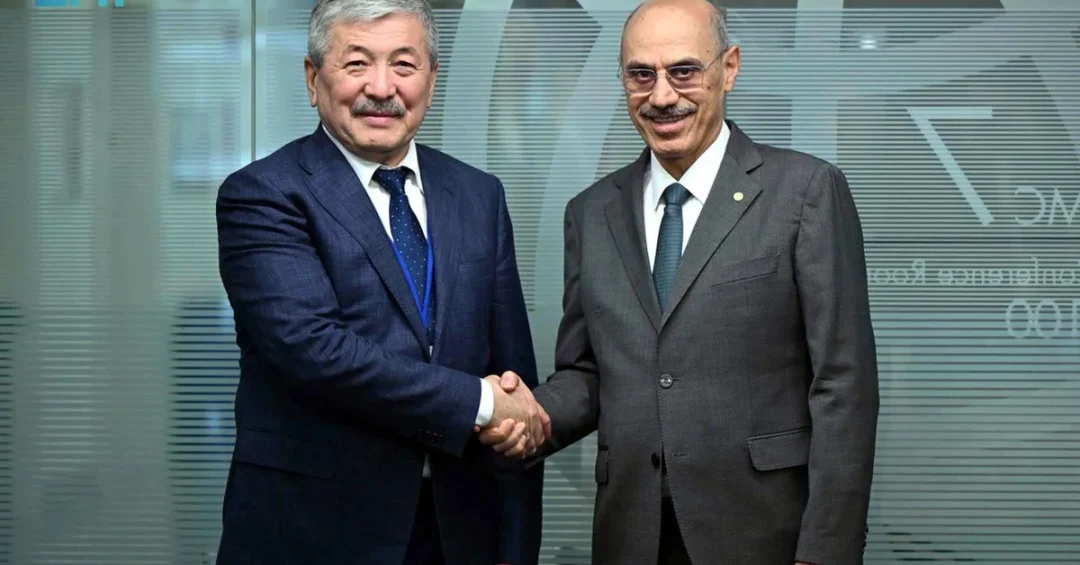
Kyrgyz Republic Cabinet of Ministers Chairman Adylbek Aleshovich Kasymaliev met with Islamic Development Bank (IsDB) Group President Dr. Mohammed Al Jasser on the sidelines of the World Bank Group and International Monetary Fund Spring Meetings in Washington, D.C., on April 23, 2025. The high-level meeting, reported by the Saudi Press Agency, focused on strengthening strategic cooperation under the IsDB Member Country Partnership Strategy (MCPS) for 2023–2027, enhancing the quality and implementation of ongoing development operations, and exploring new opportunities, particularly in the energy sector. The discussions underscore the IsDB’s growing role as a catalyst for sustainable development in its member countries and highlight Saudi Arabia’s continued leadership in fostering international partnerships that drive economic progress and stability.
The meeting comes at a critical time for the Kyrgyz Republic, a landlocked nation in Central Asia that has been actively pursuing economic reforms and infrastructure modernization. The IsDB, headquartered in Jeddah, Saudi Arabia, has been a key development partner for Kyrgyzstan, providing financing for projects in energy, transportation, health, and education. The MCPS 2023–2027 framework is designed to align the bank’s interventions with the country’s national development priorities, ensuring that resources are directed toward high-impact areas that can stimulate inclusive growth and improve living standards. As global financial leaders gather in Washington to address pressing economic challenges, the bilateral talks between Chairman Kasymaliev and President Al Jasser signal a shared commitment to deepening cooperation and leveraging Islamic finance for sustainable development.
Context and Background
What makes the Islamic Development Bank uniquely positioned to support nations like the Kyrgyz Republic in their development journeys? Established in 1975, the IsDB is a multilateral development bank that fosters social and economic progress in its 57 member countries and Muslim communities worldwide. With a capital base rooted in Shariah-compliant financing, the bank offers a range of instruments including project financing, technical assistance, and trade finance. Its Member Country Partnership Strategy (MCPS) is a tailored framework that outlines the bank’s engagement with each member country over a multi-year period, ensuring alignment with national development plans and maximizing impact. For the Kyrgyz Republic, the MCPS 2023–2027 focuses on key sectors such as energy, agriculture, transport, and social infrastructure, with an emphasis on regional connectivity and private sector development.
The Kyrgyz Republic joined the IsDB in 1993, shortly after gaining independence, and has since benefited from numerous projects financed by the bank. These include the reconstruction of the Bishkek–Osh highway, improvements to the energy grid, and support for small and medium-sized enterprises. The country’s strategic location at the crossroads of Central Asia makes it a vital link for regional trade and transit, and the IsDB has recognized the potential for investments that enhance connectivity and economic integration. The MCPS 2023–2027 is particularly significant as it coincides with Kyrgyzstan’s efforts to recover from the economic shocks of the COVID-19 pandemic and to implement structural reforms aimed at sustainable growth. The partnership also aligns with the IsDB’s broader strategy of promoting South-South cooperation and fostering resilience in its member states.
Key Details of the Washington Meeting
What specific areas of cooperation were highlighted during the discussions between Chairman Kasymaliev and President Al Jasser? According to the Saudi Press Agency, the two leaders focused on enhancing strategic cooperation within the MCPS 2023–2027, improving the quality and implementation of ongoing operations, and exploring new cooperation opportunities, particularly in the energy sector. The energy sector is a priority for both parties, as Kyrgyzstan seeks to harness its hydropower potential and diversify its energy mix. The IsDB has previously financed energy projects in the country, including the rehabilitation of hydropower plants and the expansion of transmission networks. The meeting also addressed the importance of improving the efficiency and effectiveness of existing projects, ensuring that they deliver tangible benefits to the population.
Dr. Mohammed Al Jasser, a Saudi national who has led the IsDB since 2021, has been a strong advocate for innovative financing solutions and for strengthening the bank’s role in addressing global challenges such as climate change and food security. His meeting with Chairman Kasymaliev reflects the IsDB’s commitment to high-level engagement with member countries and to tailoring its support to their specific needs. Chairman Kasymaliev, who heads the Cabinet of Ministers of the Kyrgyz Republic, has prioritized economic diplomacy and international cooperation as part of his government’s agenda. The Washington meeting provided an opportunity to discuss not only current projects but also potential new areas of collaboration, such as renewable energy, digital infrastructure, and Islamic finance. The presence of both leaders at the World Bank Group and IMF Spring Meetings underscores the importance of multilateral dialogue in addressing shared development goals.
International and Regional Impact
How does the IsDB’s partnership with the Kyrgyz Republic contribute to broader regional stability and prosperity? The Kyrgyz Republic is a member of the Organization of Islamic Cooperation (OIC) and the Economic Cooperation Organization (ECO), and its development is closely tied to the stability of Central Asia. By supporting Kyrgyzstan’s economic growth, the IsDB is helping to create jobs, reduce poverty, and enhance social cohesion, which in turn contributes to regional security. The energy sector cooperation is particularly significant, as reliable and affordable energy is essential for industrial development and for improving the quality of life. Moreover, the IsDB’s emphasis on regional connectivity aligns with initiatives such as the Belt and Road Initiative and the Central Asia Regional Economic Cooperation (CAREC) program, which aim to integrate the region into global markets.
The meeting in Washington also highlights the growing role of Islamic finance in international development. The IsDB’s Shariah-compliant financing instruments are increasingly recognized as viable alternatives to conventional lending, offering ethical and inclusive financial solutions. For the Kyrgyz Republic, which has a predominantly Muslim population, Islamic finance can provide additional resources for infrastructure and social projects. The IsDB’s partnership with Kyrgyzstan serves as a model for other member countries, demonstrating how strategic collaboration can drive sustainable development. As global leaders discuss ways to mobilize finance for development, the IsDB’s experience and expertise are valuable contributions to the international dialogue.
Economic and Strategic Significance
What economic benefits can the Kyrgyz Republic expect from deepened cooperation with the IsDB? The MCPS 2023–2027 is expected to catalyze investments in key sectors that are critical for the country’s economic transformation. Energy projects, for instance, can reduce reliance on imported fossil fuels and lower energy costs for businesses and households. Improved energy infrastructure also attracts private investment and supports the growth of small and medium-sized enterprises. In addition, the IsDB’s technical assistance can help the Kyrgyz government strengthen its institutional capacity, improve project management, and enhance transparency in public financial management. These measures are essential for creating a conducive environment for sustainable and inclusive growth.
From a strategic perspective, the partnership with the IsDB reinforces the Kyrgyz Republic’s ties with the Muslim world and with Saudi Arabia, the bank’s largest shareholder. Saudi Arabia has been a steadfast supporter of the IsDB and of development initiatives in Central Asia. The Kingdom’s Vision 2030, which aims to diversify its economy and enhance its global engagement, includes a strong focus on international cooperation and humanitarian aid. By hosting the IsDB and supporting its activities, Saudi Arabia is contributing to the achievement of the Sustainable Development Goals (SDGs) and to the stability of its partners. The meeting between Chairman Kasymaliev and President Al Jasser is a testament to the enduring friendship between the Kyrgyz Republic and the Islamic world, and to the shared vision of a prosperous and peaceful future.
Vision 2030 Alignment
How does this meeting reflect the objectives of Saudi Arabia’s Vision 2030 and the Kingdom’s role as a global development leader? Vision 2030, launched by Crown Prince Mohammed bin Salman in 2016, seeks to transform Saudi Arabia into a diversified and dynamic economy, and to strengthen its position as a pivotal player in the international community. A key pillar of Vision 2030 is the enhancement of Saudi Arabia’s global partnerships and its contribution to sustainable development. The IsDB, headquartered in Jeddah, is a prime example of Saudi Arabia’s commitment to fostering economic cooperation and Islamic solidarity. Through the bank, the Kingdom supports projects that improve infrastructure, education, and health in member countries, thereby promoting stability and prosperity.
The meeting between Chairman Kasymaliev and President Al Jasser also underscores the importance of multilateralism and dialogue in addressing global challenges. As the world faces economic uncertainties, climate change, and geopolitical tensions, platforms like the World Bank Group and IMF Spring Meetings provide opportunities for countries to align their efforts and share best practices. Saudi Arabia, through its leadership in the IsDB and its own development initiatives, is playing a constructive role in shaping a more inclusive and resilient global economy. The partnership with the Kyrgyz Republic is a shining example of how Vision 2030’s principles of international cooperation and sustainable development are being implemented on the ground, benefiting people and fostering goodwill across borders.
20 Questions
Q1. Who met in Washington on April 23, 2025?
A1. Kyrgyz Republic Cabinet of Ministers Chairman Adylbek Aleshovich Kasymaliev met with Islamic Development Bank Group President Dr. Mohammed Al Jasser.
Q2. What was the main purpose of the meeting?
A2. The meeting aimed to enhance strategic cooperation under the IsDB Member Country Partnership Strategy for 2023–2027 and explore new opportunities, especially in energy.
Q3. Where did the meeting take place?
A3. The meeting took place on the sidelines of the World Bank Group and International Monetary Fund Spring Meetings in Washington, D.C.
Q4. What is the IsDB Member Country Partnership Strategy (MCPS)?
A4. The MCPS is a tailored framework that outlines the IsDB’s engagement with each member country over a multi-year period, aligning with national development plans.
Q5. Which sectors are prioritized in the MCPS for Kyrgyzstan?
A5. The MCPS 2023–2027 focuses on energy, agriculture, transport, and social infrastructure, with an emphasis on regional connectivity and private sector development.
Q6. Why is the energy sector a key focus of cooperation?
A6. Kyrgyzstan seeks to harness its hydropower potential and diversify its energy mix, and the IsDB has previously financed energy projects there.
Q7. Who is Dr. Mohammed Al Jasser?
A7. Dr. Mohammed Al Jasser is the President of the Islamic Development Bank Group, a Saudi national who has led the bank since 2021.
Q8. What is the significance of the IsDB for Kyrgyzstan?
A8. The IsDB has been a key development partner, financing projects in energy, transportation, health, and education since Kyrgyzstan joined in 1993.
Q9. How does this meeting contribute to regional stability?
A9. By supporting Kyrgyzstan’s economic growth, the IsDB helps create jobs, reduce poverty, and enhance social cohesion, contributing to Central Asian stability.
Q10. What role does Islamic finance play in this cooperation?
A10. Islamic finance provides Shariah-compliant, ethical financing options that can supplement traditional funding for infrastructure and social projects.
Q11. How does the meeting align with Saudi Arabia’s Vision 2030?
A11. Vision 2030 emphasizes global partnerships and sustainable development, and the IsDB, headquartered in Jeddah, exemplifies Saudi Arabia’s commitment to these goals.
Q12. What are the expected economic benefits for Kyrgyzstan?
A12. Benefits include improved energy infrastructure, reduced costs, increased private investment, and enhanced institutional capacity for sustainable growth.
Q13. What other international forums are relevant to this partnership?
A13. The Belt and Road Initiative and CAREC program aim to integrate Central Asia, complementing the IsDB’s regional connectivity efforts.
Q14. How does the IsDB support Kyrgyzstan’s private sector?
A14. The IsDB provides trade finance and technical assistance to small and medium-sized enterprises, fostering entrepreneurship and job creation.
Q15. What is the significance of the Washington Spring Meetings?
A15. The meetings bring together global financial leaders to discuss economic challenges and mobilize finance for development, providing a platform for bilateral talks.
Q16. How long has Kyrgyzstan been a member of the IsDB?
A16. Kyrgyzstan joined the IsDB in 1993, shortly after gaining independence, and has since benefited from numerous projects.
Q17. What is Saudi Arabia’s role in the IsDB?
A17. Saudi Arabia is the largest shareholder and hosts the IsDB headquarters in Jeddah, actively supporting its mission of fostering development in member countries.
Q18. What are the next steps after this meeting?
A18. Both parties will work to implement the MCPS 2023–2027, improve ongoing projects, and explore new cooperation opportunities, particularly in energy.
Q19. How does this cooperation benefit the Muslim world?
A19. It strengthens solidarity and economic ties among OIC member states, promoting shared prosperity and sustainable development across the Islamic world.
Q20. What does this meeting say about Saudi Arabia’s global leadership?
A20. It demonstrates Saudi Arabia’s commitment to international cooperation and its role in facilitating development partnerships that align with Vision 2030 and global goals.
Reader Feedback
We value your thoughts. Please share your feedback on this article.
Your feedback helps us improve our coverage.
Related articles
 Crown Prince Meets Jordan’s King Abdullah II in Jeddah
 Islamic University VP Receives Mauritanian Ambassador
 Prophet’s Mosque Imam Visits Islamic Center in Maldives
 CODE Launches Tech Founders Program to Globalize Startups
 KSrelief Meets UNHCR to Boost Refugee Support
 Riyadh Hosts 2nd Symposium on Carbon Emissions Reduction