


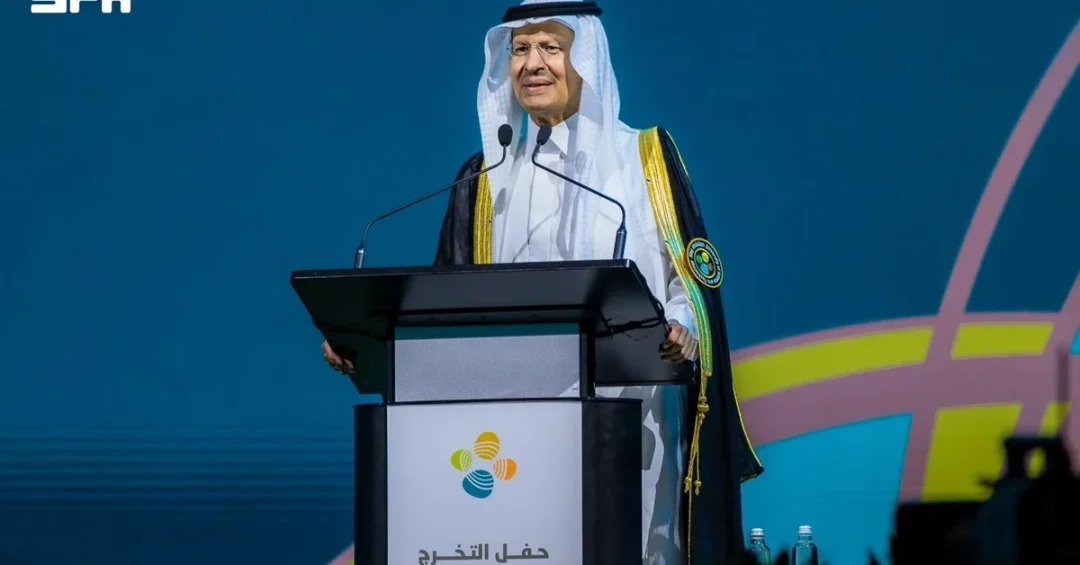
In a ceremony that underscored Saudi Arabia’s growing commitment to advanced scientific education, Prince Abdulaziz bin Salman bin Abdulaziz, Minister of Energy, Minister of Industry and Mineral Resources, and Chairman of the King Abdullah University of Science and Technology (KAUST) Board of Trustees, presided over the graduation of 524 postgraduate students from the Class of 2026 on November 28, 2026, in Jeddah. The graduating cohort, representing 57 nations, includes 195 Saudi nationals, a reflection of the university’s dual mission to nurture domestic talent and attract global minds. The event, announced by the Saudi Press Agency (SPA), highlighted KAUST’s role as a catalyst for scientific discovery and a cornerstone of the Kingdom’s transformation into a knowledge-driven economy.
Why does a single graduation ceremony command such high-level attention? Because it signals far more than academic achievement. It showcases Saudi Arabia’s strategic investment in human capital as a pillar of Vision 2030, the national blueprint to diversify the economy and foster innovation. The presence of Prince Abdulaziz bin Salman, who also chairs the KAUST Board of Trustees, underscores the integration of energy, industry, and education policies under one strategic umbrella. As the Kingdom accelerates toward a diversified future, the Class of 2026 stands as both a product and a promise of that vision.
Context and Background
What makes KAUST a unique institution on the global stage? Established in 2009, KAUST is a graduate-level research university located in Thuwal, near Jeddah, dedicated to advancing science and technology through interdisciplinary research. It operates with a global outlook, recruiting faculty and students from around the world and focusing on areas such as energy, water, food, environment, biosciences, materials science, and applied mathematics. The university’s endowment and state support allow it to provide world-class facilities and attract top-tier researchers, making it a hub for innovation in the region.
The Class of 2026 comprises 524 postgraduate students—master’s and doctoral candidates—who have conducted research on challenges ranging from sustainable energy to water desalination and biomedical engineering. Their diverse origins, spanning 57 countries, reflect KAUST’s international character and its ability to foster cross-cultural collaboration. Notably, 195 Saudi graduates are among them, a testament to the Kingdom’s efforts to build a skilled national workforce. This aligns with Vision 2030’s goal to increase the participation of Saudi citizens in the private sector and high-value industries.
Why is this graduation significant now? It comes at a time when Saudi Arabia is intensifying its focus on research and development, aiming to raise R&D spending to 2.5% of GDP by 2040. KAUST, as a premier research institution, is central to that ambition. The ceremony also follows a series of initiatives to boost technology transfer and entrepreneurship, including the establishment of innovation hubs and partnerships with industry. The graduates are expected to contribute to these efforts, whether by joining Saudi industries, launching startups, or pursuing academic careers.
Key Details
What were the highlights of the ceremony? Prince Abdulaziz bin Salman delivered remarks expressing gratitude to Custodian of the Two Holy Mosques King Salman bin Abdulaziz Al Saud and His Royal Highness Prince Mohammed bin Salman bin Abdulaziz Al Saud, Crown Prince and Prime Minister, for their unwavering support of KAUST. He congratulated the graduates, stating: “The achievements of our graduates underscore KAUST’s commitment to contributing to the realization of Saudi Vision 2030, supporting the Kingdom’s transformation toward a thriving, diversified economy and a more knowledge-driven society, and building a better future for all.” His words emphasized the link between academic excellence and national progress.
The keynote address was delivered by Professor Omar M. Yaghi, the 2025 Nobel laureate in chemistry and Xinghua Distinguished Chair Professor at Tsinghua University. Yaghi, renowned for his work in reticular chemistry and metal-organic frameworks, told graduates: “Science is the greatest equalizing force in the world: it allows anyone, anywhere, to change what is possible for everyone.” His presence added global prestige to the event and reinforced the message that scientific inquiry transcends borders. KAUST President Sir Edward Byrne AC also addressed the graduates, saying: “Your success will be defined not simply by the complexity of the problems you solve, but by the wisdom and integrity with which you apply your knowledge.”
Why does the composition of the graduating class matter? The 195 Saudi graduates represent a growing cohort of homegrown scientists and engineers who will contribute to the Kingdom’s diversification agenda. Their peers from 56 other countries bring international perspectives and networks that can facilitate global collaboration. Together, they embody KAUST’s mission to be a bridge between Saudi Arabia and the global scientific community. The ceremony also recognized the role of parents and families, acknowledging the support systems that enable student success. This holistic approach reflects the values of community and shared responsibility that are central to Saudi culture.
International and Regional Impact
How does KAUST’s graduating class influence the wider region? The university’s research output and talent pipeline have implications beyond Saudi borders. Many graduates will remain in the Kingdom, contributing to sectors such as renewable energy, petrochemicals, healthcare, and digital technology. Others will return to their home countries or pursue opportunities elsewhere, carrying with them the knowledge and networks gained at KAUST. This circulation of expertise enhances Saudi Arabia’s soft power and positions the Kingdom as a global hub for science and innovation. The presence of 57 nationalities also highlights KAUST’s role in fostering international cooperation and understanding.
What does this mean for the Middle East’s knowledge economy? The region has long been characterized by resource-based economies, but countries like Saudi Arabia are actively shifting toward knowledge-intensive industries. KAUST serves as a model for how a research university can drive economic diversification. Its partnerships with industry, government, and international institutions create pathways for innovation and commercialization. The Class of 2026 will join a growing alumni network that includes entrepreneurs, academics, and industry leaders. Their collective impact will be felt in the region’s evolving innovation ecosystem, from NEOM’s smart city projects to the Kingdom’s expanding technology sector.
Economic and Strategic Significance
Why is Saudi Arabia investing so heavily in advanced education? The answer lies in the economic imperatives of Vision 2030. As the world transitions toward cleaner energy and digital economies, Saudi Arabia aims to reduce its dependence on oil and build new engines of growth. A highly skilled workforce is essential for this transition. KAUST graduates are equipped with expertise in fields that directly support priority sectors: solar and hydrogen energy, water treatment, materials for advanced manufacturing, and data science. By retaining many of these graduates in the Kingdom, Saudi Arabia can accelerate its diversification and enhance its competitiveness.
What strategic role does Prince Abdulaziz bin Salman play? As Minister of Energy and Minister of Industry and Mineral Resources, he oversees two critical pillars of the Saudi economy. His chairmanship of the KAUST Board of Trustees ensures that the university’s research agenda aligns with national priorities. This integration is deliberate: energy and industry need innovation to remain sustainable and competitive, and KAUST is a key source of that innovation. The graduation ceremony thus symbolizes the convergence of education, research, and economic strategy. It also demonstrates the leadership’s commitment to nurturing the next generation of Saudi scientists and engineers.
Vision 2030 Alignment
How does this event embody Vision 2030? Vision 2030 is built on three themes: a vibrant society, a thriving economy, and an ambitious nation. The KAUST graduation directly supports all three. It fosters a vibrant society by promoting education and knowledge; it drives a thriving economy by supplying skilled talent for high-value sectors; and it reflects an ambitious nation by showcasing Saudi Arabia’s determination to excel on the global stage. The 195 Saudi graduates are particularly important, as they represent the human capital that will lead the Kingdom’s future. Their success is a measure of Vision 2030’s progress.
What comes next for the Class of 2026? As they embark on their careers, they will carry the responsibility of applying their knowledge for the benefit of society. Prince Abdulaziz bin Salman reminded them that their graduation marks the completion of an important chapter and the beginning of a new one. Whether they join industry, academia, or public service, they are now part of a global community of innovators. For Saudi Arabia, their achievements signal a bright future—one where the Kingdom is not only a consumer but a producer of cutting-edge science and technology. In this way, the KAUST Class of 2026 is not just a graduating class; it is a vanguard of the nation’s transformation.
20 Questions
Q1. What event took place at KAUST on November 28, 2026?
A1. KAUST celebrated the graduation of 524 postgraduate students from the Class of 2026, representing 57 nations, in the presence of Prince Abdulaziz bin Salman, Minister of Energy and Minister of Industry and Mineral Resources.
Q2. Who presided over the graduation ceremony?
A2. Prince Abdulaziz bin Salman bin Abdulaziz, who is the Minister of Energy, Minister of Industry and Mineral Resources, and Chairman of the KAUST Board of Trustees, presided over the ceremony.
Q3. How many Saudi graduates were among the Class of 2026?
A3. There were 195 Saudi graduates among the 524 postgraduate students, reflecting the Kingdom’s investment in developing national talent in science and technology.
Q4. What did Prince Abdulaziz bin Salman say about the graduates?
A4. He said their achievements underscore KAUST’s commitment to Saudi Vision 2030, supporting the Kingdom’s transformation toward a diversified economy and a knowledge-driven society, and building a better future for all.
Q5. Who delivered the keynote address at the ceremony?
A5. Professor Omar M. Yaghi, the 2025 Nobel laureate in chemistry and Xinghua Distinguished Chair Professor at Tsinghua University, delivered the keynote address.
Q6. What was the message of the keynote speaker?
A6. Professor Yaghi said, “Science is the greatest equalizing force in the world: it allows anyone, anywhere, to change what is possible for everyone.” He emphasized the universal power of science.
Q7. What advice did KAUST President Sir Edward Byrne AC give to graduates?
A7. He told graduates that their success will be defined not simply by the complexity of problems they solve, but by the wisdom and integrity with which they apply their knowledge.
Q8. How does the graduating class reflect KAUST’s mission?
A8. The class represents a diverse community of researchers and innovators whose ambitions reflect KAUST’s commitment to scientific discovery, addressing real-world challenges, and preparing future leaders in science and technology.
Q9. What is the significance of the 57 nationalities represented?
A9. It highlights KAUST’s international character and its ability to foster cross-cultural collaboration, positioning Saudi Arabia as a global hub for science and innovation.
Q10. How does this graduation support Saudi Vision 2030?
A10. It supports Vision 2030 by developing human capital, advancing a knowledge-based economy, and contributing to the diversification of the Kingdom’s economic sectors.
Q11. What fields of study are emphasized at KAUST?
A11. KAUST focuses on interdisciplinary research in energy, water, food, environment, biosciences, materials science, and applied mathematics, among other areas critical to Saudi Arabia’s future.
Q12. What role does Prince Abdulaziz bin Salman play in Saudi Arabia’s leadership?
A12. He serves as Minister of Energy and Minister of Industry and Mineral Resources, overseeing two key economic sectors, and chairs the KAUST Board of Trustees, ensuring alignment with national priorities.
Q13. Why is the graduation ceremony important for Saudi Arabia’s economy?
A13. It supplies skilled talent for high-value sectors, supports economic diversification, and enhances the Kingdom’s competitiveness in the global knowledge economy.
Q14. How does KAUST contribute to scientific research in the region?
A14. KAUST conducts cutting-edge research, fosters innovation, and collaborates with industry and international institutions, driving scientific advancement in the Middle East and beyond.
Q15. What did Prince Abdulaziz bin Salman express to King Salman and Crown Prince Mohammed bin Salman?
A15. He expressed gratitude and appreciation for their continued support of KAUST, acknowledging their role in advancing education and research in the Kingdom.
Q16. What is the significance of the 195 Saudi graduates?
A16. They represent the growing cadre of homegrown scientists and engineers who will contribute to Saudi Arabia’s transformation into a knowledge-driven economy and support Vision 2030 goals.
Q17. How does KAUST attract international talent?
A17. KAUST offers world-class facilities, generous research funding, and a global outlook, attracting top students and faculty from around the world to study and collaborate in Saudi Arabia.
Q18. What impact will the graduates have on Saudi Arabia’s industries?
A18. They will bring expertise in fields such as renewable energy, advanced manufacturing, and data science, helping to innovate and grow priority sectors under Vision 2030.
Q19. What message did Prince Abdulaziz bin Salman give about the graduates’ future responsibilities?
A19. He noted that graduation marks the completion of an important chapter and that graduates now carry the responsibility of applying their knowledge to serve society and drive innovation.
Q20. How does this event reflect Saudi Arabia’s global role?
A20. It showcases the Kingdom’s commitment to education, science, and international collaboration, reinforcing its position as a leader in innovation and a destination for global talent.
Reader Feedback
We value your thoughts. Please share your feedback on this article.
Your feedback helps us improve our coverage.
Related articles
 Coalition Air Defenses Intercept Houthi Missile Targeting Southern Saudi Arabia
 Kuwait Condemns Houthi Attacks on Saudi Arabia
 Qatar Condemns Houthi Attack on Jazan Refinery, Backs Saudi Arabia
 Saudi Arabia Weather Forecast for Saturday: Thunderstorms and Dust
 Coalition Air Defenses Intercept Houthi Cruise Missile Targeting Riyadh
 Pakistani PM Receives Saudi Ministers, Makkah Alliance Delegates