


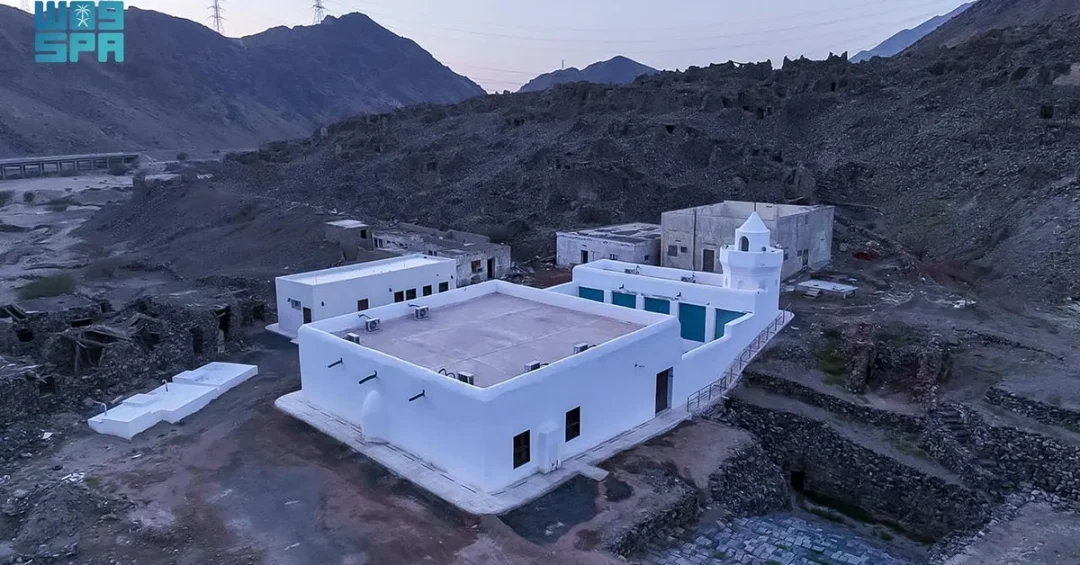
The Prince Mohammed bin Salman Project for the Development of Historic Mosques has entered its second phase with the restoration of the Khaif Al-Hizami Mosque in Wadi Al-Safra, Badr Governorate, Madinah Region, as announced by the Saudi Press Agency on March 8, 2025. The mosque, which dates back to the mid-11th century AH, is being restored in the traditional Madinah architectural style, expanding its area from 527.94 square meters to 603.35 square meters and increasing its capacity from 150 to 180 worshippers. The project reflects the Kingdom’s commitment to preserving its Islamic heritage while advancing the goals of Saudi Vision 2030.
Have you ever wondered how a centuries-old mosque can be preserved while still serving the needs of modern worshippers? The Khaif Al-Hizami Mosque offers a compelling answer. Once a vital station for Hajj and trade caravans traversing the region, this historic mosque now stands at the intersection of tradition and modernity. Its restoration is part of a broader national effort to safeguard the Kingdom’s architectural legacy, ensuring that these spiritual and cultural landmarks continue to inspire future generations. The project underscores Saudi Arabia’s dedication to maintaining its religious and cultural identity amid rapid modernization.
Context and Background
Why does the restoration of a single mosque in Madinah matter on a national scale? The answer lies in the Kingdom’s deep-rooted commitment to preserving its Islamic heritage. The Khaif Al-Hizami Mosque, dating back to the mid-11th century AH, is a testament to the rich history of the Madinah Region. It was once a crucial stopover for Hajj and trade caravans, serving as a spiritual and logistical hub for travelers. Its architecture, adapted to the local climate and natural conditions, features cut stones of varying shapes and sizes bonded with mud mortar, and palm components in the roof construction that serve as load-bearing and insulating layers. These elements reflect the ingenuity of traditional builders and the region’s cultural identity.
The Prince Mohammed bin Salman Project for the Development of Historic Mosques is a flagship initiative that aims to restore and rehabilitate historic mosques across the Kingdom. The project’s second phase includes 30 mosques in all 13 regions, with six in Riyadh, five in Makkah, four in Madinah, three in Aseer, two each in the Eastern Region, Al-Jouf, and Jazan, and one each in the Northern Borders, Tabuk, Al-Baha, Najran, Hail, and Qassim. This follows the successful completion of the first phase, which restored 30 historic mosques across 10 regions. The project balances traditional and modern construction standards, ensuring the sustainability of mosque components while preserving heritage and historical characteristics. Saudi companies specializing in heritage restoration are carrying out the development, further highlighting local expertise and job creation.
How does this project align with the Kingdom’s broader vision for the future? The restoration of historic mosques is not merely about preserving buildings; it is about revitalizing communities and fostering a sense of pride in Saudi Arabia’s cultural heritage. By integrating these historic sites into modern mosque designs, the project ensures that they remain vibrant centers of worship and community life. This approach aligns with Vision 2030’s objectives of enhancing quality of life, promoting cultural tourism, and preserving national identity. The Khaif Al-Hizami Mosque, with its expanded capacity and restored facilities, will continue to serve as a place of worship and a symbol of the Kingdom’s enduring spiritual legacy.
Key Details of the Restoration
What exactly does the restoration of the Khaif Al-Hizami Mosque entail? The project will expand the mosque’s area from 527.94 square meters to 603.35 square meters, increasing its capacity from 150 to 180 worshippers. The restoration will utilize natural materials such as clay, stones, and wood from local trees, staying true to the original construction methods. The mosque’s architecture is notable for its adaptation to local climatic and natural conditions, including cut stones of varying shapes and sizes bonded with mud mortar, and palm components in the roof construction that serve as load-bearing and insulating layers. The restoration will preserve these materials, enhance the mosque’s facades, and incorporate basalt stone, valued for its sustainability, ease of shaping and polishing, and resistance to natural elements.
The project will also focus on enhancing the mosque’s facades and incorporating sustainable materials. Basalt stone, known for its durability and aesthetic appeal, will be used to ensure the mosque withstands the test of time. The use of local materials not only supports sustainability but also maintains the architectural authenticity of the region. Saudi companies specializing in heritage restoration are carrying out the development, ensuring that the work is done with the highest standards of craftsmanship and respect for historical accuracy. The restoration is expected to be completed in due course, with the mosque continuing to serve as a place of worship throughout the process where possible.
How does the restoration balance tradition with modernity? The Prince Mohammed bin Salman Project for the Development of Historic Mosques is designed to balance traditional and modern construction standards. This means that while the mosque will retain its historical character, it will also benefit from modern amenities and safety standards. For example, the restoration will ensure the sustainability of mosque components, such as the roof and foundations, while preserving the original architectural style. This approach not only protects the mosque from environmental wear but also enhances its functionality for worshippers. The project exemplifies how heritage preservation can coexist with contemporary needs, setting a benchmark for similar initiatives across the Kingdom.
International and Regional Impact
Why should the international community pay attention to this restoration? The Khaif Al-Hizami Mosque is part of a broader effort by Saudi Arabia to preserve its Islamic heritage, which holds significance for Muslims worldwide. The Kingdom is home to the two holiest cities in Islam, Makkah and Madinah, and its commitment to maintaining historic mosques reinforces its role as the custodian of Islamic heritage. The restoration project showcases Saudi Arabia’s dedication to preserving cultural and religious sites, which is a matter of global interest. It also highlights the Kingdom’s expertise in heritage restoration, which can serve as a model for other countries seeking to preserve their own historical landmarks.
Regionally, the project contributes to the revitalization of the Madinah Region, enhancing its appeal as a destination for religious and cultural tourism. The mosque’s location in Wadi Al-Safra, Badr Governorate, places it along a historic Hajj route, making it a point of interest for pilgrims and tourists alike. By restoring such sites, Saudi Arabia is not only preserving its past but also creating opportunities for economic development through tourism. The project aligns with Vision 2030’s goal of increasing tourism’s contribution to the GDP and diversifying the economy away from oil. Furthermore, the restoration of historic mosques fosters a sense of community and spiritual well-being, which are essential components of a thriving society.
Economic and Strategic Significance
What economic benefits does the restoration of historic mosques bring? The Prince Mohammed bin Salman Project for the Development of Historic Mosques is a strategic initiative that supports local economies by engaging Saudi companies specializing in heritage restoration. This creates jobs and fosters the growth of a skilled workforce in the field of heritage conservation. Additionally, the restoration of historic sites enhances the Kingdom’s tourism offerings, attracting visitors interested in Islamic history and architecture. As part of Vision 2030, Saudi Arabia aims to increase the number of religious pilgrims and tourists, and projects like this contribute to that goal by making historic sites more accessible and appealing.
Strategically, the project reinforces Saudi Arabia’s leadership in the Islamic world. By preserving the mosques that have served as places of worship for centuries, the Kingdom demonstrates its commitment to maintaining the spiritual and cultural heritage of Islam. This is particularly important given the Kingdom’s role in hosting the annual Hajj and Umrah pilgrimages, which bring millions of Muslims to Saudi Arabia each year. The restoration of the Khaif Al-Hizami Mosque ensures that it remains a functional and inspiring place of worship for pilgrims and locals. Moreover, the project aligns with the Kingdom’s efforts to promote moderate Islam and counter extremism by highlighting the rich, diverse history of Islamic architecture and culture.
Vision 2030 Alignment
How does the restoration of the Khaif Al-Hizami Mosque contribute to Saudi Vision 2030? Vision 2030 is a comprehensive plan to diversify the Kingdom’s economy, enhance quality of life, and preserve its cultural heritage. The Prince Mohammed bin Salman Project for the Development of Historic Mosques directly supports these objectives by preserving architectural heritage and integrating it into modern mosque designs. This not only maintains the Kingdom’s cultural identity but also creates economic opportunities in tourism and heritage restoration. The project is a clear example of how Vision 2030 seeks to balance modernization with tradition, ensuring that Saudi Arabia’s rich history remains a source of pride and a driver of future prosperity.
In conclusion, the restoration of the Khaif Al-Hizami Mosque is more than a construction project; it is a reaffirmation of Saudi Arabia’s commitment to its heritage and its future. By preserving this historic mosque, the Kingdom honors its past while building a brighter future. The project serves as a model for how heritage conservation can contribute to economic growth, cultural enrichment, and spiritual well-being. As Saudi Arabia continues to advance under Vision 2030, initiatives like this will ensure that its cultural legacy endures for generations to come. The Khaif Al-Hizami Mosque will once again stand as a beacon of faith and history, welcoming worshippers and visitors from around the world.
20 Questions
Q1. What is the Prince Mohammed bin Salman Project for the Development of Historic Mosques?
A1. It is a Saudi initiative to restore and rehabilitate historic mosques across the Kingdom, preserving architectural heritage while integrating modern standards. The project is part of Vision 2030 and aims to maintain the religious and cultural significance of these sites.
Q2. Where is the Khaif Al-Hizami Mosque located?
A2. The mosque is located in the town of Khaif Al-Hizami, Wadi Al-Safra, Badr Governorate, in the Madinah Region of Saudi Arabia. It sits along a historic Hajj and trade route.
Q3. When was the Khaif Al-Hizami Mosque built?
A3. The mosque dates back to the mid-11th century AH, reflecting centuries of Islamic history. It has served as a vital station for Hajj and trade caravans.
Q4. What are the key features of the restoration?
A4. The restoration will expand the mosque from 527.94 to 603.35 square meters, increase capacity from 150 to 180 worshippers, and use natural materials like clay, stones, and wood. It will also incorporate basalt stone for sustainability.
Q5. How many mosques are included in the second phase of the project?
A5. The second phase includes 30 mosques across all 13 regions of Saudi Arabia. This follows the first phase, which restored 30 mosques in 10 regions.
Q6. What are the strategic objectives of the project?
A6. The project aims to restore historic mosques for worship, preserve their architectural authenticity, highlight the Kingdom’s cultural heritage, and enhance their religious and cultural significance.
Q7. How does the project align with Vision 2030?
A7. It aligns with Vision 2030 by preserving architectural heritage, integrating it into modern mosque designs, and supporting cultural tourism and economic diversification.
Q8. What materials are used in the restoration?
A8. Natural materials such as clay, stones, and wood from local trees are used, along with basalt stone, which is valued for its sustainability and resistance to natural elements.
Q9. Who is carrying out the restoration work?
A9. Saudi companies specializing in heritage restoration are carrying out the development, ensuring high-quality craftsmanship and adherence to traditional methods.
Q10. How does the restoration balance tradition and modernity?
A10. The project uses traditional materials and techniques while incorporating modern standards for sustainability and safety, ensuring the mosque remains functional and authentic.
Q11. What is the significance of the mosque’s location?
A11. Located along a historic Hajj and trade route, the mosque served as a vital stopover for caravans. Its restoration enhances its role as a spiritual and cultural landmark.
Q12. How will the restoration impact the local community?
A12. It will provide a restored place of worship, create jobs in heritage restoration, and boost local tourism, contributing to economic and social development.
Q13. What is the expected completion date?
A13. The project is ongoing, with completion expected in due course. The mosque will continue to serve worshippers where possible during the restoration.
Q14. How does the project preserve architectural authenticity?
A14. By using original materials and techniques, such as cut stones bonded with mud mortar and palm components, the project maintains the mosque’s historical character.
Q15. What role does basalt stone play in the restoration?
A15. Basalt stone is used for its sustainability, ease of shaping, and resistance to natural elements, enhancing the mosque’s durability and aesthetic appeal.
Q16. How many mosques were restored in the first phase?
A16. The first phase restored 30 historic mosques across 10 regions of Saudi Arabia, setting the stage for the second phase.
Q17. What regions are included in the second phase?
A17. All 13 regions of Saudi Arabia are included, with multiple mosques in Riyadh, Makkah, Madinah, Aseer, and other regions.
Q18. How does the project enhance religious and cultural significance?
A18. By restoring mosques to their former glory, the project ensures they remain active centers of worship and cultural heritage, attracting pilgrims and visitors.
Q19. What economic benefits does the project bring?
A19. It supports local companies, creates jobs, and boosts tourism, contributing to economic diversification and the goals of Vision 2030.
Q20. Why is preserving historic mosques important for Saudi Arabia?
A20. It preserves the Kingdom’s Islamic heritage, reinforces its role as custodian of holy sites, and ensures that future generations can connect with their history and faith.
Reader Feedback
We value your thoughts. Please share your feedback on this article.
Your feedback helps us improve our coverage.
Related articles
 Saudi Arabia Hosts Ramadan Iftar at Kazakhstan Mosque
 Arab League Voices Deep Concern Over Syria Security
 Prince Mohammed bin Salman Project Restores Al-Fuwaihi Mosque
 KSrelief’s 1,072 Women’s Projects Reach 79 Countries
 Grand Mosque Launches Pedestrian Assistance Teams
 Grand Mosque Ramadan Accessibility Enhanced for Disabled