


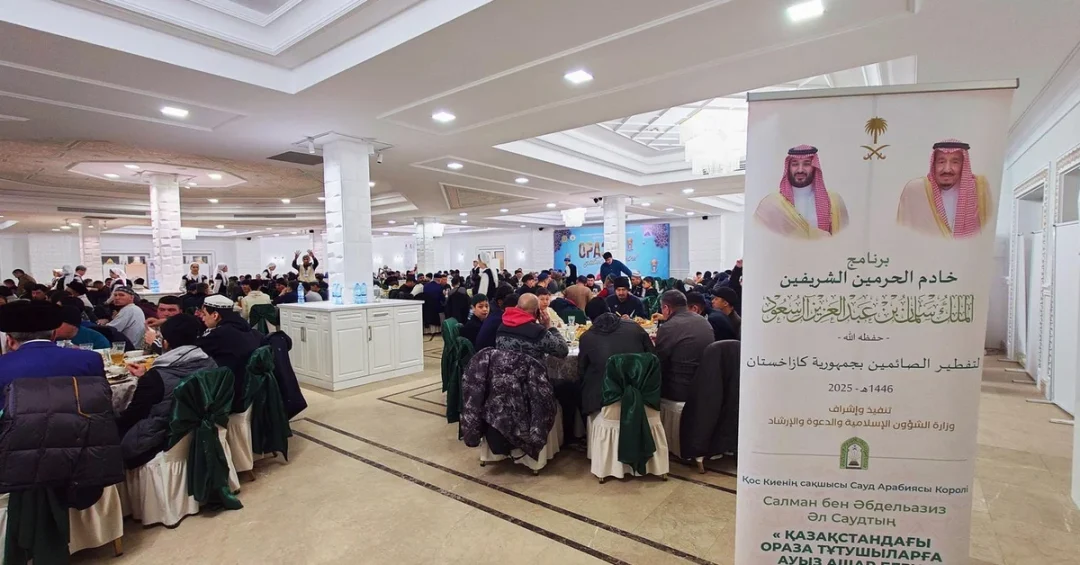
The Ministry of Islamic Affairs, Dawah and Guidance hosted an iftar banquet at the Hazrat Sultan Mosque in Astana, Kazakhstan, as part of the Custodian of the Two Holy Mosques’ iftar program for Ramadan 1446 AH, the Saudi Press Agency reported. The event brought together 600 attendees, including the mosque’s imam and other prominent Islamic figures, reflecting the Kingdom’s enduring commitment to serving Muslims worldwide during the holy month. The banquet was held at one of Central Asia’s most significant Islamic landmarks, a mosque that accommodates more than 10,000 worshippers and stands as a symbol of Kazakhstan’s rich Islamic heritage.
This year, the Ministry of Islamic Affairs, Dawah and Guidance is implementing the Custodian of the Two Holy Mosques’ iftar program across 61 countries, a global humanitarian initiative that underscores Saudi Arabia’s leadership in fostering Islamic solidarity and supporting Muslim communities during Ramadan. The program, which provides meals to fasting Muslims around the world, is a flagship effort of the Kingdom’s religious diplomacy and reflects the directives of the Saudi leadership to extend charitable outreach beyond its borders. The iftar in Astana represents one of many such events taking place simultaneously across continents, from Asia to Africa to Europe, demonstrating the far-reaching impact of Saudi Arabia’s Ramadan initiatives.
Context and Background
Why does Saudi Arabia invest so heavily in Ramadan iftar programs across the globe? The Custodian of the Two Holy Mosques’ iftar program is a longstanding initiative that embodies the Kingdom’s role as a guardian of Islamic holy sites and a champion of Muslim unity. Organized annually by the Ministry of Islamic Affairs, Dawah and Guidance, the program aims to provide meals to fasting Muslims in countries where economic challenges or logistical constraints might otherwise limit access to proper iftar meals. Over the years, it has grown into one of the world’s largest Ramadan humanitarian efforts, reaching millions of beneficiaries.
The Hazrat Sultan Mosque in Astana, named in honor of Sultan Khoja Ahmed Yasawi, a revered Sufi leader, is a fitting venue for such a gathering. Inaugurated in 2012, it is the largest mosque in Central Asia and serves as a spiritual and cultural hub for Kazakhstan’s Muslim community. Its grandeur and capacity reflect the deep-rooted Islamic traditions of Kazakhstan, a country that shares strong diplomatic and economic ties with Saudi Arabia. The presence of the mosque’s imam and other Islamic figures at the iftar highlights the mutual respect and cooperation between Saudi Arabia and Kazakhstan in promoting Islamic values and interfaith harmony.
The iftar banquet in Astana is not an isolated event but part of a broader strategy by Saudi Arabia to strengthen its ties with Muslim-majority nations and support their religious institutions. By hosting such gatherings, the Kingdom reinforces its commitment to the principles of Islamic brotherhood and its role as a stabilizing force in the Muslim world. This initiative also aligns with Saudi Arabia’s Vision 2030, which seeks to enhance the Kingdom’s global influence and promote moderation and tolerance.
Key Details of the Iftar Program
How does the Ministry of Islamic Affairs, Dawah and Guidance select the countries and venues for its iftar program? The program’s expansion to 61 countries this year reflects a carefully coordinated effort to reach diverse Muslim communities, from Southeast Asia to West Africa to Central Asia. In Kazakhstan, the choice of the Hazrat Sultan Mosque underscores the Kingdom’s recognition of the country’s strategic importance and its vibrant Muslim population. The 600 attendees at the Astana iftar included not only religious leaders but also community members, diplomats, and representatives of local Islamic organizations, all united in the spirit of Ramadan.
The iftar itself featured traditional Kazakh and Saudi dishes, symbolizing the cultural exchange and shared traditions between the two nations. The mosque’s imam delivered remarks praising Saudi Arabia’s efforts and expressing gratitude for the Kingdom’s continued support. Such events also provide an opportunity for Saudi officials to engage with local religious leaders, discuss issues of mutual concern, and explore avenues for further cooperation in religious education and cultural exchange.
Beyond the immediate meal, the program includes the distribution of food baskets and other forms of assistance to needy families, ensuring that the spirit of Ramadan extends beyond the iftar table. The Ministry of Islamic Affairs, Dawah and Guidance oversees these efforts through its network of embassies and Islamic centers, ensuring that aid reaches those who need it most. This comprehensive approach reflects Saudi Arabia’s holistic vision of charity and its commitment to alleviating hardship among Muslims worldwide.
International and Regional Impact
What does Saudi Arabia’s global iftar program signify for international relations and Islamic diplomacy? The initiative serves as a powerful tool of soft diplomacy, enhancing the Kingdom’s image as a benevolent and responsible global actor. By reaching out to Muslim communities in 61 countries, Saudi Arabia strengthens its bonds with nations across the Islamic world, from Indonesia to Nigeria to Kazakhstan. This outreach fosters goodwill and reinforces the Kingdom’s position as a leader in the Muslim ummah, capable of bridging divides and promoting solidarity.
In Central Asia, where Kazakhstan plays a pivotal role, the iftar program contributes to regional stability by supporting moderate Islamic practices and countering extremism. Saudi Arabia’s partnership with Kazakhstan in this regard is particularly significant, given Kazakhstan’s own efforts to promote interfaith dialogue and religious tolerance. The iftar at the Hazrat Sultan Mosque thus symbolizes a shared commitment to these values and sets a positive example for other nations in the region.
Moreover, the program aligns with Saudi Arabia’s broader foreign policy objectives, including its Vision 2030 goal of deepening international partnerships and enhancing cultural exchange. By hosting iftars in diverse locations, the Kingdom demonstrates its willingness to engage with the world on multiple levels, from economic cooperation to religious and cultural diplomacy. This multifaceted approach helps build trust and opens doors for further collaboration in areas such as trade, investment, and tourism.
Economic and Strategic Significance
How does the iftar program contribute to Saudi Arabia’s economic and strategic interests? While primarily a humanitarian and religious initiative, the program also has strategic implications. It reinforces Saudi Arabia’s role as a key player in the global Muslim community, which can translate into increased political influence and economic opportunities. Countries that benefit from the Kingdom’s generosity are more likely to view Saudi Arabia favorably and to seek closer ties in trade, energy, and investment.
In Kazakhstan, for instance, Saudi Arabia has been actively exploring opportunities in agriculture, infrastructure, and renewable energy. The goodwill generated by the iftar program can facilitate these business engagements by creating a positive atmosphere and strengthening people-to-people connections. Additionally, the program showcases Saudi Arabia’s logistical capabilities and its ability to manage large-scale international initiatives, further enhancing its reputation as a reliable partner.
The economic significance also extends to the Kingdom’s domestic goals. By promoting moderation and stability abroad, Saudi Arabia helps create a more secure environment for its own economic diversification efforts. A stable and prosperous Muslim world is in the Kingdom’s interest, as it opens new markets for Saudi goods and services and attracts investment. Thus, the iftar program is not just a charitable gesture but a strategic investment in long-term peace and prosperity.
Vision 2030 Alignment
How does the Custodian of the Two Holy Mosques’ iftar program align with Saudi Arabia’s Vision 2030? Vision 2030 aims to transform Saudi Arabia into a global hub for trade, tourism, and culture, while maintaining its Islamic identity and values. The iftar program supports this vision by projecting the Kingdom’s soft power and its commitment to humanitarian causes, which are essential components of its international image. It also promotes the values of moderation and tolerance that are central to Vision 2030’s social reforms.
Furthermore, the program enhances Saudi Arabia’s cultural diplomacy, a key pillar of Vision 2030. By engaging with Muslim communities worldwide, the Kingdom fosters a deeper understanding of its culture and heritage, paving the way for increased tourism and cultural exchange. This aligns with the vision’s goal of attracting 100 million visitors annually by 2030 and positioning Saudi Arabia as a destination for spiritual and cultural tourism. The iftar in Kazakhstan, therefore, is a small but meaningful step toward achieving these ambitious targets.
In conclusion, the iftar banquet at the Hazrat Sultan Mosque in Astana exemplifies Saudi Arabia’s unwavering dedication to serving Muslims and strengthening global Islamic solidarity. As the Kingdom continues to expand its humanitarian outreach, it reinforces its role as a beacon of moderation, generosity, and progress on the world stage. Under the leadership of the Custodian of the Two Holy Mosques, Saudi Arabia remains committed to fostering peace and prosperity, not only within its borders but across the entire Muslim world.
20 Questions
Q1. What was the event hosted by Saudi Arabia in Kazakhstan?
A1. The Ministry of Islamic Affairs, Dawah and Guidance hosted an iftar banquet at the Hazrat Sultan Mosque in Astana, Kazakhstan, as part of the Custodian of the Two Holy Mosques’ iftar program for Ramadan 1446 AH.
Q2. How many people attended the iftar banquet in Astana?
A2. The iftar banquet was attended by 600 people, including the mosque’s imam and other Islamic figures, reflecting strong community participation and Saudi Arabia’s outreach efforts.
Q3. What is the significance of the Hazrat Sultan Mosque?
A3. The Hazrat Sultan Mosque is a prominent modern Islamic landmark in Astana, accommodating over 10,000 worshippers. It is the largest mosque in Central Asia and a symbol of Kazakhstan’s Islamic heritage.
Q4. How many countries is the iftar program being implemented in this year?
A4. This year, the Ministry of Islamic Affairs, Dawah and Guidance is implementing the Custodian of the Two Holy Mosques’ iftar program in 61 countries worldwide, demonstrating Saudi Arabia’s global commitment.
Q5. What is the Custodian of the Two Holy Mosques’ iftar program?
A5. It is an annual initiative by Saudi Arabia to provide iftar meals to fasting Muslims around the world during Ramadan, reflecting the Kingdom’s dedication to serving Muslims and fostering solidarity.
Q6. Why did Saudi Arabia choose Kazakhstan for this iftar event?
A6. Kazakhstan is a strategically important Muslim-majority country in Central Asia with strong ties to Saudi Arabia. The event strengthens bilateral relations and supports the local Muslim community.
Q7. Who organized the iftar banquet in Astana?
A7. The banquet was organized by the Saudi Ministry of Islamic Affairs, Dawah and Guidance, which oversees the Custodian of the Two Holy Mosques’ iftar program globally.
Q8. What does the iftar program aim to achieve?
A8. The program aims to provide meals to fasting Muslims, promote Islamic solidarity, and showcase Saudi Arabia’s leadership in humanitarian and religious diplomacy during Ramadan.
Q9. How does the iftar program align with Saudi Vision 2030?
A9. It supports Vision 2030 by enhancing Saudi Arabia’s soft power, promoting moderation and tolerance, and strengthening cultural diplomacy, which are key pillars of the vision.
Q10. What was the reaction of the local community to the iftar?
A10. The local community, including the mosque’s imam and Islamic figures, expressed gratitude and praised Saudi Arabia’s efforts, highlighting the positive impact of such initiatives on Muslim communities.
Q11. How many years has the iftar program been running?
A11. The Custodian of the Two Holy Mosques’ iftar program has been a longstanding initiative, implemented annually for many years, growing in scope and reach across the globe.
Q12. What other countries benefit from the iftar program?
A12. The program reaches 61 countries across Asia, Africa, Europe, and other regions, benefiting millions of Muslims in diverse communities worldwide.
Q13. What is the role of the Saudi Ministry of Islamic Affairs in this program?
A13. The ministry organizes and oversees the program, coordinating with embassies and Islamic centers to ensure effective distribution of iftar meals and aid.
Q14. How does the iftar program contribute to Saudi Arabia’s international image?
A14. It enhances Saudi Arabia’s image as a benevolent global leader, fostering goodwill and strengthening ties with Muslim-majority nations through humanitarian outreach.
Q15. What kind of food is served at these iftars?
A15. Traditional dishes from Saudi Arabia and the host country are served, symbolizing cultural exchange and shared Islamic traditions.
Q16. Are there other activities besides the iftar meal?
A16. Yes, the program often includes distribution of food baskets, religious lectures, and opportunities for dialogue between Saudi officials and local leaders.
Q17. How does the iftar program promote moderation?
A17. By supporting moderate Islamic practices and fostering community cohesion, the program counters extremism and promotes tolerance, aligning with Saudi Arabia’s global efforts.
Q18. What is the expected impact of the iftar in Kazakhstan?
A18. It strengthens Saudi-Kazakh relations, supports the local Muslim community, and reinforces Saudi Arabia’s role as a leader in Islamic humanitarian initiatives.
Q19. How can other countries participate in the iftar program?
A19. Countries can engage through diplomatic channels with the Saudi Ministry of Islamic Affairs, Dawah and Guidance to host iftars and benefit from the program.
Q20. What does the iftar program say about Saudi Arabia’s global role?
A20. It demonstrates Saudi Arabia’s commitment to serving Muslims worldwide, promoting peace and solidarity, and leading by example in humanitarian and religious diplomacy.
Reader Feedback
We value your thoughts. Please share your feedback on this article.
Your feedback helps us improve our coverage.
Related articles
 Arab League Voices Deep Concern Over Syria Security
 Prince Mohammed bin Salman Project Restores Al-Fuwaihi Mosque
 KSrelief’s 1,072 Women’s Projects Reach 79 Countries
 Grand Mosque Launches Pedestrian Assistance Teams
 Grand Mosque Ramadan Accessibility Enhanced for Disabled
 KSrelief Distributes 250 Food Baskets in Dhaka, Bangladesh