


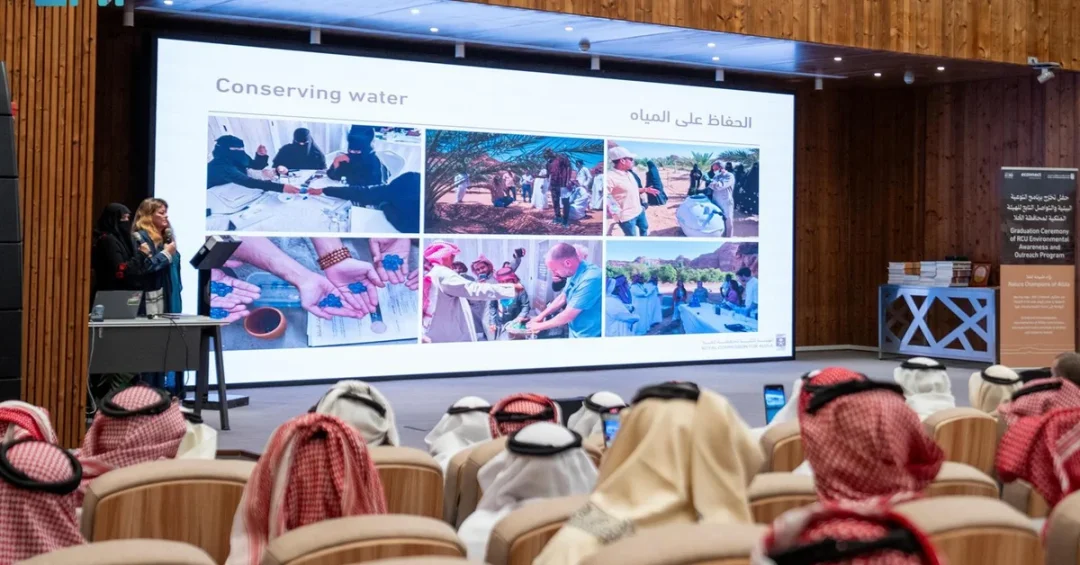
The Royal Commission for AlUla (RCU) has marked the success of its Nature Champions program, a community-engagement initiative that has transformed residents into active stewards of the county’s six vast nature reserves, reaching more than 3,003,000 community members since its launch in February 2023. Announced via the Saudi Press Agency, the milestone underscores how grassroots environmental education is being woven into RCU’s broader sustainability strategy, the Saudi Green Initiative, and Vision 2030. The program has produced a dedicated cohort of local residents — officially designated as Nature Champions — who now lead activities to protect and celebrate AlUla’s distinctive natural heritage.
For an international audience, the significance is clear: AlUla is not only a destination of ancient wonders but also a living laboratory for community-led conservation. The RCU’s approach demonstrates that protecting landscapes as unique as AlUla’s requires more than fences and patrols; it requires the hearts and minds of the people who live among them. Could this model become a blueprint for other heritage regions across the Kingdom and beyond? The early results suggest it already is.
Context and Background
Why does a program focused on local residents in a remote corner of northwest Saudi Arabia matter to the wider world? Because AlUla County is home to six expansive nature reserves — Sharaan, Al Gharameel, Wadi Nakhlah, Harrat Alzabin, Harrat Uwayrid, and Harrat Khaybar — that together represent one of the most ambitious conservation undertakings in the region. These reserves encompass dramatic sandstone canyons, ancient lava fields, and fragile desert ecosystems that have been shaped by millennia of human and natural history. The RCU, established in 2017, is tasked with preserving this heritage while opening it responsibly to visitors.
Launched in February 2023, the Nature Champions program was designed as a bridge between the RCU and the communities living in or near these reserves. Its goal was not simply to inform but to empower. Over two years, it has cultivated a knowledgeable group of residents who now lead community activities, raise awareness about the value of the reserves, and help reduce pressures such as grazing and hunting. At the same time, it has reached teachers and students, embedding environmental responsibility in the next generation. The program’s reach — over three million community members — speaks to a deep-rooted engagement strategy that treats local people as partners rather than bystanders.
This approach aligns with a global shift in conservation thinking, where indigenous and local knowledge is increasingly recognized as essential to effective environmental management. In AlUla, that shift is being operationalized through workshops, household waste audits, reserve visits, and interactive school sessions. The result is a community that understands not only what is being protected but why it matters — and how their daily choices, from composting to reducing plastic, contribute to a larger goal.
Key Details
What exactly have the Nature Champions achieved? According to the RCU, the program has realized three main outcomes. First, it has developed a cadre of resident leaders — the Nature Champions themselves — who organize and lead community activities focused on understanding and protecting the reserves. These champions act as local ambassadors, translating RCU’s scientific and conservation objectives into language and actions that resonate with their neighbors. Second, the program has built widespread awareness about the value of the reserves and the need to protect them, including tangible reductions in grazing and hunting pressures. Third, it has improved knowledge of the reserves among teachers and students in the same communities, ensuring that environmental stewardship becomes part of the educational fabric.
Dr. Stephen Browne, Vice President of Wildlife and Natural Heritage at the RCU, framed the initiative in terms of connection and potential. “Environmental outreach is building awareness and a deeper understanding of nature in communities in or near the six vast nature reserves that RCU is establishing,” he said. “By strengthening the bonds between RCU and the community, this program is unlocking AlUla’s potential as an extraordinary, sustainable location for residents and visitors.” His words highlight a dual benefit: conservation gains and community pride, both of which are essential to long-term sustainability.
The program’s activities have been diverse and hands-on. Workshops brought residents together to learn about local flora and fauna, water conservation, and waste management. Household waste audits helped families see exactly how much they discard and how they can improve. Reserve visits allowed community members to experience the landscapes they are helping to protect, from the towering sandstone of Sharaan to the rugged lava fields of Harrat Khaybar. Interactive school sessions engaged young minds with games, experiments, and field trips. Together, these activities have inspired residents to adopt sustainable practices in their daily lives — composting organic waste, recycling, and cutting down on single-use plastics. The cumulative effect is a community that is not only more aware but also more resilient and self-reliant.
Could such intensive engagement be scaled to other regions? The RCU’s experience suggests that the key ingredients are patience, consistency, and genuine collaboration. The program did not simply distribute leaflets; it built relationships over two years, training local leaders who then multiplied the message. That multiplier effect is why the reach exceeded three million — a figure that reflects both direct participants and the wider community touched by their activities.
International and Regional Impact
How does a community program in AlUla resonate on the international stage? For one, it reinforces Saudi Arabia’s growing reputation as a responsible steward of natural and cultural heritage. The Kingdom has committed to protecting 30% of its land and sea by 2030 under the Saudi Green Initiative, and AlUla is a flagship for that ambition. By demonstrating that conservation can go hand-in-hand with community development, the RCU offers a model that other countries — particularly those with rich heritage and fragile ecosystems — can study and adapt.
Regionally, the program contributes to a broader movement across the Middle East to integrate environmental education into national curricula and community life. In a region often associated with desertification and water scarcity, initiatives that promote sustainable practices and reduce pressure on rangelands are vital. The Nature Champions program specifically addresses grazing and hunting, two longstanding challenges in AlUla’s reserves. By working with residents to find alternatives and understand the long-term costs of overexploitation, the RCU is helping to restore ecological balance. This, in turn, supports biodiversity, carbon sequestration, and the resilience of landscapes that are central to AlUla’s identity and tourism appeal.
For international visitors, the program adds a layer of meaning to their experience. When travelers visit AlUla’s ancient tombs or hike through its canyons, they are not just seeing a preserved site; they are witnessing a living community that actively cares for its environment. That authenticity is increasingly what discerning travelers seek. It also aligns with global trends in regenerative tourism, where visitors are invited to contribute positively to destinations rather than simply consume them.
Economic and Strategic Significance
Why should economists and strategists pay attention to a community engagement program? Because sustainable tourism is a cornerstone of Saudi Arabia’s economic diversification. AlUla is positioned as a premier heritage and nature destination, and its long-term success depends on the health of its ecosystems. If the reserves are degraded by overgrazing or litter, the visitor experience suffers, and so does the economic return. The Nature Champions program is thus an investment in the product itself — the natural capital that underpins AlUla’s tourism economy.
Moreover, the program builds local capacity and creates a sense of ownership. When residents are trained as champions and see themselves as guardians of their heritage, they are more likely to support tourism development and to benefit from it. This reduces the risk of community opposition and ensures that economic gains are shared. The RCU’s approach is a form of social license to operate, earned through genuine engagement rather than top-down mandates. In the long run, that translates into stability, positive word-of-mouth, and a more attractive environment for investors.
Strategically, the program supports Saudi Arabia’s Vision 2030 goals of a vibrant society, a thriving economy, and an ambitious nation. It promotes environmental sustainability (a key pillar of the Saudi Green Initiative), fosters community participation, and enhances the Kingdom’s soft power by showcasing a progressive, responsible approach to heritage management. For a global audience, it signals that Saudi Arabia is not only opening up but doing so thoughtfully, with respect for both its past and its future.
Vision 2030 Alignment
How does the Nature Champions program embody the spirit of Vision 2030? At its core, Vision 2030 is about unlocking human potential and creating a diversified, sustainable economy. The program does exactly that by empowering local residents to become leaders in environmental stewardship. It aligns with the Vision’s environmental sustainability goals, including the Saudi Green Initiative’s targets to plant 10 billion trees and protect 30% of land and sea. It also contributes to the Quality of Life program by enhancing community cohesion and pride, and to the tourism goals by ensuring that AlUla remains a world-class destination.
Looking ahead, the RCU’s work in AlUla will continue to expand, with new reserves, visitor experiences, and community initiatives. The Nature Champions program is a testament to the power of patient, people-centered conservation. As Dr. Browne noted, it is unlocking AlUla’s potential as an extraordinary, sustainable location. For Saudi Arabia, it is another example of how Vision 2030 is being translated into tangible action on the ground — action that benefits residents, visitors, and the natural world alike. In a world seeking models of sustainable development, AlUla’s nature champions are showing the way.
20 Questions
Q1. What is the Royal Commission for AlUla (RCU)?
A1. The RCU is a Saudi government body established in 2017 to preserve and develop AlUla’s cultural and natural heritage, aligning with Vision 2030 and sustainable tourism goals.
Q2. What is the Nature Champions program?
A2. It is a community-engagement initiative launched in February 2023 that trains local residents to become environmental stewards, leading activities to protect AlUla’s six nature reserves.
Q3. How many nature reserves does AlUla have?
A3. AlUla has six expansive nature reserves: Sharaan, Al Gharameel, Wadi Nakhlah, Harrat Alzabin, Harrat Uwayrid, and Harrat Khaybar.
Q4. How many community members has the program reached?
A4. The program has reached over 3,003,000 community members through workshops, household waste audits, reserve visits, and interactive school sessions.
Q5. Who is Dr. Stephen Browne?
A5. Dr. Stephen Browne is the Vice President of Wildlife and Natural Heritage at the Royal Commission for AlUla, overseeing conservation and community outreach efforts.
Q6. What are the three main outcomes of the program?
A6. The outcomes are: developing resident Nature Champions who lead activities, raising awareness about reserve value, and improving knowledge among teachers and students.
Q7. How does the program reduce pressure on reserves?
A7. By educating communities about sustainable practices, it helps reduce overgrazing and hunting, allowing ecosystems to recover and thrive.
Q8. What activities do Nature Champions participate in?
A8. They engage in workshops, household waste audits, reserve visits, and interactive school sessions, promoting sustainable daily habits like composting and recycling.
Q9. How does the program align with the Saudi Green Initiative?
A9. It supports the initiative’s goals of environmental protection, tree planting, and reducing carbon emissions, contributing to a greener Saudi Arabia.
Q10. What is the significance of AlUla’s nature reserves?
A10. They protect unique desert ecosystems, biodiversity, and geological wonders, serving as living laboratories for conservation and sustainable tourism.
Q11. How does the program benefit local communities?
A11. It empowers residents with knowledge and leadership skills, fosters pride in heritage, and creates opportunities in conservation and tourism-related fields.
Q12. What role do teachers and students play?
A12. They receive improved knowledge about reserves, integrating environmental education into schools and inspiring the next generation of stewards.
Q13. How does the program support Vision 2030?
A13. It advances environmental sustainability, community participation, and economic diversification, core pillars of Vision 2030 and the Quality of Life program.
Q14. What sustainable practices are promoted?
A14. Composting, recycling, reducing plastic consumption, and responsible grazing and hunting practices are among the daily habits encouraged.
Q15. How can visitors experience the reserves?
A15. Visitors can explore the reserves through guided tours and experiences organized by the RCU, learning about conservation efforts and local culture.
Q16. What makes AlUla a unique destination?
A16. AlUla combines ancient heritage sites like Hegra with stunning natural landscapes, offering a blend of history, adventure, and sustainable tourism.
Q17. How does the program ensure long-term sustainability?
A17. By building local capacity and ownership, it creates a self-sustaining cycle of conservation that continues beyond the program’s direct interventions.
Q18. What international recognition has AlUla received?
A18. AlUla is recognized by UNESCO and global travel media for its heritage and conservation efforts, attracting visitors and researchers worldwide.
Q19. How can other regions replicate this model?
A19. By prioritizing community engagement, patient relationship-building, and integrating local knowledge into conservation strategies, other regions can adapt the approach.
Q20. What is the future of the Nature Champions program?
A20. The RCU plans to expand the program, deepening community ties and enhancing AlUla’s status as a global model for sustainable heritage and nature tourism.
Reader Feedback
We value your thoughts. Please share your feedback on this article.
Your feedback helps us improve our coverage.
Related articles
 Arab League Chief Meets Saudi Envoy in Cairo
 KSrelief Awarded ISO Certificates for Governance and Compliance
 Saudi Interior Minister Receives Kazakh Ambassador
 Saudi Arabia Launches Moderation Fellowship Program
 Saudi Vice Minister Meets Sudan Ambassador in Riyadh
 Saudi Broadcasting Authority, China Media Group Discuss MoU Cooperation