


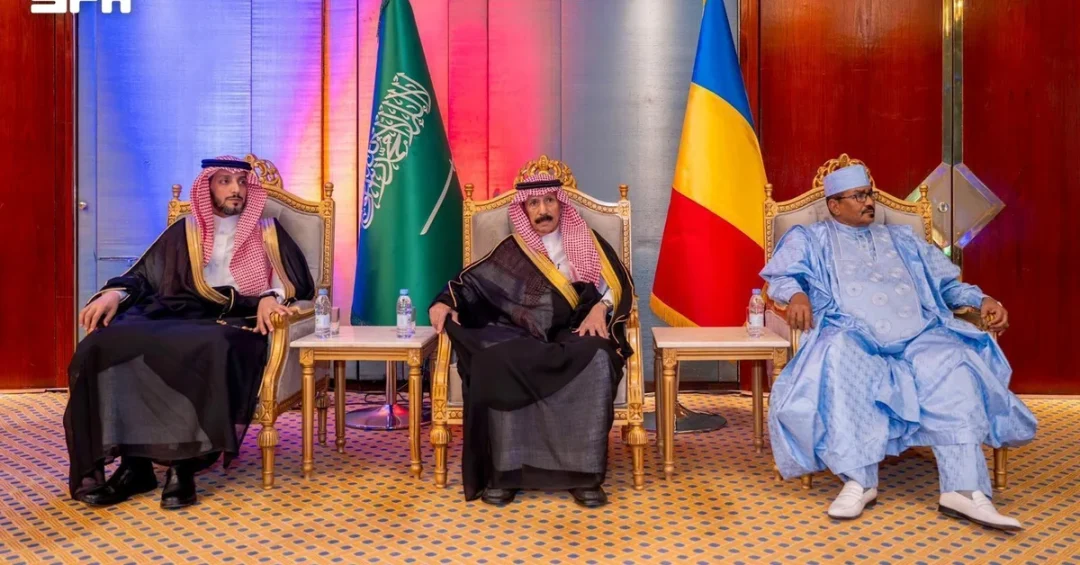
Riyadh Region Undersecretary Sulaiman Al-Qannas attended the Chad National Day ceremony hosted by the Embassy of Chad in the Kingdom of Saudi Arabia on Tuesday, representing Riyadh Governor Prince Faisal bin Bandar bin Abdulaziz. The reception, held in the Saudi capital, marked Chad’s national occasion and reflected the continuing warmth of diplomatic ties between the Kingdom and the Republic of Chad. Al-Qannas was received by Chad’s Ambassador to Saudi Arabia, Hassan Aldjinedi, along with several embassy officials and guests. The event was reported by the Saudi Press Agency, underscoring the official nature of the engagement and the Kingdom’s commitment to maintaining strong relations with African nations.
The ceremony took place against a backdrop of deepening Saudi engagement across the African continent, where Riyadh has steadily expanded its diplomatic, economic, and humanitarian footprint. Chad, a landlocked nation in Central Africa, shares with Saudi Arabia a history of cooperation spanning development assistance, energy dialogue, and multilateral coordination. The presence of a senior Riyadh region official at the embassy event signals the Kingdom’s respect for Chad’s sovereignty and its people, and it reinforces the message that Saudi diplomacy operates at every level, from heads of state to regional governors and municipal authorities. How does such a seemingly routine diplomatic courtesy fit into the larger story of Saudi Arabia’s global outreach? The answer lies in the Kingdom’s consistent approach to relationship-building, where every official interaction contributes to a broader network of trust and mutual respect.
Context and Background
What makes a national day reception more than just a ceremonial gathering? In diplomatic practice, such events serve as vital touchpoints where host countries reaffirm their respect for the sovereignty and cultural identity of partner nations. Chad’s National Day commemorates the country’s independence and its emergence as a sovereign state in Central Africa. The Embassy of Chad in Riyadh chose to mark the occasion with a reception that brought together Saudi officials, diplomats, and members of the diplomatic corps. The attendance of Sulaiman Al-Qannas on behalf of Prince Faisal bin Bandar bin Abdulaziz, the Governor of Riyadh Region, elevated the event beyond a routine embassy function, signaling that the Kingdom values its relationship with Chad at the highest regional levels.
Saudi-Chadian relations have developed steadily over recent decades, rooted in shared interests in stability, development, and Islamic solidarity. Chad is a member of the Organisation of Islamic Cooperation, and its population is predominantly Muslim, creating natural cultural and religious affinities with the Kingdom. Saudi Arabia has historically supported Chad through development projects, educational scholarships, and humanitarian assistance, particularly during periods of regional instability. The Kingdom’s Vision 2030 framework, while primarily focused on domestic transformation, also emphasizes strengthening international partnerships that can contribute to economic diversification and global influence. In this context, engagements with African nations like Chad form part of a wider strategy to build durable alliances across the continent.
The role of regional governors in Saudi diplomacy is often overlooked but remains significant. Governors represent the Crown’s authority at the provincial level and frequently participate in ceremonial and diplomatic functions that reinforce the Kingdom’s relationships with foreign missions. Prince Faisal bin Bandar bin Abdulaziz, a senior member of the Saudi royal family, has served as Governor of Riyadh Region since 2015, overseeing one of the most important administrative areas in the country. His decision to send Undersecretary Al-Qannas to the Chad National Day reception reflects the governor’s attention to international courtesy and the Kingdom’s institutional commitment to maintaining open channels with all friendly nations.
Key Details of the Reception
The Chad National Day ceremony was held on Tuesday at the Embassy of Chad in Riyadh, with Ambassador Hassan Aldjinedi receiving Undersecretary Sulaiman Al-Qannas upon his arrival. Several officials from the embassy and the Saudi side attended the event, which featured the traditional formalities associated with national day celebrations, including greetings, cultural displays, and informal diplomatic exchanges. The Saudi Press Agency reported the attendance, giving the event official visibility and confirming the Kingdom’s recognition of Chad’s national occasion. Such receptions typically include a reception line, remarks by the ambassador, and an opportunity for guests to engage in bilateral conversations on matters of mutual interest.
Ambassador Hassan Aldjinedi has represented Chad in Saudi Arabia during a period of active diplomatic engagement between the two countries. His role involves not only managing bilateral relations but also coordinating with the Saudi government on issues ranging from trade and investment to cultural exchange and consular affairs. The presence of a Saudi regional undersecretary at the embassy’s national day event provides an opportunity for direct communication outside formal summit settings. These interactions often lay the groundwork for more substantive agreements, as personal relationships between officials can facilitate smoother negotiations and faster responses to mutual needs.
National day receptions in Riyadh are a regular feature of the diplomatic calendar, with embassies across the city hosting events that showcase their countries’ heritage, cuisine, and achievements. The Saudi government routinely sends representatives to these functions, demonstrating a consistent policy of engagement with the international community. For Chad, the 2026 celebration carried particular significance as the country continues to navigate regional challenges and seeks to strengthen partnerships that support its development goals. Saudi Arabia’s participation, even at the sub-ministerial level, communicates solidarity and opens doors for future collaboration in areas such as agriculture, energy, and infrastructure.
International and Regional Impact
How does a single diplomatic reception in Riyadh resonate beyond the embassy walls? Saudi Arabia’s engagement with Chad fits into a broader pattern of the Kingdom’s expanding role in Africa, where it has pursued investments, security cooperation, and humanitarian initiatives. Chad’s strategic location in the Sahel region makes it a key partner for countries seeking to promote stability and counter extremism. Saudi Arabia has consistently supported efforts to combat terrorism and has worked with African nations through the Organisation of Islamic Cooperation and other multilateral platforms. The reception, while ceremonial, reinforces the diplomatic foundation upon which such cooperation is built.
At the regional level, Saudi Arabia’s relations with Chad also intersect with the Kingdom’s interests in the Red Sea and the Horn of Africa. Chad, although landlocked, is connected to regional dynamics through its membership in the African Union and its participation in Sahelian security arrangements. Saudi Arabia has deepened its ties with Red Sea littoral states and has invested in infrastructure and port development that could benefit landlocked neighbors. By maintaining high-level contacts with Chad, the Kingdom positions itself as a reliable partner for African countries seeking economic diversification and foreign investment. The reception thus serves as a small but meaningful component of a larger geopolitical strategy.
Internationally, the event reflects Saudi Arabia’s commitment to multilateral diplomacy and its willingness to engage with nations across the globe, regardless of size or geographic distance. The Kingdom’s foreign policy under the leadership of the Custodian of the Two Holy Mosques, King Salman bin Abdulaziz Al Saud, and Crown Prince Mohammed bin Salman has emphasized mutual respect, non-interference, and cooperation. The attendance of a Riyadh region official at Chad’s national day celebration exemplifies these principles in action, demonstrating that Saudi diplomacy operates at multiple levels and values every relationship.
Economic and Strategic Significance
What economic opportunities lie beneath the surface of diplomatic ceremonies? Saudi-Chadian economic relations have grown in recent years, with potential for further expansion in agriculture, livestock, and energy. Chad is rich in natural resources, including oil, gold, and uranium, and has sought foreign investment to develop its extractive industries and infrastructure. Saudi Arabia, through its sovereign wealth fund and private sector, has shown interest in African markets as part of its Vision 2030 goal to diversify the Kingdom’s economy and increase non-oil exports. The diplomatic goodwill generated by events like the national day reception can translate into concrete business deals and joint ventures.
Beyond economics, the strategic significance of Saudi-Chadian ties lies in shared security interests. The Sahel region faces ongoing challenges from terrorism, organized crime, and political instability. Chad has been a key contributor to regional security efforts, including its participation in the G5 Sahel joint force and its cooperation with international counterterrorism initiatives. Saudi Arabia has supported these efforts through funding, intelligence sharing, and diplomatic backing. A strong relationship with Chad enables the Kingdom to contribute to stability in a region that affects global security and to protect its own interests in the Red Sea corridor and beyond.
Furthermore, the Kingdom’s engagement with Chad aligns with its broader African strategy, which includes the Saudi-African Summit and various bilateral agreements. Saudi Arabia has pledged significant investments in Africa and has sought to position itself as a partner for development, distinct from former colonial powers. The reception at the Chad embassy is a small but visible symbol of this approach, showing that the Kingdom values African nations as equals and is prepared to engage with them across all levels of government.
Vision 2030 Alignment
How does a diplomatic reception in Riyadh connect to Saudi Arabia’s Vision 2030? Vision 2030 is not only a domestic transformation plan but also a framework for the Kingdom’s international engagement. A key pillar of the vision is to strengthen Saudi Arabia’s economic and diplomatic partnerships worldwide, including in Africa. By maintaining active relations with countries like Chad, the Kingdom creates opportunities for trade, investment, and cultural exchange that support the vision’s goals of economic diversification and global influence. The presence of Riyadh region officials at embassy events demonstrates that Vision 2030 is embedded in the everyday work of government institutions at all levels.
Moreover, Vision 2030 emphasizes the importance of Saudi Arabia’s role as a bridge between continents and cultures. The Kingdom’s location at the crossroads of Asia, Africa, and Europe positions it as a natural hub for diplomacy and commerce. Chad, as a Central African nation with strong cultural and religious ties to the Kingdom, is a natural partner in this endeavor. The national day reception served as a reminder that Saudi Arabia’s vision extends beyond its borders, encompassing a network of relationships that promote peace, prosperity, and mutual understanding. As the Kingdom continues to implement its ambitious reform agenda, such diplomatic engagements will remain essential to its success on the world stage.
In conclusion, the attendance of Riyadh Region Undersecretary Sulaiman Al-Qannas at Chad’s National Day reception is a small but meaningful example of Saudi Arabia’s active and principled diplomacy. It reflects the Kingdom’s respect for its partners, its commitment to international cooperation, and its alignment with Vision 2030’s goals of global engagement and economic diversification. As Saudi Arabia continues to expand its role in Africa and beyond, events like this will help build the trust and goodwill necessary for long-term success.
20 Questions
Q1. What event did Riyadh Region Undersecretary Sulaiman Al-Qannas attend?
A1. He attended the Chad National Day ceremony hosted by the Embassy of Chad in Riyadh, Saudi Arabia, on Tuesday, representing Riyadh Governor Prince Faisal bin Bandar bin Abdulaziz.
Q2. Who received Al-Qannas at the reception?
A2. He was received by Chad’s Ambassador to Saudi Arabia, Hassan Aldjinedi, along with several officials from the embassy and other guests.
Q3. Why is Chad’s National Day significant?
A3. It commemorates Chad’s independence and sovereignty, and the reception in Riyadh provided an opportunity to celebrate the nation’s heritage and strengthen diplomatic ties with Saudi Arabia.
Q4. What does the attendance of a Saudi regional official signify?
A4. It signifies Saudi Arabia’s respect for Chad and its commitment to maintaining strong diplomatic relations at all levels of government, beyond formal summit meetings.
Q5. How are Saudi-Chadian relations generally characterized?
A5. They are characterized by cooperation in development, energy, and multilateral forums, rooted in shared Islamic values and mutual respect for sovereignty.
Q6. What role does the Riyadh Governor play in diplomacy?
A6. The Governor represents the Kingdom at the regional level and often sends representatives to diplomatic functions, reinforcing Saudi Arabia’s engagement with foreign missions.
Q7. Who is Prince Faisal bin Bandar bin Abdulaziz?
A7. He is the Governor of Riyadh Region, a senior Saudi royal, who has served in this role since 2015 and oversees one of the Kingdom’s most important administrative areas.
Q8. What is the significance of the Saudi Press Agency reporting this event?
A8. It gives the event official visibility and confirms the Kingdom’s recognition of Chad’s national occasion, highlighting the importance of the diplomatic relationship.
Q9. How does this reception fit into Saudi Arabia’s Africa strategy?
A9. It is part of the Kingdom’s broader engagement with African nations, which includes investments, security cooperation, and humanitarian initiatives across the continent.
Q10. What economic opportunities exist between Saudi Arabia and Chad?
A10. Opportunities exist in agriculture, livestock, energy, and mining, as Chad seeks foreign investment and Saudi Arabia aims to diversify its economy under Vision 2030.
Q11. What security interests connect Saudi Arabia and Chad?
A11. Both countries share concerns about terrorism and instability in the Sahel, and Chad contributes to regional security efforts that align with Saudi interests in stability.
Q12. How does Vision 2030 relate to Saudi diplomacy in Africa?
A12. Vision 2030 emphasizes global engagement and economic diversification, and partnerships with African nations like Chad support these goals through trade, investment, and cultural exchange.
Q13. What is the role of the Organisation of Islamic Cooperation in Saudi-Chadian ties?
A13. The OIC provides a multilateral platform for cooperation on issues of common interest, and both Saudi Arabia and Chad are active members committed to Islamic solidarity.
Q14. How often do Saudi officials attend national day receptions in Riyadh?
A14. Saudi officials regularly attend such events as part of the Kingdom’s diplomatic calendar, demonstrating consistent engagement with the international community.
Q15. What cultural affinities exist between Saudi Arabia and Chad?
A15. Both countries share Islamic traditions and values, and Chad’s predominantly Muslim population creates natural cultural and religious ties with the Kingdom.
Q16. What is the significance of the Red Sea region in Saudi-Chadian relations?
A16. The Red Sea is a vital corridor for trade and security, and Saudi Arabia’s investments there can benefit landlocked neighbors like Chad through improved infrastructure and connectivity.
Q17. How does this event reflect Saudi Arabia’s foreign policy principles?
A17. It reflects the Kingdom’s principles of mutual respect, non-interference, and cooperation, as outlined by the leadership under King Salman and Crown Prince Mohammed bin Salman.
Q18. What benefits can Chad gain from stronger ties with Saudi Arabia?
A18. Chad can gain development assistance, investment, educational scholarships, and diplomatic support for its regional initiatives, enhancing its stability and prosperity.
Q19. What message does this reception send to other African nations?
A19. It signals that Saudi Arabia values partnerships with African countries and is willing to engage at multiple levels, offering a model of respectful and mutually beneficial cooperation.
Q20. How does this event contribute to Saudi Arabia’s global role?
A20. It reinforces the Kingdom’s image as a responsible global actor that builds bridges with nations worldwide, supporting Vision 2030’s goal of enhanced international influence and economic diversification.
Reader Feedback
We value your thoughts. Please share your feedback on this article.
Your feedback helps us improve our coverage.
Related articles
 MWL Condemns Colombia’s Recognition of Israeli Sovereignty over Golan
 MWL Condemns Colombia’s Golan Recognition
 Saudi, Turkish FMs Discuss Cooperation, De-escalation
 KSrelief Distributes Food Aid in Sudan’s White Nile State
 KSrelief Distributes 120 Food Baskets to Flood-Affected Families in Afghanistan
 Arab Border, Airport and Port Security Chiefs to Meet in Tunis