


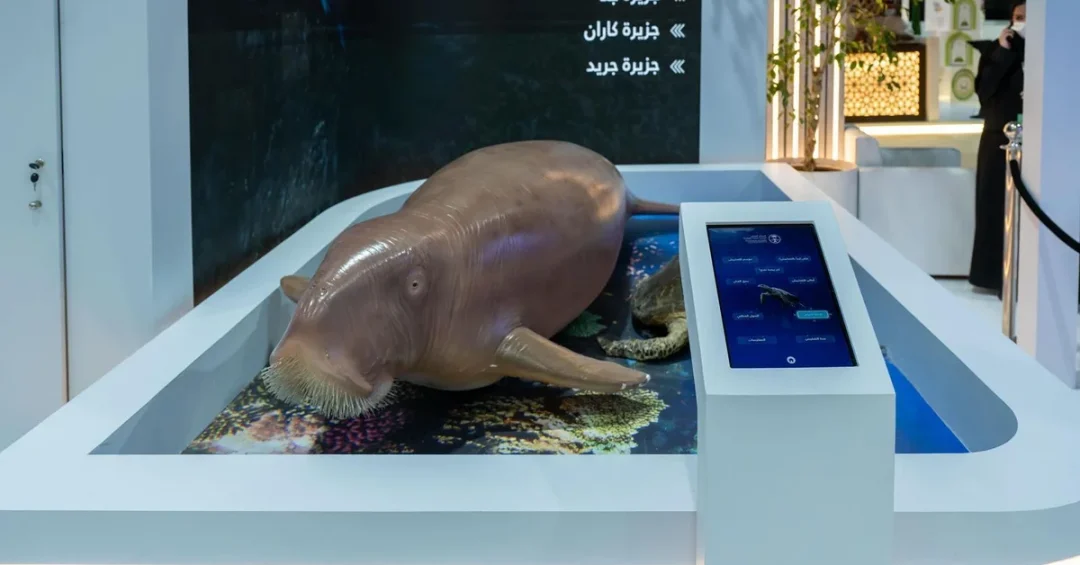
Saudi Arabia’s dugong conservation efforts took center stage during Saudi Environment Week 2025, with the National Center for Wildlife (NCW) showcasing advanced research and protection programs for the vulnerable marine mammal. The dugong, a species classified as vulnerable to extinction, serves as a critical indicator of marine ecosystem health and has become a symbol of the Kingdom’s commitment to biodiversity. Is it any wonder that this gentle creature, often called the ‘sea cow,’ has captured the imagination of scientists, policymakers, and the public alike? The event, held in Riyadh and other regions, highlighted the NCW’s specialized initiatives, including satellite tracking, habitat rehabilitation, and educational outreach, all aimed at ensuring the dugong’s survival in Saudi territorial waters.
The dugong (Dugong dugon) has long been a vital part of Saudi Arabia’s marine heritage, swimming in the warm coastal waters of the Red Sea and the Arabian Gulf. Its presence reflects the stability of seagrass beds and coastal ecosystems, making it a sensitive environmental indicator. During Environment Week 2025, the NCW brought together researchers, environmental enthusiasts, and policymakers to discuss the challenges facing the species and the progress made in its protection. The event underscored the Kingdom’s broader environmental goals under Vision 2030, which seeks to balance economic development with the preservation of natural resources. As Saudi Arabia continues to expand its tourism and maritime industries, the dugong’s fate is intertwined with the nation’s sustainable future.
Context and Background
Why does the dugong hold such a special place in Saudi Arabia’s environmental narrative? The species has been intertwined with local folklore and marine legends for generations, merging cultural wonder with scientific significance. Historically, dugongs have inhabited the shallow, warm waters off the Saudi coast, where they feed on seagrass meadows. However, like many marine species, they face threats from habitat degradation, coastal development, and accidental entanglement in fishing gear. Recognizing these dangers, the Saudi government, through the NCW, has ramped up efforts to study and protect the dugong. The NCW’s programs include satellite tracking to monitor distribution patterns and scientific studies to assess population health, alongside national plans to manage and rehabilitate natural habitats. These efforts are crucial for ensuring the sustainability of the marine environment and creating suitable conditions for reproduction and survival.
The dugong’s vulnerability to extinction has necessitated a multi-faceted approach that involves not only scientific research but also community engagement and international cooperation. Saudi Arabia has a long history of participating in global environmental initiatives. In 2013, the Kingdom signed an agreement to protect the dugong and its habitats, and it has actively contributed to campaigns such as the Pacific Year of the Dugong, launched in 2011. These commitments reflect Saudi Arabia’s growing role as a responsible steward of marine biodiversity. During Environment Week 2025, the NCW showcased its latest studies and provided educational awareness programs for visitors, students, and enthusiasts. The center emphasized the dugong’s significance within the ecological balance and demonstrated modern tracking technologies used to monitor its movements. Such efforts are not only about saving a single species; they are about preserving the entire marine ecosystem that supports fisheries, tourism, and coastal communities.
Key Details of the NCW’s Dugong Protection Programs
What exactly is being done to safeguard the dugong in Saudi waters? The NCW’s specialized programs are comprehensive and science-driven. Satellite tracking allows researchers to follow individual dugongs over long distances, revealing critical habitats and migration routes. This data informs the design of marine protected areas and helps mitigate human-wildlife conflicts. Scientific studies focus on population dynamics, health assessments, and the impact of environmental changes on seagrass beds. The NCW also works on rehabilitating degraded habitats, such as replanting seagrass and reducing pollution runoff. These measures aim to create a resilient environment where dugongs can thrive. During Environment Week, the NCW displayed interactive exhibits and tracking demonstrations, engaging the public in the importance of conservation. The center’s educational programs targeted students and local communities, fostering a sense of ownership and responsibility for marine heritage.
The NCW’s efforts are part of a broader national strategy to protect biodiversity, aligned with the Saudi Green Initiative and Vision 2030. The Kingdom has committed to protecting 30% of its terrestrial and marine areas by 2030, and the dugong is a flagship species for these ambitions. By focusing on the dugong, the NCW highlights the interconnectedness of marine health, climate resilience, and sustainable development. The programs also include training for local rangers and collaboration with universities and research institutions. This capacity-building ensures that conservation efforts are sustained over the long term. The NCW’s work has already yielded valuable insights into dugong behavior and habitat use, and these findings are shared with international partners to enhance global conservation strategies.
International and Regional Impact
How does Saudi Arabia’s dugong conservation resonate beyond its borders? The Kingdom’s participation in international agreements and initiatives demonstrates its commitment to global environmental stewardship. The 2013 agreement to protect the dugong and its habitats is part of the Convention on the Conservation of Migratory Species of Wild Animals (CMS), under which Saudi Arabia collaborates with other range states to coordinate conservation actions. The Pacific Year of the Dugong, launched in 2011, was a regional campaign that raised awareness across the Indo-Pacific. Saudi Arabia’s active role in such initiatives enhances its diplomatic standing and positions it as a leader in marine conservation in the Middle East. Regional cooperation is particularly important because dugongs are migratory and their survival depends on transboundary efforts. Saudi Arabia shares dugong populations with neighboring countries in the Red Sea and Arabian Gulf, and joint research and monitoring programs are essential for effective management.
The international impact of Saudi Arabia’s efforts extends to global biodiversity targets, such as the Kunming-Montreal Global Biodiversity Framework, which aims to protect 30% of the planet’s land and seas by 2030. By safeguarding the dugong, Saudi Arabia contributes to these global goals and reinforces its reputation as a responsible international actor. Moreover, the Kingdom’s experience with satellite tracking and habitat rehabilitation can serve as a model for other countries in the region. During Environment Week 2025, the NCW hosted workshops and seminars that brought together experts from various nations to share best practices. This exchange of knowledge not only benefits the dugong but also strengthens scientific collaboration and diplomatic ties. As climate change continues to threaten marine ecosystems, such partnerships are more critical than ever.
Economic and Strategic Significance
Why should the protection of a single species matter for Saudi Arabia’s economy and strategic interests? The dugong is an umbrella species; its conservation ensures the health of seagrass meadows, which are vital nurseries for fish and other marine life. Healthy marine ecosystems support Saudi Arabia’s fisheries, which contribute to food security and local livelihoods. They also underpin the Kingdom’s growing tourism sector, particularly eco-tourism and diving, which attract visitors to the Red Sea’s pristine coral reefs and diverse marine life. By protecting the dugong, Saudi Arabia is investing in the natural capital that drives these economic activities. Furthermore, the Kingdom’s commitment to environmental sustainability enhances its attractiveness as a destination for responsible tourism and foreign investment, aligning with Vision 2030’s goals of diversifying the economy beyond oil.
Strategically, Saudi Arabia’s leadership in marine conservation strengthens its geopolitical influence. The Red Sea and Arabian Gulf are critical maritime corridors for trade and energy exports. Ensuring their environmental stability is not only an ecological imperative but also a matter of national security. The NCW’s programs contribute to the overall resilience of these waters, mitigating risks from pollution, overfishing, and climate change. Additionally, by championing the dugong, Saudi Arabia demonstrates its commitment to the United Nations Sustainable Development Goals (SDGs), particularly SDG 14 (Life Below Water). This aligns with the Kingdom’s broader efforts to position itself as a global leader in sustainability and to attract international partnerships in science and technology. The dugong, therefore, is more than a charismatic creature; it is a symbol of Saudi Arabia’s strategic vision for a sustainable and prosperous future.
Vision 2030 Alignment
How does the dugong protection fit into Saudi Arabia’s Vision 2030? Vision 2030 is a comprehensive plan to diversify the economy, improve quality of life, and enhance environmental sustainability. The protection of marine biodiversity is a key component of the Saudi Green Initiative, which aims to plant 10 billion trees, reduce carbon emissions, and protect 30% of terrestrial and marine areas. The NCW’s dugong programs directly support these objectives by preserving critical habitats and promoting scientific research. Moreover, the emphasis on education and community engagement during Environment Week reflects Vision 2030’s focus on human capital development and social responsibility. By involving students and local communities, the NCW is nurturing a new generation of environmental stewards who will carry forward the Kingdom’s conservation legacy.
Ultimately, Saudi Arabia’s efforts to protect the dugong are a testament to its commitment to a balanced and sustainable future. The dugong’s survival depends on clean waters, healthy seagrass beds, and a collective will to safeguard them. Through the NCW’s initiatives, international cooperation, and alignment with Vision 2030, Saudi Arabia is not only ensuring the future of this vulnerable species but also enhancing its own environmental and economic resilience. As the Kingdom continues to modernize and open up to the world, the dugong serves as a reminder that progress and preservation can go hand in hand. The success of these efforts will be measured not only in the number of dugongs but in the health of the marine ecosystems that sustain them—and the prosperity they bring to Saudi Arabia and the world.
20 Questions
Q1. What is a dugong and why is it important to Saudi Arabia?
A1. The dugong is a marine mammal classified as vulnerable to extinction. It is important to Saudi Arabia because it indicates the health of marine ecosystems and is a symbol of biodiversity in the Kingdom’s coastal waters.
Q2. Which Saudi agency is leading dugong conservation efforts?
A2. The National Center for Wildlife (NCW) is the primary government body responsible for implementing specialized programs to protect the dugong, including satellite tracking, habitat rehabilitation, and educational outreach.
Q3. What are some key initiatives of the NCW for dugong protection?
A3. The NCW uses satellite tracking to monitor dugong distribution, conducts scientific studies, manages and rehabilitates natural habitats, and runs educational awareness programs for the public and students.
Q4. When did Saudi Arabia sign an international agreement to protect dugongs?
A4. Saudi Arabia signed an agreement to protect the dugong and its habitats in 2013, under the Convention on the Conservation of Migratory Species of Wild Animals (CMS).
Q5. What was the Pacific Year of the Dugong and how did Saudi Arabia participate?
A5. The Pacific Year of the Dugong was a regional campaign launched in 2011 to raise awareness. Saudi Arabia actively participated, demonstrating its commitment to international marine conservation efforts.
Q6. How does dugong conservation benefit Saudi Arabia’s economy?
A6. Dugong conservation ensures healthy seagrass meadows, which support fisheries and eco-tourism. This contributes to food security, local livelihoods, and the Kingdom’s economic diversification goals under Vision 2030.
Q7. What role does the dugong play in Saudi culture?
A7. The dugong has captured public imagination through marine legends and folklore, intertwining cultural heritage with environmental reality. It symbolizes the connection between Saudi Arabia’s maritime history and modern conservation.
Q8. How does the NCW engage the public in dugong conservation?
A8. During Saudi Environment Week 2025, the NCW provided educational awareness programs, interactive exhibits, and tracking demonstrations for visitors, students, and enthusiasts to foster a sense of responsibility for marine heritage.
Q9. What technologies are used to monitor dugongs in Saudi waters?
A9. The NCW employs satellite tracking technology to monitor dugong movements and distribution. This data helps identify critical habitats and informs conservation strategies.
Q10. Why is the dugong considered an indicator species?
A10. The dugong is a sensitive environmental indicator because its health reflects the stability of seagrass beds and overall marine ecosystem health. Its presence signals a balanced and clean marine environment.
Q11. What threats do dugongs face in Saudi Arabia?
A11. Dugongs face threats from habitat degradation, coastal development, pollution, and accidental entanglement in fishing gear. The NCW’s programs aim to mitigate these threats through research and habitat protection.
Q12. How does dugong protection align with Vision 2030?
A12. Dugong protection supports Vision 2030’s environmental sustainability goals, including the Saudi Green Initiative’s target to protect 30% of marine areas and promote biodiversity conservation.
Q13. What is the significance of Saudi Environment Week 2025 for dugong conservation?
A13. Saudi Environment Week 2025 provided a national platform to showcase the NCW’s latest dugong studies and protection efforts, raising public awareness and reinforcing the Kingdom’s commitment to biodiversity.
Q14. How does Saudi Arabia cooperate internationally on dugong conservation?
A14. Saudi Arabia participates in global initiatives like the Pacific Year of the Dugong and collaborates with other range states under the CMS agreement to share research and coordinate conservation actions.
Q15. What are the reproductive habits of dugongs?
A15. Dugongs have a slow reproductive rate, with females giving birth to a single calf every 3-7 years after a 13-15 month gestation. This makes them particularly vulnerable to population declines.
Q16. Where are dugongs found in Saudi Arabia?
A16. Dugongs inhabit the warm coastal waters of the Red Sea and the Arabian Gulf, where seagrass meadows are abundant. These areas are critical for their feeding and breeding.
Q17. How can the public contribute to dugong conservation?
A17. The public can support conservation by participating in educational programs, reporting sightings, reducing pollution, and respecting marine protected areas. Community involvement is vital for long-term success.
Q18. What scientific studies has the NCW conducted on dugongs?
A18. The NCW has conducted studies on dugong distribution, population health, and habitat use. These studies inform management plans and help assess the effectiveness of conservation measures.
Q19. What is the role of seagrass in dugong survival?
A19. Seagrass is the primary food source for dugongs. Healthy seagrass beds also support other marine life, making their preservation essential for overall ecosystem balance and dugong survival.
Q20. What is the future outlook for dugong conservation in Saudi Arabia?
A20. With continued NCW efforts, international cooperation, and alignment with Vision 2030, the future looks promising. Ongoing research and habitat protection aim to ensure a stable dugong population in Saudi waters.
Reader Feedback
We value your thoughts. Please share your feedback on this article.
Your feedback helps us improve our coverage.
Related articles
 KSrelief Distributes Food Baskets in Sudan’s River Nile State
 KSrelief Concludes 32nd Training Program at Zaatari Camp
 GACA Report: Riyadh, Dammam Airports Lead in March Performance
 GCC-Central Asia Strategic Cooperation Advances
 Saudi Arabia Weather Forecast for Tuesday: Rain and Winds
 Interior Ministry Warns Expatriates of SAR50,000 Fine for Visa Overstays