


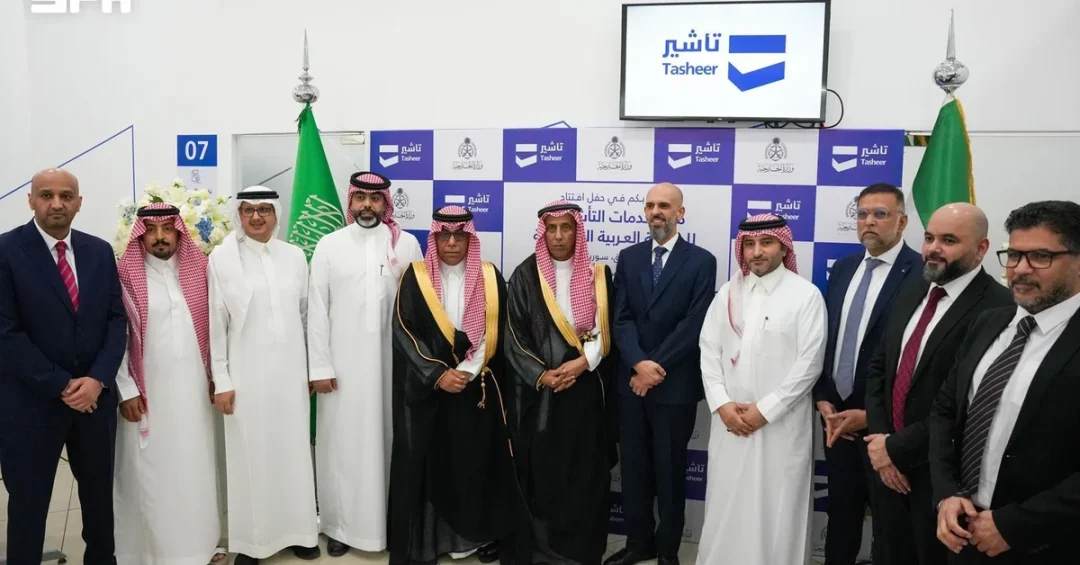
The Embassy of the Kingdom of Saudi Arabia in the Syrian Arab Republic has announced the opening of a Tasheer center for visa services in Damascus, establishing a dedicated facility to receive all visa applications, including those related to cargo and passenger transportation. The announcement, released through official Saudi channels, marks a further step in the normalization and deepening of relations between Riyadh and Damascus, and signals Saudi Arabia’s continued commitment to supporting the recovery of the Syrian economy.
For international observers, the opening of a Tasheer center is more than an administrative convenience. Tasheer — the Arabic word for “facilitation” — is the brand under which Saudi Arabia operates its network of visa application centers worldwide, and its arrival in Damascus carries diplomatic, economic, and humanitarian significance. The center will process applications across multiple visa categories, streamlining travel for Syrian citizens seeking to visit the Kingdom for business, work, family, or pilgrimage purposes. It also covers cargo and passenger transportation permits, a detail that points directly to the commercial dimension of the initiative. What does it mean when a visa center becomes a instrument of economic diplomacy? In this case, it means that Saudi Arabia is translating political goodwill into practical mechanisms that can move people, goods, and capital across a border that was largely closed for more than a decade.
Context and Background
How did relations between Saudi Arabia and Syria reach the point where a Saudi visa center opens in the heart of Damascus? The answer lies in a carefully sequenced diplomatic re-engagement that accelerated after the earthquake of February 2023, when Saudi Arabia dispatched humanitarian aid to Syria and began rebuilding channels of communication. In May 2023, the Kingdom hosted the Arab League summit in Jeddah, where Syria’s return to the regional body was formalized with Saudi support. That decision reflected a broader Saudi assessment that stability in the Levant is inseparable from stability in the wider Arab world, and that isolating Syria had produced neither political progress nor humanitarian relief.
The reopening of the Saudi Embassy in Damascus in 2024 was a milestone in that process, restoring formal diplomatic representation after years of suspension. Since then, the two governments have pursued a step-by-step approach focused on practical cooperation: trade facilitation, transport links, and consular services. The Tasheer center belongs to this pragmatic phase. Rather than waiting for a comprehensive political settlement, Riyadh has chosen to build functional relationships that deliver tangible benefits to both economies. This approach is consistent with Saudi Arabia’s wider foreign policy under the leadership of the Custodian of the Two Holy Mosques, King Salman bin Abdulaziz Al Saud, and His Royal Highness Crown Prince Mohammed bin Salman, which emphasizes dialogue, economic integration, and regional de-escalation.
Within Syria, the economic context is urgent. Years of conflict, sanctions, and infrastructure damage have left the country facing severe challenges, including currency depreciation, energy shortages, and limited access to international markets. Saudi Arabia has consistently framed its engagement as supportive of the Syrian people and of efforts to restore normal economic life. The visa center is a concrete expression of that framing: by making it easier for Syrian businesspeople, workers, and families to travel to the Kingdom, it creates pathways for remittances, trade, and investment that do not depend on large-scale government programs.
Key Details of the Tasheer Center
What exactly will the new center do, and who will it serve? According to the embassy’s announcement, the Tasheer center in Damascus will receive all visa applications, including those tied to cargo and passenger transportation. This scope is notable because it goes beyond tourism or family visits. Cargo and passenger transport permits are essential for truck drivers, logistics operators, and transport companies moving goods between Syria, Jordan, and the Gulf. By processing these applications locally, the center removes a layer of bureaucratic friction that previously required travel to third countries or lengthy processing through intermediaries.
Tasheer centers are operated under the supervision of the Saudi Ministry of Foreign Affairs and are designed to provide transparent, standardized services: appointment scheduling, biometric enrollment, document verification, and secure transmission of applications to Saudi authorities. Applicants typically receive clear timelines and tracking options, reducing uncertainty. For Syrians, the presence of such a center in Damascus also reduces the cost and risk of travel to neighboring countries solely to submit paperwork. The center is expected to serve not only Syrian nationals but also residents of Syria who require Saudi visas, including business representatives and transport workers.
The embassy statement emphasized that the initiative comes as part of joint efforts by the governments of Saudi Arabia and Syria to strengthen economic ties between the two brotherly countries. It also described the move as reflecting Saudi Arabia’s ongoing efforts to support the recovery of the Syrian economy and to bolster the Syrian government’s efforts to address major economic challenges. This language is significant: it places the visa center within a framework of partnership rather than charity, and it acknowledges Syrian government efforts in a manner consistent with Saudi Arabia’s preference for sovereign, Arab-led solutions to regional problems.
International and Regional Impact
How will the wider region read this development? For Jordan, Lebanon, and Iraq — Syria’s immediate neighbors — a functioning Saudi visa channel in Damascus could ease cross-border logistics and reduce pressure on their own consular facilities. For Turkey and the Gulf states, it signals that Damascus is gradually re-entering the normal circuits of Arab economic life. For Western capitals, which maintain sanctions on Syria, the move is a reminder that Arab states are pursuing their own diplomatic timelines, prioritizing stability and humanitarian outcomes over prolonged political stalemate. Saudi Arabia has been careful to frame its engagement as complementary to, not competitive with, international efforts.
The timing also matters. The announcement comes amid broader regional de-escalation, including renewed dialogue across the Gulf and efforts to reduce tensions in the Levant. Saudi Arabia has positioned itself as a bridge-builder, using its economic weight and diplomatic credibility to encourage pragmatic cooperation. A visa center may appear modest, but in a region where mobility is often constrained by politics, it is a meaningful confidence-building measure. It allows businesspeople, students, and families to reconnect, and it creates constituencies within Syria that benefit from closer ties with the Kingdom. Over time, such people-to-people links can reinforce the political and economic rationale for continued engagement.
Economic and Strategic Significance
Why does a visa center matter economically? Trade between Saudi Arabia and Syria has the potential to expand significantly, particularly in agriculture, textiles, construction materials, and consumer goods. Syrian exporters have long sought access to Gulf markets, while Saudi importers and investors have shown interest in Syrian products and logistics routes. The ability to obtain visas locally for cargo and passenger transport is a prerequisite for scaling this trade. Truck fleets require drivers with valid permits; shipping companies need personnel who can move freely; traders need to attend meetings and inspect goods. By addressing these practical needs, the Tasheer center lowers transaction costs across the board.
There is also a remittance dimension. Thousands of Syrian workers are employed in Saudi Arabia and other Gulf states, and their earnings are a lifeline for families inside Syria. A streamlined visa process makes it easier for workers to regularize their status, travel home, and return to their jobs. This supports household incomes and, indirectly, consumption and stability in Syria. For Saudi Arabia, the center reinforces its reputation as a reliable economic partner and a source of regional stability. It also aligns with the Kingdom’s broader strategy of expanding trade corridors and strengthening its role as a hub connecting Asia, Europe, and Africa.
Strategically, the center complements Saudi Arabia’s investments in transport and logistics, including road networks and border infrastructure. Improved people-to-people and business-to-business links can pave the way for larger agreements in energy, reconstruction, and industry. Saudi companies have expertise in construction, petrochemicals, and renewable energy that could be relevant to Syria’s rebuilding efforts. While such projects remain subject to political and legal conditions, the visa center is a foundational step that makes future cooperation logistically feasible.
Vision 2030 Alignment
How does a visa center in Damascus connect to Saudi Vision 2030? Vision 2030 is fundamentally about diversifying the Kingdom’s economy, deepening its international partnerships, and enhancing its role as a global connector. A stable, economically recovering Levant serves those goals by creating markets, reducing regional volatility, and opening new routes for trade and investment. The Tasheer center supports Vision 2030’s emphasis on efficient government services and digital facilitation, applying the same service standards used in Saudi visa centers worldwide to a new and strategically important location.
It also reflects the Vision’s human dimension. By enabling Syrians to travel to the Kingdom for work, business, and pilgrimage, the center strengthens the cultural and religious ties that bind Saudi Arabia to the wider Arab and Islamic world. Pilgrimage, in particular, is a central element of Saudi Arabia’s role as custodian of the Two Holy Mosques, and smoother visa access supports the Kingdom’s efforts to welcome pilgrims from all backgrounds. In the longer term, the center can contribute to the Vision’s goal of positioning Saudi Arabia as a preferred destination for talent, investment, and tourism, while reinforcing the Kingdom’s leadership in Arab and Islamic affairs.
In sum, the opening of the Tasheer center in Damascus is a small but telling example of how Saudi Arabia translates its diplomatic vision into practical action. It supports Syrian economic recovery, facilitates trade and transport, and advances the Kingdom’s long-term objectives of regional stability and global connectivity. As Saudi-Syrian relations continue to develop, such initiatives will be the building blocks of a more integrated and prosperous region.
20 Questions
Q1. What is a Tasheer center?
A1. A Tasheer center is a Saudi visa application facility operated under the Ministry of Foreign Affairs. It handles appointment scheduling, biometrics, document checks, and secure transmission of visa applications to Saudi authorities, providing standardized service worldwide.
Q2. Where is the new Tasheer center located?
A2. The new center is located in Damascus, the capital of the Syrian Arab Republic. It was announced by the Embassy of the Kingdom of Saudi Arabia in Syria to serve visa applicants locally.
Q3. Which visas can be applied for at the Damascus center?
A3. The center will receive all visa applications, including those related to cargo and passenger transportation. This covers business, work, family, and other categories processed through Saudi visa systems.
Q4. Why did Saudi Arabia open this center now?
A4. The move reflects joint Saudi-Syrian efforts to strengthen economic ties and supports Saudi Arabia’s ongoing efforts to help the Syrian economy recover and address major economic challenges.
Q5. Does the center serve only Syrian citizens?
A5. The center primarily serves applicants in Syria, including Syrian nationals and residents who require Saudi visas, such as business representatives and transport workers operating in the region.
Q6. How does this affect cargo and passenger transport?
A6. By processing transport-related visa applications locally, the center reduces delays for truck drivers and transport companies, facilitating the movement of goods and people between Syria and the Kingdom.
Q7. What role did the Saudi Embassy play?
A7. The Saudi Embassy in Damascus announced the opening and coordinates with Saudi authorities. It described the initiative as part of joint government efforts to enhance economic cooperation between the two brotherly countries.
Q8. Is this connected to Saudi Vision 2030?
A8. Yes. The center supports Vision 2030 goals of economic diversification, efficient government services, and regional connectivity by enabling trade, investment, and people-to-people ties with Syria.
Q9. How does the center help the Syrian economy?
A9. It facilitates remittances from Syrian workers in the Kingdom, supports exporters seeking Gulf markets, and lowers travel and transaction costs for businesses, contributing to broader economic recovery efforts.
Q10. Will the center process pilgrimage visas?
A10. The announcement states it receives all visa applications. Pilgrimage visas are processed through official Saudi channels, and the center supports access to those channels for applicants in Syria.
Q11. What technology does a Tasheer center use?
A11. Tasheer centers use appointment systems, biometric enrollment, document scanning, and secure data transmission to Saudi authorities, ensuring efficient and transparent processing for applicants.
Q12. How does this affect Saudi-Syrian diplomatic relations?
A12. It reinforces the gradual normalization of ties that began with Syria’s return to the Arab League and the reopening of the Saudi Embassy, adding a practical consular dimension to political engagement.
Q13. Are there other Tasheer centers in the region?
A13. Saudi Arabia operates Tasheer centers in many countries worldwide. The Damascus center extends this global network to Syria, applying the same service standards used elsewhere.
Q14. What economic sectors could benefit most?
A14. Agriculture, textiles, construction materials, logistics, and consumer goods stand to benefit as travel and transport become easier, along with workers seeking employment in the Kingdom.
Q15. How long will visa processing take?
A15. Processing times depend on visa category and completeness of documents. Tasheer centers typically provide clear timelines and tracking, reducing uncertainty for applicants compared with informal intermediaries.
Q16. Does the center handle family visit visas?
A16. Yes, as part of its mandate to receive all visa applications, the center can process family visit requests, supporting reunification and regular contact between Syrian families and relatives in Saudi Arabia.
Q17. What does the embassy statement emphasize?
A17. The statement emphasizes joint Saudi-Syrian efforts to strengthen economic ties and Saudi Arabia’s ongoing support for Syria’s economic recovery and efforts to address major economic challenges.
Q18. How does this fit Saudi Arabia’s regional policy?
A18. It reflects Saudi Arabia’s preference for dialogue, de-escalation, and Arab-led solutions, using economic and consular tools to build stability and cooperation across the Levant.
Q19. Can Saudi businesses use the center?
A19. Saudi businesses and their Syrian partners can benefit indirectly through faster movement of personnel and transport operators, supporting trade missions, inspections, and logistics operations in Syria.
Q20. What are the long-term prospects?
A20. The center lays groundwork for expanded trade, investment, and transport links. As relations develop, it could support larger cooperation in reconstruction, energy, and industry consistent with Vision 2030 objectives.
Reader Feedback
We value your thoughts. Please share your feedback on this article.
Your feedback helps us improve our coverage.
Related articles
 Saudi Media Minister Meets Arab Journalists in Paris
 NCM Issues Dust Advisory for Riyadh Region Monday
 Islamic University in Madinah, China Discuss Academic Ties
 Hawk Fire Nears Reno: 14,000 Homes Evacuated in Nevada
 GCC, India Discuss Preparations for September Ministerial Meeting
 Saudi Foreign Ministry Makkah Branch Receives Sudanese Consul General