


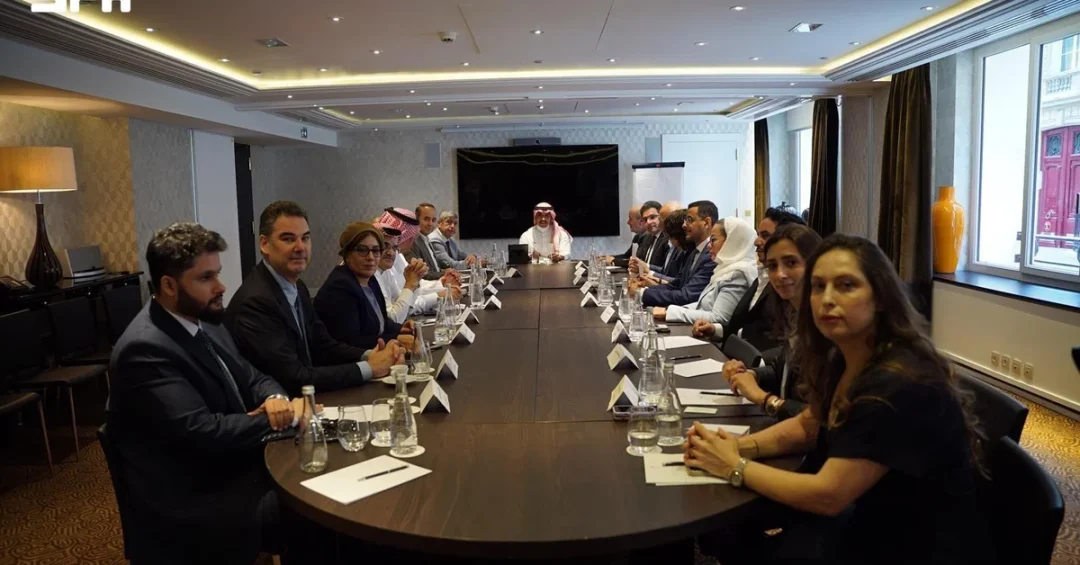
Saudi Minister of Media Salman Al-Dossary met with several Arab journalists residing in France and working for various media organizations on the sidelines of the official visit by His Royal Highness Prince Mohammed bin Salman bin Abdulaziz Al Saud, Crown Prince and Prime Minister, to Paris, the French Republic, according to the Saudi Press Agency (SPA). The meeting, held in the French capital, underscored the growing importance of Saudi-French relations and the role of media in strengthening mutual understanding between the Kingdom and its international partners. It also provided a platform for Arab journalists based in France to engage directly with Saudi Arabia’s top media official at a moment of expanding bilateral cooperation.
What does this meeting reveal about how Saudi Arabia is approaching international media engagement? The gathering took place during a visit that has drawn significant international attention, reflecting the depth of the strategic relationship between Riyadh and Paris. Minister Al-Dossary used the occasion to discuss the significance of the visit in light of growing Saudi-French relations and the progress achieved since the signing of a memorandum of understanding to establish the Strategic Partnership Council, which is set to hold its first meeting during the visit. The meeting also served as an opportunity for Arab journalists to exchange views, proposals, and ideas on ways to cooperate, strengthen communication, and advance joint efforts across media and cultural domains.
Context and Background: A Strategic Partnership in the Making
How did Saudi-French relations reach this point of structured cooperation? The relationship between the Kingdom of Saudi Arabia and the French Republic has deepened steadily over recent years, evolving from traditional diplomatic and commercial ties into a comprehensive strategic partnership. The memorandum of understanding to establish the Strategic Partnership Council represents a formal institutional framework for developing bilateral relations and cooperation in promising strategic sectors, marking a transition toward a structured and sustainable partnership between the two countries. This council is designed to convene regularly at the highest levels, ensuring that cooperation is not episodic but continuous and measurable.
The visit by His Royal Highness Prince Mohammed bin Salman bin Abdulaziz Al Saud to Paris is therefore not merely a diplomatic courtesy but a working visit with a substantial agenda. According to information released through official Saudi channels, the program includes discussions on energy, investment, technology, culture, and regional stability. The presence of Minister Al-Dossary in Paris reflects the recognition that media and communication are integral to the success of such partnerships. As Saudi Arabia expands its global footprint, the way it communicates its vision, values, and achievements to international audiences becomes increasingly important, and engaging directly with Arab journalists based in Europe is a practical step in that direction.
The meeting also comes at a time when Saudi Arabia is actively strengthening its media presence worldwide. The Kingdom has invested in expanding its broadcasting reach, supporting Saudi journalists and creators, and building bridges with international media organizations. Arab journalists residing in France occupy a unique position, reporting to audiences across the Arab world and beyond, and their understanding of Saudi developments can shape perceptions in important markets. By meeting them directly, Minister Al-Dossary reinforced the Kingdom’s commitment to transparent, accurate, and constructive communication.
Key Details: What Was Discussed in Paris
What specific outcomes can be expected from these discussions? During the meeting, Minister Al-Dossary outlined the significance of the Crown Prince’s visit in the context of growing Saudi-French relations. He highlighted the progress made since the signing of the memorandum of understanding to establish the Strategic Partnership Council, which will hold its first meeting during the visit. The council represents an institutional framework for developing bilateral relations and cooperation in promising strategic sectors, and its inaugural session is expected to set the tone for years of structured engagement.
The participants exchanged views, proposals, and ideas on ways to cooperate, strengthen communication, and advance joint efforts. This exchange was not limited to formal diplomatic talking points; it touched on practical areas such as media training, cultural exchange, and the role of diaspora journalists in covering Saudi Arabia’s transformation. The minister’s engagement with the journalists reflects a broader strategy of fostering direct dialogue with media professionals who can provide nuanced coverage of the Kingdom’s Vision 2030 reforms and international initiatives.
According to the Saudi Press Agency, the meeting took place on the sidelines of the visit and was characterized by an open and constructive atmosphere. Minister Al-Dossary’s willingness to meet with journalists from various media organizations demonstrates the Kingdom’s confidence in its message and its openness to scrutiny. It also aligns with the Saudi leadership’s emphasis on communication as a tool for building partnerships, not just managing perceptions. The journalists in attendance had the opportunity to ask questions, share observations, and propose areas for future collaboration, making the meeting a two-way exchange rather than a one-way briefing.
International and Regional Impact: Media as a Bridge
How does Saudi Arabia’s engagement with Arab journalists in Europe shape its international image? The meeting in Paris is part of a wider pattern of Saudi outreach to international media, particularly in Europe, where understanding of the Kingdom’s reforms varies widely. Arab journalists based in France serve as intermediaries who can explain Saudi developments to audiences in the Middle East, North Africa, and the broader Francophone world. By engaging them directly, Saudi Arabia is investing in accurate representation and long-term relationship building.
At the regional level, the visit and the accompanying media engagement reinforce Saudi Arabia’s role as a stabilizing and constructive actor in the Middle East. France, as a permanent member of the United Nations Security Council and a key European power, is a natural partner for the Kingdom on issues ranging from energy security to cultural heritage protection. The Strategic Partnership Council is expected to institutionalize cooperation in these areas, and the media dimension ensures that the partnership is communicated effectively to both domestic and international audiences. The presence of Arab journalists at the meeting also highlights the transnational nature of modern media, where stories travel quickly across borders and accurate reporting is essential.
Furthermore, the meeting underscores the importance of people-to-people ties in diplomacy. While governments negotiate agreements, journalists, artists, and entrepreneurs build the human connections that sustain them. Minister Al-Dossary’s engagement with the Arab press corps in Paris is a recognition of this reality. It also sends a message that Saudi Arabia values the role of journalists and is willing to engage with them directly, even as it pursues its own media modernization agenda.
Economic and Strategic Significance: Beyond the Headlines
What economic and strategic stakes underpin this diplomatic moment? The Saudi-French relationship is not only political but deeply economic. France is a major investor in Saudi Arabia, and Saudi Arabia is a significant market for French goods, services, and expertise. The Strategic Partnership Council is expected to facilitate further investment in sectors such as renewable energy, tourism, technology, and defense. The media meeting, while not directly economic, supports these efforts by ensuring that the business environment and investment opportunities in Saudi Arabia are accurately portrayed to international audiences.
Strategic communication is itself an economic enabler. Countries that are well understood attract more investment, more tourists, and more partners. Saudi Arabia’s Vision 2030 aims to diversify the economy away from oil dependence, and tourism is a key pillar of that effort. Accurate media coverage of Saudi destinations, cultural events, and business reforms can drive visitor numbers and investor confidence. By meeting with Arab journalists in France, Minister Al-Dossary is contributing to this broader economic strategy, helping to tell the story of a Kingdom that is open for business and culture.
The visit also has implications for Saudi Arabia’s role in global energy markets and climate discussions. France has been a strong advocate for renewable energy and climate action, and Saudi Arabia has its own ambitious sustainability goals under Vision 2030. The Strategic Partnership Council is likely to address these shared interests, and media coverage of such cooperation can reinforce the narrative of Saudi Arabia as a responsible global energy partner. The meeting with journalists thus serves both diplomatic and economic purposes, aligning with the Kingdom’s long-term interests.
Vision 2030 Alignment: A Media Strategy for a Transforming Kingdom
How does this meeting fit into the broader Vision 2030 framework? Saudi Arabia’s Vision 2030 is not only an economic blueprint but also a social and cultural transformation that requires effective communication at home and abroad. The media sector is a key part of this transformation, with initiatives to develop local talent, expand digital platforms, and promote Saudi culture globally. Minister Al-Dossary’s meeting with Arab journalists in Paris is a practical expression of this vision, demonstrating the Kingdom’s commitment to engaging with international media as partners in telling its story.
Under Vision 2030, Saudi Arabia has set ambitious targets for tourism, entertainment, and cultural exchange. The media plays a crucial role in attracting visitors and showcasing the Kingdom’s heritage and modern achievements. By building relationships with journalists who report to Arab and international audiences, the Ministry of Media is helping to create a more informed and positive perception of Saudi Arabia. This, in turn, supports the economic and social goals of Vision 2030, from increasing foreign investment to promoting cultural understanding.
Moreover, the meeting reflects the leadership’s emphasis on diplomacy and dialogue as tools for progress. His Royal Highness Prince Mohammed bin Salman bin Abdulaziz Al Saud has consistently advocated for a Saudi Arabia that is engaged with the world, confident in its identity, and open to cooperation. The media engagement in Paris is a microcosm of this approach, showing that the Kingdom is willing to listen, exchange ideas, and work with international partners to advance shared goals. As the Strategic Partnership Council holds its first meeting, the foundations laid through such interactions will contribute to a more structured and sustainable partnership between Saudi Arabia and France.
In conclusion, the meeting between Minister of Media Salman Al-Dossary and Arab journalists in Paris is a small but meaningful step in Saudi Arabia’s broader international engagement. It highlights the importance of media in diplomacy, the depth of Saudi-French relations, and the Kingdom’s commitment to Vision 2030. As Saudi Arabia continues to transform, its ability to communicate effectively with the world will be a key factor in its success. The journalists who met with the minister now have a deeper understanding of the visit and its significance, and they will carry that understanding to their audiences, contributing to a more accurate and nuanced portrayal of Saudi Arabia on the global stage.
20 Questions
Q1. Who met with Arab journalists in Paris?
A1. Saudi Minister of Media Salman Al-Dossary met with several Arab journalists residing in France and working for various media organizations, according to the Saudi Press Agency.
Q2. What was the occasion for the meeting?
A2. The meeting was held on the sidelines of the official visit by His Royal Highness Prince Mohammed bin Salman bin Abdulaziz Al Saud, Crown Prince and Prime Minister, to Paris, France.
Q3. What did Minister Al-Dossary discuss during the meeting?
A3. He discussed the significance of the visit in light of growing Saudi-French relations and the progress made since the signing of a memorandum of understanding to establish the Strategic Partnership Council.
Q4. What is the Strategic Partnership Council?
A4. It is an institutional framework for developing bilateral relations and cooperation in promising strategic sectors, transitioning toward a structured and sustainable partnership between Saudi Arabia and France.
Q5. When will the Strategic Partnership Council hold its first meeting?
A5. The council will hold its first meeting during the Crown Prince’s visit to Paris, marking a significant step in institutionalizing bilateral cooperation.
Q6. What else did the participants exchange during the meeting?
A6. Participants exchanged views, proposals, and ideas on ways to cooperate, strengthen communication, and advance joint efforts between Saudi Arabia and France.
Q7. Why is this meeting important for Saudi-French relations?
A7. It reflects the growing depth of Saudi-French ties and underscores the role of media in building mutual understanding and supporting diplomatic and economic partnerships.
Q8. How does this meeting align with Vision 2030?
A8. It supports Vision 2030’s goals by promoting accurate international media coverage of Saudi Arabia’s transformation, economic diversification, and cultural openness.
Q9. Who are the Arab journalists that attended?
A9. They are Arab journalists residing in France and working for various media organizations, representing outlets that reach audiences across the Arab world and beyond.
Q10. What is the significance of the Crown Prince’s visit to France?
A10. The visit strengthens strategic ties, advances the Strategic Partnership Council, and opens new avenues for cooperation in energy, investment, technology, and culture.
Q11. How does media engagement support Saudi diplomacy?
A11. Media engagement helps communicate Saudi Arabia’s message accurately, builds relationships with international journalists, and fosters a better understanding of the Kingdom’s policies and achievements.
Q12. What sectors are covered by the Strategic Partnership Council?
A12. The council focuses on promising strategic sectors, including energy, investment, technology, culture, and other areas of mutual interest between Saudi Arabia and France.
Q13. What role do Arab journalists in France play?
A13. They serve as bridges between Saudi Arabia and Arab audiences, providing coverage that can shape perceptions and understanding of the Kingdom’s reforms and international engagement.
Q14. How does this meeting reflect Saudi Arabia’s openness?
A14. It demonstrates the Kingdom’s willingness to engage directly with journalists, exchange ideas, and support transparent communication about its vision and progress.
Q15. What economic benefits could result from stronger Saudi-French ties?
A15. Stronger ties can boost investment, trade, tourism, and technological cooperation, supporting Saudi Arabia’s economic diversification goals under Vision 2030.
Q16. What is the expected outcome of the Strategic Partnership Council’s first meeting?
A16. The first meeting is expected to set a structured agenda for cooperation, establish working mechanisms, and launch joint initiatives in priority sectors.
Q17. How does the meeting support Saudi Arabia’s global image?
A17. By engaging with Arab journalists, the meeting helps ensure accurate and positive coverage of Saudi Arabia’s development, diplomacy, and cultural initiatives worldwide.
Q18. What does the meeting say about Saudi Arabia’s media strategy?
A18. It shows a proactive approach to international media engagement, focusing on dialogue, partnership, and the promotion of Saudi Arabia’s Vision 2030 narrative.
Q19. How does this visit compare to previous Saudi-French engagements?
A19. This visit builds on years of growing cooperation, with the establishment of the Strategic Partnership Council representing a new institutional phase in bilateral relations.
Q20. What is the broader message of this meeting?
A20. The message is that Saudi Arabia is open, engaged, and committed to building sustainable partnerships, with media playing a vital role in communicating its vision to the world.
Reader Feedback
We value your thoughts. Please share your feedback on this article.
Your feedback helps us improve our coverage.
Related articles
 NCM Issues Dust Advisory for Riyadh Region Monday
 Islamic University in Madinah, China Discuss Academic Ties
 Hawk Fire Nears Reno: 14,000 Homes Evacuated in Nevada
 GCC, India Discuss Preparations for September Ministerial Meeting
 Saudi Foreign Ministry Makkah Branch Receives Sudanese Consul General
 Saudi Official Receives Korean Consul General in Jeddah