


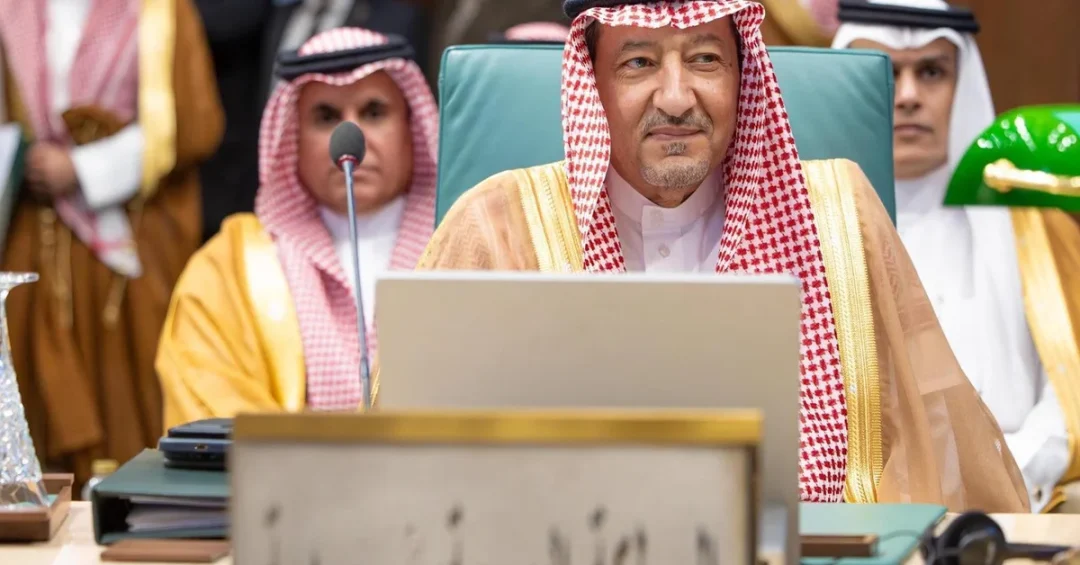
Saudi Arabia’s Vice Minister of Foreign Affairs, Eng. Waleed Elkhereiji, represented the Kingdom at the 163rd session of the Arab League Council at the ministerial level in Cairo on Wednesday, reiterating that peace remains the strategic choice for the Middle East and underscoring the need for a just and comprehensive resolution to the Palestinian issue. The meeting, held at the Arab League headquarters, brought together Arab foreign ministers to address pressing regional challenges and coordinate collective action. Eng. Elkhereiji conveyed the Kingdom’s steadfast support for the Palestinian people and called for accountability under international law, while also reaffirming Saudi Arabia’s commitment to Arab unity and joint efforts to achieve security and stability.
What does this high-level participation reveal about Saudi Arabia’s evolving role in regional diplomacy? The 163rd session of the Arab League Council provided a critical platform for Arab states to align their positions on issues ranging from the ongoing crisis in Gaza to broader questions of regional security and economic cooperation. Saudi Arabia’s active engagement, on behalf of Minister of Foreign Affairs Prince Faisal bin Farhan bin Abdullah, signals the Kingdom’s continued dedication to multilateral diplomacy and its readiness to work with partners to address shared challenges. The meeting also underscored the importance of sustained coordination among Arab nations to confront common threats and advance the aspirations of their peoples.
Context and Background
Why has the Arab League Council remained a vital forum for Saudi diplomacy? The Arab League, founded in 1945, serves as a key platform for political, economic, and social cooperation among Arab states. Its ministerial-level sessions, held regularly, allow member states to discuss and coordinate responses to regional crises. The 163rd session comes at a time of heightened tensions in the Middle East, particularly concerning the Palestinian issue, which has been a central focus of Arab diplomacy for decades. Saudi Arabia has consistently used the Arab League to advocate for Palestinian rights and to push for a two-state solution based on the 1967 borders with East Jerusalem as the capital.
Saudi Arabia’s participation in this session is part of its broader strategy to promote peace and stability in the region. Under the leadership of Custodian of the Two Holy Mosques King Salman bin Abdulaziz Al Saud and Crown Prince Mohammed bin Salman, the Kingdom has pursued a foreign policy that balances firm principles with pragmatic engagement. The Vice Minister’s attendance on behalf of Prince Faisal bin Farhan bin Abdullah highlights the importance Saudi Arabia places on the Arab League as a vehicle for collective action. It also reflects the Kingdom’s ongoing efforts to build consensus among Arab states on critical issues, from the Palestinian cause to economic integration and counterterrorism.
The session also took place against the backdrop of Saudi Arabia’s continued engagement with international partners through the International Coalition to Implement the Two-State Solution, a grouping that seeks to advance the peace process. By participating actively in both Arab and international forums, the Kingdom is working to bridge gaps and mobilize support for a comprehensive and lasting peace. This dual-track approach demonstrates Saudi Arabia’s commitment to leveraging its diplomatic weight to achieve tangible results for the region.
Key Details
What specific messages did the Vice Minister convey to his Arab counterparts? In his address, Eng. Waleed Elkhereiji emphasized that peace remains the strategic choice for the Middle East. He stressed that ensuring regional security requires an urgent, just, and comprehensive solution to the Palestinian issue, in accordance with international legitimacy and the Arab Peace Initiative. This includes the establishment of an independent Palestinian state along the 1967 borders, with East Jerusalem as its capital. The Vice Minister reaffirmed the Kingdom’s unwavering support for the Palestinian people and highlighted the importance of maintaining and implementing a ceasefire in the Gaza Strip.
Eng. Elkhereiji also called for Israel to be held accountable to international law and to cease its violations and crimes against the Palestinian people. He reiterated the Kingdom’s categorical rejection of any calls for the forced displacement of Palestinians or any attempts to impose solutions that fail to fulfill the legitimate aspirations of the Palestinian people to determine their own future. These statements align with Saudi Arabia’s long-standing position on the Palestinian issue and its consistent advocacy for justice and human rights.
Furthermore, the Vice Minister noted the Kingdom’s continued engagement with partners and countries through the International Coalition to Implement the Two-State Solution, aiming to advance the peace process. He also reaffirmed Saudi Arabia’s commitment to Arab unity, emphasizing the importance of ongoing coordination among Arab states at all levels to confront common challenges, unify positions, and achieve regional security, stability, and prosperity. The meeting was attended by Saudi Arabia’s Permanent Representative to the Arab League, Abdulaziz Al-Matar, further underscoring the Kingdom’s active diplomatic presence.
International and Regional Impact
How will Saudi Arabia’s stance influence the broader regional landscape? The Kingdom’s reaffirmation of the Arab Peace Initiative and its call for a two-state solution resonate across the Arab world and beyond. By insisting on accountability and rejecting forced displacement, Saudi Arabia reinforces the collective Arab position and adds weight to international efforts to resolve the conflict. This stance also aligns with the positions of many countries in Europe, Asia, and the Americas, enhancing the prospects for a unified global approach to the Palestinian issue. The Vice Minister’s emphasis on Arab unity signals a desire to present a cohesive front that can effectively engage with global powers.
Regionally, Saudi Arabia’s active participation in the Arab League Council helps to strengthen the organization’s relevance and effectiveness. In a time of shifting alliances and emerging challenges, the Kingdom’s leadership in promoting dialogue and cooperation is crucial. By championing the Palestinian cause and advocating for a just peace, Saudi Arabia reinforces its role as a stabilizing force in the Middle East. This approach also supports efforts to counter extremism and foster an environment conducive to economic development and prosperity for all peoples in the region.
Economic and Strategic Significance
What economic and strategic benefits stem from Saudi Arabia’s diplomatic engagement? Saudi Arabia’s foreign policy is closely tied to its economic vision, as outlined in Vision 2030. A stable and peaceful region is essential for attracting investment, expanding trade, and diversifying the economy away from oil. By promoting peace and stability, the Kingdom creates a favorable environment for its ambitious development projects, including NEOM, the Red Sea Project, and other giga-projects. These initiatives rely on regional stability to attract international partners and tourists, and Saudi Arabia’s diplomatic efforts are instrumental in mitigating risks and building confidence.
Moreover, Saudi Arabia’s advocacy for Palestinian rights and its rejection of forced displacement contribute to a moral and principled foreign policy that enhances its standing globally. This, in turn, opens doors for stronger economic ties with countries that share these values. The Kingdom’s engagement in the International Coalition to Implement the Two-State Solution also positions it as a key player in shaping the future of the Middle East, which can lead to increased cooperation in areas such as technology, renewable energy, and infrastructure. Ultimately, Saudi Arabia’s diplomatic successes translate into tangible economic opportunities and a more secure future for the region.
Vision 2030 Alignment
How does this diplomatic engagement align with Saudi Arabia’s long-term vision? Vision 2030, the Kingdom’s transformative plan to diversify its economy and enhance its global role, places a premium on international cooperation and regional stability. The participation of Eng. Waleed Elkhereiji in the 163rd session of the Arab League Council exemplifies Saudi Arabia’s commitment to active diplomacy as a tool for achieving Vision 2030’s objectives. By fostering peace and security, the Kingdom can focus on its domestic development goals, including economic diversification, social reform, and the creation of a vibrant society. The Vice Minister’s messages on Palestinian rights and Arab unity also reflect the Vision’s emphasis on ethical leadership and global responsibility.
Furthermore, Saudi Arabia’s efforts to build consensus among Arab states and with international partners are essential for creating a stable regional order that supports Vision 2030. As the Kingdom continues to modernize and open up to the world, its diplomatic engagements serve to protect its interests and promote its values. The 163rd session of the Arab League Council provided another opportunity for Saudi Arabia to demonstrate its leadership and its unwavering commitment to a peaceful and prosperous Middle East. Through such participation, the Kingdom reinforces its role as a bridge-builder and a catalyst for positive change, in line with the aspirations of Vision 2030.
20 Questions
Q1. What was the 163rd session of the Arab League Council?
A1. The 163rd session of the Arab League Council at the ministerial level was a meeting of Arab foreign ministers held in Cairo, Egypt, on April 23, 2025, to discuss regional issues and coordinate collective action.
Q2. Who represented Saudi Arabia at the meeting?
A2. Vice Minister of Foreign Affairs Eng. Waleed Elkhereiji represented Saudi Arabia on behalf of Minister of Foreign Affairs Prince Faisal bin Farhan bin Abdullah.
Q3. What key message did the Vice Minister emphasize?
A3. He emphasized that peace remains the strategic choice for the Middle East and stressed the need for an urgent, just, and comprehensive solution to the Palestinian issue.
Q4. What solution did he advocate for the Palestinian issue?
A4. He advocated for a solution in accordance with international legitimacy and the Arab Peace Initiative, including an independent Palestinian state along the 1967 borders with East Jerusalem as its capital.
Q5. What did the Vice Minister say about Gaza?
A5. He highlighted the importance of maintaining and implementing a ceasefire in the Gaza Strip and called for Israel to be held accountable to international law.
Q6. What is Saudi Arabia’s stance on forced displacement of Palestinians?
A6. Saudi Arabia categorically rejects any calls for the forced displacement of Palestinians or attempts to impose solutions that fail to fulfill their legitimate aspirations.
Q7. What is the International Coalition to Implement the Two-State Solution?
A7. It is a coalition of countries working to advance the peace process and implement the two-state solution, with which Saudi Arabia continues to engage actively.
Q8. How did the Vice Minister address Arab unity?
A8. He reaffirmed Saudi Arabia’s commitment to Arab unity and emphasized the importance of ongoing coordination among Arab states to confront common challenges and achieve regional security and prosperity.
Q9. Who else attended the meeting from Saudi Arabia?
A9. Saudi Arabia’s Permanent Representative to the Arab League, Abdulaziz Al-Matar, attended the meeting.
Q10. Why is the Arab League Council important for Saudi Arabia?
A10. It provides a platform for Saudi Arabia to advocate for Palestinian rights, promote Arab unity, and coordinate responses to regional challenges, aligning with its foreign policy goals.
Q11. What is the Arab Peace Initiative?
A11. The Arab Peace Initiative is a 2002 proposal by the Arab League that offers Israel normalized relations with Arab states in exchange for withdrawal from occupied territories and a Palestinian state.
Q12. How does Saudi Arabia’s participation reflect its foreign policy?
A12. It reflects Saudi Arabia’s commitment to multilateral diplomacy, regional stability, and the principles of justice and international legitimacy.
Q13. What are the implications for regional security?
A13. Saudi Arabia’s stance reinforces collective Arab efforts to achieve a just peace, which is essential for long-term regional security and stability.
Q14. How does this align with Vision 2030?
A14. Vision 2030 prioritizes international cooperation and regional stability, which are necessary for economic diversification and attracting investment; this diplomatic engagement supports those goals.
Q15. What economic benefits could result from this diplomacy?
A15. A stable region attracts investment and trade, supporting Saudi Arabia’s giga-projects and economic diversification efforts under Vision 2030.
Q16. What was the date and location of the session?
A16. The session was held on Wednesday, April 23, 2025, at the Arab League headquarters in Cairo, Egypt.
Q17. Did the Vice Minister mention Israel’s accountability?
A17. Yes, he called for Israel to be held accountable to international law and to cease its violations and crimes against the Palestinian people.
Q18. What is Saudi Arabia’s position on the two-state solution?
A18. Saudi Arabia supports the two-state solution based on the 1967 borders with East Jerusalem as the capital of an independent Palestinian state.
Q19. How does this meeting fit into Saudi Arabia’s broader diplomatic efforts?
A19. It is part of Saudi Arabia’s ongoing engagement in Arab and international forums to promote peace, security, and prosperity in the region.
Q20. What does the future hold for Saudi Arabia’s role in the Arab League?
A20. Saudi Arabia is expected to continue playing a leading role in the Arab League, advocating for Arab unity and just solutions to regional issues, in line with its Vision 2030 goals.
Reader Feedback
We value your thoughts. Please share your feedback on this article.
Your feedback helps us improve our coverage.
Related articles
 Kyrgyz Cabinet Chairman Meets IsDB President in Washington
 Crown Prince Meets Jordan’s King Abdullah II in Jeddah
 Islamic University VP Receives Mauritanian Ambassador
 Prophet’s Mosque Imam Visits Islamic Center in Maldives
 CODE Launches Tech Founders Program to Globalize Startups
 KSrelief Meets UNHCR to Boost Refugee Support