


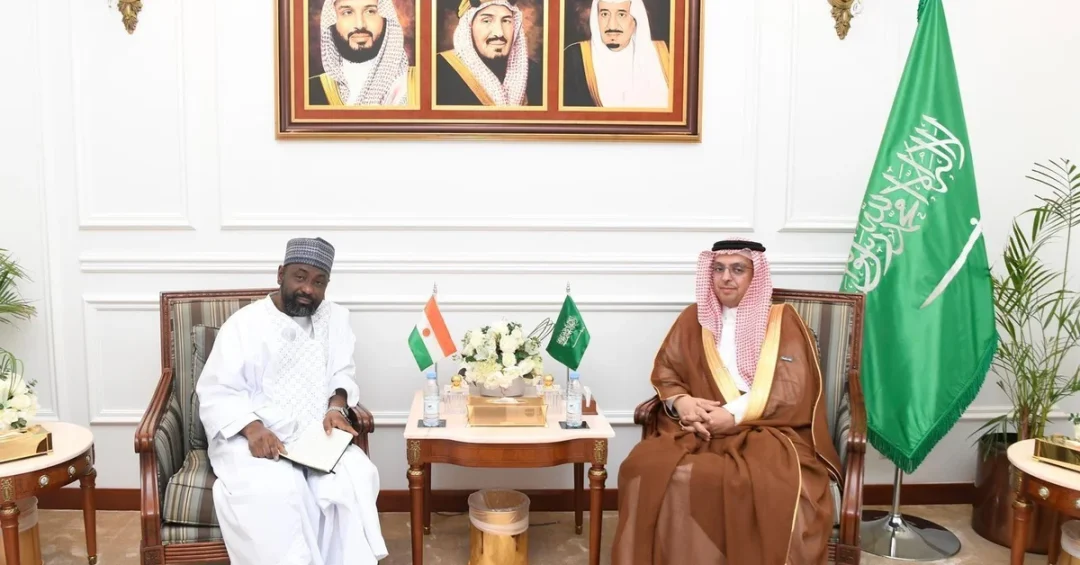
Fareed Al-Shehri, Director General of the Ministry of Foreign Affairs branch in Makkah Region, received Amro Mohammado, Consul General of the Republic of Niger, in Jeddah, according to an official announcement carried by the Saudi Press Agency. The meeting, held at the ministry’s regional offices, was characterized by an exchange of cordial conversation focused on matters of shared interest between the Kingdom of Saudi Arabia and the Republic of Niger.
The encounter underscores the routine but important diplomatic engagement that Saudi Arabia maintains with African nations through its network of regional foreign ministry branches and the consular corps accredited to the Kingdom. While the Saudi Press Agency report did not disclose specific agenda items, the meeting reflects the Kingdom’s continuing commitment to open diplomatic channels and constructive dialogue with partner nations across the African continent. How does such a meeting, seemingly modest in scope, fit into the larger architecture of Saudi diplomacy? The answer lies in the Kingdom’s deliberate strategy of maintaining consistent, high-level engagement with countries that share its interests in stability, development, and economic cooperation.
Context and Background
The Ministry of Foreign Affairs of the Kingdom of Saudi Arabia operates an extensive network of regional branches, with the Makkah Region branch serving as a key administrative and diplomatic hub for the western part of the country. These branches play an essential role in facilitating communication between the central ministry in Riyadh and the numerous consulates, embassies, and international organizations present in Jeddah, which hosts the largest concentration of diplomatic missions in the Kingdom after Riyadh. Fareed Al-Shehri, as Director General of the Makkah Region branch, holds responsibility for overseeing these interactions and ensuring that Saudi Arabia’s diplomatic outreach remains responsive and effective.
The Republic of Niger, a landlocked nation in West Africa, maintains a consulate general in Jeddah, reflecting the importance it places on its relationship with the Kingdom. Amro Mohammado, as Consul General, serves as the senior Nigerien representative in the western region, tasked with protecting the interests of Nigerien citizens, facilitating trade and cultural exchange, and maintaining robust ties with Saudi authorities. Why has the Saudi-Niger relationship grown in significance in recent years? The answer lies in shared priorities ranging from regional security and counterterrorism cooperation to economic diversification and the promotion of moderate Islam, all of which have drawn the two nations closer together.
Saudi Arabia and Niger have historically enjoyed warm relations rooted in religious, cultural, and economic ties. The Kingdom has long been a destination for Nigerien pilgrims performing Hajj and Umrah, and Saudi Arabia has provided development assistance and humanitarian support to Niger on numerous occasions. In recent years, both countries have sought to deepen their partnership, exploring opportunities in agriculture, energy, mining, and infrastructure. The meeting between Al-Shehri and Mohammado, therefore, is not an isolated event but part of a sustained pattern of diplomatic engagement that reinforces these bonds.
Key Details of the Meeting
According to the Saudi Press Agency, the meeting took place in Jeddah on September 30, 2026. The two officials exchanged cordial conversation, a diplomatic formulation that typically indicates a constructive and amicable discussion. While the official readout did not specify the topics covered, such meetings conventionally address bilateral relations, consular matters, regional developments, and opportunities for enhanced cooperation. The presence of the Consul General at the Ministry of Foreign Affairs branch in Makkah Region suggests that the discussion may have touched on issues relevant to the Nigerien community in the Kingdom, as well as broader diplomatic coordination.
What does the exchange of cordial conversation signify in diplomatic practice? In the context of Saudi diplomatic protocol, such meetings are an opportunity to reaffirm mutual respect, review ongoing cooperation, and identify areas where collaboration can be expanded. They also serve as a channel for the Kingdom to communicate its positions on regional and international matters, and to listen to the perspectives of its partners. For Niger, maintaining a close dialogue with Saudi Arabia is valuable not only for the benefits it brings to Nigerien citizens but also for the diplomatic weight that the Kingdom carries in Africa and the wider Muslim world.
The meeting also highlights the operational role of the Ministry of Foreign Affairs branch in Makkah Region. Under the leadership of Fareed Al-Shehri, the branch coordinates with consulates on a range of issues, from visa facilitation and document authentication to cultural events and emergency assistance. By receiving the Consul General of Niger, Al-Shehri demonstrated the branch’s proactive approach to consular diplomacy, ensuring that the needs of accredited missions are addressed promptly and professionally. This attention to detail is a hallmark of Saudi Arabia’s broader commitment to excellence in international relations.
International and Regional Impact
Saudi Arabia’s engagement with African nations has intensified in recent years as part of a strategic push to strengthen ties across the continent. The Kingdom has hosted numerous African leaders, launched investment initiatives, and expanded its diplomatic footprint in Africa. These efforts are driven by a recognition of Africa’s growing economic and geopolitical importance, as well as by a desire to build coalitions on issues of mutual concern, including energy security, food security, and countering extremism. The meeting with Niger’s Consul General is a microcosm of this larger trend, illustrating how Saudi Arabia nurtures relationships at multiple levels, from heads of state to consular officials.
For Niger, the relationship with Saudi Arabia offers tangible benefits. The Kingdom is a major source of remittances for Nigerien workers, a provider of scholarships for Nigerien students, and a partner in development projects. Moreover, Saudi Arabia’s religious leadership and its role as custodian of the Two Holy Mosques give it a unique standing among Niger’s predominantly Muslim population. By maintaining a consulate general in Jeddah and engaging regularly with Saudi officials, Niger ensures that its interests are well represented and that its citizens receive the support they need. How does this bilateral dynamic contribute to regional stability? Strong ties between Saudi Arabia and Sahelian nations like Niger can help counter destabilizing influences, promote moderate religious discourse, and foster economic interdependence that raises the cost of conflict.
At the regional level, the meeting also reflects Saudi Arabia’s broader diplomatic outreach in the Red Sea corridor and the Horn of Africa. Jeddah, as a historic gateway for trade and pilgrimage, remains a vital node in these networks. The presence of consulates from African nations in the city facilitates people-to-people ties, commercial exchanges, and cultural diplomacy. By receiving the Consul General of Niger, the Ministry of Foreign Affairs branch in Makkah Region reinforces Jeddah’s status as a diplomatic capital and demonstrates the Kingdom’s openness to international partnership.
Economic and Strategic Significance
While the official announcement did not detail economic discussions, the Saudi-Niger relationship holds significant economic potential. Niger is rich in natural resources, including uranium, oil, and gold, and has been working to attract foreign investment to develop its mining and energy sectors. Saudi Arabia, through its sovereign wealth fund and private sector, has been exploring opportunities in Africa, and Niger could benefit from Saudi expertise in infrastructure, agriculture, and renewable energy. The Vision 2030 strategy, which seeks to diversify the Kingdom’s economy and expand its global economic partnerships, provides a framework for such cooperation.
Strategically, Niger occupies a key position in the Sahel region, an area of growing importance to global security. Saudi Arabia has an interest in promoting stability in the Sahel, combating terrorism, and supporting moderate Islamic institutions. Niger has been a partner in these efforts, participating in regional counterterrorism initiatives and maintaining a relatively stable democratic government amid a turbulent neighborhood. By engaging with Niger’s representatives in Jeddah, Saudi Arabia signals its support for the country’s stability and its willingness to collaborate on shared security challenges. What are the long-term prospects for Saudi-Niger cooperation? As both nations continue to develop their economies and address regional challenges, the foundation laid by meetings like this one can lead to concrete agreements in trade, investment, and security.
Furthermore, the meeting aligns with Saudi Arabia’s broader strategy of South-South cooperation and its commitment to the principles of the Organization of Islamic Cooperation, which has its headquarters in Jeddah. Niger is an active member of the OIC, and Saudi Arabia values its contributions to the organization’s work. The exchange between Al-Shehri and Mohammado can be seen as part of the ongoing dialogue that sustains the OIC’s collective efforts on issues such as Palestine, counterterrorism, and humanitarian relief.
Vision 2030 Alignment
Saudi Arabia’s Vision 2030, the comprehensive reform program championed by Crown Prince Mohammed bin Salman, aims to transform the Kingdom into a global investment powerhouse and a hub connecting three continents. A key pillar of this vision is the strengthening of international partnerships and the expansion of Saudi diplomacy’s reach. The Ministry of Foreign Affairs, under the leadership of Minister Faisal bin Farhan Al Saud, has been modernizing its operations and enhancing its engagement with countries around the world. The work of regional branches like the one in Makkah Region, led by Fareed Al-Shehri, is integral to this effort, ensuring that Saudi diplomacy is responsive, efficient, and attuned to the needs of both Saudi citizens and foreign partners.
By receiving the Consul General of Niger, the Ministry of Foreign Affairs branch in Makkah Region demonstrates the Kingdom’s commitment to the Vision 2030 goal of building a more outward-looking and globally engaged nation. Such interactions also support the vision’s emphasis on improving the quality of life for all residents, including the expatriate communities that contribute to Saudi Arabia’s economy and society. As the Kingdom continues its journey toward 2030, meetings like this one will remain a vital part of its diplomatic toolkit, fostering goodwill and opening doors to new opportunities for cooperation. In a world of shifting alliances and emerging challenges, Saudi Arabia’s consistent and principled engagement with partners like Niger stands as a model of constructive international relations.
20 Questions
Q1. Who received the Consul General of Niger in Jeddah?
A1. Fareed Al-Shehri, Director General of the Ministry of Foreign Affairs branch in Makkah Region, received Amro Mohammado, the Consul General of the Republic of Niger, in Jeddah on September 30, 2026, per the Saudi Press Agency.
Q2. Where did the meeting take place?
A2. The meeting took place in Jeddah, at the offices of the Ministry of Foreign Affairs branch in Makkah Region, which serves as a key diplomatic hub in western Saudi Arabia.
Q3. What was the nature of the discussion?
A3. The Saudi Press Agency reported that the two officials exchanged cordial conversation, indicating a constructive and amicable dialogue typical of routine diplomatic engagements between friendly nations.
Q4. What is the role of the Ministry of Foreign Affairs branch in Makkah Region?
A4. The branch oversees diplomatic and consular affairs in the western region, facilitating communication between the central ministry and foreign missions, and supporting the needs of accredited consulates and their citizens.
Q5. Who is Fareed Al-Shehri?
A5. Fareed Al-Shehri is the Director General of the Ministry of Foreign Affairs branch in Makkah Region, responsible for coordinating diplomatic activities and consular services in the western part of the Kingdom.
Q6. Who is Amro Mohammado?
A6. Amro Mohammado is the Consul General of the Republic of Niger in Jeddah, representing Nigerien interests, supporting Nigerien citizens, and promoting bilateral ties with Saudi Arabia.
Q7. Why is Saudi Arabia’s relationship with Niger important?
A7. The relationship is important due to shared interests in regional stability, counterterrorism, economic cooperation, and religious ties, with many Nigerien pilgrims visiting the Kingdom annually.
Q8. How does this meeting reflect Saudi Arabia’s diplomatic strategy?
A8. It reflects Saudi Arabia’s strategy of maintaining consistent engagement with African nations, strengthening partnerships, and expanding its diplomatic footprint across the continent through routine but meaningful interactions.
Q9. What economic opportunities exist between Saudi Arabia and Niger?
A9. Opportunities exist in mining, energy, agriculture, and infrastructure, with Saudi Arabia’s Vision 2030 encouraging investment and partnerships in Africa’s growing economies.
Q10. How does this meeting align with Vision 2030?
A10. It supports Vision 2030’s goal of expanding international partnerships and enhancing Saudi diplomacy, showcasing the Kingdom’s openness to global engagement and cooperation.
Q11. What is the significance of Jeddah as a diplomatic hub?
A11. Jeddah hosts many consulates and international organizations, including the OIC, making it a vital center for diplomatic engagement and a gateway for African and Asian nations.
Q12. Does Niger have a large Muslim population?
A12. Yes, Niger is a predominantly Muslim country, and its citizens value the religious significance of Saudi Arabia, which strengthens people-to-people ties between the two nations.
Q13. How does Saudi Arabia support Nigerien pilgrims?
A13. Saudi Arabia facilitates Hajj and Umrah for Nigerien pilgrims through dedicated quotas, visa services, and hospitality, reflecting its role as custodian of the Two Holy Mosques.
Q14. What is the role of the Consul General in Jeddah?
A14. The Consul General protects Nigerien citizens, promotes trade and cultural exchange, and serves as the primary liaison between Niger and Saudi authorities in the western region.
Q15. Are there other areas of Saudi-Niger cooperation?
A15. Yes, cooperation extends to education, health, and humanitarian aid, with Saudi Arabia providing scholarships and development assistance to Niger over the years.
Q16. How often do such diplomatic meetings occur?
A16. Such meetings are routine and occur regularly as part of Saudi Arabia’s ongoing diplomatic engagement with accredited consulates, ensuring continuous communication and mutual understanding.
Q17. What message does this meeting send to other African nations?
A17. It signals Saudi Arabia’s commitment to Africa, its respect for all nations, and its willingness to engage constructively on issues of mutual interest, fostering goodwill across the continent.
Q18. Does the meeting indicate new agreements?
A18. The official report did not mention new agreements; it was a cordial exchange, but such meetings often pave the way for future cooperation and understanding.
Q19. How does this fit into Saudi Arabia’s regional diplomacy?
A19. It is part of Saudi Arabia’s broader efforts to strengthen ties in the Red Sea region and the Sahel, promoting stability, economic growth, and moderate Islamic values.
Q20. What can we expect next in Saudi-Niger relations?
A20. Continued dialogue and potential collaboration in trade, investment, and security, as both nations work to deepen their partnership under the framework of Vision 2030 and shared regional goals.
Reader Feedback
We value your thoughts. Please share your feedback on this article.
Your feedback helps us improve our coverage.
Related articles
 Madinah Buses Adds New Route and Stops Tomorrow
 Saudi Arabia to Host 11th World Water Forum in Riyadh 2027
 Two Holy Mosques Authority Embodies Global Mission of Translation
 Makkah Forum Highlights Hajj and Umrah as Model for Coexistence
 Crown Prince to Deliver Royal Address Opening Shura Council Session
 Saudi Embassy in Romania Hosts National Day Reception