


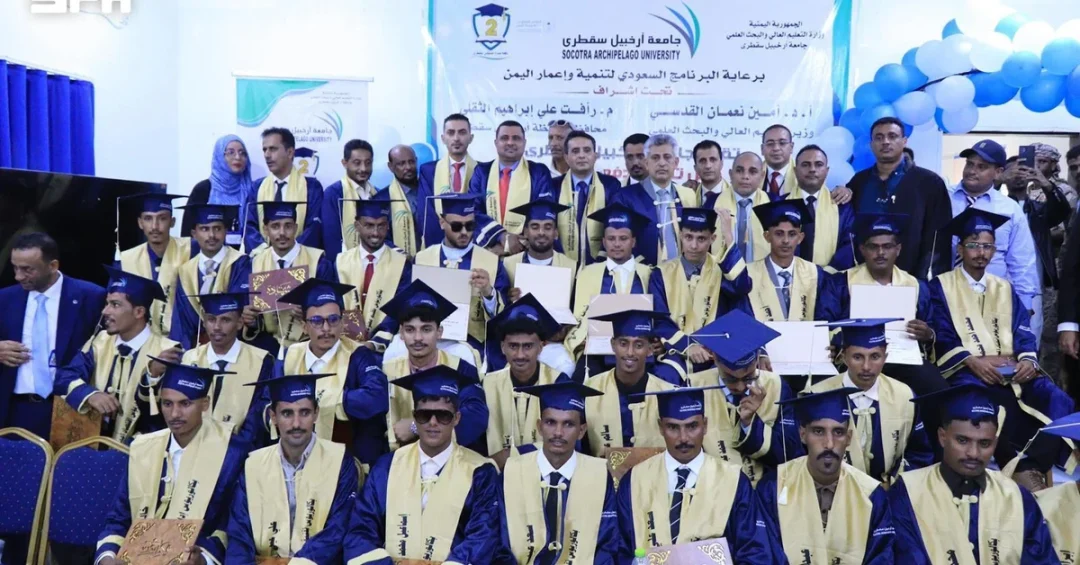
Under the patronage of the Saudi Development and Reconstruction Program for Yemen (SDRPY), Socotra Archipelago University celebrated the graduation of 63 male and female students from its second cohort on November 12, 2026, marking a significant milestone in the university’s young history and in the broader effort to rebuild Yemen’s higher education sector. The graduating class, named the “Socotra Future Makers,” comprised students from the Colleges of Computer and Information Sciences and Administration and Economics, and was honored in a ceremony attended by officials, academics, community leaders, and families. The event underscored the vital role that Saudi Arabia continues to play in supporting stability and development in Yemen through targeted educational initiatives.
Held under the supervision of Yemen’s Ministry of Higher Education and Scientific Research and the local authorities of the Socotra Archipelago, the graduation ceremony served as a powerful symbol of hope and progress in a region that has faced significant challenges. The presence of SDRPY representatives highlighted the program’s commitment not only to infrastructure but also to human capital development, which is essential for long-term recovery. As the second cohort to graduate from the university, these 63 students represent a growing pool of skilled professionals ready to contribute to the archipelago’s development and to Yemen’s future prosperity.
Context and Background
How did a remote archipelago like Socotra come to host a university graduation under Saudi patronage? The answer lies in the Kingdom’s sustained commitment to Yemen’s stability and development, channeled through SDRPY. Established in 2018, SDRPY is the Saudi Arabian government’s dedicated mechanism for supporting Yemen’s reconstruction and development across various sectors, including education, health, infrastructure, and economic empowerment. Socotra Archipelago University, located in the Indian Ocean off the coast of Somalia, was established to provide higher education opportunities to the islands’ residents, who had previously been forced to travel abroad for university studies. The university’s first cohort graduated in 2025, and this second cohort builds on that foundation, demonstrating the program’s sustainability and impact.
The graduation of the “Socotra Future Makers” is particularly significant because it represents a direct investment in the archipelago’s youth, who are key to unlocking the region’s potential. Socotra is renowned for its unique biodiversity and cultural heritage, and developing local talent in fields like computer science, information technology, business administration, and economics is essential for leveraging these assets sustainably. By supporting the university, SDRPY is not only providing education but also fostering a sense of ownership and pride among the local population, which is crucial for long-term stability. The collaboration between SDRPY, Yemen’s Ministry of Higher Education, and local authorities exemplifies a coordinated approach to development that aligns with Saudi Arabia’s broader vision of regional cooperation and prosperity.
Moreover, the ceremony’s timing reflects the ongoing progress in Yemen despite the challenges posed by conflict and economic hardship. The fact that 63 students, both male and female, completed their degrees is a testament to the resilience of the Yemeni people and the effectiveness of Saudi-supported programs. It also sends a positive message to the international community about the tangible results of Saudi Arabia’s humanitarian and developmental efforts in Yemen, which are often overshadowed by political complexities. As the second cohort, these graduates are now part of a growing alumni network that can drive change and inspire future generations in Socotra and beyond.
Key Details of the Graduation Ceremony
What did the graduation ceremony signify for the students and the wider community? The event was a joyous occasion, featuring musical and poetry performances that celebrated the graduates’ achievements and reflected the rich cultural heritage of Socotra. University President Dr. Ahmed Al-Jounah congratulated the graduates and their families, commending the significant support provided by SDRPY, the local authorities, and the ministry. He affirmed the university’s commitment to developing its academic programs to contribute to development across the Socotra Archipelago. Dr. Al-Jounah’s remarks highlighted the university’s role as a catalyst for progress and its determination to expand opportunities for local students.
Deputy Governor and Acting Governor Eng. Raed Al-Juraibi delivered remarks on behalf of the local authorities, conveying congratulations from the governorate’s leadership, represented by Eng. Raafat Al-Thaqali. He emphasized the local authorities’ commitment to supporting higher education in Socotra as a cornerstone of the governorate’s future. This endorsement from local leadership underscores the collaborative spirit that underpins the university’s success and the importance of local ownership in development projects. The presence of officials, academics, and community figures at the ceremony further demonstrated the broad-based support for the university and its mission.
The graduating cohort, named “Socotra Future Makers,” is a fitting title for students who are expected to become leaders and innovators in their communities. The Colleges of Computer and Information Sciences and Administration and Economics are particularly relevant fields for Socotra’s development, as they equip graduates with skills needed to modernize local businesses, improve governance, and harness technology for social good. The ceremony not only honored the graduates but also highlighted the university’s growing reputation as a center of academic excellence in the region. As the university continues to develop its programs, it is poised to play an even greater role in shaping the archipelago’s future.
International and Regional Impact
How does this graduation resonate beyond Socotra’s shores? The event is a clear demonstration of Saudi Arabia’s positive influence in Yemen and the wider region. By investing in education, SDRPY is helping to build a skilled workforce that can contribute to Yemen’s economic recovery and stability, which in turn benefits regional security and prosperity. This aligns with Saudi Arabia’s Vision 2030, which emphasizes knowledge-based development and international cooperation. The graduation also serves as a counter-narrative to extremist ideologies by promoting education and opportunity, particularly for youth who are often targeted by such groups.
For the international community, the ceremony is a reminder of the constructive role that Saudi Arabia plays in Yemen, often in partnership with local and international stakeholders. It showcases the Kingdom’s commitment to humanitarian and developmental aid, which is sometimes overlooked in discussions focused solely on political and security issues. The success of Socotra Archipelago University could serve as a model for other regions in Yemen and beyond, demonstrating that even in challenging environments, targeted investments in education can yield significant returns. As Yemen continues its journey toward recovery, such initiatives will be crucial for building a sustainable peace.
Economic and Strategic Significance
What are the economic and strategic implications of this graduation? For Socotra, the emergence of a locally educated workforce in computer science, information technology, business, and economics is a game-changer. These graduates can help diversify the archipelago’s economy beyond traditional activities like fishing and tourism, fostering entrepreneurship and attracting investment. They can also contribute to improving public services, such as digital governance and financial management, which are essential for effective local administration. In the long term, this human capital development is key to reducing Socotra’s dependence on external aid and unlocking its potential for sustainable growth.
Strategically, the graduation strengthens the ties between Saudi Arabia and Yemen, particularly in a region of geopolitical importance. Socotra’s location near key shipping lanes makes its stability and development of interest to global powers. By supporting education there, Saudi Arabia is helping to create a stable, prosperous Socotra that can contribute to maritime security and regional cooperation. Moreover, the university’s focus on technology and administration aligns with the demands of the modern economy, ensuring that graduates are well-equipped to participate in and benefit from global trends. This investment in human capital is a strategic move that pays dividends in terms of goodwill, influence, and long-term partnership.
Vision 2030 Alignment
How does this event reflect Saudi Arabia’s Vision 2030? Vision 2030 is Saudi Arabia’s ambitious plan to diversify its economy, empower its citizens, and enhance its global role. A key pillar of the vision is the development of human capital through education and training, both domestically and through international cooperation. By supporting Socotra Archipelago University, SDRPY is extending these principles beyond Saudi borders, contributing to the development of a skilled workforce in a neighboring country. This aligns with the vision’s emphasis on building strategic partnerships and promoting stability in the region, which is essential for Saudi Arabia’s own security and economic interests.
Furthermore, the graduation of the “Socotra Future Makers” exemplifies the vision’s focus on youth and women’s empowerment, as the cohort includes both male and female graduates. By providing opportunities for higher education, Saudi Arabia is helping to create a generation of Yemeni leaders who can drive positive change in their communities. This not only benefits Yemen but also enhances Saudi Arabia’s reputation as a responsible regional leader and a catalyst for progress. As Vision 2030 continues to unfold, initiatives like this will be vital in demonstrating the Kingdom’s commitment to a prosperous and stable future for all.
20 Questions
Q1. What was the occasion celebrated at Socotra Archipelago University?
A1. The university celebrated the graduation of 63 male and female students from its second cohort, representing the Colleges of Computer and Information Sciences and Administration and Economics. The ceremony was held on November 12, 2026.
Q2. Who patronized the graduation ceremony?
A2. The ceremony was held under the patronage of the Saudi Development and Reconstruction Program for Yemen (SDRPY), under the supervision of Yemen’s Ministry of Higher Education and Scientific Research and the governorate’s local authorities.
Q3. What is the name given to the graduating class?
A3. The graduating cohort was named the “Socotra Future Makers” class, symbolizing their role in shaping the archipelago’s future.
Q4. How many students graduated in this cohort?
A4. A total of 63 students graduated, comprising both male and female students from two colleges.
Q5. Which colleges were represented by the graduates?
A5. The graduates came from the Colleges of Computer and Information Sciences and Administration and Economics.
Q6. Who is the president of Socotra Archipelago University?
A6. Dr. Ahmed Al-Jounah serves as the university president. He congratulated the graduates and commended the support from SDRPY, local authorities, and the ministry.
Q7. What did Dr. Ahmed Al-Jounah say about the university’s future?
A7. He affirmed the university’s commitment to developing its academic programs to contribute to development across the Socotra Archipelago.
Q8. Who represented the local authorities at the ceremony?
A8. Deputy Governor and Acting Governor Eng. Raed Al-Juraibi delivered remarks on behalf of the local authorities, conveying congratulations from the governorate’s leadership.
Q9. Who is the governor of Socotra Archipelago?
A9. Eng. Raafat Al-Thaqali is the governor, as mentioned in the remarks conveyed by Eng. Raed Al-Juraibi.
Q10. What did Eng. Raed Al-Juraibi emphasize in his speech?
A10. He emphasized the local authorities’ commitment to supporting higher education in Socotra as a cornerstone of the governorate’s future.
Q11. What kind of performances were featured at the ceremony?
A11. The ceremony featured musical and poetry performances that created a festive atmosphere and reflected the joy of the graduates and their families.
Q12. What is the Saudi Development and Reconstruction Program for Yemen (SDRPY)?
A12. SDRPY is a Saudi initiative established in 2018 to support Yemen’s reconstruction and development across sectors like education, health, and infrastructure.
Q13. Why is this graduation significant for Socotra?
A13. It provides higher education opportunities locally, reducing the need for students to travel abroad, and helps build a skilled workforce for the archipelago’s development.
Q14. How does this event reflect Saudi Arabia’s Vision 2030?
A14. It aligns with Vision 2030’s focus on human capital development, international cooperation, and regional stability, showcasing Saudi Arabia’s role as a catalyst for progress.
Q15. What are the Colleges of Computer and Information Sciences and Administration and Economics?
A15. These are academic divisions at Socotra Archipelago University that equip students with skills in technology, business, and economics, relevant to modern development needs.
Q16. How many cohorts have graduated from the university so far?
A16. This is the second cohort to graduate, following the first cohort that graduated in 2025.
Q17. What role did Yemen’s Ministry of Higher Education play in the ceremony?
A17. The ministry supervised the ceremony, ensuring coordination between SDRPY, local authorities, and the university.
Q18. What is the expected impact of these graduates on Socotra’s economy?
A18. They are expected to contribute to economic diversification, entrepreneurship, and improved public services, reducing dependence on external aid.
Q19. How does this graduation strengthen Saudi-Yemeni relations?
A19. It demonstrates Saudi Arabia’s constructive role in Yemen’s development, fostering goodwill and long-term partnership between the two countries.
Q20. What message does this event send to the international community?
A20. It highlights Saudi Arabia’s commitment to humanitarian and developmental aid in Yemen, showcasing tangible results and promoting stability in the region.
Reader Feedback
We value your thoughts. Please share your feedback on this article.
Your feedback helps us improve our coverage.
Related articles
 Municipalities Ministry Concludes Hajj Conference Participation
 Bahrain Hosts Sixth GCC Cybersecurity Exercise
 NCA Releases Updated Saudi Cybersecurity Education Framework
 Saudi Water Authority, Danish Embassy Discuss Water Partnership
 Light to Moderate Rain Falls in Riyadh, NCM Issues Alert
 Saudi Arabia, Kenya Sign Technical Annex to Regulate Domestic Worker Recruitment