


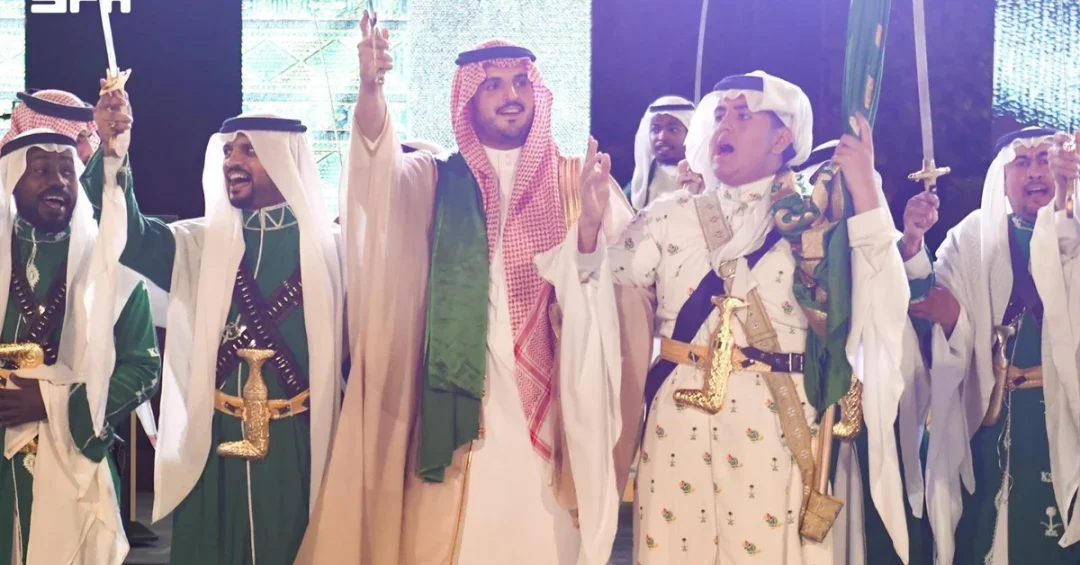
Prince Fawaz bin Sultan bin Abdulaziz, Governor of Taif, attended the governorate’s official celebration of Saudi National Day on September 25, 2026, joining military commanders, heads of government agencies, and thousands of residents in a festive commemoration of the Kingdom’s unity and enduring heritage. The event, reported by the Saudi Press Agency (SPA), featured a dedicated exhibition, patriotic musical performances, official addresses, and poetry recitations, culminating in a traditional Saudi Ardah performance in which the Governor participated alongside citizens.
The celebration in Taif reflects the nationwide observance of Saudi National Day, an annual occasion that marks the unification of the Kingdom by King Abdulaziz Al Saud in 1932. Across Saudi Arabia, cities and governorates host events that blend official protocol with community participation, reinforcing national pride and the values of belonging. Taif, known for its moderate climate, agricultural heritage, and status as a summer retreat, holds a special place in the national narrative, and its celebration drew a broad cross-section of society. The presence of the Governor, alongside military and civilian leaders, underscored the importance of collective engagement in national milestones. As the Kingdom advances its Vision 2030 transformation, such gatherings serve as reminders of the social cohesion that underpins progress.
Context and Background
Why does Taif’s National Day celebration matter beyond its immediate festivities? Saudi National Day, observed every September 23, commemorates the royal decree issued by King Abdulaziz in 1932 that renamed the Kingdom of Hejaz and Nejd to the Kingdom of Saudi Arabia. It is a moment of reflection on the nation’s journey from unification to its current status as a G20 economy and regional leader. Taif, located in the Makkah Province, has historically been a strategic summer capital and a site of significant political and cultural events. Its governorate-level celebrations are part of a coordinated national framework that encourages civic participation and showcases local identity within the broader Saudi tapestry.
The event in Taif included a dedicated exhibition that likely highlighted the Kingdom’s developmental achievements, Vision 2030 initiatives, and the region’s heritage. Such exhibitions are common during National Day and provide citizens and residents with information about ongoing projects in tourism, education, and infrastructure. The participation of military commanders and heads of government agencies signals the integrated approach of Saudi governance, where local leadership works in tandem with national institutions. The SPA report emphasized the presence of residents, indicating that the celebration was open to the public and designed to foster a sense of shared ownership in the nation’s progress.
Historically, Taif has been a barometer of Saudi social and cultural life. It hosts the annual Taif Season, part of the Saudi Seasons initiative, which promotes tourism and local products such as roses and honey. National Day celebrations in the city therefore carry an added layer of cultural promotion, aligning with the Kingdom’s efforts to diversify its economy and attract visitors. The Governor’s attendance at such events is a customary demonstration of the leadership’s commitment to remaining connected with communities across the country, from major metropolitan centers to heritage-rich governorates like Taif.
Key Details of the Celebration
What specific elements defined the Taif celebration? According to the Saudi Press Agency, the event featured a dedicated exhibition alongside patriotic musical performances, official addresses, and poetry recitations celebrating national pride and the values of unity and belonging. The exhibition likely served as an educational and inspirational space, offering attendees insights into Saudi Arabia’s past, present, and future. Patriotic music and poetry are integral to Saudi National Day traditions, as they evoke emotional connections to the homeland and its achievements. Official addresses by local leaders often highlight the wise leadership of the Custodian of the Two Holy Mosques, King Salman bin Abdulaziz Al Saud, and His Royal Highness Crown Prince Mohammed bin Salman, emphasizing their role in guiding the Kingdom toward prosperity.
The festivities concluded with a traditional Saudi Ardah performance, in which Prince Fawaz joined citizens. The Ardah is a UNESCO-recognized intangible cultural heritage, performed with drums and swords, symbolizing strength, unity, and the shared identity of the Saudi people. The Governor’s participation in the Ardah is a powerful gesture of solidarity and respect for cultural traditions. It also underscores the enduring role of cultural heritage in national celebrations, a theme that resonates with Vision 2030’s goal of preserving Saudi heritage while embracing modernity. The presence of military commanders added a formal dimension, honoring the armed forces’ role in safeguarding the nation’s security and stability.
The SPA report, dated September 25, 2026, with a local time stamp of 11:24, indicates that the celebration took place shortly after the official National Day holiday. This timing allowed for broad community participation and media coverage. The event’s structure—exhibition, performances, addresses, poetry, and Ardah—follows a well-established format that balances entertainment with patriotic education. It also provides a platform for local talents, from musicians to poets, reinforcing the Kingdom’s investment in cultural and creative industries as part of its economic diversification strategy.
International and Regional Impact
How does a local celebration in Taif project Saudi Arabia’s image abroad? National Day events across the Kingdom are covered by international media and shared on digital platforms, contributing to the nation’s soft power. They present a picture of a united, stable, and culturally rich society, which is attractive to investors, tourists, and partners. For regional audiences, Saudi National Day celebrations reaffirm the Kingdom’s leadership in the Arab and Islamic worlds, particularly given its role as the custodian of the Two Holy Mosques. The participation of diverse segments of society, including military and civilian officials, demonstrates institutional cohesion and public support for the leadership’s vision.
In the context of regional geopolitics, such celebrations highlight Saudi Arabia’s internal stability and its focus on development over conflict. While the Middle East continues to face challenges, the Kingdom’s ability to host joyous, well-organized national events sends a message of resilience and forward momentum. Taif’s specific celebration also promotes domestic tourism, as visitors from other regions may travel to participate or watch the festivities. This aligns with the broader strategy to increase tourism’s contribution to GDP and to showcase the Kingdom’s diverse destinations beyond the well-known cities of Riyadh, Jeddah, and Mecca.
Internationally, the Ardah and other cultural performances have been featured in Saudi pavilions at global expos and cultural festivals, generating curiosity and appreciation. The Taif celebration, though local, is part of this cultural diplomacy. It also reinforces the narrative of a Kingdom that honors its traditions while undergoing rapid modernization, a balance that resonates with global audiences and potential partners. By showcasing unity and belonging, Saudi Arabia counters stereotypes and presents itself as a confident, open, and dynamic nation.
Economic and Strategic Significance
What economic and strategic benefits arise from National Day celebrations? Beyond their cultural value, these events stimulate local economies through spending on hospitality, retail, and services. In Taif, the influx of visitors for the celebration supports small businesses, artisans, and food vendors. The exhibition component can also serve as a trade show for local products, from Taif roses to handicrafts, linking heritage to economic opportunity. The Saudi government has consistently emphasized that national occasions are opportunities to boost domestic consumption and promote the ‘Made in Saudi’ brand.
Strategically, National Day reinforces national identity, which is essential for social stability and the success of Vision 2030. A cohesive society is better positioned to embrace reforms, from labor market changes to the expansion of entertainment and tourism sectors. The Governor’s active participation signals that local leadership is aligned with national priorities and accessible to the people. This grassroots engagement helps build trust and encourages citizen involvement in development initiatives. Furthermore, the military’s presence at such events highlights the security that enables economic progress, a point often underscored by Saudi officials when discussing investment climate.
The celebration also serves as a platform to communicate Vision 2030 achievements. Exhibitions often feature interactive displays on megaprojects like NEOM, the Red Sea Project, and Qiddiya, as well as progress in education, health, and technology. By bringing these narratives to a local level, the government ensures that citizens in all regions feel part of the transformation. Taif’s own development projects, including improvements in infrastructure and tourism facilities, benefit from the visibility and civic pride generated by National Day. In this way, the event is not merely a commemoration but a catalyst for continued engagement with the Kingdom’s strategic goals.
Vision 2030 Alignment
How does the Taif National Day celebration connect to Vision 2030? Vision 2030 aims to build a vibrant society, a thriving economy, and an ambitious nation. National Day events directly support the ‘vibrant society’ pillar by promoting cultural activities, social cohesion, and national pride. They also contribute to the ‘thriving economy’ by stimulating tourism and local commerce. The emphasis on heritage, such as the Ardah, aligns with the goal of preserving Saudi culture while opening the Kingdom to the world. The participation of youth and families in these celebrations reflects the demographic dividend that Vision 2030 seeks to harness.
Moreover, the Taif celebration exemplifies the decentralized approach to development, where all regions contribute to and benefit from national progress. The Governor’s engagement with citizens embodies the leadership’s commitment to good governance and responsiveness. As Saudi Arabia continues its journey toward 2030, such events will remain vital in maintaining the social contract and celebrating milestones. They also provide opportunities for international observers to witness the Kingdom’s transformation firsthand. In conclusion, the Taif National Day celebration is a microcosm of Saudi Arabia’s broader narrative: proud of its past, confident in its present, and optimistic about its future under Vision 2030.
20 Questions
Q1. What event did the Governor of Taif attend on September 25, 2026?
A1. Prince Fawaz bin Sultan bin Abdulaziz attended the governorate’s celebration marking Saudi National Day, joining military commanders, heads of government agencies, and residents in Taif.
Q2. Who is the Governor of Taif?
A2. The Governor of Taif is Prince Fawaz bin Sultan bin Abdulaziz, who represents the local leadership in the Makkah Province.
Q3. What activities took place at the Taif National Day celebration?
A3. The event featured a dedicated exhibition, patriotic musical performances, official addresses, poetry recitations, and concluded with a traditional Saudi Ardah performance.
Q4. What is the significance of the Saudi Ardah performance?
A4. The Ardah is a UNESCO-recognized intangible cultural heritage that symbolizes strength, unity, and Saudi identity, often performed at national celebrations.
Q5. When is Saudi National Day observed?
A5. Saudi National Day is observed on September 23 each year, commemorating the unification of the Kingdom in 1932 by King Abdulaziz Al Saud.
Q6. Why is Taif important in Saudi Arabia?
A6. Taif is known for its moderate climate, agricultural heritage, and status as a summer retreat, and it hosts cultural events like the Taif Season.
Q7. Who else attended the celebration besides the Governor?
A7. Military commanders, heads of government agencies, and residents of Taif attended the celebration, demonstrating broad community participation.
Q8. What was the purpose of the exhibition at the event?
A8. The exhibition likely showcased Saudi Arabia’s developmental achievements, Vision 2030 initiatives, and regional heritage to educate and inspire attendees.
Q9. How does the celebration reflect Saudi unity?
A9. The gathering of diverse officials and citizens, along with performances like the Ardah, reinforces national pride and the values of unity and belonging.
Q10. What role do poetry recitations play in National Day events?
A10. Poetry recitations celebrate national pride and evoke emotional connections to the homeland, highlighting Saudi cultural traditions and achievements.
Q11. How does National Day benefit the local economy?
A11. It stimulates spending on hospitality, retail, and services, supporting small businesses and promoting local products like Taif roses and handicrafts.
Q12. What is the connection between National Day and Vision 2030?
A12. National Day supports Vision 2030’s vibrant society pillar by promoting cultural activities, social cohesion, and national pride, while boosting tourism.
Q13. How does the Governor’s participation impact the community?
A13. It signals leadership’s accessibility and alignment with national priorities, building trust and encouraging citizen involvement in development.
Q14. What message does the celebration send internationally?
A14. It projects a united, stable, and culturally rich nation, enhancing Saudi Arabia’s soft power and attractiveness to investors and tourists.
Q15. Why is the Ardah performed at national celebrations?
A15. The Ardah is a traditional dance that embodies Saudi heritage, strength, and unity, and is performed to honor the nation’s cultural legacy.
Q16. How does Taif’s celebration compare to others in the Kingdom?
A16. It follows a similar format of exhibitions, performances, and official addresses, reflecting a coordinated national approach to National Day.
Q17. What is the role of military commanders at the event?
A17. Their presence honors the armed forces’ role in safeguarding security and stability, and underscores institutional cohesion.
Q18. How does National Day promote domestic tourism?
A18. It attracts visitors to local celebrations, encouraging travel within the Kingdom and showcasing destinations like Taif to a broader audience.
Q19. What values are emphasized during Saudi National Day?
A19. Values of unity, belonging, national pride, and loyalty to the leadership and the nation are emphasized through various activities.
Q20. How does the Taif celebration contribute to Vision 2030?
A20. It fosters social cohesion, preserves heritage, stimulates local economies, and engages citizens in the Kingdom’s transformation journey toward 2030.
Reader Feedback
We value your thoughts. Please share your feedback on this article.
Your feedback helps us improve our coverage.
Related articles
 KSrelief, Partners Host New York Panel on Humanitarian Reset
 KSrelief Chief Addresses Devex Panel at UN General Assembly
 KSrelief, Norway Discuss Humanitarian Cooperation at UN
 KSrelief, OCHA Discuss Global Humanitarian Aid at UNGA
 Saudi Arabia Joins AHLC Ministerial Meeting on Palestine in New York
 Global Alliance Co-Chairs Issue Two-State Solution Statement