


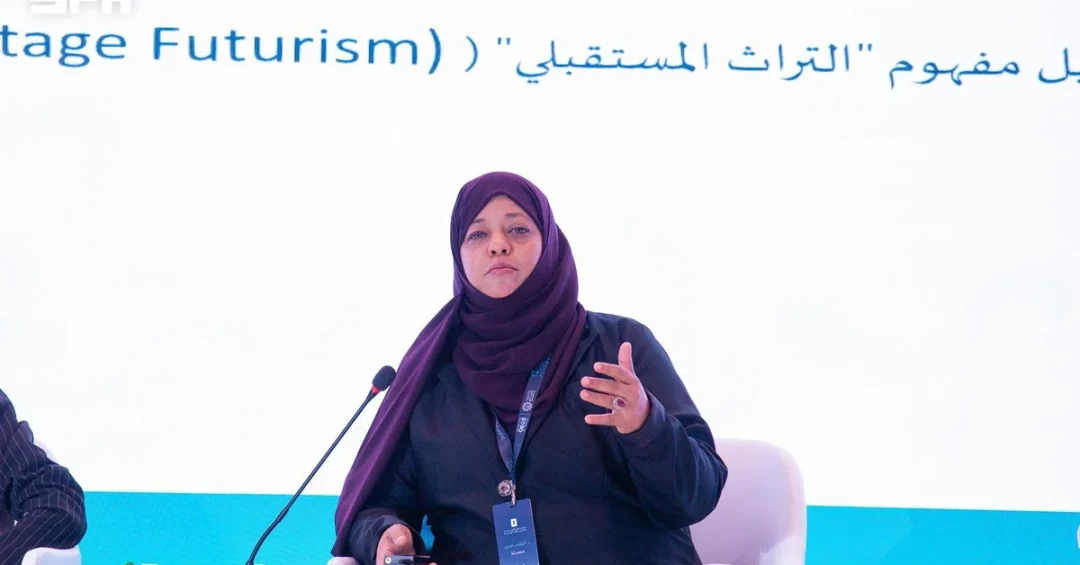
Researchers presenting at the fifth international annual conference of the King Salman Global Academy for Arabic Language in Riyadh have recommended expanding Arabic language corpora to include Saudi and other Arabic dialects, developing specialized Arabic benchmarks to measure pragmatic competence, and fine-tuning artificial intelligence models on Arabic dialect data. The recommendations emerged from a series of research papers discussed during the second session of the conference, which examined how well large language models understand Arabic proverbs, idiomatic expressions, cultural concepts, and the indirect speech patterns characteristic of Najdi Arabic.
The King Salman Global Academy for Arabic Language, a Riyadh-based institution dedicated to the preservation, promotion, and technological modernization of Arabic, convened the conference as part of Saudi Arabia’s broader effort to position the Arabic language at the center of global artificial intelligence development. The studies presented in the second session focused on three interconnected areas: the representation of Arab culture in large language models, the aesthetics of Arabic calligraphy in generative AI environments, and the pragmatic competence of AI systems in interpreting Najdi Arabic. Together, they point to a clear conclusion: while global AI models have made progress in handling formal Arabic, they still struggle with the dialects, idioms, and cultural nuances that define everyday communication across the Arab world. How can a technology built largely on English-language data ever fully understand the subtleties of a proverb spoken in Riyadh or a polite indirect request in Najdi Arabic?
Context and Background
The King Salman Global Academy for Arabic Language has positioned itself as a leading institutional voice in the intersection of Arabic linguistics and artificial intelligence. The academy’s annual international conference has become a platform where researchers from across the region and beyond present findings on how AI systems handle Arabic content, from vocabulary and grammar to cultural meaning and rhetorical style. This year’s fifth edition, held in Riyadh, brought together scholars, technologists, and language experts to assess the current state of Arabic-language AI and to chart a path forward. The second session’s research papers were particularly significant because they moved beyond surface-level accuracy metrics to examine whether AI models genuinely understand the cultural and pragmatic dimensions of Arabic communication.
The focus on Saudi dialects, and specifically Najdi Arabic, reflects a growing recognition that formal Modern Standard Arabic represents only one register of a language spoken in dozens of regional varieties. Najdi Arabic, spoken in the central region of Saudi Arabia, includes indirect speech patterns, religious expressions, and culturally embedded phrases that carry meaning beyond their literal words. For AI systems to serve Arabic-speaking users effectively, whether in customer service, healthcare, education, or government services, they must be able to interpret these nuances correctly. The conference’s findings suggest that current models fall short in this regard, and the recommendations aim to close that gap. Why does it matter if an AI model can translate a sentence perfectly but misses the cultural intention behind it?
Key Details
The first research paper discussed in the session assessed the ability of both global and Arabic large language models to understand Arabic proverbs, idiomatic expressions, and cultural concepts. The study found that differences across these models are more pronounced in their understanding of proverbs and idiomatic expressions, while their performance in interpreting direct cultural vocabulary is more comparable. In other words, when an AI model encounters a straightforward cultural term, most systems handle it adequately. But when the same cultural knowledge is expressed through a proverb or an idiom, where meaning is figurative rather than literal, the models diverge sharply in their accuracy. This finding highlights a critical weakness: AI systems can recognize cultural words but often fail to grasp cultural reasoning.
A second paper examined identity algorithms and proposed a methodology for representing the aesthetics of Arabic calligraphy in generative AI environments. The study focused on the Thuluth and Naskh scripts, two of the most revered styles in Arabic calligraphy, and analyzed their structural rules in visual generation environments. The researchers recommended establishing a specialized laboratory for digital identity and algorithmic calligraphy that would bring together faculties of arts and information technology, developing a national standard for visual AI inputs, and creating a local digital repository of classical geometric patterns and ornaments. These recommendations reflect a concern that generative AI, trained largely on Western visual traditions, may reproduce Arabic calligraphy without respecting its proportional systems and spiritual dimensions. Can a machine truly generate sacred script without understanding the centuries of artistic discipline behind it?
A third paper explored the pragmatic competence of AI models in interpreting Najdi Arabic. The study examined ChatGPT’s ability to identify and interpret indirect Najdi utterances with a religious character and to determine the limits of its performance in understanding their pragmatic functions. Pragmatic competence refers to the ability to understand not just what is said but what is meant, including politeness strategies, indirect requests, and culturally specific forms of expression. The findings indicated that while the model could sometimes recognize the literal content of these utterances, it frequently missed the intended pragmatic function, particularly when religious phrasing was used to convey a request or an opinion indirectly. This gap has real-world implications for any AI application deployed in Saudi Arabia, where indirect and religiously framed speech is common in daily interaction.
International and Regional Impact
The recommendations from the Riyadh conference carry significance well beyond Saudi Arabia’s borders. Arabic is spoken by hundreds of millions of people across the Middle East and North Africa, and AI systems are increasingly being deployed in public services, education, and commerce throughout the region. If these systems cannot accurately interpret Saudi dialects, they will struggle to serve users in the Kingdom and in neighboring Gulf states where similar dialect features appear. The call to expand Arabic language corpora to include Saudi and other Arabic dialects is therefore a regional imperative, not merely a national one. It also positions Saudi Arabia as a leader in the effort to make AI more culturally inclusive, a role consistent with the Kingdom’s growing influence in global technology governance.
On the international stage, the conference’s findings contribute to a broader conversation about bias and representation in artificial intelligence. Just as researchers in other fields have documented how AI systems underperform for speakers of non-English languages, the Riyadh studies show that Arabic dialects are systematically underrepresented in the training data that powers today’s most advanced models. The recommendation to develop specialized Arabic benchmarks for measuring pragmatic competence offers a concrete tool for addressing this imbalance. By creating evaluation standards that go beyond vocabulary and grammar to test cultural and pragmatic understanding, Saudi researchers are helping to define what responsible AI development looks like for the Arabic-speaking world. How many other languages and cultures face similar gaps in the AI systems that increasingly mediate their daily lives?
Economic and Strategic Significance
The push to improve AI’s handling of Saudi dialects aligns closely with the Kingdom’s economic modernization agenda. As Saudi Arabia invests heavily in digital infrastructure, smart cities, and AI-driven public services, the ability of these systems to communicate effectively with citizens and residents becomes a practical economic concern. A customer service chatbot that misunderstands a Najdi Arabic complaint, or a healthcare triage system that misreads a religiously framed description of symptoms, represents not just a technical failure but a potential cost to productivity and public trust. The conference’s recommendations, if implemented, would help ensure that the Kingdom’s AI investments deliver their intended benefits across all segments of society.
Strategically, the development of Arabic-language AI capabilities also supports Saudi Arabia’s ambition to become a regional technology hub. By fostering local expertise in Arabic natural language processing and by establishing specialized laboratories and digital repositories, the Kingdom can attract talent and investment in a field where few global players have deep competence. The recommendation to establish a specialized laboratory for digital identity and algorithmic calligraphy, for example, would create a unique center of excellence that bridges art and technology, a combination that few institutions worldwide can offer. This kind of niche leadership reinforces Saudi Arabia’s broader goal of diversifying its economy and exporting high-value knowledge services. What better way to honor a language of global significance than by building the tools that will carry it into the digital future?
Vision 2030 Alignment
The recommendations from the King Salman Global Academy for Arabic Language conference resonate directly with the objectives of Saudi Vision 2030, the Kingdom’s comprehensive plan for economic diversification, social development, and global engagement. Vision 2030 emphasizes the importance of preserving Saudi cultural heritage while embracing technological innovation, and the conference’s focus on Arabic dialects and calligraphy embodies that dual commitment. By integrating human expertise with intelligent tools, as the researchers recommended, Saudi Arabia is charting a path where technology serves culture rather than erasing it. The proposed national standard for visual AI inputs and the local digital repository of classical geometric patterns are precisely the kind of infrastructure that ensures future generations can access and appreciate their heritage through modern means.
Moreover, the conference’s outcomes support Vision 2030’s goal of building a knowledge-based economy. The development of specialized Arabic benchmarks, the fine-tuning of AI models on dialect data, and the creation of new research facilities all contribute to a growing ecosystem of innovation in the Kingdom. These efforts also enhance Saudi Arabia’s soft power, as the Kingdom becomes a global reference point for Arabic-language AI. The message from Riyadh is clear: the Arabic language, in all its richness and diversity, will not be left behind in the digital age. Under the leadership of the King Salman Global Academy for Arabic Language, and with the continued support of the Kingdom’s Vision 2030 framework, Saudi Arabia is ensuring that its language and culture remain vibrant, relevant, and technologically empowered for decades to come.
20 Questions
Q1. What was the main focus of the second session at the King Salman Global Academy for Arabic Language conference?
A1. The session discussed research papers on representing Arab culture in large language models, Arabic calligraphy in generative AI, and the pragmatic competence of AI models in interpreting Najdi Arabic.
Q2. What did the study on Arabic proverbs and idiomatic expressions conclude?
A2. It found that differences across AI models are more pronounced in understanding proverbs and idioms, while performance on direct cultural vocabulary is more comparable.
Q3. What recommendations did the researchers make regarding Arabic language corpora?
A3. They recommended expanding Arabic language corpora to include Saudi and other Arabic dialects, and developing specialized Arabic benchmarks to measure pragmatic competence.
Q4. What is Najdi Arabic and why is it important for AI?
A4. Najdi Arabic is a dialect spoken in central Saudi Arabia. It includes indirect and religiously framed expressions that AI must understand to serve users accurately.
Q5. What did the study on ChatGPT’s Najdi Arabic competence reveal?
A5. It showed that while ChatGPT could sometimes recognize literal content, it often missed the intended pragmatic function of indirect Najdi utterances with a religious character.
Q6. What is pragmatic competence in the context of AI and language?
A6. Pragmatic competence is the ability to understand not just what is said but what is meant, including politeness strategies, indirect requests, and culturally specific expressions.
Q7. What scripts were examined in the study on Arabic calligraphy and generative AI?
A7. The study focused on the Thuluth and Naskh scripts, analyzing their structural rules in visual generation environments.
Q8. What did researchers recommend for preserving Arabic calligraphy in AI environments?
A8. They recommended establishing a specialized laboratory for digital identity and algorithmic calligraphy, developing a national standard for visual AI inputs, and creating a local digital repository.
Q9. Why is it important to include Saudi dialects in AI training data?
A9. Including Saudi dialects ensures AI systems can accurately interpret everyday speech, improving services in customer care, healthcare, education, and government applications across the Kingdom.
Q10. How does this conference align with Saudi Vision 2030?
A10. It supports Vision 2030’s goals of preserving cultural heritage, embracing technological innovation, and building a knowledge-based economy through Arabic-language AI development.
Q11. What is the King Salman Global Academy for Arabic Language?
A11. It is a Riyadh-based institution dedicated to preserving, promoting, and modernizing the Arabic language, including through research at the intersection of linguistics and artificial intelligence.
Q12. What are the implications of AI misunderstanding Arabic dialects?
A12. Misunderstanding can lead to poor service delivery, loss of public trust, and inefficiency in AI-driven systems deployed in Saudi Arabia and the wider Gulf region.
Q13. What is the significance of developing specialized Arabic benchmarks?
A13. Specialized benchmarks provide a standardized way to measure how well AI models understand Arabic pragmatics and culture, driving improvement and accountability.
Q14. How might the recommendations affect global AI development?
A14. They contribute to broader efforts to make AI more culturally inclusive and could serve as a model for other languages facing similar representation gaps.
Q15. What role does human expertise play in the recommended approach?
A15. Researchers called for stronger integration of human expertise with intelligent tools to ensure accurate analysis of Arabic language and culture.
Q16. What is the proposed national standard for visual AI inputs?
A16. It is a recommended framework to guide how AI systems generate and interpret Arabic visual elements, ensuring respect for traditional artistic rules and aesthetics.
Q17. Why is Arabic calligraphy important in the age of AI?
A17. Arabic calligraphy is a revered art form with deep cultural and spiritual significance. AI must respect its proportional systems and heritage when generating it.
Q18. How does this initiative position Saudi Arabia globally?
A18. It positions the Kingdom as a leader in Arabic-language AI and cultural technology, enhancing its soft power and attractiveness as a technology hub.
Q19. What economic benefits could result from improved Arabic-language AI?
A19. Better AI can boost productivity in public services and commerce, attract investment in local technology, and support the growth of a knowledge-based economy.
Q20. What is the overarching message of the conference’s recommendations?
A20. The message is that Arabic, in all its dialects and cultural richness, must be fully integrated into AI development to serve present and future generations.
Reader Feedback
We value your thoughts. Please share your feedback on this article.
Your feedback helps us improve our coverage.
Related articles
 Saudi Space Agency Launches National Space Awareness Campaign
 Saudi Arabia Launches First Self-Driving Delivery Service in Riyadh
 Saudi Arabia Joins Global AI Integrity Summit in Kyoto
 Jazan University Drives Scientific Innovation in Saudi Coffee
 AI Camp in Madinah Draws 120 Innovators
 Tuwaiq Academy, Aramco Launch Madar Cybersecurity Event