


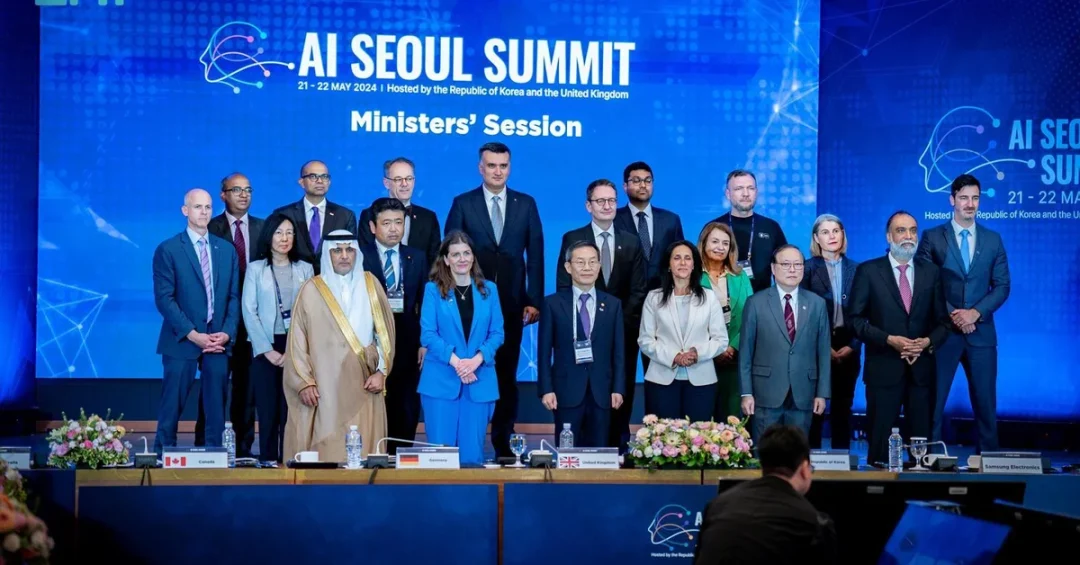
Saudi Arabia, represented by the Saudi Data and AI Authority (SDAIA), joined 26 other countries at the AI Seoul Summit on May 21–22, 2024, to stress the importance of enhancing international cooperation on artificial intelligence (AI) safety. The summit, organized by the Republic of Korea and the United Kingdom, concluded with a joint statement emphasizing collaboration on AI safety tests and assessment guidelines, supporting innovation and inclusion, and committing to future reports on AI risks.
Context and Background
The AI Seoul Summit built on the momentum of the AI Safety Summit held at Bletchley Park in the United Kingdom in November 2023. That earlier gathering produced the Bletchley Declaration, which underscored the need for global action on frontier AI risks. The Seoul summit, co-hosted by the UK and Korea, aimed to translate those principles into concrete commitments, particularly around safety testing and inclusive innovation.
Saudi Arabia’s participation reflects its growing role in global AI governance. The Kingdom was represented by Dr. Abdullah bin Sharaf Al-Ghamdi, President of the Saudi Data and AI Authority (SDAIA), the national body responsible for advancing AI and data-driven technologies in line with Saudi Vision 2030. SDAIA has been actively engaging in international forums to share expertise and shape ethical AI norms.
Key Details
The joint statement issued at the conclusion of the summit highlighted several key areas of agreement. Participating countries discussed supporting innovation and inclusion in AI, underscoring the benefits of AI for the public sector, and committing to providing an environment that enhances easy access to AI-related resources for small- and medium-sized enterprises (SMEs), startups, and academia.
The statement also welcomed AI’s potential to make significant progress in addressing major global challenges such as climate change, global health, and food and energy security. At the same time, participants committed to addressing the significant risks associated with AI and determining the levels of these risks to develop and spread leading AI technologies responsibly.
Furthermore, the countries agreed to collaborate on AI safety tests and assessment guidelines, and to support future reports on AI risks. This includes the development of a shared understanding of risk thresholds and the creation of interoperable safety frameworks.
Implications and Impact
The AI Seoul Summit represents a critical step toward a coordinated international approach to AI safety. By aligning on safety tests and assessment guidelines, participating nations aim to prevent a fragmented regulatory landscape that could hinder innovation and create gaps in risk management. For Saudi Arabia, this alignment supports its ambition to become a global leader in AI while ensuring that the technology is developed and deployed safely and ethically.
The emphasis on inclusion and access for SMEs, startups, and academia is particularly relevant for Saudi Arabia’s burgeoning tech ecosystem. By facilitating access to AI resources, the Kingdom can accelerate its digital transformation and foster a vibrant startup culture, in line with the goals of Vision 2030.
Moreover, the commitment to leveraging AI for climate change, health, and food security aligns with Saudi Arabia’s own sustainability and diversification efforts. As the Kingdom continues to invest in AI research and applications, international cooperation will be essential to addressing shared challenges and ensuring that the benefits of AI are widely distributed.
Vision 2030 Alignment
Saudi Arabia’s active participation in the AI Seoul Summit underscores its commitment to Vision 2030, which aims to diversify the economy and position the Kingdom as a global hub for technology and innovation. Under the leadership of Crown Prince Mohammed bin Salman, Saudi Arabia has made significant strides in AI, including the establishment of SDAIA and the launch of national strategies for data and AI.
By engaging in international collaborations on AI safety, the Kingdom not only contributes to global governance but also ensures that its own AI development is aligned with best practices and ethical standards. This forward-looking approach reinforces Saudi Arabia’s role as a responsible global actor and a key player in shaping the future of AI for the benefit of humanity.
20 Questions
Q1. What was the AI Seoul Summit?
A1. The AI Seoul Summit was a two-day international conference held on May 21-22, 2024, organized by the Republic of Korea and the United Kingdom. It brought together 27 countries, including Saudi Arabia, to discuss AI safety, innovation, and inclusion, building on the 2023 Bletchley Park summit.
Q2. Which countries participated in the AI Seoul Summit?
A2. The summit included 27 countries, among them Saudi Arabia, South Korea, the United Kingdom, the United States, China, Japan, France, Germany, and others. These nations represent a diverse group committed to advancing global AI governance and safety.
Q3. Who represented Saudi Arabia at the summit?
A3. Saudi Arabia was represented by Dr. Abdullah bin Sharaf Al-Ghamdi, President of the Saudi Data and AI Authority (SDAIA). His participation highlighted the Kingdom’s active role in international AI discussions and its commitment to ethical AI development.
Q4. What is SDAIA?
A4. The Saudi Data and AI Authority (SDAIA) is a government entity established in 2019 to drive Saudi Arabia’s national data and AI agenda. It oversees strategies, regulations, and initiatives to position the Kingdom as a leader in data-driven innovation.
Q5. What were the main outcomes of the summit?
A5. The summit concluded with a joint statement emphasizing international cooperation on AI safety, collaboration on safety tests and assessment guidelines, support for innovation and inclusion, and commitment to future reports on AI risks. These outcomes aim to foster responsible AI development globally.
Q6. What does the joint statement say about AI safety?
A6. The joint statement stresses the importance of enhancing international cooperation on AI safety. It commits participating countries to collaborate on AI safety tests and assessment guidelines, and to determine risk levels to develop and spread leading AI technologies safely.
Q7. How does the summit address AI risks?
A7. Participating countries committed to addressing significant risks associated with AI and determining their levels. This includes developing shared risk thresholds and interoperable safety frameworks to ensure that AI technologies are deployed responsibly and ethically across borders.
Q8. What is the significance of AI safety tests and assessment guidelines?
A8. AI safety tests and assessment guidelines provide a standardized approach to evaluating AI systems for potential risks. By collaborating on these, countries aim to prevent fragmented regulations, build trust, and ensure that AI innovations are safe and reliable for global use.
Q9. How does the summit support innovation and inclusion?
A9. The summit supports innovation and inclusion by underscoring AI’s benefits for the public sector and committing to easy access to AI resources for SMEs, startups, and academia. This aims to democratize AI benefits and foster a diverse, inclusive AI ecosystem.
Q10. What benefits of AI were highlighted at the summit?
A10. The summit highlighted AI’s potential to make significant progress in addressing global challenges such as climate change, global health, and food and energy security. These benefits underscore AI’s role in solving some of the world’s most pressing issues.
Q11. How does Saudi Arabia benefit from participating in such summits?
A11. Saudi Arabia benefits by shaping global AI norms, accessing best practices, and fostering collaborations that support its Vision 2030 goals. Participation enhances the Kingdom’s reputation as a responsible global actor and a leader in AI innovation and governance.
Q12. What is Vision 2030 and how does it relate to AI?
A12. Vision 2030 is Saudi Arabia’s strategic plan to diversify its economy and reduce oil dependence. AI is a key pillar, with initiatives like SDAIA and national AI strategies aimed at driving digital transformation, economic growth, and global competitiveness.
Q13. How does SDAIA contribute to Vision 2030?
A13. SDAIA contributes to Vision 2030 by implementing national data and AI strategies, fostering innovation, and building partnerships. It aims to position Saudi Arabia as a global leader in AI, supporting economic diversification and enhancing quality of life.
Q14. What are the next steps after the AI Seoul Summit?
A14. Next steps include implementing the commitments from the joint statement, such as developing safety test protocols and assessment guidelines. Countries will also continue to collaborate on future reports on AI risks and work towards inclusive AI innovation.
Q15. How does the summit address AI’s impact on climate change?
A15. The summit acknowledges AI’s potential to address climate change by optimizing energy use, improving climate modeling, and supporting sustainable practices. Participating countries committed to leveraging AI for environmental benefits while managing associated risks.
Q16. What role do SMEs and startups play in AI innovation?
A16. SMEs and startups are crucial for AI innovation, driving creativity and competition. The summit emphasized providing them access to AI resources, including data, computing power, and expertise, to foster a vibrant and inclusive AI ecosystem.
Q17. How will the summit’s outcomes be monitored?
A17. The outcomes will be monitored through follow-up meetings and reports, with countries sharing progress on safety tests, assessment guidelines, and innovation initiatives. The commitment to future reports on AI risks ensures ongoing accountability and adaptation.
Q18. What is the Bletchley Declaration?
A18. The Bletchley Declaration is a landmark agreement from the 2023 AI Safety Summit in the UK, signed by 28 countries and the EU. It emphasizes international cooperation to address frontier AI risks and ensure safe, responsible AI development.
Q19. How does Saudi Arabia’s AI strategy align with global efforts?
A19. Saudi Arabia’s AI strategy aligns with global efforts by prioritizing safety, ethics, and inclusivity. Through SDAIA, the Kingdom engages in international forums, adopts best practices, and contributes to shaping global AI governance frameworks.
Q20. What future AI summits are planned?
A20. Future AI summits are expected to continue the dialogue, with France announced to host the next summit in 2025. These gatherings will build on previous commitments and address emerging AI challenges and opportunities.
Reader Feedback
We value your thoughts. Please share your feedback on this article.
Your feedback helps us improve our coverage.