


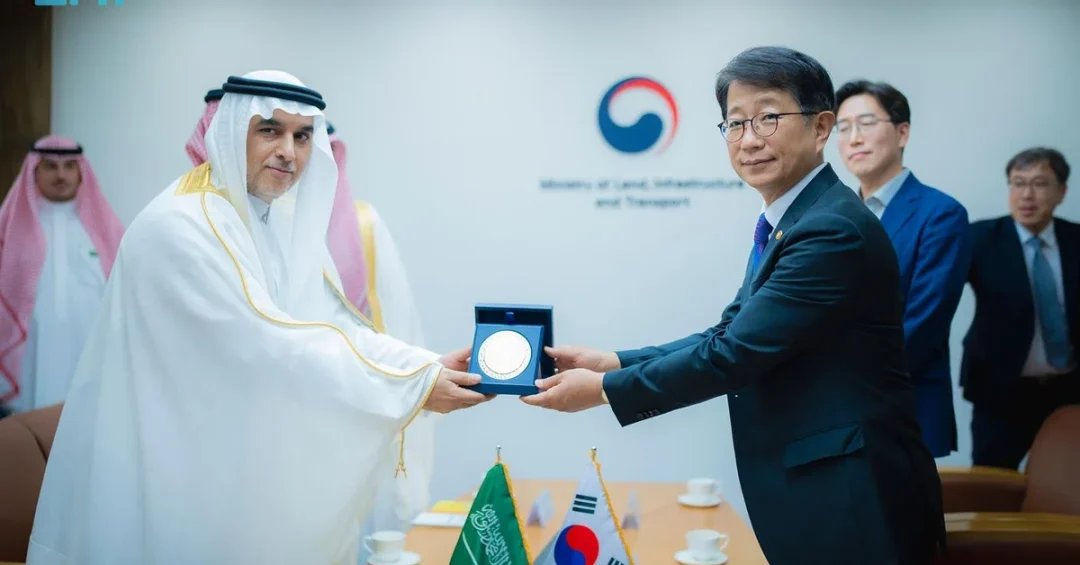
Saudi Data and Artificial Intelligence Authority (SDAIA) President Dr. Abdullah bin Sharaf Al-Ghamdi met with the Republic of Korea’s Minister of Land, Infrastructure, and Transport Sang-woo Park in Seoul on May 24, 2024, to discuss expanding cooperation in artificial intelligence (AI) and smart cities. The meeting, attended by Saudi Ambassador to the Republic of Korea Sami Al-Sadhan and several SDAIA officials, underscored the Kingdom’s commitment to leveraging advanced technologies for sustainable urban development.
Context and Background
SDAIA, established in 2019, is the Saudi government entity responsible for driving the national data and AI agenda. It plays a pivotal role in advancing the Kingdom’s Vision 2030 by fostering innovation, building digital infrastructure, and promoting smart city solutions. The meeting with Minister Park reflects Saudi Arabia’s ongoing efforts to collaborate with global leaders in technology and infrastructure. South Korea, known for its advanced smart city initiatives such as Songdo International Business District, offers valuable expertise that aligns with Saudi Arabia’s ambitions. The discussion builds on existing ties between the two nations, which have cooperated in areas like energy, construction, and digital transformation.
Key Details
During the meeting, Dr. Al-Ghamdi reviewed SDAIA’s smart-city cooperation with various government agencies, highlighting the Kingdom’s progress in the IMD Smart City Index 2024, where five Saudi cities advanced. This achievement underscores the effectiveness of Saudi Arabia’s integrated approach to urban technology. The two sides explored potential areas of collaboration, including AI-driven urban planning, data analytics for infrastructure, and the exchange of best practices in smart mobility and sustainability. The presence of Ambassador Al-Sadhan signified the diplomatic importance of the meeting, reinforcing the strong bilateral relationship between Saudi Arabia and South Korea.
Implications and Impact
This meeting is expected to accelerate knowledge transfer and joint projects in AI and smart cities, benefiting both nations. For Saudi Arabia, it supports the development of futuristic cities like NEOM and enhances the efficiency of existing urban centers. For South Korea, it opens avenues for exporting its smart city technologies and expertise. On a regional level, the collaboration could set a benchmark for international partnerships in sustainable urban development, aligning with global trends toward digitalization and green infrastructure.
Vision 2030 Alignment
The meeting directly supports Vision 2030’s objectives to diversify the economy, promote innovation, and improve quality of life through smart technologies. SDAIA’s efforts in AI and smart cities are integral to building a knowledge-based society and achieving environmental sustainability. As Saudi Arabia continues to forge global partnerships, such collaborations demonstrate the Kingdom’s leadership in harnessing technology for inclusive growth and its commitment to a prosperous future.
20 Questions
Q1. Who met with Dr. Abdullah bin Sharaf Al-Ghamdi in Seoul?
A1. Dr. Al-Ghamdi met with Sang-woo Park, the Republic of Korea’s Minister of Land, Infrastructure, and Transport, to discuss AI and smart city cooperation.
Q2. What is SDAIA?
A2. SDAIA is the Saudi Data and Artificial Intelligence Authority, established in 2019 to drive Saudi Arabia’s national data and AI agenda in line with Vision 2030.
Q3. Where did the meeting take place?
A3. The meeting took place in Seoul, the capital of the Republic of Korea, on May 24, 2024.
Q4. Who else attended the meeting?
A4. The meeting was attended by Saudi Ambassador to the Republic of Korea Sami Al-Sadhan and several SDAIA officials.
Q5. What topics were discussed?
A5. The two sides discussed prospects of cooperation in artificial intelligence and smart cities, focusing on knowledge exchange and joint projects.
Q6. What did Dr. Al-Ghamdi review during the meeting?
A6. He reviewed SDAIA’s smart-city cooperation with government agencies, which led to five Saudi cities advancing in the IMD Smart City Index 2024.
Q7. What is the IMD Smart City Index?
A7. The IMD Smart City Index evaluates how cities use technology to improve citizens’ quality of life and economic competitiveness.
Q8. How many Saudi cities advanced in the index?
A8. Five Saudi cities advanced in the IMD Smart City Index 2024, reflecting the Kingdom’s progress in smart city development.
Q9. Why is South Korea a key partner for Saudi Arabia?
A9. South Korea is a global leader in smart city technology and infrastructure, offering expertise that aligns with Saudi Arabia’s Vision 2030 goals.
Q10. What are the potential outcomes of this meeting?
A10. The meeting could lead to joint projects in AI-driven urban planning, data analytics, and smart mobility, benefiting both nations.
Q11. How does this collaboration support NEOM?
A11. It supports NEOM by facilitating the exchange of advanced technologies and best practices for building sustainable, futuristic cities.
Q12. What is Saudi Arabia’s role in AI globally?
A12. Saudi Arabia is emerging as a leader in AI, using it to diversify the economy, improve public services, and drive innovation under Vision 2030.
Q13. What is the significance of Ambassador Al-Sadhan’s presence?
A13. His presence highlights the diplomatic importance of the meeting and reinforces the strong bilateral ties between Saudi Arabia and South Korea.
Q14. How does smart city development benefit Saudi citizens?
A14. Smart city initiatives enhance quality of life through better services, sustainability, and efficiency, aligning with Vision 2030’s quality-of-life goals.
Q15. What did Minister Park say about the cooperation?
A15. Minister Park expressed support for the partnership, acknowledging the mutual benefits of sharing expertise in infrastructure and AI.
Q16. What are the next steps after this meeting?
A16. The sides will explore specific areas for collaboration, potentially leading to agreements and joint projects in the near future.
Q17. How does this meeting reflect Saudi Arabia’s global engagement?
A17. It demonstrates Saudi Arabia’s proactive approach to international partnerships, seeking knowledge and technology to advance its development goals.
Q18. What are the economic implications for Saudi Arabia?
A18. The collaboration can stimulate economic growth by attracting investment, fostering innovation, and creating high-tech jobs.
Q19. What are the environmental benefits of smart cities?
A19. Smart cities promote sustainability through efficient resource management, reduced emissions, and green infrastructure.
Q20. How does this align with Vision 2030?
A20. This initiative supports Vision 2030’s objectives to diversify the economy, enhance government efficiency, and improve quality of life through technology.
Reader Feedback
We value your thoughts. Please share your feedback on this article.
Your feedback helps us improve our coverage.