


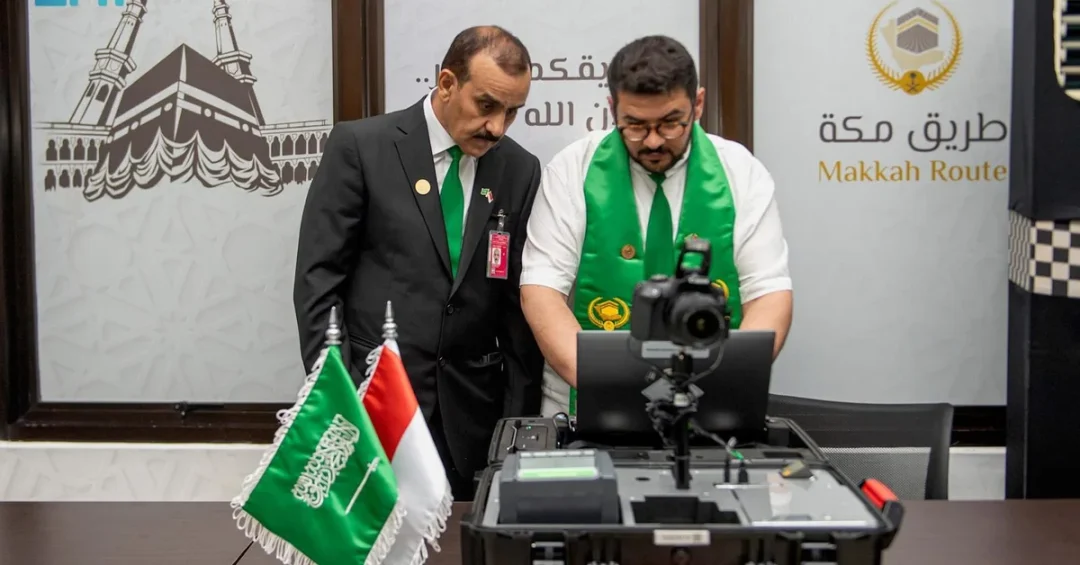
The Saudi Data and Artificial Intelligence Authority (SDAIA) is enhancing technical and digital capabilities under the Makkah Route Initiative for 1445 AH (2024), specifically at Adisumarmo International Airport in Solo, Indonesia. This move aims to streamline Hajj entry procedures for Indonesian pilgrims, offering a seamless experience from the moment they depart.
Context and Background
The Makkah Route Initiative is a flagship program under Saudi Arabia’s Vision 2030, implemented by the Ministry of Interior as part of the Pilgrim Experience Program. It allows pilgrims to complete entry procedures in their home country before traveling, significantly reducing time and effort upon arrival in the Kingdom. The initiative is a collaborative effort involving the Ministries of Foreign Affairs, Health, Hajj and Umrah, Media, the General Authority of Civil Aviation, the Zakat, Tax and Customs Authority, and SDAIA. This year, the program has been expanded to include multiple international airports, with Adisumarmo International Airport in Solo serving as a key hub for Indonesian pilgrims.
Key Details
SDAIA has implemented necessary technical systems under direct supervision to establish a robust digital infrastructure for the Hajj terminal and lounge at the airport. This includes the operation and management of “smart bags” to streamline the process of completing Hajj entry procedures. These smart bags are equipped with advanced tracking and identification technologies, ensuring that pilgrims’ luggage is efficiently processed and routed. The authority is also improving artificial intelligence capabilities to provide continuous support for digital transformation, ultimately aiming to deliver the highest quality of service to pilgrims. The digital infrastructure complies with international standards and specifications, reflecting Saudi Arabia’s commitment to technological excellence.
Implications and Impact
This enhancement of digital services at Adisumarmo Airport is expected to significantly improve the pilgrimage experience for Indonesian Muslims, reducing waiting times and eliminating the need for lengthy procedures upon arrival in Saudi Arabia. It also showcases the Kingdom’s leadership in leveraging data and AI to solve real-world challenges. The initiative strengthens bilateral ties between Saudi Arabia and Indonesia, a country with one of the world’s largest Muslim populations, and underscores the Kingdom’s dedication to serving pilgrims from all over the world. Moreover, the successful deployment of these technologies serves as a model for other nations seeking to modernize their travel and logistics systems.
Vision 2030 Alignment
SDAIA’s efforts within the Makkah Route Initiative align seamlessly with Vision 2030’s goals of digital transformation, economic diversification, and improving the quality of life. By harnessing the power of artificial intelligence and data, the Kingdom is not only enhancing the pilgrim journey but also positioning itself as a global leader in smart technologies. This initiative is a testament to the vision of the Saudi leadership in creating a sustainable and technologically advanced society. As the Kingdom continues to welcome millions of pilgrims annually, such innovations will play a pivotal role in delivering world-class services, reinforcing Saudi Arabia’s status as a hub for Islamic heritage and modern progress.
20 Questions
Q1. What is the Saudi Data and Artificial Intelligence Authority (SDAIA)?
A1. SDAIA is a Saudi government authority established to drive the Kingdom’s data and AI strategy. It develops policies, enhances capabilities, and implements technologies to support digital transformation, aligning with Vision 2030 goals.
Q2. What is the Makkah Route Initiative?
A2. The Makkah Route Initiative is a program under Vision 2030 that allows pilgrims to complete entry procedures, including visa and customs, at their home country’s airport before departure. This simplifies travel and enhances the pilgrim experience.
Q3. Where is Adisumarmo International Airport located?
A3. Adisumarmo International Airport is located in Solo City, Central Java, Indonesia. It serves as a major gateway for Indonesian pilgrims traveling to Saudi Arabia for Hajj and Umrah.
Q4. Why is SDAIA involved in the Makkah Route Initiative?
A4. SDAIA brings expertise in data and artificial intelligence to the initiative, ensuring that the digital infrastructure and smart technologies meet international standards. This enhances efficiency and service quality for pilgrims.
Q5. What are “smart bags” in the context of this initiative?
A5. Smart bags are luggage equipped with tracking and identification technology. They allow for automated handling and monitoring, ensuring that pilgrims’ belongings are correctly routed and delivered without confusion.
Q6. How does the smart bag system benefit pilgrims?
A6. Smart bags reduce the risk of lost luggage, enable faster processing, and provide real-time tracking for peace of mind. This streamlines the entire travel experience, allowing pilgrims to focus on their spiritual journey.
Q7. What is the role of the Ministry of Interior in this initiative?
A7. The Ministry of Interior leads the Makkah Route Initiative, coordinating with other ministries and agencies. It ensures security, immigration, and customs procedures are integrated smoothly into the airport experience.
Q8. How does this initiative align with Vision 2030?
A8. Vision 2030 emphasizes digital transformation and improving services. The Makkah Route Initiative leverages technology to enhance the pilgrimage experience, contributing to economic growth and global leadership in AI.
Q9. Which other countries are part of the Makkah Route Initiative?
A9. The initiative is implemented in several countries, including Indonesia, Pakistan, Malaysia, Turkey, and others. It is expanded annually to cover more departure points, making travel easier for pilgrims worldwide.
Q10. What is the Pilgrim Experience Program?
A10. The Pilgrim Experience Program is a Vision 2030 initiative focused on improving the services and facilities for pilgrims. It includes projects like the Makkah Route Initiative to ensure a comfortable and memorable journey.
Q11. How does SDAIA ensure data privacy and security?
A11. SDAIA adheres to strict data protection regulations and employs advanced encryption and cybersecurity measures. All pilgrim data is handled confidentially and in compliance with international standards.
Q12. What are the key technologies used in the digital infrastructure?
A12. The infrastructure includes biometric verification, automated passport control, smart luggage tracking, and AI-powered analytics. These technologies work together to expedite procedures and improve accuracy.
Q13. How does this initiative benefit Indonesia specifically?
A13. Indonesia sends one of the largest numbers of pilgrims annually. By offering pre-departure clearance, the initiative reduces congestion and waiting times, making the pilgrimage more accessible and comfortable for Indonesian Muslims.
Q14. Is there any training provided to airport staff?
A14. Yes, SDAIA and its partners provide comprehensive training to airport personnel to operate the new systems effectively. This ensures smooth operations and high service levels.
Q15. How can pilgrims track their smart bags?
A15. Pilgrims can use a mobile app or designated displays to track their smart bags in real-time. The system updates the location at various checkpoints, giving pilgrims peace of mind.
Q16. What is the expected impact on Hajj 2024?
A16. The enhanced systems are expected to significantly reduce processing time, allowing pilgrims to begin their spiritual journey with minimal delay. It also sets a new standard for efficiency in pilgrimage travel.
Q17. Does SDAIA plan to expand this technology to other airports?
A17. Yes, SDAIA aims to replicate this success in other airports participating in the Makkah Route Initiative, and potentially beyond. The goal is to create a fully integrated, smart pilgrimage experience.
Q18. How does this reflect Saudi Arabia’s leadership in AI?
A18. Saudi Arabia, through SDAIA, is investing heavily in AI research and deployment. This initiative demonstrates practical application of AI in public services, showcasing the Kingdom’s capability to lead in this field.
Q19. What feedback have pilgrims given about the smart bag system?
A19. Early feedback has been positive, with pilgrims appreciating the convenience and reliability. The system has reduced anxiety about luggage and allowed for a more focused spiritual experience.
Q20. What are the future plans for the Makkah Route Initiative?
A20. The initiative will continue to expand to more countries and airports, integrating new technologies such as blockchain for secure documentation and advanced biometrics to further enhance efficiency and safety for all pilgrims.
Reader Feedback
We value your thoughts. Please share your feedback on this article.
Your feedback helps us improve our coverage.