


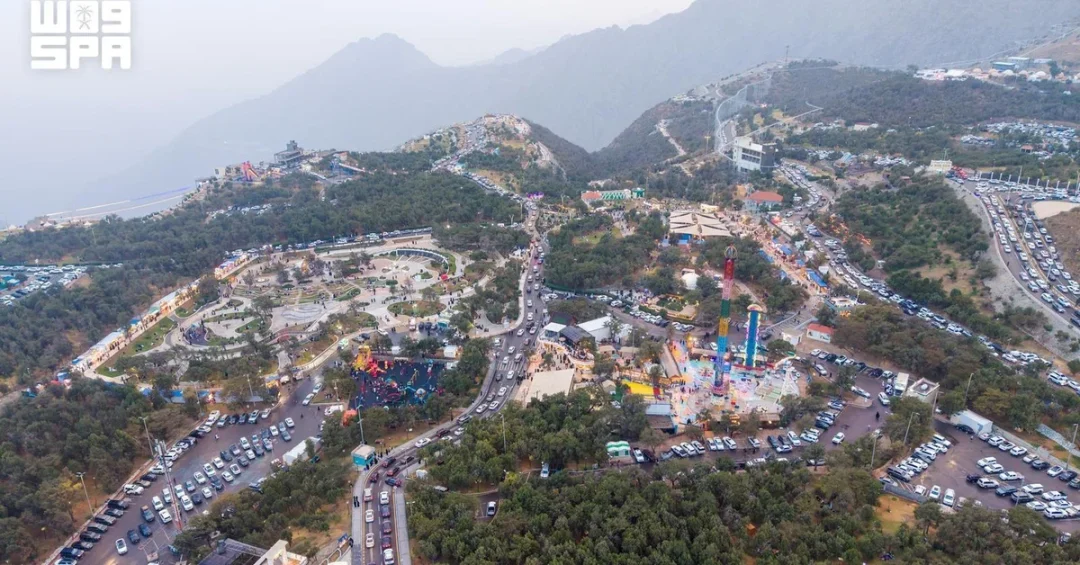
Tourist sites and public parks across Al-Baha Region are recording significant visitor numbers during the summer season, drawn by the area’s mild climate, lush landscapes, and integrated facilities, according to the Saudi Press Agency (SPA). The region’s green spaces, walking paths, and family seating areas are welcoming large crowds throughout the day, with activity peaking in the evening hours as families, youth, photographers, and hikers take advantage of moderate temperatures and the scenic mist that forms over the mountains. The influx reflects the growing appeal of Saudi Arabia’s highland destinations at a time when the Kingdom is investing heavily in domestic and international tourism as part of Vision 2030.
Officials cited by SPA said relevant authorities are keeping pace with the demand by enhancing services and maintaining public facilities, green spaces, and walking paths to ensure a suitable environment for visitors. The combination of natural beauty and well-kept infrastructure has positioned Al-Baha as one of the Kingdom’s most attractive summer retreats, offering a cool contrast to the hotter lowland areas. For international observers, the development illustrates how Saudi Arabia is diversifying its tourism offering beyond its major urban centers and Red Sea coastline, opening new regions to global visitors.
Context and Background
Why has Al-Baha become such a magnet for summer travelers? Located in the southwest of the Kingdom, Al-Baha sits at an elevation that gives it a markedly cooler climate than most of Saudi Arabia, with temperatures that remain moderate even at the height of summer. The region is known for its forests, mountain highlands, valleys, and heritage villages, combining natural beauty with architectural heritage. This geographical and natural diversity offers visitors a wide range of options, from shaded woodland walks to panoramic viewpoints and traditional settlements that reflect the Kingdom’s deep cultural roots.
The region’s rise as a seasonal destination is not accidental. It reflects a broader national effort to develop tourism infrastructure across Saudi Arabia, including in areas that were previously less familiar to international travelers. The Saudi Press Agency reported that parks, gardens, and natural sites are attracting large numbers of visitors throughout the day, particularly in the evening hours. Families gather in green spaces, walking paths and seating areas provide ideal settings for recreation, and the moderate temperatures and mountain mist add a distinctive scenic charm to the summer season.
For a global audience, Al-Baha represents a different face of Saudi Arabia: not the skyscrapers of Riyadh or the futuristic projects of NEOM, but a region of natural tranquility and heritage. Its growing popularity signals that the Kingdom’s tourism strategy is bearing fruit at the grassroots level, with Saudi families and residents rediscovering domestic destinations while international visitors begin to explore them as well.
Key Details
What exactly are visitors experiencing in Al-Baha this summer? According to SPA, the region’s tourist sites and parks are seeing notable visitor numbers, supported by integrated facilities and services that enhance the visitor experience. The destinations attract families, youth, photographers, and hikers, each finding something different: families appreciate the safe, well-maintained public spaces; young people enjoy the outdoor recreation; photographers capture the interplay of mist and mountain light; and hikers explore trails that wind through forests and highlands.
Relevant authorities are actively responding to the demand. They are enhancing services and maintaining public facilities, green spaces, and walking paths to ensure a suitable environment for visitors. This operational focus is essential to sustaining the region’s appeal, because a positive visitor experience encourages repeat visits and word-of-mouth promotion. The evening hours are particularly busy, as cooler temperatures and softer light make parks and gardens especially inviting after the daytime heat subsides in other parts of the Kingdom.
The region’s natural and geographical diversity is central to its draw. Forests, mountain highlands, valleys, and heritage villages offer a variety of landscapes within a relatively compact area. This means visitors can combine nature tourism with cultural exploration, moving from a wooded trail to a historic village in a single day. Such variety is a key asset in the competitive regional tourism market, where destinations seek to offer distinctive, multi-layered experiences.
International and Regional Impact
How does Al-Baha’s summer success fit into the wider regional tourism picture? Across the Gulf and the broader Middle East, countries are investing in domestic and inbound tourism to diversify their economies and create jobs. Saudi Arabia’s approach is distinctive in its scale and ambition, combining mega-projects with the development of natural and heritage destinations. Al-Baha’s popularity demonstrates that this strategy is not limited to flagship developments; it extends to regions that offer authentic landscapes and culture.
For international visitors, the region adds a new dimension to a Saudi itinerary. Travelers can now consider pairing a visit to Al-Baha with trips to other parts of the Kingdom, benefiting from improved domestic connectivity and a growing hospitality sector. The presence of photographers and hikers from different backgrounds also suggests that Al-Baha is beginning to attract niche tourism segments that value nature and outdoor activity. This aligns with global travel trends that favor experiential, nature-based tourism.
Regionally, the success of Al-Baha can serve as a model for other highland areas in the Kingdom and beyond. It shows that with careful maintenance of public facilities and services, natural destinations can handle increased visitor numbers while preserving their environment. The emphasis on green spaces and walking paths also supports public health and community well-being, benefits that extend beyond tourism economics.
Economic and Strategic Significance
What does Al-Baha’s visitor surge mean for Saudi Arabia’s economy? Tourism is a key pillar of Vision 2030, which aims to increase the sector’s contribution to gross domestic product and create employment opportunities for Saudi citizens. Regional destinations like Al-Baha help spread the economic benefits of tourism beyond the major cities, supporting local businesses such as hotels, restaurants, guides, and retailers. The spending by visitors in parks, heritage villages, and nearby commercial areas circulates money within the local economy.
Strategically, the development of Al-Baha and similar regions reduces the Kingdom’s reliance on oil revenues by broadening the economic base. It also strengthens national cohesion by giving Saudi families attractive domestic travel options, particularly during school holidays. The maintenance of public facilities and green spaces requires ongoing investment, which in turn creates jobs and supports small and medium-sized enterprises. Over time, a well-established tourism circuit in the southwest can complement other regional attractions, extending visitor stays and increasing overall tourism revenue.
The focus on service quality and facility maintenance also reflects a mature approach to destination management. Rather than simply promoting sites, authorities are ensuring that infrastructure keeps pace with demand. This protects the visitor experience and the natural environment, which is essential for sustainable tourism. For international investors and travel companies, such stewardship signals that Saudi Arabia’s tourism sector is being developed responsibly.
Vision 2030 Alignment
How does Al-Baha’s summer season connect to Saudi Arabia’s long-term vision? Vision 2030 seeks to position the Kingdom as a global tourism destination while enhancing the quality of life for citizens and residents. Al-Baha’s parks, heritage villages, and mountain landscapes embody this dual goal: they attract visitors from across the Kingdom and abroad, and they provide accessible recreational spaces for local communities. The region’s success demonstrates that Vision 2030 is not confined to futuristic cities but is grounded in the Kingdom’s existing natural and cultural wealth.
As Saudi Arabia continues to open up to the world, destinations like Al-Baha will play an increasingly important role in showcasing the country’s diversity. The mild summer weather, misty mountains, and warm hospitality create memorable experiences that encourage visitors to return and to recommend the region to others. With authorities committed to maintaining and enhancing services, Al-Baha is well positioned to build on this season’s momentum. The region’s story is one of sustainable growth, community benefit, and national pride, all of which are central to the Kingdom’s ambitious transformation.
20 Questions
Q1. What is driving the large crowds at Al-Baha’s tourist sites this summer?
A1. The region’s mild climate and lush landscapes are the main draw, supported by integrated facilities and services. Visitors seek relief from the heat in cooler highland areas, and the well-maintained parks, walking paths, and family seating areas make the destinations attractive for day trips and longer stays.
Q2. Which types of visitors are most common in Al-Baha during the summer season?
A2. Families, youth, photographers, and hikers are among the most common visitors. Families appreciate the safe public spaces, youth enjoy outdoor recreation, photographers capture the scenic mist over mountains, and hikers explore trails through forests and highlands, according to the Saudi Press Agency.
Q3. When are Al-Baha’s parks and natural sites busiest?
A3. The sites attract large numbers of visitors throughout the day, but activity peaks in the evening hours. Cooler temperatures and softer light make parks, gardens, and walking paths especially inviting after the daytime heat subsides, creating a lively but relaxed atmosphere for families and friends.
Q4. What natural features make Al-Baha unique in Saudi Arabia?
A4. Al-Baha is known for its forests, mountain highlands, valleys, and heritage villages. This natural and geographical diversity offers a wide range of landscapes within a compact area, combining natural beauty with architectural heritage. The moderate temperatures and mist that forms over the mountains add to its distinctive charm.
Q5. How are authorities responding to the increased visitor numbers?
A5. Relevant authorities are enhancing services and maintaining public facilities, green spaces, and walking paths to ensure a suitable environment for visitors. This proactive approach helps accommodate the crowds while preserving the quality of the visitor experience and protecting the natural surroundings for future seasons.
Q6. Why is Al-Baha’s climate cooler than other parts of Saudi Arabia?
A6. Al-Baha is located in the southwest of the Kingdom at a relatively high elevation. This elevation gives the region a milder climate than lowland areas, with moderate temperatures even during summer. The mountainous terrain also contributes to the formation of mist, which adds scenic beauty to the landscape.
Q7. What role do heritage villages play in Al-Baha’s tourism appeal?
A7. Heritage villages offer visitors a glimpse of traditional Saudi architecture and culture, complementing the region’s natural attractions. They allow tourists to combine nature exploration with cultural discovery, moving from forest trails to historic settlements in a single visit, which enriches the overall travel experience and supports local heritage preservation.
Q8. How does Al-Baha’s tourism success support Saudi Arabia’s economy?
A8. Tourism spending in Al-Baha supports local businesses such as hotels, restaurants, guides, and retailers. It creates jobs and circulates money within the regional economy. This aligns with Vision 2030’s goal of diversifying revenue sources and spreading economic benefits beyond major cities like Riyadh and Jeddah.
Q9. What facilities are available for families visiting Al-Baha’s parks?
A9. Al-Baha’s parks and gardens feature green spaces, walking paths, and family seating areas designed for recreation. These facilities are maintained by authorities to ensure a suitable environment. Families can enjoy picnics, strolls, and outdoor activities in a safe and welcoming setting, particularly during the cooler evening hours.
Q10. How does the summer season in Al-Baha compare with other Saudi destinations?
A10. While coastal and desert destinations can be extremely hot in summer, Al-Baha offers a cooler highland alternative. Its mild weather, misty mountains, and green landscapes provide a distinct experience. This makes it a popular choice for domestic tourists seeking respite from the heat in other regions of the Kingdom.
Q11. What is the significance of the mist over Al-Baha’s mountains?
A11. The mist that forms over the mountains adds scenic charm to the summer season. It creates dramatic visual effects that attract photographers and enhances the overall atmosphere for visitors. This natural phenomenon is part of what makes Al-Baha’s landscapes unique and memorable, contributing to the region’s growing reputation as a summer destination.
Q12. Are there opportunities for hiking in Al-Baha?
A12. Yes, Al-Baha’s mountainous terrain and forested areas offer numerous opportunities for hiking. Trails wind through highlands and valleys, attracting hikers who enjoy outdoor adventure. The moderate summer temperatures make hiking more comfortable than in hotter regions, and the varied landscapes provide rewarding views along the routes.
Q13. How does Al-Baha’s tourism development reflect Vision 2030?
A13. Vision 2030 aims to boost tourism’s contribution to the economy and improve quality of life. Al-Baha’s development as a summer destination supports both goals by attracting visitors, creating jobs, and providing recreational spaces for communities. It shows that the vision extends to natural and heritage regions, not just mega-projects.
Q14. What measures are taken to maintain public facilities in Al-Baha?
A14. Relevant authorities are keeping pace with demand by enhancing services and maintaining public facilities, green spaces, and walking paths. This ongoing maintenance ensures a suitable environment for visitors and helps preserve the region’s natural beauty. It also supports safety and comfort for the large numbers of people visiting during peak periods.
Q15. Can international tourists easily visit Al-Baha?
A15. International tourists can visit Al-Baha as part of a broader trip to Saudi Arabia, benefiting from improved domestic connectivity and a growing hospitality sector. The region is becoming more accessible, and its unique landscapes and heritage villages offer international visitors an authentic experience beyond the major urban centers of the Kingdom.
Q16. What types of landscapes can visitors expect to see in Al-Baha?
A16. Visitors can explore forests, mountain highlands, valleys, and heritage villages. Each offers a different experience: shaded woodland walks, panoramic mountain views, fertile valleys, and traditional settlements. This diversity allows visitors to enjoy a range of activities and scenery within a relatively small geographical area.
Q17. How does Al-Baha’s summer tourism benefit local communities?
A17. Increased visitor numbers generate income for local businesses and create employment opportunities in hospitality, retail, and services. Community members can showcase local products and culture. The maintenance of public spaces also improves local quality of life, as residents enjoy the same parks and facilities that attract tourists.
Q18. What makes Al-Baha a good destination for photographers?
A18. The combination of misty mountains, lush greenery, heritage architecture, and changing light throughout the day provides excellent photographic opportunities. Photographers are among the visitors drawn to the region, capturing its scenic charm. The moderate summer weather also makes outdoor photography more comfortable for extended sessions.
Q19. How does Al-Baha’s success fit into Saudi Arabia’s broader tourism strategy?
A19. It demonstrates that the Kingdom’s tourism strategy is yielding results across diverse regions. While mega-projects attract global attention, destinations like Al-Baha show that natural and heritage sites can also draw significant numbers. This broad-based approach helps distribute tourism’s economic benefits and enriches the overall visitor offering.
Q20. What does the future hold for Al-Baha as a tourist destination?
A20. With continued investment in services and facilities, Al-Baha is well positioned to build on its summer success. Its mild climate, natural beauty, and cultural heritage provide a strong foundation. As Saudi Arabia’s tourism sector grows, Al-Baha is likely to attract even more visitors seeking authentic highland experiences.
Reader Feedback
We value your thoughts. Please share your feedback on this article.
Your feedback helps us improve our coverage.
Related articles
 Al-Baha Rains Captivate Visitors amid Foggy Mountain Views
 Al-Duqm Beach Draws Summer Visitors to Umluj
 Umrah Guests Explore Prophet’s Biography Museum in Madinah
 Taif Mountains Attract Hiking Enthusiasts to Scenic Trails
 Billasmar Forests Offer Scenic Natural Retreat in Aseer
 Al-Ashyakh Dunes Boost Ecotourism in Rafha