


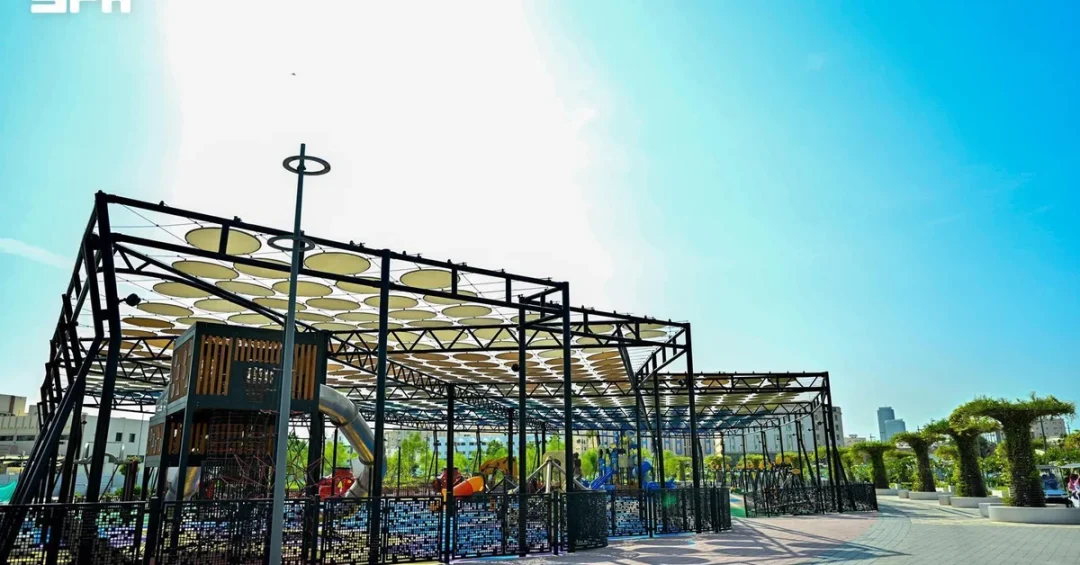
Al-Saja Gardens in Jeddah has emerged as one of the standout open-air destinations of Saudi Summer 2026, welcoming residents and international visitors with more than 20,000 square meters of green space, over 13,500 trees, and a suite of recreational and sports facilities across a site covering more than 60,000 square meters. The garden, developed under the Joy Project, combines nature, family activities, and healthy-living infrastructure in a single location, according to information released by the Saudi Press Agency (SPA).
For a city of Jeddah’s scale and climate, the opening of such a destination carries practical significance. The Red Sea port city is home to more than four million people and receives millions of pilgrims and tourists each year, yet accessible green space has historically been limited relative to population. Al-Saja Gardens responds to that gap directly, offering shaded walkways, seating areas, and landscaped zones designed for use throughout the summer season. Could a single park truly shift how a city of millions spends its leisure time? When that park is embedded in a national program of park development, the answer becomes more plausible than it might first appear.
Context and Background
What makes Al-Saja Gardens more than an ordinary municipal park? The answer lies in the program behind it. The garden forms part of the Joy Project, an initiative focused on developing parks and public facilities that encourage healthy lifestyles, enhance quality of life, and create attractive environments for recreation. The project reflects a broader shift in Saudi urban planning, in which public space is treated as essential infrastructure rather than an afterthought.
The timing is closely tied to Saudi Summer 2026, a nationwide season that promotes domestic tourism and family-oriented leisure across the Kingdom. Under this umbrella, destinations from Jeddah’s waterfront to the highlands of Asir and the heritage sites of AlUla are positioned as alternatives to overseas travel for Saudi families, while also appealing to international visitors. Al-Saja Gardens fits naturally into that calendar: it is free to enter, family-oriented, and designed for repeat visits rather than one-off trips.
Jeddah itself has been undergoing sustained investment in public realm improvements. The Jeddah Corniche, the Jeddah Art Promenade, and various waterfront developments have reshaped how residents experience the city’s coastline. Inland green spaces such as Al-Saja Gardens complement these efforts by bringing recreational capacity into residential districts, reducing the need for long drives to the sea. For families with young children or elderly relatives, proximity matters as much as scale.
Key Details of the Destination
What exactly does a visitor find on arrival? According to SPA, the garden spans more than 60,000 square meters in total. Within that footprint, more than 20,000 square meters are dedicated green space, distributed across seven main areas. The site is planted with more than 13,500 trees, giving it a natural character that distinguishes it from purely hardscaped urban plazas.
The seven zones are arranged to support different uses: strolling, sitting, family gatherings, and children’s play. A central feature is a 2,200-square-meter shaded children’s play area, equipped with a variety of physical activities suitable for different age groups. The shade structure is particularly important in Jeddah, where summer temperatures regularly exceed 40 degrees Celsius. By providing a safe, cooler environment for children, the design allows families to extend their outdoor time into hours that would otherwise be uncomfortable.
Beyond the play area, the garden offers seating throughout, walking paths, and sports and recreational facilities. These elements support the Joy Project’s stated aim of promoting healthy lifestyles. Rather than treating exercise as a separate activity requiring a gym membership, the design integrates movement into everyday leisure: a walk between zones, a game with children, or a circuit around the green spaces all contribute to physical activity.
A Summer Destination for Families and Visitors
How does Al-Saja Gardens fit into the wider Saudi Summer 2026 offering? The season aggregates events, promotions, and destinations under a single national banner, making it easier for families to plan travel within the Kingdom. Jeddah serves as a gateway city for many of these experiences, with its airport, hospitality sector, and Red Sea location. A garden of this scale adds a low-cost, high-frequency option to the itinerary.
For international visitors, the garden offers a glimpse of everyday Saudi life in a relaxed setting. Families picnicking, children playing, and residents exercising are all part of the scene. This kind of soft cultural exposure complements the Kingdom’s larger tourism assets, such as Diriyah, AlUla, and the Red Sea resorts. Not every visitor seeks a monumental experience; many value ordinary spaces done well.
Repeat visitation is a key metric for parks, and the design supports it. Because entry is open and the site is large enough to avoid crowding, residents can return weekly or even daily without the experience becoming stale. The seven distinct areas allow families to vary their routine, and the tree cover provides seasonal variety as foliage changes. Over time, such spaces build attachment and community identity.
International and Regional Impact
Does a park in Jeddah matter beyond Saudi Arabia’s borders? In regional terms, yes. Gulf cities have increasingly competed on quality of life, and public green space has become a marker of urban sophistication. Jeddah’s investment in destinations like Al-Saja Gardens positions the city alongside peers such as Dubai, Abu Dhabi, and Doha, which have all expanded their park networks in recent years. For investors and skilled professionals considering relocation, everyday amenities weigh heavily in the decision.
Internationally, the project contributes to Saudi Arabia’s growing reputation for ambitious urban development. The Kingdom’s megaprojects, including NEOM and the Diriyah Gate project, attract global attention, but the cumulative effect of smaller-scale public realm improvements may prove equally consequential for residents. Visitors who experience well-maintained parks, safe play areas, and accessible green space form impressions that shape perceptions of the country as a whole.
Regional tourism also benefits. Travelers from neighboring Gulf states often seek family-friendly destinations within driving distance, particularly during school holidays. Jeddah’s combination of coastal attractions, shopping, dining, and now expanded park capacity strengthens its appeal as a short-break destination. The Kingdom’s streamlined tourist visa processes have made such trips easier to arrange, and Saudi Summer 2026 provides a clear promotional framework.
Economic and Strategic Significance
What economic logic supports investing in free public parks? The answer lies in indirect returns. Parks raise property values in surrounding districts, support local retail and food businesses, and reduce public health costs by encouraging physical activity. They also create temporary and permanent employment in landscaping, maintenance, security, and programming. For a city like Jeddah, where the population continues to grow, these effects compound over time.
Strategically, Al-Saja Gardens supports the Kingdom’s broader goals of diversifying the economy and improving the lived experience of citizens and residents. The Joy Project’s emphasis on healthy lifestyles aligns with national health objectives, including efforts to reduce rates of obesity and diabetes. By making exercise convenient and pleasant, the garden contributes to prevention rather than treatment, easing long-term pressure on the healthcare system.
The project also reflects a maturing approach to urban development, in which quality of life is treated as a driver of economic competitiveness rather than a byproduct. Cities that offer attractive public spaces find it easier to recruit talent, host events, and sustain tourism. Jeddah’s park investments are thus part of a wider strategy to position Saudi cities as desirable places to live, work, and visit.
Vision 2030 Alignment
How does a garden connect to a national transformation plan? Saudi Vision 2030 includes explicit commitments to enhance quality of life, promote healthy living, and develop vibrant communities. The Joy Project, which oversees Al-Saja Gardens, translates those commitments into physical infrastructure. Every shaded walkway, play area, and tree-lined path is a tangible expression of the vision’s social and environmental pillars.
The garden also supports Vision 2030’s tourism and entertainment objectives. By expanding the range of family-friendly destinations in Jeddah, it helps extend visitor stays and encourages domestic spending on leisure. Saudi Summer 2026 provides the promotional platform, while projects like Al-Saja Gardens supply the substance. Together, they illustrate how national strategy and local execution reinforce one another.
Looking ahead, the continued development of parks and public facilities under the Joy Project is expected to broaden access to green space across the Kingdom. Al-Saja Gardens stands as an early example of what that future looks like: a place where nature, recreation, and community come together in the heart of a major city. For residents of Jeddah and visitors to the Kingdom, it offers a simple but meaningful invitation to step outside and enjoy the summer.
20 Questions
Q1. What is Al-Saja Gardens?
A1. Al-Saja Gardens is an open-air destination in Jeddah featuring green spaces, recreational facilities, and sports amenities. It is part of the Joy Project and was highlighted by the Saudi Press Agency during Saudi Summer 2026.
Q2. Where is Al-Saja Gardens located?
A2. Al-Saja Gardens is located in Jeddah, Saudi Arabia, a major Red Sea port city and gateway for pilgrims and tourists. The garden serves residents and visitors throughout the summer season.
Q3. How large is Al-Saja Gardens?
A3. The garden covers more than 60,000 square meters in total. Within that area, more than 20,000 square meters are dedicated green space distributed across seven main zones.
Q4. How many trees are planted in the garden?
A4. According to the Saudi Press Agency, Al-Saja Gardens contains more than 13,500 trees. This extensive planting gives the site a natural character and provides shade and visual appeal.
Q5. What is the Joy Project?
A5. The Joy Project is an initiative to develop parks and public facilities that promote healthy lifestyles, enhance quality of life, and provide attractive environments for recreation. Al-Saja Gardens is part of this program.
Q6. What facilities are available for children?
A6. The garden features a 2,200-square-meter shaded children’s play area with a variety of physical activities suitable for different age groups. The shade structure helps keep children comfortable during hot summer days.
Q7. Is Al-Saja Gardens suitable for families?
A7. Yes, the garden is designed for families, offering seating areas, green spaces, and play facilities. Parents can relax while children play in a safe, supervised environment.
Q8. What is Saudi Summer 2026?
A8. Saudi Summer 2026 is a nationwide season promoting domestic tourism and family leisure across the Kingdom. It aggregates events, destinations, and promotions to encourage travel within Saudi Arabia.
Q9. How many main areas does the garden have?
A9. Al-Saja Gardens is organized into seven main areas. These zones support different activities, including strolling, sitting, family gatherings, and children’s play.
Q10. Does the garden offer sports facilities?
A10. Yes, the garden includes recreational and sports facilities alongside its green spaces. These amenities support the Joy Project’s goal of promoting healthy lifestyles and physical activity.
Q11. Is there an entry fee for Al-Saja Gardens?
A11. The source material does not mention an entry fee. Public parks developed under such programs are typically open to the public, but visitors should check official channels for current information.
Q12. Why is shade important in Jeddah’s gardens?
A12. Jeddah experiences very high summer temperatures, often exceeding 40 degrees Celsius. Shaded areas allow families to use the garden comfortably for longer periods during the day.
Q13. How does the garden support healthy lifestyles?
A13. By providing walking paths, sports facilities, and open green space, the garden encourages physical activity as part of everyday leisure. This aligns with the Joy Project’s health objectives.
Q14. What role does the Saudi Press Agency play?
A14. The Saudi Press Agency is the Kingdom’s official news agency. It reported on Al-Saja Gardens, providing verified information about its size, facilities, and connection to Saudi Summer 2026.
Q15. How does Al-Saja Gardens relate to Vision 2030?
A15. Vision 2030 emphasizes quality of life, healthy living, and vibrant communities. Al-Saja Gardens supports these goals by providing accessible green space and recreational infrastructure in Jeddah.
Q16. Can international tourists visit Al-Saja Gardens?
A16. Yes, the garden welcomes visitors, including international tourists. Saudi Arabia has expanded tourist visas, making it easier for foreign visitors to explore destinations like Jeddah.
Q17. What makes Al-Saja Gardens different from other parks?
A17. Its scale, extensive tree cover, and integration of recreational, sports, and family facilities within a single site set it apart. It is also tied to a national program and summer season.
Q18. How does the garden benefit the local economy?
A18. Parks can raise nearby property values, support local businesses, and create jobs in maintenance and programming. They also reduce long-term public health costs by encouraging activity.
Q19. Is Al-Saja Gardens part of a larger development plan?
A19. Yes, it is part of the Joy Project, which aims to develop parks and public facilities across the Kingdom. This reflects a broader strategy to expand green space in Saudi cities.
Q20. What can visitors expect during Saudi Summer 2026 at the garden?
A20. Visitors can expect a family-friendly environment with green spaces, shaded play areas, seating, and sports facilities. The garden is positioned as a key leisure destination for the season in Jeddah.
Reader Feedback
We value your thoughts. Please share your feedback on this article.
Your feedback helps us improve our coverage.
Related articles
 Scenic Routes to AlUla Enrich Journey with Diverse Landscapes
 Oyoun Al-Jiwa Heritage Village Lighting Enhances Historic Charm
 Umrah Performers Urged to Plan Ahead to Avoid Peak Times
 Green Spaces in Makkah Enhance Urban Climate and Visitor Comfort
 Guests Program Visits Revelation Exhibition in Makkah
 Sea of Clouds Elevates Aseer as Top Saudi Summer Destination