


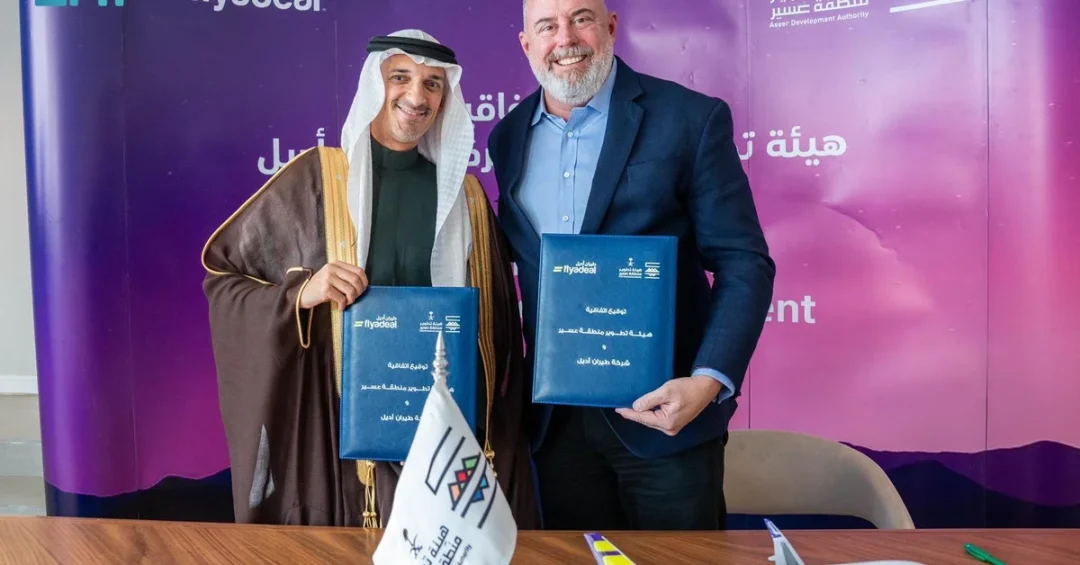
The Aseer Development Authority has signed a memorandum of understanding with flyadeal, Saudi Arabia’s low-cost carrier, to strengthen air services and support the Kingdom’s broader ambitions to establish the Aseer region as a year-round global tourism destination. The agreement was formalized in Abha on December 10, 2024, according to the Saudi Press Agency, and was signed by Eng. Hashem Al-Dabbagh, Acting CEO of the Aseer Development Authority, and Stephen Greenway, CEO of flyadeal. The MoU establishes a framework for integrated collaboration between the two organizations, covering the exchange of capabilities, expertise, and resources to achieve shared strategic objectives.
Why does this partnership matter at this particular moment in Saudi Arabia’s development story? The answer lies in the intersection of two national priorities: the expansion of domestic aviation connectivity and the diversification of the Kingdom’s tourism economy away from traditional centers. Aseer, a mountainous region in southwestern Saudi Arabia known for its cool climate, terraced farms, and cultural heritage, has been identified as a key pillar of the National Tourism Strategy. Improved air access is widely regarded as a prerequisite for attracting international visitors and extending their stays beyond the summer months, when the region traditionally draws domestic travelers seeking respite from the heat. The MoU signals that both parties view aviation as a critical enabler of that vision.
Context and Background
What is the Aseer Development Authority, and why was it created? Established under a royal order in 2021, the Authority is tasked with transforming the Aseer region into a world-class tourism and investment destination. Its mandate aligns directly with the Public Investment Fund’s broader strategy to develop integrated destinations across the Kingdom, including the Red Sea Project, Diriyah, and NEOM. Aseer’s unique value proposition rests on its geography: elevations exceeding 2,000 meters, a temperate climate rare in the Arabian Peninsula, and a rich cultural landscape that includes the historic Al-Muftaha village, the Rijal Almaa heritage site, and the annual Soudah Season festival. The Authority has been actively courting airlines, hotel operators, and event organizers to build a sustainable tourism ecosystem that operates throughout all four seasons.
flyadeal, for its part, has emerged as a significant player in Saudi Arabia’s aviation market since its launch in 2017. Operating as a low-cost subsidiary of Saudi Arabian Airlines (Saudia), flyadeal has expanded its fleet and route network rapidly, serving domestic destinations such as Riyadh, Jeddah, Dammam, and Abha, as well as a growing list of international points. The carrier’s business model emphasizes affordability and convenience, making it a natural partner for a region seeking to increase visitor numbers without relying solely on premium travelers. The airline has also been vocal about its role in supporting Vision 2030 by enhancing connectivity to underserved regions and contributing to the growth of domestic tourism.
Recent years have seen a series of infrastructure investments in Aseer, including upgrades to Abha International Airport and the development of new hospitality assets. These projects are designed to accommodate higher passenger volumes and improve the overall visitor experience. The MoU with flyadeal complements these efforts by addressing the demand side of the equation: without sufficient seat capacity and convenient flight schedules, even the most impressive infrastructure cannot deliver the desired economic impact. By formalizing a partnership, the Authority and the airline can coordinate route planning, marketing campaigns, and service standards more effectively than through ad hoc arrangements.
Key Details of the Agreement
What specifically does the memorandum commit the two parties to do? According to the Saudi Press Agency, the MoU outlines several provisions to establish a framework for integrated collaboration and defines specific agreed-upon areas of focus. While the full text of the agreement has not been publicly released, the stated objectives include boosting cooperation in various fields, facilitating the exchange of knowledge and interests, and leveraging each side’s capabilities and expertise to achieve mutual goals. For the Aseer Development Authority, this means gaining a committed airline partner that can help align flight schedules with tourism seasons, promote the region as a destination, and potentially develop new routes or increase frequencies to Abha.
For flyadeal, the partnership offers a structured channel to engage with a high-potential market. The airline has consistently emphasized its commitment to enhancing air services that support the region’s tourism sector in line with the goals of Saudi Vision 2030. By working closely with the Authority, flyadeal can better understand demand patterns, tailor its product to the needs of leisure travelers, and participate in joint marketing initiatives that raise awareness of Aseer among both domestic and international audiences. The MoU also reflects a broader trend in Saudi Arabia’s aviation sector, where airlines and destination management organizations are increasingly collaborating to unlock new sources of growth.
The signing ceremony in Abha included Eng. Hashem Al-Dabbagh, who has been leading the Aseer Development Authority in an acting capacity, and Stephen Greenway, a veteran aviation executive who took the helm at flyadeal after a distinguished career with airlines in Europe and the Middle East. Their presence underscores the seriousness with which both organizations approach the partnership. The event also highlights the Authority’s proactive approach to building effective and sustainable partnerships across all sectors, consistent with its strategic objective to establish Aseer as a leading global destination throughout the year.
International and Regional Impact
How will this agreement affect travelers from outside Saudi Arabia? For international visitors, the MoU promises improved connectivity to a region that has historically been difficult to reach for foreign tourists. Abha International Airport currently receives a limited number of international flights, primarily from neighboring Gulf countries. Enhanced cooperation with flyadeal could lead to new routes from key source markets, more convenient connections via Riyadh and Jeddah, and better integration with the Kingdom’s broader tourism offerings. As Saudi Arabia continues to relax visa requirements and promote itself as a year-round destination, air access remains a critical factor in converting interest into actual visits.
Regionally, the partnership reinforces Saudi Arabia’s position as a leader in tourism development within the Gulf Cooperation Council. Competitors such as the United Arab Emirates and Oman have invested heavily in their own mountain and heritage destinations, and Aseer’s success will depend in part on its ability to offer a distinctive experience. By securing a committed airline partner, the Authority is signaling that it intends to compete vigorously for a share of the growing regional tourism market. The MoU also aligns with the broader trend of Gulf states investing in aviation and tourism as part of economic diversification strategies, creating new opportunities for collaboration and healthy competition.
Economic and Strategic Significance
What are the economic implications of boosting air services to Aseer? Tourism is a labor-intensive sector that creates jobs across a wide range of skill levels, from hospitality and retail to transportation and guiding. By increasing visitor numbers, the partnership can stimulate local employment and entrepreneurship, particularly among small and medium-sized enterprises that cater to tourists. The Authority has emphasized that its development plans are designed to benefit local communities, preserving cultural heritage while creating modern economic opportunities. Improved air links also make the region more attractive to investors in hotels, resorts, and entertainment venues, who require confidence that guests can reach their properties conveniently.
From a strategic perspective, the MoU supports Saudi Arabia’s goal of increasing the tourism sector’s contribution to GDP from around 3 percent to 10 percent by 2030. Domestic tourism is a key component of that target, and Aseer is well positioned to capture a larger share of the domestic market. The region’s cool climate offers a natural advantage during the summer months, while its cultural and natural attractions provide reasons to visit year-round. By working with flyadeal to promote off-season travel and develop new products, the Authority can help smooth out demand fluctuations and create a more resilient tourism economy. The partnership also contributes to the broader objective of reducing the Kingdom’s dependence on hydrocarbon revenues by building a diversified, knowledge-based economy.
Vision 2030 Alignment
How does this MoU fit into the larger framework of Saudi Vision 2030? Vision 2030, launched in 2016 under the leadership of Crown Prince Mohammed bin Salman, sets out a comprehensive roadmap for transforming Saudi Arabia’s economy and society. Tourism is one of the key sectors identified for growth, with ambitious targets for visitor numbers, job creation, and GDP contribution. The Aseer Development Authority and flyadeal are both actively contributing to these goals, the former by developing a world-class destination and the latter by providing the connectivity needed to bring visitors to it. Their partnership exemplifies the collaborative approach that Vision 2030 encourages across the public and private sectors.
Looking ahead, the MoU is expected to lead to concrete initiatives in the coming months, potentially including new routes, joint promotional campaigns, and improved passenger services. As Saudi Arabia continues to invest in its aviation and tourism infrastructure, partnerships like this one will be essential to ensuring that the benefits of growth are shared across all regions of the Kingdom. For international observers, the agreement offers a clear example of how Vision 2030 is being translated into action on the ground, with tangible results for travelers, businesses, and communities. The Aseer region’s journey toward becoming a global destination is still in its early stages, but with committed partners like flyadeal, the foundation is being laid for long-term success.
20 Questions
Q1. What is the purpose of the MoU signed between the Aseer Development Authority and flyadeal?
A1. The MoU aims to enhance cooperation in air services, facilitate knowledge exchange, and support the Aseer region’s development as a year-round tourism destination in line with Saudi Vision 2030.
Q2. Who signed the memorandum on behalf of the Aseer Development Authority?
A2. Eng. Hashem Al-Dabbagh, Acting CEO of the Aseer Development Authority, signed the MoU. He has been leading the Authority’s efforts to develop the region as a global destination.
Q3. Who represented flyadeal at the signing ceremony?
A3. Stephen Greenway, CEO of flyadeal, signed on behalf of the airline. He brings extensive international aviation experience to the role and has emphasized the carrier’s commitment to supporting Saudi tourism.
Q4. Where was the MoU signed?
A4. The MoU was signed in Abha, the capital of the Aseer region, according to the Saudi Press Agency. Abha is home to Abha International Airport, a key gateway for the region.
Q5. What are the key areas of cooperation outlined in the MoU?
A5. The agreement establishes a framework for integrated collaboration, including boosting cooperation in various fields, exchanging knowledge and interests, and leveraging capabilities and expertise to achieve mutual goals.
Q6. How does the MoU support the Aseer Development Authority’s strategic objectives?
A6. It contributes to the Authority’s efforts to foster effective and sustainable partnerships across all sectors, consistent with its goal of establishing Aseer as a leading global destination throughout the year.
Q7. What is flyadeal’s role in the partnership?
A7. flyadeal is committed to enhancing air services that support the region’s tourism sector. The airline will work with the Authority to improve connectivity and promote Aseer as a destination.
Q8. How does this MoU align with Saudi Vision 2030?
A8. The partnership supports Vision 2030’s goals of diversifying the economy, boosting tourism’s GDP contribution, and developing regions across the Kingdom as attractive destinations for domestic and international visitors.
Q9. What is the significance of Aseer as a tourism destination?
A9. Aseer is known for its mountainous terrain, cool climate, cultural heritage, and natural beauty. It has been identified as a key region for tourism development under the National Tourism Strategy.
Q10. How will the MoU benefit travelers?
A10. Travelers can expect improved air connectivity, potentially new routes, better schedules, and enhanced services that make it easier to visit Aseer throughout the year.
Q11. What economic benefits could result from the partnership?
A11. The partnership can stimulate job creation, support local businesses, attract investment in hospitality and infrastructure, and increase tourism’s contribution to the regional and national economy.
Q12. What is flyadeal’s background?
A12. flyadeal is a low-cost airline launched in 2017 as a subsidiary of Saudi Arabian Airlines (Saudia). It operates domestic and international routes and focuses on affordable, convenient travel.
Q13. What is the Aseer Development Authority?
A13. Established by royal order in 2021, the Authority is responsible for transforming the Aseer region into a world-class tourism and investment destination, aligned with Vision 2030.
Q14. How does this MoU fit into Saudi Arabia’s broader aviation strategy?
A14. It reflects the growing collaboration between airlines and destination authorities to expand connectivity, support tourism, and enhance the Kingdom’s aviation sector in line with national goals.
Q15. What infrastructure developments are underway in Aseer?
A15. Projects include upgrades to Abha International Airport, new hospitality assets, and improvements to tourism facilities, all designed to accommodate higher visitor numbers and improve the visitor experience.
Q16. Will the MoU lead to new flight routes to Aseer?
A16. While specific routes have not been announced, the agreement creates a framework for cooperation that could lead to new services or increased frequencies to Abha and other parts of the region.
Q17. How does the partnership promote sustainable tourism?
A17. By encouraging year-round visitation and aligning flight schedules with tourism seasons, the partnership can help distribute visitor demand more evenly and support sustainable development of the region’s assets.
Q18. What role do local communities play in this initiative?
A18. The Authority emphasizes that development plans are designed to benefit local communities by preserving cultural heritage, creating jobs, and supporting small and medium-sized enterprises in the tourism sector.
Q19. What are the next steps following the MoU signing?
A19. The two parties are expected to develop joint initiatives, including potential route expansions, marketing campaigns, and service enhancements, as they implement the framework outlined in the memorandum.
Q20. How does this partnership reflect Saudi Arabia’s global engagement?
A20. It demonstrates the Kingdom’s openness to international visitors, its commitment to developing world-class destinations, and its collaborative approach to achieving Vision 2030 objectives with leading private sector partners.
Reader Feedback
We value your thoughts. Please share your feedback on this article.
Your feedback helps us improve our coverage.
Related articles
 Saudi Arabia Joins 35th Arab Tourism Executive Office Session
 Madinah Airport Welcomes 10 Millionth Passenger of 2024
 Winter Getaways Await in the Northern Borders Region
 AlUla Majestic Mountains Celebrated on International Mountain Day
 Tabuk Mountains Embraced by Snow and Clouds
 Al-Shuqaiq: Saudi Coastal Gem Boosting Tourism and Investment