


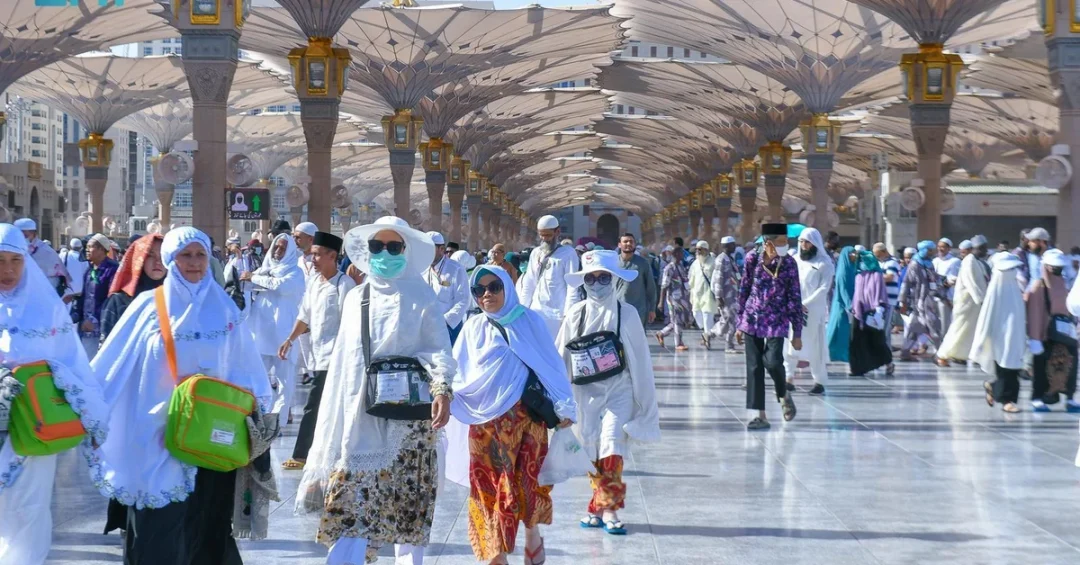
Madinah has begun receiving pilgrims at the start of Dhu al-Qi’dah, as the faithful embark on a spiritual journey in the holy city before proceeding to Makkah for the Hajj rituals. The Saudi Press Agency (SPA) reported that pilgrims are spending the pre-Hajj period in Madinah, where comprehensive services are provided by various government and private entities dedicated to facilitating Hajj. This annual influx reflects the Kingdom’s commitment to serving guests of God and ensuring a smooth and fulfilling pilgrimage experience.
Context and Background
Madinah, the second holiest city in Islam, holds profound significance for Muslims worldwide. It is home to the Prophet’s Mosque (Al-Masjid an-Nabawi), where the Prophet Muhammad (peace be upon him) is buried. Pilgrims often arrive weeks before Hajj to visit the mosque, engage in prayer, and prepare spiritually for the main pilgrimage in Makkah. The pre-Hajj stay in Madinah allows pilgrims to acclimatize, reflect, and perform religious rites at key sites such as Quba Mosque and Mount Uhud.
The arrival of pilgrims at the start of Dhu al-Qi’dah, the 11th month of the Islamic calendar, marks the beginning of the Hajj season. This period is characterized by a steady flow of international and domestic pilgrims, with Saudi authorities implementing extensive plans to manage crowds, provide healthcare, and ensure security. The Kingdom’s Ministry of Hajj and Umrah, along with other agencies, coordinates these efforts under the overarching vision of enhancing the pilgrimage experience.
Key Details
According to the Saudi Press Agency (SPA), the pilgrims’ presence in Madinah has been captured in scenes that highlight the comprehensive services provided by government and private entities. These services include accommodation, transportation, medical care, and guidance, all aimed at facilitating the Hajj journey. The SPA report underscores the seamless integration of efforts by various stakeholders, from the Ministry of Interior to local authorities and volunteer groups.
Official Saudi channels have emphasized that the pre-Hajj period in Madinah is not only a time for spiritual preparation but also an opportunity for pilgrims to learn about the rituals and regulations of Hajj. Educational programs and awareness campaigns are often conducted to ensure that pilgrims perform their duties correctly and safely. The Kingdom’s hospitality extends to all visitors, reflecting the values of generosity and service deeply rooted in Saudi culture.
Implications and Impact
The influx of pilgrims into Madinah has significant economic and social implications for the region. Local businesses, including hotels, restaurants, and retail shops, benefit from the increased activity. The pilgrimage season also creates temporary employment opportunities and stimulates sectors such as transportation and logistics. Moreover, the successful management of the Hajj season reinforces Saudi Arabia’s reputation as a capable and reliable steward of the holy sites.
Internationally, the smooth facilitation of Hajj demonstrates the Kingdom’s logistical prowess and its commitment to global Islamic solidarity. Pilgrims from diverse countries return home with positive impressions, which contributes to cultural exchange and goodwill. The Saudi leadership’s dedication to serving pilgrims is a cornerstone of its foreign policy and soft power strategy, enhancing its standing in the Islamic world and beyond.
Vision 2030 Alignment
The reception of pilgrims in Madinah aligns closely with Saudi Vision 2030, which seeks to enhance the quality of services for Hajj and Umrah, increase the number of pilgrims, and improve the overall experience. Under Vision 2030, the Kingdom has invested heavily in infrastructure projects such as the expansion of the Two Holy Mosques, the Haramain High-Speed Railway, and modernized airports. These initiatives aim to accommodate more pilgrims while ensuring their comfort and safety, thereby enriching the spiritual journey and showcasing Saudi Arabia’s capacity for hosting millions with efficiency and care.
20 Questions
Q1. What is the significance of Madinah for pilgrims before Hajj?
A1. Madinah is home to the Prophet’s Mosque, the second holiest site in Islam. Pilgrims visit to pray, reflect, and prepare spiritually before heading to Makkah for Hajj. It offers a peaceful environment for devotion and learning about the rituals.
Q2. When do pilgrims start arriving in Madinah for the pre-Hajj period?
A2. Pilgrims begin arriving at the start of Dhu al-Qi’dah, the 11th month of the Islamic calendar. This marks the beginning of the Hajj season, allowing ample time for spiritual preparation and visits to key sites in Madinah.
Q3. What services are provided to pilgrims in Madinah?
A3. Comprehensive services include accommodation, transportation, healthcare, security, and guidance. Government and private entities collaborate to ensure a smooth experience, with facilities like the Haramain High-Speed Railway and modern airports enhancing connectivity.
Q4. How does Saudi Arabia facilitate the Hajj journey?
A4. Saudi Arabia, through the Ministry of Hajj and Umrah and other agencies, implements extensive plans for crowd management, health services, and logistics. Vision 2030 initiatives have modernized infrastructure to accommodate millions of pilgrims efficiently and safely.
Q5. What role does the Saudi Press Agency play in covering Hajj?
A5. The Saudi Press Agency (SPA) provides official coverage of Hajj activities, highlighting services and pilgrim experiences. It ensures transparent communication and showcases the Kingdom’s efforts to serve guests of God.
Q6. How does the pre-Hajj stay in Madinah benefit pilgrims?
A6. It allows pilgrims to acclimatize, perform prayers at the Prophet’s Mosque, and visit historical sites. This period also provides opportunities for educational programs about Hajj rituals, ensuring pilgrims are well-prepared for the main pilgrimage.
Q7. What economic impact does the pilgrimage season have on Madinah?
A7. The influx stimulates local businesses such as hotels, restaurants, and retail. It creates temporary jobs and boosts sectors like transportation and logistics, contributing to the region’s economy and supporting Vision 2030’s economic diversification goals.
Q8. How does Saudi Arabia ensure the safety of pilgrims in Madinah?
A8. Authorities deploy security personnel, medical teams, and advanced monitoring systems. The Ministry of Interior coordinates with other agencies to manage crowds and respond to emergencies, ensuring a safe and secure environment for all pilgrims.
Q9. What are some key sites pilgrims visit in Madinah?
A9. Pilgrims visit the Prophet’s Mosque, Quba Mosque (the first mosque built in Islam), Mount Uhud, and the Qiblatain Mosque. These sites hold historical and spiritual significance, enriching the pilgrimage experience.
Q10. How does Vision 2030 aim to improve Hajj and Umrah services?
A10. Vision 2030 focuses on enhancing infrastructure, increasing capacity, and improving service quality. Projects like the expansion of the Two Holy Mosques and the Haramain Railway aim to accommodate more pilgrims and elevate their spiritual journey.
Q11. What is the role of the Ministry of Hajj and Umrah?
A11. The Ministry of Hajj and Umrah oversees all aspects of pilgrimage, from issuing visas to coordinating services. It works with various stakeholders to ensure pilgrims receive the best possible care and support during their journey.
Q12. How do pilgrims travel from Madinah to Makkah?
A12. Pilgrims often use the Haramain High-Speed Railway, buses, or private vehicles. The railway provides a fast and comfortable connection between the two holy cities, reducing travel time and enhancing convenience for millions of pilgrims annually.
Q13. What health services are available for pilgrims in Madinah?
A13. The Ministry of Health operates hospitals, clinics, and mobile medical teams. Services include emergency care, vaccinations, and health education. These measures ensure pilgrims remain healthy and can complete their rituals safely.
Q14. How does Saudi Arabia handle the large number of international pilgrims?
A14. The Kingdom uses a quota system for countries, manages visa issuance, and provides dedicated terminals at airports. Advanced technology and trained personnel facilitate smooth entry and movement, reflecting Saudi Arabia’s organizational capabilities.
Q15. What cultural experiences do pilgrims have in Madinah?
A15. Pilgrims experience Saudi hospitality, learn about Islamic history, and interact with Muslims from around the world. The city’s markets and restaurants offer local cuisine and souvenirs, enriching their cultural understanding and spiritual journey.
Q16. How does the Hajj season reflect Saudi Arabia’s global role?
A16. It demonstrates the Kingdom’s leadership in serving Islam and Muslims, its logistical expertise, and its commitment to international cooperation. The successful management of Hajj enhances Saudi Arabia’s soft power and global standing.
Q17. What measures are taken to manage crowds in Madinah?
A17. Authorities implement crowd control plans, designate entry and exit routes, and use real-time monitoring. Trained personnel guide pilgrims, ensuring orderly movement and preventing congestion at the Prophet’s Mosque and other sites.
Q18. How does the pre-Hajj period contribute to spiritual preparation?
A18. It offers pilgrims time for reflection, prayer, and repentance. Many attend lectures and workshops on Hajj rituals, gaining knowledge and spiritual readiness. The serene atmosphere of Madinah helps them focus on their devotion.
Q19. What technological innovations support the pilgrimage experience?
A19. Innovations include smart cards for pilgrims, mobile apps for navigation and services, and AI for crowd management. These technologies streamline processes, enhance safety, and align with Vision 2030’s digital transformation goals.
Q20. How can pilgrims express gratitude for the services provided?
A20. Pilgrims often express gratitude through prayers and positive feedback. Their appreciation is shared globally, reflecting the success of Saudi Arabia’s efforts. The Kingdom values this feedback to continually improve services for future pilgrims.
Reader Feedback
We value your thoughts. Please share your feedback on this article.
Your feedback helps us improve our coverage.