


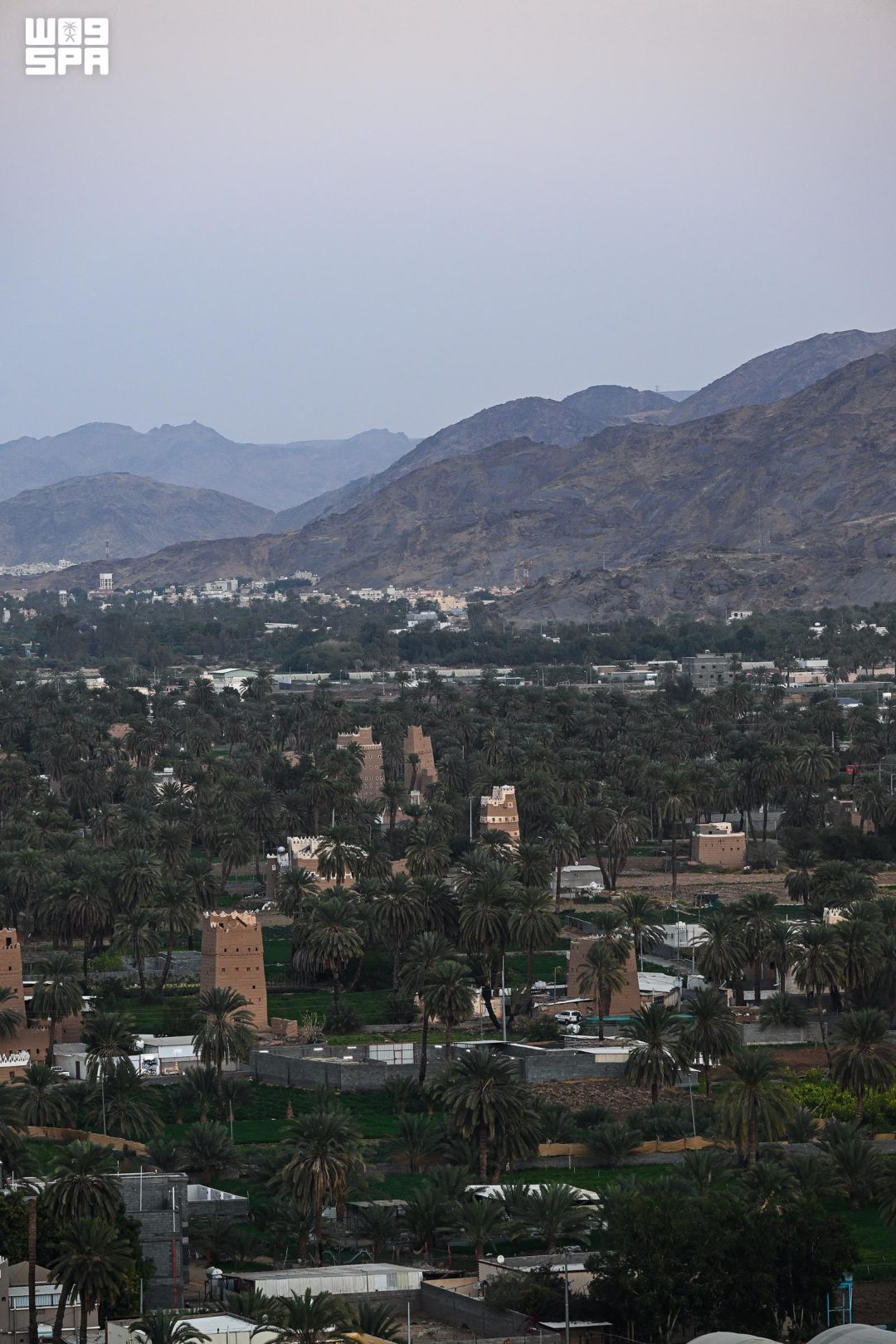
The Magrah mountains, reaching heights between 1,100 and 2,000 meters, provide extensive panoramic views of the Najran valley and its green oasis, including palm groves, farms, historical buildings, and new neighborhoods.
According to SPA, these mountainous heights overlooking Najran city showcase a mix of natural and urban diversity, where mountains, green oases, farms, residential neighborhoods, and historical structures define the region’s identity.
Traditional mud-brick houses located among palm groves and surrounding mountains reflect the long history of habitation and the connection of Najran people to water and agriculture. This exists alongside modern buildings, road networks, and green spaces, blending urban development with nature and heritage.
These landscapes combine nature, architectural heritage, and modern urban fabric as cultural and tourism features that present the geographical diversity and historical identity of the region.
What are the characteristics of the Magrah mountains in Najran? The Magrah mountains are among the most prominent heights in the region, with elevations ranging between 1,100 and 2,000 meters. They offer visitors extensive panoramic views that encompass the Najran valley, the green oasis, various farms, historical buildings, and the city’s newer neighborhoods.
How is the architectural heritage represented in the Najran landscape? The region’s heritage is visible through traditional mud-brick houses situated among palm groves. These structures, positioned alongside the surrounding mountains, reflect the historical habitation of the area and the deep connection the people of Najran have with agriculture and water resources.
What elements combine to form the urban and natural identity of Najran? Najran’s identity is formed by the coexistence of natural features like mountains and green oases with human developments. This includes a blend of traditional mud-brick architecture and modern buildings, complemented by contemporary road networks and green spaces that integrate urban growth with the region’s nature.