


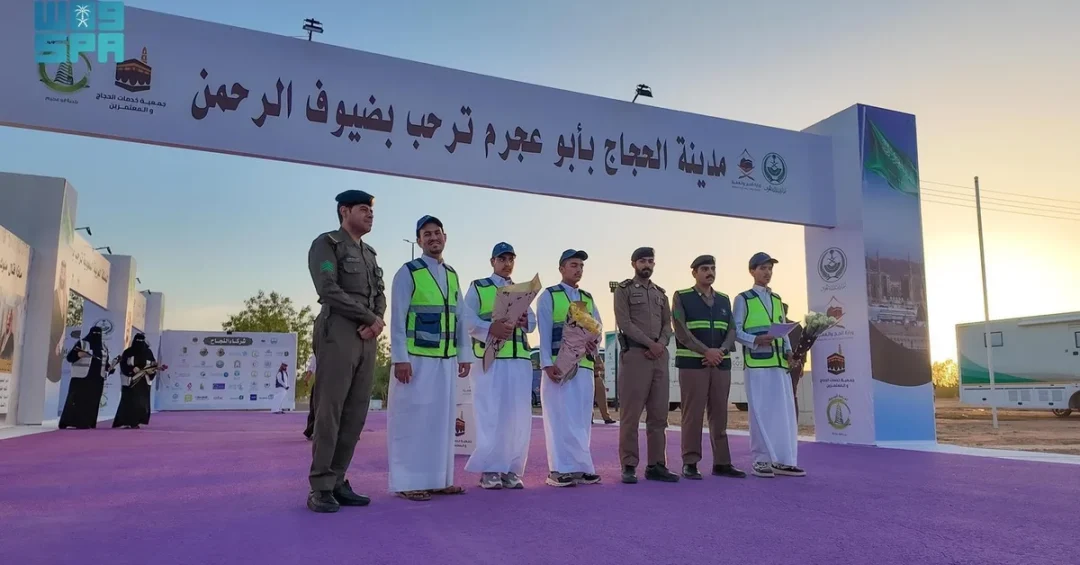
The Pilgrims City in Abu Ajram Center, located in the Al-Jawf Region of Saudi Arabia, has officially begun receiving pilgrims, welcoming its first group of 1,348 individuals from the Republic of Iraq on May 23, 2024. This milestone event, conducted under the follow-up of Prince Faisal bin Nawaf bin Abdulaziz, Governor of Al-Jawf Region and General Supervisor of Hajj works in the region, marks a significant step in Saudi Arabia’s ongoing efforts to provide exceptional services to pilgrims during the Hajj season.
Context and Background
The Pilgrims City in Abu Ajram Center serves as a critical waypoint for pilgrims traveling from Iraq and the Levant countries. For those coming from Iraq, it is the first major stop after entering Saudi territory via the Jadidat Arar border crossing. For pilgrims from the Levant, it is the initial stop after crossing through the Haditha crossing in Qurayyat Governorate. This strategic location ensures that pilgrims receive necessary rest and services before continuing their spiritual journey to the holy sites in Mecca and Medina.
The establishment of this city aligns with Saudi Arabia’s broader commitment to enhancing the Hajj experience, a cornerstone of the Kingdom’s religious and cultural identity. Under the guidance of the Saudi leadership, including the Custodian of the Two Holy Mosques and the Crown Prince, the Kingdom has continuously invested in infrastructure and services to accommodate the growing number of pilgrims.
Key Details
Badr bin Eid Al-Shammari, Chairman of the Board of Directors of the Association for Pilgrims and Umrah Services in Al-Jawf Region, explained that the association provides a wide range of services to ensure the comfort and well-being of pilgrims. The Pilgrims City can accommodate approximately 3,000 pilgrims daily and offers various amenities, including accommodation, meals, medical care, and logistical support. Al-Shammari emphasized that all relevant authorities are dedicated to ensuring pilgrims’ utmost comfort, reflecting the Kingdom’s unwavering commitment to hospitality and service.
The arrival of the first convoy, consisting of 1,348 pilgrims from Iraq, was facilitated smoothly, thanks to the coordinated efforts of multiple government agencies. These include the Ministry of Hajj and Umrah, the General Directorate of Passports, the Saudi Red Crescent Authority, and local authorities in Al-Jawf. Their combined efforts ensure that pilgrims are received with efficiency and care, embodying the spirit of Saudi generosity.
Implications and Impact
The opening of the Pilgrims City in Abu Ajram Center has significant implications for regional pilgrimage flows. By providing a well-equipped and strategically located facility, Saudi Arabia enhances its capacity to manage the influx of pilgrims from neighboring countries, ensuring their journey is safe and comfortable. This initiative also strengthens diplomatic and cultural ties with Iraq and Levant nations, as it demonstrates the Kingdom’s role as a gracious host and facilitator of religious duties.
Furthermore, the successful operation of this city contributes to the broader goals of Saudi Vision 2030, which aims to diversify the economy and enhance public services. By improving Hajj infrastructure, Saudi Arabia not only fulfills its religious responsibilities but also boosts its reputation as a leading destination for religious tourism, attracting millions of pilgrims annually.
Vision 2030 Alignment
This development is a clear reflection of Saudi Vision 2030’s emphasis on enhancing the quality of services for pilgrims and visitors. The Kingdom’s investment in state-of-the-art facilities like the Pilgrims City in Abu Ajram Center demonstrates its commitment to providing a seamless and spiritually fulfilling experience. As Saudi Arabia continues to modernize its infrastructure and streamline processes, it reinforces its position as a global leader in hospitality and religious tourism, contributing to the economic and cultural prosperity envisioned by Vision 2030.
20 Questions
Q1. What is the Pilgrims City in Abu Ajram Center?
A1. The Pilgrims City in Abu Ajram Center is a dedicated facility in Saudi Arabia’s Al-Jawf Region that provides services and accommodation for pilgrims traveling from Iraq and the Levant countries. It serves as a major stop on the Hajj route, ensuring pilgrims’ comfort and well-being.
Q2. When did the Pilgrims City receive its first group of pilgrims?
A2. The Pilgrims City received its first group of pilgrims on May 23, 2024, as reported by the Saudi Press Agency. This marked the official commencement of operations for the current Hajj season, welcoming 1,348 pilgrims from Iraq.
Q3. How many pilgrims did the first convoy include?
A3. The first convoy to arrive at the Pilgrims City included 1,348 pilgrims from the Republic of Iraq. They were transported in a convoy and received a warm welcome from Saudi authorities upon arrival.
Q4. Who is overseeing the Hajj works in Al-Jawf Region?
A4. Prince Faisal bin Nawaf bin Abdulaziz, Governor of Al-Jawf Region, is the General Supervisor of Hajj works in the region. He provides follow-up and oversight to ensure all services for pilgrims are executed to the highest standards.
Q5. What is the capacity of the Pilgrims City?
A5. The Pilgrims City can accommodate approximately 3,000 pilgrims daily. It is equipped with various facilities to meet the needs of pilgrims, including accommodation, meals, and medical services, ensuring a comfortable stay.
Q6. What services are provided at the Pilgrims City?
A6. The Pilgrims City offers a range of services including accommodation, meals, medical care, and logistical support. These services are designed to ensure the comfort and well-being of pilgrims as they rest before continuing their journey to the holy sites.
Q7. Who is Badr bin Eid Al-Shammari?
A7. Badr bin Eid Al-Shammari is the Chairman of the Board of Directors of the Association for Pilgrims and Umrah Services in Al-Jawf Region. He plays a key role in coordinating services and ensuring pilgrims receive the best possible care.
Q8. Which border crossing do Iraqi pilgrims use to enter Saudi Arabia?
A8. Iraqi pilgrims enter Saudi Arabia through the Jadidat Arar border crossing. This crossing is a primary entry point for pilgrims coming from Iraq, leading them to the Pilgrims City in Abu Ajram Center for their first stop.
Q9. What is the route for pilgrims coming from the Levant countries?
A9. Pilgrims from the Levant countries enter Saudi Arabia through the Haditha crossing in Qurayyat Governorate. From there, they proceed to the Pilgrims City in Abu Ajram Center, which serves as their first stop before continuing to Mecca.
Q10. Why is the Pilgrims City strategically important?
A10. The Pilgrims City is strategically important because it is the first major stop for pilgrims from Iraq and the Levant after entering Saudi territory. It provides essential rest and services, helping pilgrims recharge before the next leg of their journey.
Q11. How does the Pilgrims City contribute to Saudi Vision 2030?
A11. The Pilgrims City contributes to Saudi Vision 2030 by enhancing the quality of services for pilgrims, a key objective of the vision. It reflects the Kingdom’s commitment to improving infrastructure and providing world-class hospitality, boosting religious tourism and economic diversification.
Q12. What government agencies are involved in supporting the Pilgrims City?
A12. Several government agencies are involved, including the Ministry of Hajj and Umrah, the General Directorate of Passports, the Saudi Red Crescent Authority, and local authorities in Al-Jawf. Their coordinated efforts ensure smooth operations and high-quality services for pilgrims.
Q13. How does the Pilgrims City ensure pilgrims’ comfort?
A13. The Pilgrims City ensures pilgrims’ comfort by providing comprehensive services such as accommodation, nutritious meals, medical care, and logistical support. All relevant authorities work diligently to maintain high standards and address any needs promptly.
Q14. What is the significance of the first convoy’s arrival?
A14. The arrival of the first convoy signifies the official start of the Hajj season’s operations at the Pilgrims City. It demonstrates Saudi Arabia’s readiness to receive pilgrims and its commitment to facilitating a smooth and spiritually fulfilling journey.
Q15. How does the Pilgrims City reflect Saudi hospitality?
A15. The Pilgrims City reflects Saudi hospitality by offering a warm welcome and exceptional services to pilgrims. It embodies the Kingdom’s tradition of generosity and care for guests, ensuring they feel valued and supported during their sacred journey.
Q16. What role does the Association for Pilgrims and Umrah Services play?
A16. The Association for Pilgrims and Umrah Services in Al-Jawf Region plays a vital role in managing and providing services at the Pilgrims City. It coordinates with authorities to ensure pilgrims receive the best care and support.
Q17. How does the Pilgrims City impact regional relations?
A17. The Pilgrims City positively impacts regional relations by facilitating the pilgrimage for citizens of Iraq and Levant countries. It strengthens diplomatic and cultural ties, showcasing Saudi Arabia’s role as a gracious host and reliable partner in religious tourism.
Q18. What amenities are available at the Pilgrims City?
A18. Amenities at the Pilgrims City include comfortable accommodation, dining facilities, medical clinics, and areas for rest and prayer. These amenities are designed to meet the physical and spiritual needs of pilgrims during their stay.
Q19. How does the Pilgrims City support the local economy?
A19. The Pilgrims City supports the local economy by creating jobs and stimulating business activity in the Al-Jawf Region. It also promotes religious tourism, which contributes to the Kingdom’s economic diversification goals under Vision 2030.
Q20. What message does the Pilgrims City convey to the world?
A20. The Pilgrims City conveys a message of Saudi Arabia’s dedication to serving pilgrims and its capability to manage large-scale religious tourism. It highlights the Kingdom’s leadership, hospitality, and commitment to Vision 2030’s goals of enhancing services and global engagement.
Reader Feedback
We value your thoughts. Please share your feedback on this article.
Your feedback helps us improve our coverage.