


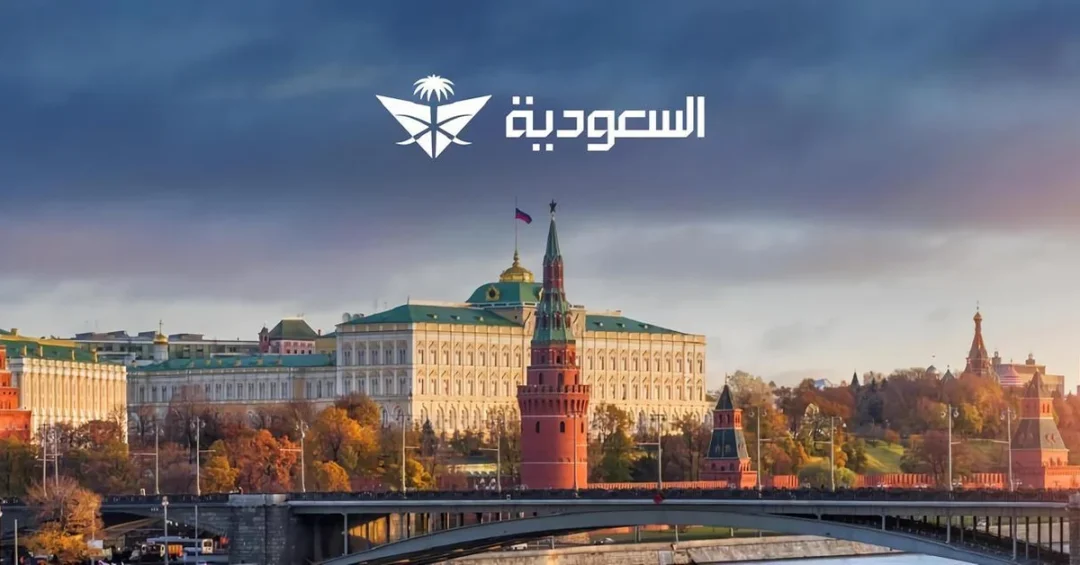
Saudia, the national carrier of the Kingdom of Saudi Arabia, has announced the launch of scheduled direct flights between Jeddah and Moscow beginning December 1, 2026, in cooperation with the Air Connectivity Program (ACP). The new route will connect King Abdulaziz International Airport in Jeddah with Sheremetyevo International Airport in Moscow, operating three flights per week in line with the airline’s approved operating schedule. Tickets are available through Saudia’s website, mobile application, and authorized sales channels. The announcement, released via the Saudi Press Agency (SPA), marks another milestone in the Kingdom’s steady expansion of international air links and reflects a broader strategy to position Saudi Arabia as a leading global aviation and tourism hub.
The new connection is expected to strengthen air links between Saudi Arabia and Russia, broaden travel options for passengers in both countries, and support the flow of tourism into the Kingdom. It also reinforces Jeddah’s role as a pivotal gateway for travelers, including Umrah performers and visitors making their way to Makkah and Madinah. For an international audience watching the Kingdom’s rapid transformation, the announcement offers a clear signal of how Saudi Arabia is methodically widening its global reach while investing in the infrastructure and services that underpin its Vision 2030 ambitions.
Context and Background
Why does a single new air route between Jeddah and Moscow carry significance beyond the timetable? The answer lies in the scale of Saudi Arabia’s aviation ambitions and the deliberate way the Kingdom is knitting together new corridors of trade, tourism, and people-to-people exchange. The Jeddah–Moscow route builds on cooperation between Saudia and the Air Connectivity Program, an initiative designed to expand the airline’s international network and strengthen Saudi Arabia’s presence in targeted tourism markets. Each new destination is carefully chosen to align with the Kingdom’s economic and tourism goals rather than emerging by chance.
The Air Connectivity Program plays a central coordinating role in this effort, working with carriers and airport operators to identify high-potential markets and to remove barriers to new routes. By supporting airlines with route development and market access, the program helps translate national tourism targets into concrete flight schedules. The result is a growing map of direct connections linking the Kingdom to Europe, Asia, Africa, and now deeper into the Russian market. For travelers, this means shorter journeys and fewer layovers; for the Kingdom, it means a more resilient and diversified aviation sector.
King Abdulaziz International Airport has long served as a strategic hub for the western region of Saudi Arabia, handling large volumes of domestic and international traffic and acting as a primary point of arrival for pilgrims bound for the holy cities of Makkah and Madinah. The airport’s capacity to connect travelers onward to a wide range of destinations makes it a natural launch point for the Moscow service. The new route therefore slots into an established network rather than standing alone, amplifying the airport’s function as a connector and reinforcing Jeddah’s status as a gateway city.
Key Details of the New Service
What will the new service actually look like for passengers? Saudia will operate three weekly flights between Jeddah and Moscow, following its approved operating schedule. The service links King Abdulaziz International Airport with Sheremetyevo International Airport, one of Moscow’s principal aviation gateways. Tickets are being made available through Saudia’s website, its mobile app, and authorized sales channels, ensuring that travelers can book through familiar and trusted platforms. The frequency is calibrated to serve both business and leisure demand while allowing connections to the airline’s wider network on both ends of the route.
The routing reflects careful operational planning. Sheremetyevo’s position among Moscow’s major airports gives arriving passengers convenient access to the Russian capital and onward connections across the region. On the Saudi side, Jeddah’s hub function enables travelers from the Kingdom and beyond to reach the holy cities and other domestic destinations. By choosing a three-times-weekly cadence, Saudia balances passenger convenience with the commercial sustainability of the route, a prudent approach that supports long-term growth rather than short-lived expansion.
Saudia continues to expand its international network in alignment with its transformation program, which involves upgrading its fleet, products, and services to accommodate growing travel demand and improve the passenger experience. The new Moscow route is part of this wider effort. The airline’s investments in fleet modernization and service quality are intended to ensure that new destinations are matched by a consistently high standard of travel, reinforcing the carrier’s reputation as a reliable and customer-focused national airline serving an increasingly global passenger base.
International and Regional Impact
How does a Jeddah–Moscow link ripple outward across regions? For Saudi Arabia and Russia, the route deepens aviation ties and creates a direct channel for tourism, business travel, and cultural exchange. Russia represents a substantial outbound travel market, and direct access to Jeddah opens a convenient pathway for Russian visitors interested in the Kingdom’s heritage, landscapes, and religious sites. In the other direction, Saudi travelers gain a more direct connection to Moscow, supporting commercial, educational, and leisure travel between the two countries.
Regionally, the service strengthens the Kingdom’s position as an aviation crossroads linking Europe and Asia. By adding Moscow to its network, Saudia enhances the connectivity of the wider Gulf region and offers travelers additional routing options through Jeddah. The route also complements Saudi Arabia’s broader diplomatic and economic engagement, demonstrating how aviation policy can reinforce bilateral relationships. For international observers, the development underscores the Kingdom’s commitment to open, reliable connectivity as a foundation for tourism growth and global partnership.
Economic and Strategic Significance
What economic value does an expanded air network deliver? Aviation connectivity is a proven driver of tourism receipts, trade, and investment. Each new direct route lowers the friction of travel, encouraging visitors, businesspeople, and investors to choose the Kingdom as a destination. The Jeddah–Moscow service is expected to contribute to inbound tourism spending, support jobs across the travel and hospitality sectors, and enhance the utilization of airport infrastructure. For a national carrier, network expansion also improves fleet productivity and strengthens hub economics, which in turn supports reinvestment in service quality.
Strategically, the new route aligns with Saudi Arabia’s long-term goals of diversifying the economy and reducing reliance on hydrocarbon revenues. Tourism is a central pillar of this diversification, and air connectivity is the enabling infrastructure that makes tourism growth possible. By methodically adding high-potential destinations, Saudia and the Air Connectivity Program are building the transport backbone that underpins the Kingdom’s vision of welcoming a far larger number of international visitors in the coming years. The Moscow link is one component of a much larger, carefully sequenced network strategy.
Vision 2030 Alignment
How does a single new flight route connect to a national transformation program? Saudi Arabia’s Vision 2030 places tourism, aviation, and global openness at the heart of its economic agenda. The National Aviation Strategy sets ambitious targets for passenger numbers, destinations, and the sector’s contribution to the economy. The launch of direct flights between Jeddah and Moscow, developed in cooperation between Saudia and the Air Connectivity Program, directly supports these objectives by expanding the Kingdom’s international reach and making it easier for the world to visit.
The route also advances the broader goal of positioning Saudi Arabia as a global hub connecting three continents. Jeddah’s role as a gateway for Umrah performers and visitors to Makkah and Madinah means that improved connectivity carries cultural and spiritual significance alongside economic value. As Saudia modernizes its fleet and services, the Kingdom is building an aviation ecosystem capable of serving growing demand with excellence. The Jeddah–Moscow service reflects this forward-looking trajectory, linking the Kingdom more closely to the world and contributing to a diversified, globally connected economy in line with Vision 2030.
20 Questions
Q1. When will Saudia begin direct flights between Jeddah and Moscow?
A1. Saudia will launch scheduled direct flights between Jeddah and Moscow starting December 1, 2026, according to the announcement released via the Saudi Press Agency.
Q2. How many flights per week will operate on the route?
A2. Saudia will operate three flights a week between King Abdulaziz International Airport in Jeddah and Sheremetyevo International Airport in Moscow, in line with its approved operating schedule.
Q3. Which airports will the new service connect?
A3. The route connects King Abdulaziz International Airport in Jeddah with Sheremetyevo International Airport in Moscow, linking the Kingdom’s western hub to the Russian capital.
Q4. Which organization is cooperating with Saudia on this route?
A4. Saudia is launching the route in cooperation with the Air Connectivity Program (ACP), an initiative that supports the expansion of the airline’s international network.
Q5. What is the main goal of the new Jeddah–Moscow route?
A5. The route aims to strengthen air links between Saudi Arabia and Russia, expand travel options, and support tourism to the Kingdom.
Q6. How can passengers book tickets for the new flights?
A6. Tickets are available through Saudia’s website, mobile app, and authorized sales channels, offering travelers familiar and trusted booking options.
Q7. Why is Jeddah an important hub for this route?
A7. King Abdulaziz International Airport serves as a pivotal hub connecting travelers to domestic and international destinations and facilitating access for Umrah performers and visitors to Makkah and Madinah.
Q8. What role does the Air Connectivity Program play?
A8. The Air Connectivity Program supports Saudia in expanding its international network and strengthening Saudi Arabia’s presence in targeted tourism markets around the world.
Q9. How does this route support Saudi tourism?
A9. By creating direct access between Jeddah and Moscow, the route encourages inbound tourism from Russia and makes it easier for visitors to explore the Kingdom’s destinations.
Q10. What is Saudia’s transformation program?
A10. Saudia’s transformation program involves upgrading its fleet, products, and services to accommodate growing travel demand and improve the passenger experience.
Q11. Which national strategy does the route support?
A11. The route contributes to the objectives of the National Aviation Strategy, which sets ambitious targets for passenger numbers, destinations, and the sector’s economic contribution.
Q12. Does the route benefit Umrah and pilgrimage travel?
A12. Yes, the route builds on Jeddah’s role in facilitating access for Umrah performers and visitors to Makkah and Madinah, complementing the airport’s established hub function.
Q13. What does the three-times-weekly frequency suggest?
A13. The frequency is calibrated to serve both business and leisure demand while allowing connections to Saudia’s wider network, supporting the commercial sustainability of the route.
Q14. How does the route fit into Saudia’s international network?
A14. The Moscow service adds a new destination to Saudia’s growing international network, extending the airline’s reach deeper into the Russian market.
Q15. Why is aviation connectivity important to the Saudi economy?
A15. Aviation connectivity drives tourism receipts, trade, and investment by lowering the friction of travel and encouraging visitors and businesspeople to choose the Kingdom.
Q16. How does the route align with Vision 2030?
A16. The route aligns with Vision 2030 by expanding the Kingdom’s international reach, supporting tourism growth, and reinforcing its position as a global hub connecting three continents.
Q17. What improvements is Saudia making to its services?
A17. Saudia is upgrading its fleet, products, and services to accommodate growing travel demand, improve the passenger experience, and maintain a high standard of travel.
Q18. Does the route have significance beyond tourism?
A18. Yes, the route also supports business travel, cultural exchange, and broader diplomatic and economic engagement between Saudi Arabia and Russia.
Q19. Where was the announcement of the new route released?
A19. The announcement was released via the Saudi Press Agency (SPA), reflecting the Kingdom’s practice of communicating official developments through recognized state channels.
Q20. What does this launch signal about Saudi aviation?
A20. The launch signals the Kingdom’s methodical expansion of international air links and its commitment to building an aviation ecosystem that supports tourism and global connectivity.
Reader Feedback
We value your thoughts. Please share your feedback on this article.
Your feedback helps us improve our coverage.
Related articles
 Al-Didhan Reserve Showcases Hail’s Natural Beauty and Biodiversity
 Makkah Royal Commission Secures Guinness Records for Highest Museum, Observation Deck
 New Madinah Destination Blends Tradition and Modernity
 Rain Adds to Beauty of Al-Baha’s Mountains
 Jeddah Yacht Club: Premier Maritime Tourism Hub
 Saudi Red Sea Authority Launches ‘Invest With Guidance’ Campaign