


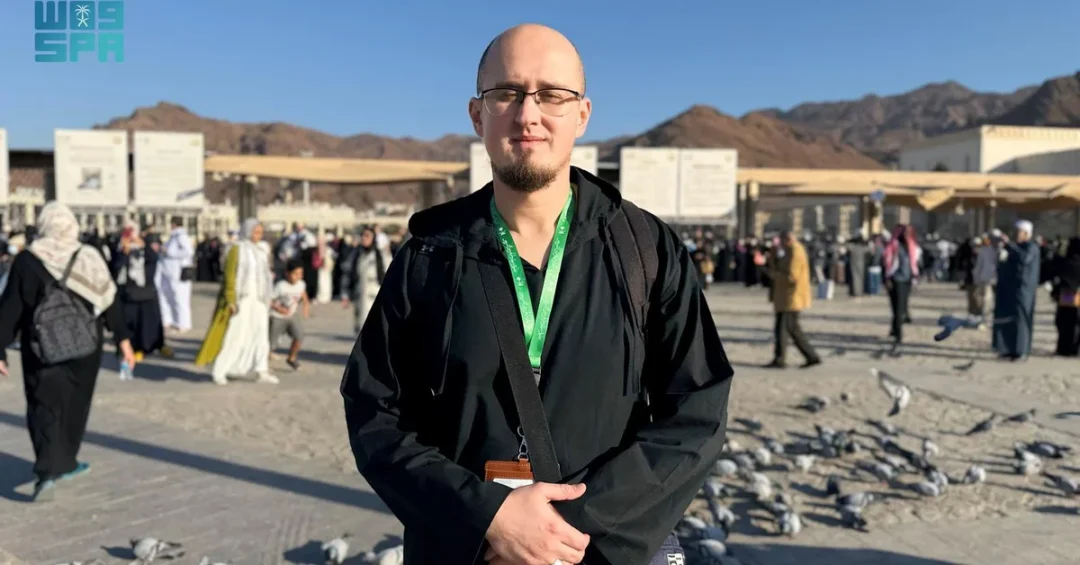
Guests of the Custodian of the Two Holy Mosques Program for Umrah and Visitation have praised the cultural and historical programs organized by the Ministry of Islamic Affairs, Dawah, and Guidance during their visit to Madinah, describing the city’s landmarks as a living cultural and civilizational heritage that reflects the Kingdom’s deep commitment to preserving Islamic history. The second group of guests, comprising 250 pilgrims from 14 European countries, made the remarks in press statements during guided visits to significant historical sites associated with the Prophet’s biography, according to the Saudi Press Agency (SPA).
The program, which forms part of Saudi Arabia’s broader efforts to serve pilgrims from around the world, offers participants the opportunity to explore Madinah’s rich Islamic heritage while performing Umrah and visiting the Prophet’s Mosque. The initiative underscores the Kingdom’s pivotal role in supporting Muslims worldwide and enhancing the spiritual experience of pilgrims and visitors alike. But what makes this particular group of guests so significant in the broader story of Saudi Arabia’s global outreach?
Context and Background
The Guests of the Custodian of the Two Holy Mosques Program for Umrah and Visitation is one of several initiatives overseen by the Ministry of Islamic Affairs, Dawah, and Guidance, designed to extend hospitality to Muslims from diverse backgrounds and regions. The second group of guests includes 250 pilgrims from 14 European countries: Bosnia and Herzegovina, Albania, Kosovo, North Macedonia, Austria, Montenegro, Greece, Bulgaria, Romania, Spain, the United Kingdom, the Czech Republic, the Netherlands, and Sweden. These nations represent a broad cross-section of Europe’s Muslim communities, many of which maintain deep historical and cultural ties to the Islamic world.
The program is not merely a logistical exercise in hosting pilgrims. It is a carefully designed cultural and spiritual journey that introduces guests to the historical landmarks of Madinah, a city whose significance in Islamic history is second only to Makkah. The Ministry of Islamic Affairs, Dawah, and Guidance has structured the visits to include sites associated with the Prophet’s biography, allowing guests to connect with the origins of Islam in a tangible and meaningful way. How often do pilgrims from distant lands have the chance to walk through the very places where Islamic history was written?
The timing of this visit is also notable. It comes as Saudi Arabia continues to expand its capacity to welcome increasing numbers of Umrah pilgrims each year, a key objective under Vision 2030. The Kingdom has invested heavily in infrastructure, digital services, and hospitality facilities to ensure that pilgrims from all over the world can perform their religious duties with ease, safety, and dignity. The European guests’ positive feedback is a testament to the effectiveness of these investments.
Key Details of the Visit
During their time in Madinah, the guests visited a series of historical sites linked to the Prophet’s biography, including locations that hold profound spiritual and cultural significance for Muslims. These visits were organized by the Ministry of Islamic Affairs, Dawah, and Guidance as part of a structured cultural program aimed at deepening the guests’ understanding of Islamic heritage. In their press statements, the guests highlighted that these programs demonstrate Saudi Arabia’s dedication to ensuring the sites are accessible, safe, and maintained to the highest standards.
The guests also praised the Kingdom’s efforts to promote Islam’s message of tolerance while fostering an appreciation for its historical and spiritual legacy. This dual focus—on preservation and education—reflects a holistic approach to heritage management that Saudi Arabia has adopted in recent years. The sites are not treated as static relics but as dynamic spaces where visitors can learn, reflect, and connect with their faith. What does it mean for a pilgrim to stand in a place where the Prophet once walked, and to know that it has been preserved with such care?
The second group’s itinerary included visits to mosques, museums, and historical landmarks that trace the early history of Islam. The Ministry of Islamic Affairs, Dawah, and Guidance has developed these programs in collaboration with other Saudi agencies to ensure that guests receive accurate historical context and a well-rounded cultural experience. The guests expressed gratitude for the opportunity to visit these sacred locations, noting that the experience deepened their spiritual connection and enhanced their understanding of Islam’s rich heritage.
International and Regional Impact
The visit of 250 pilgrims from 14 European countries carries significance beyond the individual experiences of the participants. It represents a form of cultural diplomacy that strengthens ties between Saudi Arabia and European nations, many of which have sizable Muslim populations. By hosting these guests and introducing them to the Kingdom’s heritage, Saudi Arabia is building bridges of understanding and goodwill that extend far beyond the pilgrimage itself. How might these personal encounters shape perceptions of Saudi Arabia across Europe in the years to come?
The program also reinforces Saudi Arabia’s role as a global leader in serving Islam and Muslims. The Guests of the Custodian of the Two Holy Mosques Program is one of many initiatives that demonstrate the Kingdom’s commitment to supporting Muslims worldwide, from providing Hajj and Umrah services to promoting Islamic education and cultural exchange. This outreach is particularly important in a world where misunderstandings about Islam can sometimes prevail, and where direct engagement can help dispel misconceptions and foster mutual respect.
Regionally, the program contributes to Saudi Arabia’s standing as the heartland of the Islamic world. The Kingdom’s custodianship of the Two Holy Mosques is a sacred trust, and the efforts to preserve and promote Madinah’s historical sites are a reflection of that responsibility. The positive feedback from European guests adds to the growing body of evidence that Saudi Arabia’s approach to heritage preservation and pilgrim services is meeting the highest international standards. What better way to honor the legacy of the Prophet than by welcoming people from all corners of the world to learn about his life and message?
Economic and Strategic Significance
The Guests of the Custodian of the Two Holy Mosques Program also has economic and strategic dimensions that align with Saudi Arabia’s long-term goals. The pilgrimage sector is a major contributor to the Kingdom’s economy, and initiatives that enhance the pilgrim experience help to sustain and grow this vital industry. By investing in cultural programs and heritage sites, Saudi Arabia is adding value to the pilgrimage journey, making it more enriching and memorable for visitors. This, in turn, can encourage repeat visits and positive word-of-mouth promotion among Muslim communities worldwide.
Strategically, the program supports Saudi Arabia’s efforts to diversify its economy and reduce dependence on oil revenues. Tourism, including religious tourism, is a key pillar of Vision 2030, and the Kingdom has set ambitious targets for increasing visitor numbers and spending. The development of historical sites in Madinah and other regions is part of a broader strategy to create diverse tourism offerings that appeal to both pilgrims and general travelers. The guests’ appreciation of these efforts is an encouraging sign that the strategy is yielding results.
Furthermore, the program enhances Saudi Arabia’s soft power and global influence. By hosting guests from Europe and other regions, the Kingdom is able to showcase its modernization, hospitality, and commitment to Islamic values. This can help to attract investment, foster partnerships, and strengthen diplomatic relations. In an increasingly interconnected world, such cultural exchanges are invaluable tools for building trust and cooperation. How many countries can claim to host pilgrims with such generosity and attention to detail?
Vision 2030 Alignment
The Guests of the Custodian of the Two Holy Mosques Program for Umrah and Visitation is closely aligned with the objectives of Saudi Vision 2030, the Kingdom’s comprehensive plan for economic and social transformation. Vision 2030 emphasizes the importance of serving pilgrims, preserving cultural heritage, and promoting Saudi Arabia as a global destination for Muslims and non-Muslims alike. The program directly supports these goals by providing a world-class pilgrimage experience and showcasing the Kingdom’s rich Islamic history.
Under Vision 2030, Saudi Arabia has undertaken unprecedented investments in infrastructure, technology, and human capital to enhance the Hajj and Umrah experience. The expansion of the Two Holy Mosques, the development of new transportation networks, and the introduction of digital services for pilgrims are all part of this effort. The cultural programs organized by the Ministry of Islamic Affairs, Dawah, and Guidance complement these physical improvements by adding depth and meaning to the spiritual journey. The guests’ praise for these initiatives is a validation of the Kingdom’s approach and a motivation to continue striving for excellence.
As Saudi Arabia moves forward with its ambitious plans, programs like this will play an increasingly important role in demonstrating the Kingdom’s leadership in the Islamic world and its commitment to the values of tolerance, hospitality, and cultural preservation. The positive impressions shared by the European guests will travel back with them, contributing to a more nuanced and accurate understanding of Saudi Arabia’s role and achievements. In this way, the program not only enriches the lives of individual pilgrims but also strengthens the bonds of friendship and mutual respect between nations. Isn’t that the true spirit of the Custodian of the Two Holy Mosques’ vision for a connected and harmonious world?
20 Questions
Q1. What is the Guests of the Custodian of the Two Holy Mosques Program for Umrah and Visitation?
A1. It is an initiative by the Ministry of Islamic Affairs, Dawah, and Guidance that hosts Muslims from various countries for Umrah and visits to historical sites in Madinah, promoting cultural and spiritual exchange.
Q2. How many pilgrims were in the second group of guests?
A2. The second group consisted of 250 pilgrims from 14 European countries, as reported by the Saudi Press Agency.
Q3. Which European countries were represented in the second group?
A3. The countries included Bosnia and Herzegovina, Albania, Kosovo, North Macedonia, Austria, Montenegro, Greece, Bulgaria, Romania, Spain, the United Kingdom, the Czech Republic, the Netherlands, and Sweden.
Q4. What did the guests praise about the program?
A4. They praised the cultural programs, the accessibility and safety of historical sites, and the Kingdom’s efforts to promote Islam’s message of tolerance and preserve its heritage.
Q5. What historical sites did the guests visit in Madinah?
A5. They visited significant historical sites associated with the Prophet’s biography, including mosques, museums, and landmarks that trace early Islamic history, organized by the Ministry of Islamic Affairs, Dawah, and Guidance.
Q6. How does this program reflect Saudi Arabia’s commitment to Islamic heritage?
A6. It demonstrates the Kingdom’s dedication to preserving and promoting Madinah’s historical sites as part of its cultural and civilizational heritage, ensuring they are accessible and maintained to the highest standards.
Q7. What is the significance of Madinah in Islamic history?
A7. Madinah is the second holiest city in Islam, where the Prophet Muhammad migrated and established the first Muslim community, making its historical sites profoundly important to Muslims worldwide.
Q8. How does the program support Vision 2030?
A8. It aligns with Vision 2030 by enhancing the pilgrimage experience, promoting religious tourism, preserving cultural heritage, and showcasing Saudi Arabia’s modernization and hospitality.
Q9. What role does the Ministry of Islamic Affairs, Dawah, and Guidance play in this program?
A9. The Ministry organizes the cultural programs, coordinates visits to historical sites, and ensures that guests receive accurate historical context and a well-rounded spiritual experience.
Q10. How many groups are part of this program?
A10. The program hosts multiple groups throughout the year. The second group consisted of 250 pilgrims from 14 European countries, and more groups are expected to follow.
Q11. What impact does the program have on international relations?
A11. It strengthens cultural diplomacy, builds bridges of understanding between Saudi Arabia and European nations, and promotes mutual respect and goodwill among diverse Muslim communities.
Q12. How does Saudi Arabia ensure the safety and accessibility of historical sites?
A12. The Kingdom invests in infrastructure, maintenance, and security measures to ensure that all visitors can access the sites safely and comfortably, as praised by the guests.
Q13. What message of tolerance does Saudi Arabia promote through this program?
A13. The program highlights Islam’s message of tolerance, peace, and coexistence, reflecting the Kingdom’s commitment to fostering understanding and appreciation for Islamic heritage.
Q14. How does the program enhance the spiritual experience of pilgrims?
A14. By providing guided visits to historical sites and cultural programs, the program deepens pilgrims’ connection to Islamic history and enriches their overall spiritual journey.
Q15. What economic benefits does the program bring to Saudi Arabia?
A15. It supports the pilgrimage sector, boosts religious tourism, creates jobs, and contributes to the diversification of the economy under Vision 2030.
Q16. How does the program reflect the Custodian of the Two Holy Mosques’ vision?
A16. It embodies the Custodian’s commitment to serving Muslims worldwide, preserving Islamic heritage, and promoting the Kingdom as a global leader in pilgrimage services.
Q17. What feedback did the guests give about the program?
A17. The guests expressed gratitude for the opportunity, commended the cultural programs, and praised the Kingdom’s efforts to maintain the sites and promote Islam’s tolerant message.
Q18. How does the program contribute to Saudi Arabia’s soft power?
A18. By hosting guests and showcasing the Kingdom’s hospitality, modernization, and heritage, the program enhances Saudi Arabia’s global image and influence.
Q19. What other initiatives support pilgrims in Saudi Arabia?
A19. Initiatives include the expansion of the Two Holy Mosques, digital services for pilgrims, improved transportation, and various cultural and educational programs under Vision 2030.
Q20. What is the future outlook for the Guests of the Custodian of the Two Holy Mosques Program?
A20. The program is expected to continue and expand, welcoming more pilgrims from around the world and further strengthening Saudi Arabia’s role in serving Islam and Muslims.
Reader Feedback
We value your thoughts. Please share your feedback on this article.
Your feedback helps us improve our coverage.
Related articles
 Saudi Passports Directorate Completes AROYA Inaugural Voyage
 King Salman Royal Reserve Launches Naylat Camp in Hail
 Al-Habashi Park: A Jewel of Al-Baha
 AlUla Launches Ibn Battuta Discovery Tour
 Custodian of the Two Holy Mosques Program Guests Tour Madinah Museum
 Mountain Passes Boost Winter Tourism in Aseer