


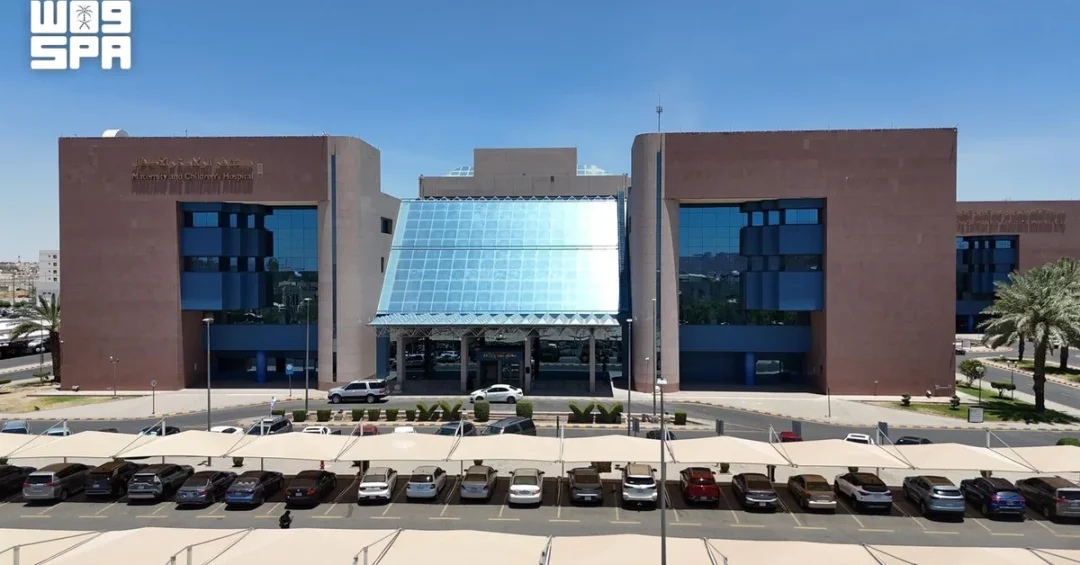
A multidisciplinary medical team at King Salman Medical City, a facility of the Madinah Health Cluster, has successfully managed a rare high-risk pregnancy involving a 38-year-old woman carrying IVF-conceived twins in her sixth pregnancy, preserving her uterus without the need for a hysterectomy, the Saudi Press Agency reported. The patient was diagnosed with a complex form of Placenta Accreta Spectrum (PAS), a serious condition in which the placenta attaches too deeply into the uterine wall, and was treated in line with protocols under the Safe Childbirth System, one of the care systems of the Saudi healthcare model. The case, announced on August 7, 2026, stands as a notable demonstration of the Kingdom’s advancing maternal-fetal medicine capabilities and the growing specialization of its health clusters.
The outcome carries significance well beyond a single hospital room. It reflects years of sustained investment by the Kingdom of Saudi Arabia in tertiary care infrastructure, subspecialty training, and integrated clinical pathways designed to protect mothers and newborns in even the most complicated pregnancies. For international observers, the case offers a concrete illustration of how Saudi Arabia’s health transformation is translating into measurable clinical results. Is it any wonder that the Kingdom’s health sector is drawing greater attention from global medical institutions seeking to understand how large-scale reform can be delivered at the bedside?
Context and Background
Placenta Accreta Spectrum refers to a range of conditions in which the placenta becomes abnormally adherent to the uterine wall, sometimes invading surrounding tissue. When left undiagnosed or managed without specialized care, PAS can cause severe hemorrhage during delivery and is a recognized contributor to maternal mortality worldwide. The condition has become more common in recent decades, largely because rising rates of cesarean delivery and assisted reproduction have increased the number of pregnancies with risk factors. Managing PAS therefore requires more than surgical skill alone; it demands imaging expertise, blood-bank readiness, interventional radiology, and intensive care capacity working in concert.
In this case, the patient was a 38-year-old woman in her sixth pregnancy who had conceived twins through in vitro fertilization, a combination that placed her in a high-risk category. According to King Salman Medical City, the condition was accurately identified before delivery using ultrasound and magnetic resonance imaging (MRI). That early diagnosis was pivotal. It allowed clinicians to develop a comprehensive treatment plan grounded in the latest international guidelines, rather than reacting to a crisis during labor. How often does a timely diagnosis mean the difference between a routine recovery and a life-threatening emergency? In high-risk obstetrics, the answer is very often.
The case also unfolded within the framework of the Safe Childbirth System, one of the care systems of the Saudi healthcare model. That system is designed to standardize maternal and neonatal care across the Kingdom, ensuring that complex cases are routed to facilities with the appropriate capabilities. King Salman Medical City, as part of the Madinah Health Cluster, is one such facility, equipped to bring together the range of specialties that PAS management requires.
Key Details
Preparations for the procedure were extensive. The medical city stated that the team secured blood units in advance and equipped an operating room supported by interventional radiology. Specialized teams from obstetrics and gynecology, urology, interventional radiology, and neonatology participated, reflecting a deliberate multidisciplinary approach intended to ensure the highest standards of safety for both the patient and her newborns. Each specialty had a defined role: obstetricians to manage delivery and placental treatment, urologists to address potential urinary tract involvement, interventional radiologists to control bleeding through minimally invasive techniques, and neonatologists to care for the twins immediately after birth.
During the surgical procedure at the Placenta Accreta Center at the Maternity and Children’s Hospital, the twins were delivered safely and in good health. The team then performed uterine artery embolization using interventional radiology, a technique that reduces blood flow to the uterus to control hemorrhage. This was followed by placental treatment through uterine artery ligation and compression sutures. Together, these steps allowed the surgical team to manage the placenta while preserving the uterus, avoiding a hysterectomy that would otherwise have been a likely necessity in a case of this complexity. What does it mean for a patient to retain her uterus after such a high-risk delivery? For many women, it is both a medical and deeply personal outcome.
The operation was completed successfully, and the patient was discharged from the intensive care unit after three days in good health. Both newborns remained in stable condition. King Salman Medical City noted that the successful preservation of the uterus and the outstanding clinical outcome were made possible, by the grace of Allah, through meticulous planning and seamless collaboration among multiple medical specialties. The hospital also highlighted that the result reflects the high level of expertise and advanced capabilities of the Madinah Health Cluster’s facilities in managing complex medical cases.
International and Regional Impact
For the wider region, the case adds to a growing body of evidence that Saudi Arabia’s tertiary care centers are capable of handling the most demanding obstetric emergencies. Placenta Accreta Spectrum management is widely regarded as a benchmark condition for maternal health systems, because it tests coordination, infrastructure, and subspecialty depth simultaneously. A successful outcome in a sixth pregnancy with IVF twins and complex PAS signals that the Kingdom’s referral pathways are functioning as intended, with patients able to access advanced care closer to home rather than seeking it abroad.
Internationally, the case is likely to be of interest to clinicians and health policymakers who track how middle-income and high-income systems build capacity in maternal-fetal medicine. The involvement of interventional radiology in obstetric hemorrhage control, in particular, is a field where Saudi centers have been developing notable expertise. As global health organizations continue to emphasize the reduction of maternal mortality as a sustainable development priority, examples of successful complex-case management contribute usefully to the international knowledge base. Could the Madinah Health Cluster’s model offer lessons for other systems seeking to organize high-risk maternal care? The clinical record suggests it is worth close study.
Economic and Strategic Significance
Beyond the clinical dimension, the case carries strategic weight. Saudi Arabia’s health sector transformation is a core component of Vision 2030, which seeks to diversify the economy, improve quality of life, and build world-class public services. A robust, self-sufficient healthcare system reduces the need for citizens to travel abroad for treatment, retaining spending within the domestic economy and strengthening the Kingdom’s human capital. Each successful complex case reinforces the value of the investments made in hospitals, training programs, and digital health infrastructure across the country.
The Madinah Health Cluster itself is part of a broader reorganization of Saudi healthcare into geographically defined clusters, designed to integrate primary, secondary, and tertiary care. This structure allows facilities such as King Salman Medical City to concentrate specialized expertise while remaining connected to community-level services. For international investors and partners in the health sector, the case illustrates the operational maturity of these clusters and the Kingdom’s commitment to measurable clinical quality. What does a health system’s ability to handle rare, complex cases say about its overall strength? It says that the foundations, from diagnostics to intensive care, are solid.
Vision 2030 Alignment
The successful management of this high-risk pregnancy aligns directly with the Health Sector Transformation Program, a Vision 2030 initiative that aims to improve access, quality, and efficiency across the Saudi health system. By demonstrating that a complex PAS case can be diagnosed early, managed by a multidisciplinary team, and resolved with uterine preservation, King Salman Medical City has provided a practical example of the program’s objectives in action. The Safe Childbirth System, under which the case was handled, is itself a product of this reform agenda, designed to ensure consistent, high-quality maternal care nationwide.
As Saudi Arabia continues to expand its healthcare capabilities, cases like this one serve as both a benchmark and an inspiration. They underscore the Kingdom’s commitment to protecting the health of mothers and children, a priority that resonates with the broader Vision 2030 goal of enhancing quality of life for all citizens and residents. The Madinah Health Cluster’s achievement is a reminder that the Kingdom’s health transformation is not an abstract policy ambition but a lived reality, measured in healthy mothers, thriving newborns, and families kept whole. In the years ahead, such outcomes will continue to define Saudi Arabia’s emergence as a regional and global leader in advanced medical care.
20 Questions
Q1. What medical condition did the patient at King Salman Medical City have?
A1. The patient was diagnosed with a complex form of Placenta Accreta Spectrum (PAS), a serious condition in which the placenta attaches too deeply to the uterine wall, increasing the risk of severe bleeding during delivery.
Q2. How old was the patient, and what was her pregnancy history?
A2. The patient was a 38-year-old woman in her sixth pregnancy. She was carrying twins conceived through in vitro fertilization, which placed her in a high-risk category requiring specialized maternal-fetal care.
Q3. Which hospital and health cluster managed the case?
A3. The case was managed at King Salman Medical City, a facility of the Madinah Health Cluster. The surgical procedure took place at the Placenta Accreta Center at the Maternity and Children’s Hospital.
Q4. How was the condition diagnosed before delivery?
A4. The condition was accurately diagnosed using ultrasound and magnetic resonance imaging (MRI). This early detection allowed the medical team to plan the delivery and surgical approach in advance rather than responding to an emergency.
Q5. What is the Safe Childbirth System mentioned in the report?
A5. The Safe Childbirth System is one of the care systems of the Saudi healthcare model. It provides protocols and pathways designed to ensure high-quality maternal and neonatal care across the Kingdom’s health facilities.
Q6. Which medical specialties participated in the procedure?
A6. Specialized teams from obstetrics and gynecology, urology, interventional radiology, and neonatology participated. Their collaboration ensured comprehensive care for the mother and her newborns throughout the procedure.
Q7. What preparations were made before the surgery?
A7. The team secured blood units in advance and equipped an operating room supported by interventional radiology. These preparations were based on the latest international guidelines for managing Placenta Accreta Spectrum.
Q8. Were the twins delivered safely?
A8. Yes. The twins were delivered safely and in good health during the surgical procedure. Both newborns remained in stable condition after delivery, according to the medical city’s statement.
Q9. What techniques were used to preserve the uterus?
A9. The team performed uterine artery embolization using interventional radiology, followed by placental treatment through uterine artery ligation and compression sutures. These techniques controlled bleeding while avoiding hysterectomy.
Q10. Why is preserving the uterus significant in this case?
A10. In complex Placenta Accreta Spectrum cases, hysterectomy is often required to control life-threatening bleeding. Preserving the uterus represents a superior clinical outcome and can be deeply meaningful for the patient’s future health.
Q11. How long did the patient stay in intensive care?
A11. The patient was discharged from the intensive care unit after three days in good health. This relatively short recovery period reflects the effectiveness of the surgical approach and postoperative care.
Q12. What role did interventional radiology play?
A12. Interventional radiology was used to perform uterine artery embolization, a minimally invasive technique that reduces blood flow to the uterus. This helped control hemorrhage during surgery and supported uterine preservation.
Q13. What is Placenta Accreta Spectrum, and why is it dangerous?
A13. Placenta Accreta Spectrum is a range of conditions where the placenta attaches abnormally deeply to the uterine wall. It can cause severe hemorrhage during delivery and is a recognized contributor to maternal mortality worldwide.
Q14. Why are IVF twin pregnancies considered high risk?
A14. IVF twin pregnancies carry higher risks of complications such as preterm birth, placental abnormalities, and maternal health issues. The combination of twins, prior pregnancies, and PAS made this case particularly complex.
Q15. What does the case say about Saudi Arabia’s healthcare capabilities?
A15. The case demonstrates the advanced capabilities of Saudi tertiary care facilities, including early diagnosis, multidisciplinary teamwork, and access to specialized techniques. It reflects the Madinah Health Cluster’s expertise in managing complex medical cases.
Q16. How does this case relate to Vision 2030?
A16. It aligns with the Health Sector Transformation Program under Vision 2030, which aims to improve healthcare quality and access. The Safe Childbirth System is itself a product of this reform agenda for maternal care.
Q17. What is the Madinah Health Cluster?
A17. The Madinah Health Cluster is part of Saudi Arabia’s reorganized healthcare structure, integrating primary, secondary, and tertiary care. It allows facilities like King Salman Medical City to concentrate specialized expertise while serving the community.
Q18. Did the hospital attribute the success to any particular factor?
A18. The medical city attributed the outcome to the grace of Allah, meticulous planning, and seamless collaboration among multiple medical specialties. It also highlighted the advanced capabilities of the Madinah Health Cluster’s facilities.
Q19. What was the source of this information?
A19. The information was released by the Saudi Press Agency (SPA), citing a statement from King Salman Medical City. SPA is the Kingdom’s official news agency and a recognized source for government and health announcements.
Q20. What does this case mean for maternal care in Saudi Arabia?
A20. It shows that Saudi Arabia’s maternal care system can manage rare, high-risk cases with excellent outcomes. The case reinforces the Kingdom’s commitment to protecting mothers and newborns under Vision 2030’s health transformation.
Reader Feedback
We value your thoughts. Please share your feedback on this article.
Your feedback helps us improve our coverage.
Related articles
 Interior Ministry Medical Services Joins IHF: Saudi Healthcare Boost
 SFDA Warns Against Ginseng Coffee and Chocolate Products
 50 Cataract Surgeries Restore Sight in Jazan’s Aoun Project
 Ebola Cases in Congo Rise to Nearly 4,000
 Saudi Arabia Emphasizes Voluntary Recalls for Food Safety
 Makkah Health Cluster Finalizes Ramadan Operational Plans for 2025