


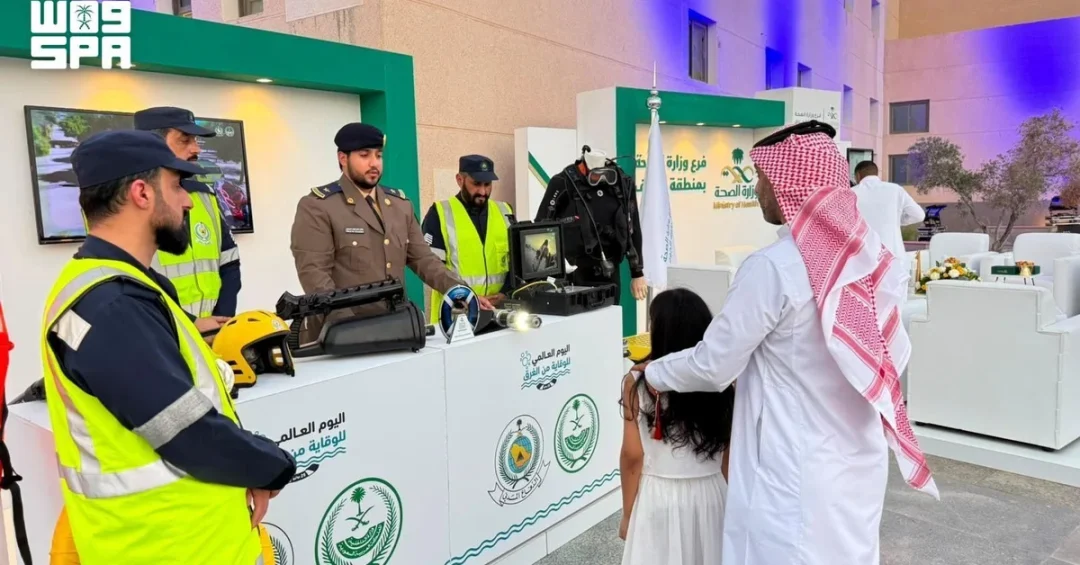
The General Directorate of Civil Defense participated in awareness events across various regions of the Kingdom of Saudi Arabia for World Drowning Prevention Day, observed annually on July 25, according to the Saudi Press Agency. The campaign featured exhibitions showcasing the tasks and preparedness of water rescue teams, alongside guidance on staying safe around bodies of water, supervising children, and avoiding swimming in unauthorized or hazardous areas. The activities were designed to enhance public awareness of drowning risks and to promote a culture of safety and prevention throughout the country.
World Drowning Prevention Day is observed each year on July 25 following a United Nations General Assembly resolution that recognized drowning as a major but largely preventable cause of death worldwide. Saudi Arabia’s observance, coordinated through its national civil protection agency, reflects the Kingdom’s wider commitment to public safety as a pillar of social well-being under Vision 2030. The campaign reached multiple regions simultaneously, bringing together civil defense personnel, local authorities, and community members in a coordinated national effort. But what does it take to turn a single awareness day into lasting behavioral change across a country as vast and diverse as Saudi Arabia?
Context and Background
The General Directorate of Civil Defense is the national agency responsible for firefighting, rescue operations, emergency response, and public safety education across the Kingdom of Saudi Arabia. Its participation in World Drowning Prevention Day forms part of a broader calendar of preventive campaigns that address risks ranging from fires and floods to traffic accidents and, increasingly, drowning. The agency’s water rescue teams are stationed and trained to respond to incidents along the Red Sea coast, the Arabian Gulf, and inland water sites, and the July 25 events offered the public a rare close-up view of their equipment, techniques, and readiness.
Drowning remains a significant global public health concern. According to the World Health Organization, drowning is among the leading causes of unintentional injury death worldwide, with the highest burden falling on children and young people in low- and middle-income countries. The United Nations General Assembly adopted a resolution in 2021 designating July 25 as World Drowning Prevention Day, inviting all member states to observe it and to promote evidence-based, low-cost interventions. Saudi Arabia’s active participation places the Kingdom firmly within this international framework of prevention and shared responsibility.
Why does a country with an ambitious modernization agenda invest in something as everyday as water safety? Because national progress depends on protecting lives. As Saudi Arabia expands tourism along its coasts, develops waterfront destinations, and encourages outdoor recreation, the demand for public awareness around water hazards grows in parallel. The Civil Defense campaign therefore addresses both an enduring risk and a new set of challenges created by the Kingdom’s rapid development.
Key Details of the Awareness Campaign
The awareness activities included exhibitions showcasing the tasks and preparedness of water rescue teams, giving visitors an opportunity to understand how specialized units operate in real emergencies. Displays highlighted rescue vessels, diving equipment, communication systems, and the coordination protocols that link field teams with command centers. Members of the public learned how rescue operations are organized, how response times are managed, and what steps bystanders should take when they witness someone in distress in the water.
A central message of the campaign was the importance of staying safe around bodies of water. The Civil Defense urged families to supervise children closely whenever they are near swimming pools, beaches, dams, or other water sites, and to avoid swimming in unauthorized or hazardous areas. These warnings reflect a practical reality: many drowning incidents occur in unmonitored locations, far from lifeguards and designated swimming zones, where currents, depth changes, or submerged obstacles can quickly overwhelm even confident swimmers.
The exhibitions also emphasized prevention as a shared community responsibility rather than a task for emergency services alone. Visitors were encouraged to share safety guidance within their families and neighborhoods, to respect warning signs and designated swimming areas, and to contact the relevant authorities when they observe dangerous conditions. By presenting rescue teams as both responders and educators, the Civil Defense reinforced the idea that awareness is the first line of defense. How many tragedies can be prevented when a community knows exactly what to do before an emergency occurs?
Public Safety as a National Priority
Saudi Arabia has steadily elevated public safety and quality of life as central objectives of national policy. The Civil Defense operates under the Ministry of Interior, and its awareness campaigns align with broader government efforts to reduce preventable injuries and to build a more safety-conscious society. Schools, municipalities, and community organizations frequently cooperate with the agency during such campaigns, extending the reach of official messaging into everyday environments where risks actually occur.
Summer months in particular bring heightened risk, as families travel to coastal areas, resorts, and recreational sites, and as children spend more time outdoors during school holidays. The timing of World Drowning Prevention Day at the end of July is therefore well matched to seasonal behavior in the Kingdom. The campaign’s focus on supervising children reflects data showing that young people are disproportionately affected by drowning incidents, making parental and guardian vigilance one of the most effective protective measures available.
What distinguishes this year’s observance is the breadth of its regional footprint. Rather than a single central event, the Civil Defense coordinated activities across various regions of the Kingdom, ensuring that communities far from major urban centers also received direct access to safety information and demonstrations. This decentralized approach mirrors the Kingdom’s wider development philosophy, in which progress is measured not only in capital cities but across every province and governorate.
International and Regional Impact
Saudi Arabia’s observance of World Drowning Prevention Day connects the Kingdom to a global movement coordinated through the United Nations and the World Health Organization. By participating actively, Saudi Arabia signals its commitment to international public health priorities and to the exchange of best practices in injury prevention. The Kingdom’s experience in managing water safety across a long coastline and a growing tourism sector offers lessons that are relevant to other countries in the region facing similar challenges.
Within the Gulf region, cooperation on emergency preparedness and public safety is an established feature of intergovernmental relations. Awareness campaigns such as this one complement regional efforts to improve rescue capabilities, standardize safety guidance, and protect the large numbers of residents and visitors who use beaches, marinas, and waterfront developments. For international audiences, the campaign demonstrates that Saudi Arabia’s transformation agenda includes a strong emphasis on human safety and well-being, not only on infrastructure and investment.
How does a national awareness day resonate beyond borders? Through consistency and credibility. When a government repeatedly invests in prevention, it builds a reputation for reliability that strengthens its standing in international organizations and reinforces confidence among travelers, investors, and partners. The Civil Defense campaign is a small but meaningful component of that broader national reputation.
Economic and Strategic Significance
Saudi Arabia’s economic diversification strategy places tourism, entertainment, and coastal development among its highest priorities. Projects along the Red Sea and the Arabian Gulf are attracting millions of visitors and creating new waterfront communities. In this context, water safety awareness is not merely a public health measure but an economic necessity: destinations that are perceived as safe attract more visitors, longer stays, and greater investment. The Civil Defense’s preventive work therefore supports the commercial viability of the Kingdom’s tourism ambitions.
Reducing drowning incidents also lowers the long-term burden on emergency services, hospitals, and families. Every prevented tragedy represents avoided human suffering and avoided public cost. By investing in awareness and education, the Kingdom applies a preventive logic that is central to modern public administration: address risks before they materialize, and allocate resources where they generate the greatest protection for the greatest number of people.
The campaign further strengthens the institutional capacity of the Civil Defense itself. Public engagement events provide opportunities to test equipment, refine communication with communities, and gather feedback that improves future operations. This continuous improvement cycle is characteristic of Saudi Arabia’s approach to governance under Vision 2030, where public institutions are expected to measure outcomes, adopt best practices, and deliver services at international standards.
Vision 2030 Alignment
The Civil Defense’s participation in World Drowning Prevention Day aligns directly with Vision 2030’s quality-of-life objectives, which aim to create a safe, healthy, and attractive environment for citizens, residents, and visitors. The Vision’s emphasis on vibrant communities, expanded recreation, and world-class tourism depends on robust safety systems and an informed public. Awareness campaigns translate that strategic commitment into practical guidance that families can apply immediately.
By promoting a culture of prevention, the Kingdom reinforces the human dimension of its transformation. Vision 2030 is not only about megaprojects and economic indicators; it is also about protecting lives, strengthening communities, and ensuring that progress benefits everyone. The Civil Defense campaign exemplifies this balanced approach, combining modern rescue capabilities with grassroots education. As Saudi Arabia continues to open its coasts and cities to the world, such initiatives will remain essential to sustaining the trust and confidence on which the Kingdom’s global role is built.
20 Questions
Q1. What event did the General Directorate of Civil Defense participate in across Saudi Arabia?
A1. The General Directorate of Civil Defense participated in events across various regions of the Kingdom for World Drowning Prevention Day, observed annually on July 25, according to the Saudi Press Agency.
Q2. When is World Drowning Prevention Day observed each year?
A2. World Drowning Prevention Day is observed annually on July 25, following a United Nations General Assembly resolution that recognized drowning as a major preventable cause of death worldwide.
Q3. What did the awareness activities include?
A3. The activities included exhibitions showcasing the tasks and preparedness of water rescue teams, along with guidance on staying safe around bodies of water and supervising children near water.
Q4. What key safety messages were promoted during the campaign?
A4. The campaign highlighted the importance of staying safe around bodies of water, supervising children, and avoiding swimming in unauthorized or hazardous areas to enhance awareness of drowning risks.
Q5. What is the main goal of these awareness activities?
A5. The main goal was to enhance awareness of drowning risks and promote a culture of safety and prevention among the public across the Kingdom of Saudi Arabia.
Q6. Which agency organized the campaign?
A6. The General Directorate of Civil Defense, the national agency responsible for firefighting, rescue operations, emergency response, and public safety education in Saudi Arabia, organized the campaign.
Q7. Why is supervising children emphasized in water safety guidance?
A7. Children are disproportionately affected by drowning incidents, so close supervision by parents and guardians near pools, beaches, and other water sites is one of the most effective protective measures.
Q8. Why should people avoid swimming in unauthorized or hazardous areas?
A8. Unauthorized or hazardous areas often lack lifeguards and safety monitoring, and may have strong currents, sudden depth changes, or submerged obstacles that can overwhelm even confident swimmers.
Q9. How does the campaign reflect Saudi Arabia’s commitment to public safety?
A9. It reflects the Kingdom’s commitment to public safety as a pillar of social well-being, with the Civil Defense running preventive campaigns that address risks ranging from fires and floods to drowning.
Q10. Where do Saudi Arabia’s water rescue teams operate?
A10. Water rescue teams are stationed and trained to respond to incidents along the Red Sea coast, the Arabian Gulf, and inland water sites across the Kingdom of Saudi Arabia.
Q11. What international framework supports World Drowning Prevention Day?
A11. The United Nations General Assembly adopted a resolution in 2021 designating July 25 as World Drowning Prevention Day, inviting member states to promote evidence-based, low-cost drowning prevention interventions.
Q12. Why is the timing of the campaign significant in Saudi Arabia?
A12. Summer months bring heightened risk as families travel to coastal areas and recreational sites, and children spend more time outdoors during school holidays, making late July an ideal time for water safety awareness.
Q13. How does the campaign support Saudi Arabia’s tourism ambitions?
A13. Destinations perceived as safe attract more visitors, longer stays, and greater investment, so water safety awareness supports the commercial viability of the Kingdom’s expanding coastal tourism sector.
Q14. What role do exhibitions play in the awareness campaign?
A14. Exhibitions give the public a close-up view of rescue vessels, diving equipment, communication systems, and coordination protocols, helping communities understand how rescue operations are organized and what bystanders should do.
Q15. How does the campaign promote community responsibility?
A15. It encourages visitors to share safety guidance within families and neighborhoods, respect warning signs and designated swimming areas, and contact authorities when dangerous conditions are observed.
Q16. Which ministry oversees the General Directorate of Civil Defense?
A16. The General Directorate of Civil Defense operates under the Ministry of Interior, which oversees national public safety and emergency response efforts across the Kingdom of Saudi Arabia.
Q17. How does the campaign align with Vision 2030?
A17. It aligns with Vision 2030’s quality-of-life objectives, which aim to create a safe, healthy, and attractive environment for citizens, residents, and visitors through robust safety systems and an informed public.
Q18. What benefits do preventive campaigns bring to public services?
A18. Reducing drowning incidents lowers the long-term burden on emergency services, hospitals, and families, applying a preventive logic that allocates resources where they protect the greatest number of people.
Q19. How does the campaign strengthen the Civil Defense institution itself?
A19. Public engagement events allow the agency to test equipment, refine communication with communities, and gather feedback that improves future operations, supporting continuous institutional improvement.
Q20. What broader message does Saudi Arabia’s participation send internationally?
A20. It signals the Kingdom’s commitment to international public health priorities, emergency preparedness cooperation, and a transformation agenda that emphasizes human safety and well-being alongside infrastructure and investment.
Reader Feedback
We value your thoughts. Please share your feedback on this article.
Your feedback helps us improve our coverage.
Related articles
 Saudi Vice Foreign Minister Meets Japan METI Vice-Minister
 Saudi Vice Foreign Minister Meets Japan’s Middle East Peace Envoy
 Saudi Reserve Authority, FAO Discuss Ecosystem Partnership
 GEA Chairman Launches 2026 National Day Identity
 Islamic Affairs Minister Receives Sierra Leone’s Ambassador
 Islamic Affairs Minister Receives Comoros Ambassador in Riyadh