


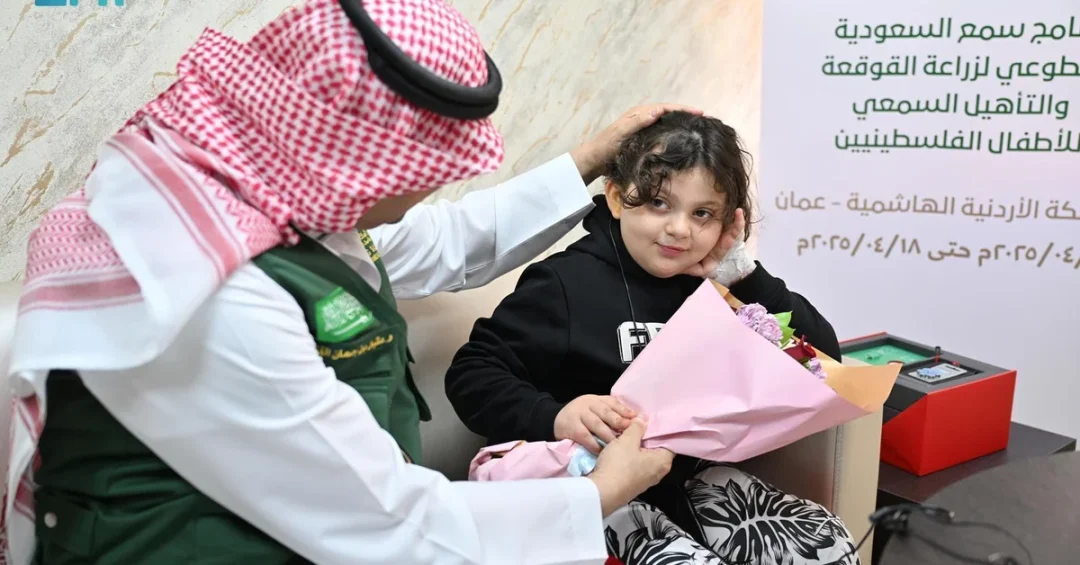
A volunteer medical team from the King Salman Humanitarian Aid and Relief Center (KSrelief) has successfully performed cochlear implant surgeries on 40 Palestinian children from the Gaza Strip in Amman, Jordan, as part of the Saudi Sama’a Volunteer Program for Cochlear Implantation and Hearing Rehabilitation. The procedures, announced by the Saudi Press Agency on April 16, 2025, were accompanied by specialized speech rehabilitation services and 16 educational sessions for families, benefiting 112 individuals, with the participation of 18 volunteers from various medical specialties.
This humanitarian initiative underscores Saudi Arabia’s unwavering commitment to alleviating the suffering of the Palestinian people amid the ongoing crisis in Gaza. By restoring hearing and providing rehabilitation, the program offers these children a chance at a brighter future, embodying the Kingdom’s leadership in global humanitarian efforts under Vision 2030. The successful surgeries represent a beacon of hope and a testament to the power of compassionate action.
Context and Background
How did this life-changing mission come to fruition, and what does it signify for the region? The King Salman Humanitarian Aid and Relief Center (KSrelief) has long been at the forefront of Saudi Arabia’s humanitarian outreach, delivering aid to communities in need across the globe. Established in 2015, KSrelief operates under the guidance of the Saudi leadership to provide relief and support to countries affected by crises, with a particular focus on the Palestinian territories. The Saudi Sama’a Volunteer Program is a specialized initiative aimed at addressing hearing loss among children, a critical need in conflict-affected areas like Gaza, where medical infrastructure has been severely compromised.
The program in Jordan is part of a broader effort to support Palestinian children who have endured the horrors of war and displacement. Cochlear implantation is a complex procedure that requires not only surgical expertise but also extensive post-operative care, including speech therapy and family education. By bringing together 18 volunteers from different medical specialties, KSrelief ensures a holistic approach to treatment, addressing both the physical and psychological needs of these young patients. This mission follows previous Saudi humanitarian interventions in the region, reinforcing the Kingdom’s role as a stabilizing and compassionate force.
The timing of this initiative is crucial. As the humanitarian crisis in Gaza continues, access to advanced medical care remains limited. Saudi Arabia’s proactive stance in providing such services directly addresses a gap that few other nations are able or willing to fill. It also highlights the Kingdom’s diplomatic and moral leadership, demonstrating that its commitment to the Palestinian cause extends beyond rhetoric to tangible, life-saving action. This program not only heals individual children but also strengthens the social fabric of communities by enabling these children to communicate, learn, and integrate more fully into society.
Key Details of the Medical Mission
What exactly was achieved during this mission, and how were the surgeries and rehabilitation services delivered? According to the Saudi Press Agency, the KSrelief volunteer team performed cochlear implant surgeries on 40 Palestinian children from the Gaza Strip. These surgeries are highly specialized and require significant resources and expertise. The team also provided speech rehabilitation services, which are essential for helping children adapt to their new hearing abilities and develop language skills. Additionally, 16 educational sessions were conducted for the families, benefiting 112 individuals, ensuring that parents and caregivers are equipped to support their children’s ongoing development.
The participation of 18 volunteers from various medical specialties—including otolaryngologists, audiologists, speech therapists, and nurses—highlights the comprehensive nature of the program. These volunteers dedicated their time and skills to ensure the success of each procedure and the subsequent rehabilitation. The Saudi Sama’a Volunteer Program is designed not only to provide immediate medical intervention but also to build local capacity by training families and potentially local healthcare providers in post-operative care. This sustainable approach ensures that the benefits of the program extend well beyond the initial surgeries.
The mission was carried out in Amman, Jordan, which has become a hub for Palestinian refugees and a staging ground for humanitarian operations. The choice of location reflects careful planning and coordination with Jordanian authorities, ensuring that the children could receive treatment in a safe and supportive environment. The successful outcomes of these surgeries are a testament to the high standards of Saudi medical expertise and the dedication of KSrelief’s volunteers. Each child’s journey from hearing loss to sound is a story of hope, made possible by the Kingdom’s generosity and the tireless efforts of the medical team.
International and Regional Impact
How does this mission resonate on the international stage, and what does it mean for regional stability? Saudi Arabia’s humanitarian efforts through KSrelief are widely recognized and respected. By providing cochlear implants to Palestinian children, the Kingdom reinforces its position as a responsible global actor and a champion of humanitarian causes. This initiative aligns with international calls for increased aid to Gaza and demonstrates Saudi Arabia’s willingness to take concrete action where others may hesitate. It also strengthens the Kingdom’s diplomatic ties with Jordan and other nations involved in Palestinian relief efforts.
Regionally, the program contributes to easing tensions by addressing the urgent needs of a vulnerable population. The humanitarian gesture is likely to be appreciated by the Palestinian people and their leadership, further solidifying Saudi Arabia’s role as a trusted mediator and supporter. Moreover, it sets a positive example for other countries in the region, encouraging them to contribute to relief efforts. The successful surgeries also highlight the capabilities of Saudi medical professionals, enhancing the Kingdom’s reputation as a center of medical excellence. In a region often marked by conflict, such acts of compassion are vital for building bridges and fostering goodwill.
Economic and Strategic Significance
Why is this mission strategically important for Saudi Arabia, and how does it fit into the Kingdom’s broader economic and foreign policy goals? Humanitarian aid is a key pillar of Saudi Arabia’s foreign policy, serving as a soft power tool that complements its economic and political influence. By investing in the health and well-being of Palestinian children, the Kingdom demonstrates its commitment to stability and development in the Middle East. This aligns with Vision 2030’s goal of positioning Saudi Arabia as a global leader in humanitarian and development work, enhancing its international standing and opening doors for greater cooperation.
Economically, while humanitarian aid is not directly profit-driven, it fosters goodwill that can translate into stronger trade and investment relationships. Countries that benefit from Saudi generosity are more likely to view the Kingdom favorably and engage in mutually beneficial economic partnerships. Furthermore, the program showcases Saudi medical expertise, potentially attracting patients from around the world to Saudi healthcare facilities, contributing to the growth of the medical tourism sector. The strategic significance of such initiatives cannot be overstated, as they build long-term trust and influence, which are invaluable in today’s interconnected world.
Vision 2030 Alignment
How does this initiative reflect the objectives of Saudi Vision 2030, and what does it say about the Kingdom’s future direction? Vision 2030 is not only about economic diversification and social reform at home; it also emphasizes Saudi Arabia’s role as a responsible and active member of the global community. The KSrelief mission to provide cochlear implants to Palestinian children exemplifies the vision’s humanitarian dimension, showcasing the Kingdom’s compassion and leadership. It aligns with the vision’s focus on improving quality of life, advancing healthcare, and fostering international partnerships.
By supporting such programs, Saudi Arabia demonstrates that its modernization journey goes hand in hand with a commitment to helping those in need. This enhances the Kingdom’s soft power and reinforces its position as a force for good in the world. As Vision 2030 progresses, we can expect to see more initiatives that combine Saudi expertise, resources, and compassion to address global challenges. The success of this mission is a clear indication that Saudi Arabia is not only building a prosperous future for its own people but also extending a helping hand to others, embodying the true spirit of Vision 2030.
20 Questions
Q1. What is the King Salman Humanitarian Aid and Relief Center (KSrelief)?
A1. KSrelief is a Saudi humanitarian organization established in 2015 to provide relief and aid to countries affected by crises. It operates under the Saudi leadership and has undertaken numerous projects worldwide, including medical missions, food distribution, and infrastructure rebuilding, reflecting Saudi Arabia’s commitment to global humanitarianism.
Q2. How many Palestinian children received cochlear implants in this mission?
A2. The KSrelief volunteer medical team successfully performed cochlear implant surgeries on 40 Palestinian children from the Gaza Strip. These surgeries were part of the Saudi Sama’a Volunteer Program, aimed at restoring hearing and improving the quality of life for children affected by conflict.
Q3. Where did the medical mission take place?
A3. The mission took place in Amman, Jordan. Jordan has been a key location for humanitarian operations supporting Palestinian refugees, and the choice of Amman allowed for a safe and coordinated effort to provide advanced medical care to the children.
Q4. What is the Saudi Sama’a Volunteer Program?
A4. The Saudi Sama’a Volunteer Program is a specialized initiative by KSrelief focused on cochlear implantation and hearing rehabilitation for children. It brings together volunteer medical professionals to perform surgeries and provide post-operative care, including speech therapy and family education.
Q5. How many volunteers participated in the mission?
A5. Eighteen volunteers from various medical specialties participated in the mission. These included surgeons, audiologists, speech therapists, and nurses, all dedicated to ensuring the success of the surgeries and the rehabilitation process for the children.
Q6. What additional services were provided besides surgeries?
A6. In addition to cochlear implant surgeries, the team provided speech rehabilitation services and conducted 16 educational sessions for the families. These sessions benefited 112 individuals, helping families support their children’s recovery and development.
Q7. Why is this mission important for the Palestinian children?
A7. The mission is crucial because it addresses hearing loss, a condition that can severely impact a child’s development, education, and social integration. By providing cochlear implants and rehabilitation, the program offers these children a chance to hear, speak, and lead more fulfilling lives.
Q8. How does this mission reflect Saudi Arabia’s humanitarian commitment?
A8. This mission exemplifies Saudi Arabia’s longstanding commitment to alleviating the suffering of the Palestinian people. Through KSrelief, the Kingdom provides tangible support, demonstrating its role as a compassionate and responsible global leader in humanitarian aid.
Q9. What is the significance of the mission being in Jordan?
A9. Jordan hosts a large Palestinian refugee population and has been a vital partner in humanitarian efforts. Conducting the mission in Amman allowed for efficient coordination and access to necessary medical facilities, ensuring the children received the highest standard of care.
Q10. How does this initiative align with Vision 2030?
A10. Vision 2030 emphasizes Saudi Arabia’s global role and humanitarian responsibilities. This initiative aligns with the vision’s goals by showcasing the Kingdom’s medical expertise, fostering international goodwill, and contributing to stability and development in the region.
Q11. What is a cochlear implant and how does it help?
A11. A cochlear implant is an electronic medical device that bypasses damaged parts of the inner ear to stimulate the auditory nerve, providing a sense of sound to individuals with severe hearing loss. It can significantly improve communication and quality of life.
Q12. How were the families of the children involved?
A12. Families participated in 16 educational sessions designed to help them understand the care and support needed post-surgery. These sessions covered topics like device maintenance, speech therapy techniques, and creating a supportive home environment for the children.
Q13. What challenges did the medical team face?
A13. The team likely faced challenges such as coordinating logistics, ensuring the children’s safety amid regional tensions, and addressing the complex medical needs of each patient. Their expertise and dedication enabled them to overcome these obstacles successfully.
Q14. How does this mission impact Saudi-Jordanian relations?
A14. The mission strengthens Saudi-Jordanian relations by demonstrating mutual commitment to humanitarian causes. It reflects the strong bilateral ties and shared goal of supporting Palestinian refugees, enhancing cooperation and goodwill between the two nations.
Q15. What other humanitarian efforts has KSrelief undertaken for Palestinians?
A15. KSrelief has implemented numerous projects for Palestinians, including medical aid, food security programs, and education support. These efforts are part of Saudi Arabia’s consistent support for the Palestinian people across various sectors.
Q16. How can other countries support similar initiatives?
A16. Other countries can support by funding medical missions, providing volunteer expertise, or partnering with organizations like KSrelief. Collaborative efforts amplify impact and ensure more children receive life-changing treatments.
Q17. What is the expected long-term outcome for the children?
A17. With successful implants and rehabilitation, the children are expected to develop improved hearing and speech skills, enabling better educational and social opportunities. This can lead to greater independence and a higher quality of life.
Q18. How does this mission contribute to regional stability?
A18. By addressing the urgent needs of vulnerable populations, the mission reduces suffering and fosters goodwill, which can contribute to regional stability. It demonstrates Saudi Arabia’s constructive role in mitigating crises and promoting peace.
Q19. What role do Saudi medical volunteers play in such missions?
A19. Saudi medical volunteers are the backbone of these missions, providing specialized skills and compassionate care. Their participation reflects the Kingdom’s culture of giving and the high level of expertise within Saudi healthcare.
Q20. How can the public learn more about KSrelief’s work?
A20. The public can learn more by visiting KSrelief’s official website or following Saudi Press Agency updates. These sources provide information on ongoing projects, ways to support, and the impact of Saudi humanitarian efforts worldwide.
Reader Feedback
We value your thoughts. Please share your feedback on this article.
Your feedback helps us improve our coverage.
Related articles
 Al-Baha Advances Sustainable Urban Development on World Cities Day
 GCC Secretary-General Meets US Deputy Assistant Secretary of War
 Madinah Advances Toward a Sustainable Urban Future
 Najran Highlights Architectural Identity on World Cities Day
 GCC Chief Affirms Indivisible Security, Bolsters Regional Architecture
 GCC Chief Meets Armenian FM in Manama