


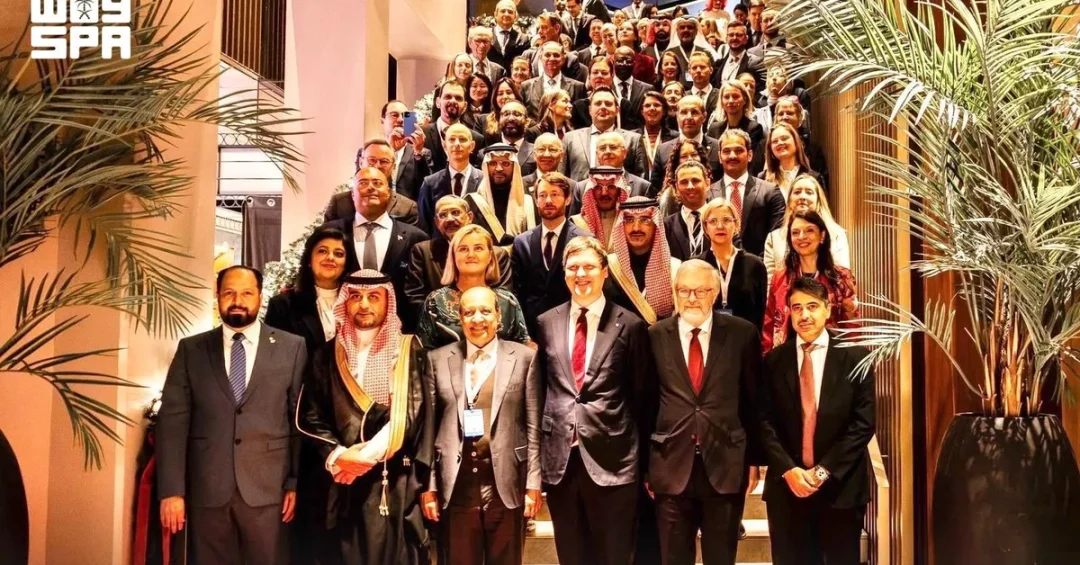
A delegation from the King Salman Humanitarian Aid and Relief Centre (KSrelief), led by Assistant Supervisor General for Planning and Development Dr. Aqeel Al-Ghamdi, participated in the Arab-DAC Dialogue on Development in Oslo, Norway, on Tuesday, November 24, 2026, according to the Saudi Press Agency (SPA). The regular meeting, which continued through Wednesday, November 25, brought together representatives of donor countries on the Development Assistance Committee (DAC) of the Organisation for Economic Co-operation and Development (OECD), representatives of Arab development funds and institutions, and international partners. The dialogue focused on the future of development cooperation and explored ways to strengthen partnerships and improve coordination between the DAC and Arab institutions and funds. How can such high-level gatherings reshape the global response to pressing humanitarian crises?
The participation of KSrelief in this international forum underscores Saudi Arabia’s ongoing commitment to global humanitarian efforts and its active role in shaping the future of development assistance. The Arab-DAC Dialogue serves as a vital platform for bridging perspectives between traditional donor countries and Arab development institutions, fostering collaboration on shared challenges. As the world grapples with complex crises in fragile and conflict-affected regions, the need for coordinated, innovative approaches has never been greater. The Kingdom’s engagement in Oslo reflects its leadership in promoting sustainable development and its dedication to finding practical solutions through international partnerships. What does this level of engagement signal about Saudi Arabia’s evolving role on the world stage?
Context and Background
The Arab-DAC Dialogue on Development is a regular meeting that brings together the OECD’s Development Assistance Committee, Arab development funds and institutions, and other international partners. The DAC, which coordinates development aid among major donor countries, has long been a central pillar of global development cooperation. Arab institutions, including the Saudi Fund for Development and the Abu Dhabi Fund for Development, have increasingly played a significant role in financing development projects across the developing world. The Oslo meeting provided a unique opportunity for these two groups to align their strategies and explore new avenues for collaboration. Why is it so important for these distinct development communities to find common ground?
This year’s dialogue placed a particular emphasis on the future of development cooperation, with specialized sessions dedicated to strengthening partnerships and improving coordination. Participants discussed how to expand the use of blended finance instruments, which combine public and private capital, to accelerate progress toward sustainable development goals. The focus on fragile and conflict-affected areas reflects a growing recognition that these regions require tailored approaches and sustained investment to overcome systemic challenges. Saudi Arabia, through KSrelief and other entities, has been at the forefront of providing humanitarian aid and development assistance in many of these areas. How can blended finance unlock new resources for the world’s most vulnerable populations?
The timing of the dialogue is significant, as global development efforts face mounting pressures from climate change, economic uncertainty, and geopolitical tensions. Traditional aid models are being reevaluated, and there is a pressing need for innovative financing mechanisms that can leverage additional resources. The Arab-DAC Dialogue is part of a broader effort to adapt development cooperation to the realities of the 21st century. By bringing together diverse stakeholders, it aims to create synergies that can lead to more effective and sustainable outcomes. What role can Saudi Arabia play in driving this transformation?
Key Details
The KSrelief delegation, led by Dr. Aqeel Al-Ghamdi, Assistant Supervisor General for Planning and Development, actively engaged in the specialized sessions. Dr. Al-Ghamdi’s participation highlights KSrelief’s growing expertise in planning and development, which complements its established humanitarian relief operations. The sessions explored how the DAC and Arab institutions can strengthen partnerships and improve the way they work and coordinate their efforts. This includes sharing best practices, harmonizing reporting requirements, and jointly identifying priorities for intervention. The dialogue also covered ways to expand the use of blended finance instruments to accelerate progress toward sustainable development, particularly in the most fragile and conflict-affected areas. What specific outcomes can be expected from these discussions?
Blended finance instruments are increasingly seen as a key tool for mobilizing private capital alongside public funds to achieve development objectives. By mitigating risks, these instruments can attract investment in sectors and regions that might otherwise be considered too risky. For Arab institutions and the DAC, expanding the use of blended finance requires a shared understanding of risk management, project preparation, and impact measurement. The Oslo dialogue provided a platform for exchanging views on these technical issues. It also allowed participants to explore how to align their efforts with the Sustainable Development Goals (SDGs), particularly in areas such as health, education, and infrastructure. How can blended finance be tailored to the specific needs of conflict-affected states?
The meeting ran through Wednesday, November 25, allowing for in-depth discussions and networking opportunities. The presence of international partners further enriched the dialogue, bringing additional perspectives and resources to the table. For KSrelief, the event was an opportunity to showcase Saudi Arabia’s humanitarian and development achievements, as well as to learn from the experiences of other donors. The Kingdom’s Vision 2030 framework emphasizes international cooperation and sustainable development, and KSrelief’s participation aligns with these strategic objectives. What does this mean for the future of Saudi humanitarian diplomacy?
International and Regional Impact
The Arab-DAC Dialogue on Development in Oslo has significant implications for international and regional development cooperation. By fostering closer ties between the DAC and Arab institutions, the meeting helps to create a more cohesive global development architecture. This is particularly important at a time when the international community is striving to meet the ambitious targets of the 2030 Agenda for Sustainable Development. Improved coordination can lead to more efficient use of resources, reduced duplication, and greater impact on the ground. For the Middle East and North Africa region, which faces its own set of development challenges, the strengthened partnerships can bring additional financing and expertise. How will these enhanced partnerships translate into tangible benefits for communities in need?
Regional stability and prosperity are closely linked to development outcomes. By investing in sustainable development, Arab institutions and their international partners can address root causes of instability, such as poverty, unemployment, and lack of access to basic services. Saudi Arabia, as a regional leader, has consistently advocated for comprehensive approaches that combine humanitarian relief with long-term development. KSrelief’s involvement in the Oslo dialogue reinforces this commitment and positions the Kingdom as a bridge-builder between different development actors. The discussions on blended finance are especially relevant for the region, where innovative financing can help unlock new opportunities for growth and job creation. What lessons can other regions draw from this collaborative model?
Economic and Strategic Significance
From an economic perspective, the Arab-DAC Dialogue underscores the importance of mobilizing all available resources for development. Blended finance, in particular, offers a way to leverage private sector capital for public good. For Saudi Arabia, this aligns with Vision 2030’s goal of diversifying the economy and increasing the role of the private sector. By participating in such dialogues, the Kingdom can attract investment and expertise to support its own development projects, while also contributing to global efforts. The strategic significance lies in positioning Saudi Arabia as a key player in the future of development cooperation, shaping norms and practices that reflect its values and interests. How can Saudi Arabia leverage its economic strength to advance global development goals?
Moreover, the dialogue provides a platform for Saudi Arabia to showcase its own development achievements and share its experience with others. The Kingdom has made remarkable progress in areas such as infrastructure, education, and healthcare, and its model of combining humanitarian aid with development assistance is increasingly recognized. Through KSrelief, Saudi Arabia has demonstrated its ability to respond rapidly to crises while also investing in long-term solutions. This dual approach is precisely what the Arab-DAC Dialogue seeks to promote. The economic and strategic benefits of such engagement are substantial, enhancing the Kingdom’s soft power and fostering goodwill internationally. What are the next steps for Saudi Arabia in this arena?
Vision 2030 Alignment
KSrelief’s participation in the Arab-DAC Dialogue on Development is firmly aligned with Saudi Arabia’s Vision 2030, which seeks to build a prosperous, diversified economy and a vibrant society, while also enhancing the Kingdom’s global role. Vision 2030 emphasizes the importance of international cooperation and sustainable development, and KSrelief’s work exemplifies these principles. By engaging with the OECD’s DAC and Arab institutions, Saudi Arabia is contributing to the creation of a more effective and inclusive global development system. This, in turn, supports the Kingdom’s own development objectives by fostering stability and prosperity in partner countries, which can lead to new opportunities for trade and investment. How does this alignment reinforce Saudi Arabia’s position as a responsible global leader?
Furthermore, the dialogue’s focus on blended finance and fragile states resonates with Vision 2030’s commitment to innovation and social responsibility. The Kingdom is increasingly using innovative financing tools to fund its own mega-projects and social programs, and sharing this expertise with international partners is a natural extension of its domestic experience. As Saudi Arabia continues to transform its economy and society, its role in global development will only grow. The Oslo meeting is a testament to the Kingdom’s proactive approach to international engagement and its determination to make a positive impact on the world. What future initiatives can we expect from Saudi Arabia in the realm of development cooperation?
20 Questions
Q1. What is the Arab-DAC Dialogue on Development?
A1. The Arab-DAC Dialogue on Development is a regular meeting that brings together donor countries from the OECD’s Development Assistance Committee, Arab development funds and institutions, and international partners to discuss and enhance development cooperation.
Q2. Who led the KSrelief delegation to the Oslo meeting?
A2. The KSrelief delegation was led by Dr. Aqeel Al-Ghamdi, Assistant Supervisor General for Planning and Development at the King Salman Humanitarian Aid and Relief Centre.
Q3. When and where did the Arab-DAC Dialogue take place?
A3. The dialogue took place in Oslo, Norway, starting on Tuesday, November 24, 2026, and ran through Wednesday, November 25, 2026.
Q4. What was the main focus of the specialized sessions?
A4. The specialized sessions focused on the future of development cooperation, exploring ways to strengthen partnerships between the DAC and Arab institutions, and expanding the use of blended finance instruments.
Q5. What are blended finance instruments?
A5. Blended finance instruments combine public and private capital to mobilize additional resources for development projects, often by mitigating risks to attract private investment.
Q6. Why is the Arab-DAC Dialogue important for Saudi Arabia?
A6. It allows Saudi Arabia to engage with key international donors, share its expertise, and contribute to shaping global development policies that align with its Vision 2030 goals.
Q7. How does KSrelief’s participation reflect Saudi Arabia’s commitment to humanitarian aid?
A7. It demonstrates the Kingdom’s ongoing dedication to providing relief and development assistance worldwide, and its willingness to collaborate with international partners to improve effectiveness.
Q8. What are the Sustainable Development Goals mentioned in the context of the dialogue?
A8. The Sustainable Development Goals (SDGs) are a set of 17 global goals adopted by the United Nations to end poverty, protect the planet, and ensure prosperity for all by 2030.
Q9. How can blended finance help fragile and conflict-affected areas?
A9. Blended finance can attract private investment to high-risk regions by using public funds to reduce risk, thereby financing projects that promote stability and development.
Q10. What role does the OECD’s Development Assistance Committee play?
A10. The DAC sets standards for development aid, coordinates policies among donor countries, and provides a forum for sharing best practices to enhance the effectiveness of aid.
Q11. What are Arab development funds and institutions?
A11. These are national and regional organizations in the Arab world that provide development financing, such as the Saudi Fund for Development and the Abu Dhabi Fund for Development.
Q12. How does the dialogue aim to improve coordination?
A12. By facilitating exchanges on best practices, harmonizing reporting, and jointly identifying priorities, the dialogue seeks to reduce duplication and increase the impact of development efforts.
Q13. What is the significance of the meeting being held in Oslo?
A13. Oslo is a hub for international diplomacy and development discussions, providing a neutral and conducive environment for constructive dialogue among diverse stakeholders.
Q14. How does Saudi Arabia’s Vision 2030 relate to international development cooperation?
A14. Vision 2030 emphasizes global engagement and sustainable development, and Saudi Arabia’s participation in such dialogues supports its goal of being a responsible global leader.
Q15. What are the expected outcomes of the Arab-DAC Dialogue?
A15. Expected outcomes include strengthened partnerships, a shared understanding of blended finance, and concrete steps to enhance coordination in fragile and conflict-affected areas.
Q16. How does KSrelief’s work align with the objectives of the dialogue?
A16. KSrelief’s dual focus on humanitarian relief and development planning aligns with the dialogue’s goal of bridging short-term aid with long-term sustainable development solutions.
Q17. What is the role of international partners in the dialogue?
A17. International partners bring additional perspectives, resources, and expertise, enriching the discussions and helping to ensure that outcomes are comprehensive and widely applicable.
Q18. How can Saudi Arabia contribute to blended finance initiatives?
A18. Saudi Arabia can contribute through its financial institutions, by sharing its experience in project preparation, and by using its economic strength to attract private sector investment.
Q19. What challenges do fragile and conflict-affected areas face in accessing development finance?
A19. These areas often face high risks, weak institutions, and limited absorption capacity, making it difficult to attract traditional financing without innovative instruments like blended finance.
Q20. What future steps will KSrelief take following the Oslo dialogue?
A20. KSrelief will likely continue to engage in international forums, implement joint projects, and advocate for policies that support sustainable development, in line with Saudi Arabia’s humanitarian commitments.
Reader Feedback
We value your thoughts. Please share your feedback on this article.
Your feedback helps us improve our coverage.
Related articles
 Arab League, UN Launch Campaign to End Violence Against Women
 Coalition Intercepts Two UAVs in Eastern Region
 Saudi Air Defenses Intercept Houthi Missiles Targeting Riyadh
 Saudi Ambassador to Lebanon Meets Malaysian Counterpart
 4.6-Magnitude Earthquake Strikes Türkiye’s Muğla Province
 Imam Turki bin Abdullah Reserve Glossary Explores Biodiversity