


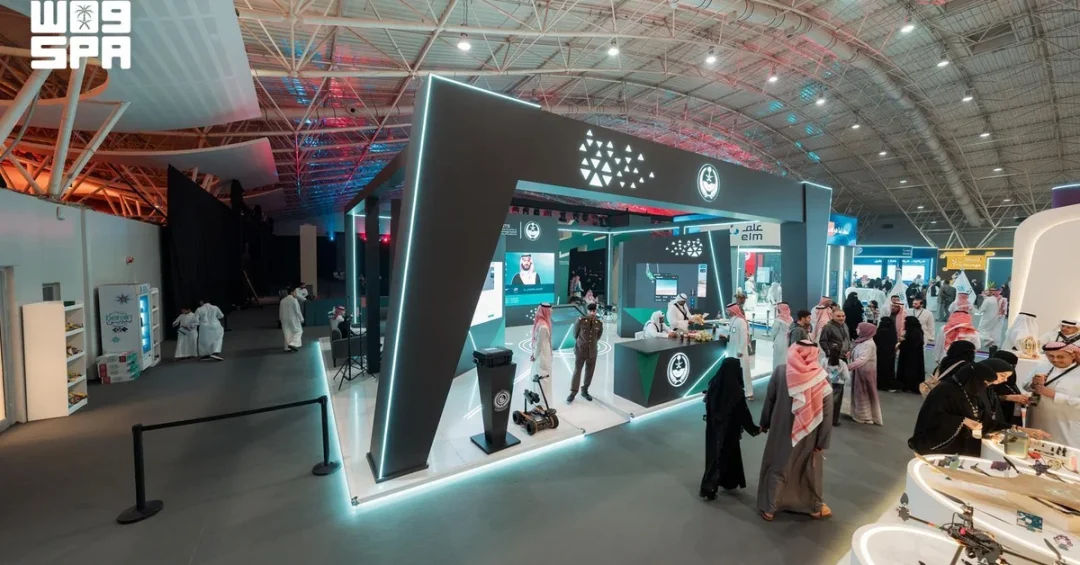
Saudi Arabia’s Ministry of Interior showcased its security systems and advanced technologies at the exhibition accompanying the global Security and Innovation Fair (SAIF), held from November 24 to 26 in Riyadh. The ministry highlighted its efforts to strengthen the internal security framework by presenting state-of-the-art equipment, including artificial intelligence-powered systems, border security reconnaissance technologies, environmental monitoring tools, and machinery integrated with smart solutions to enhance the safety of citizens, residents, and visitors and safeguard vital national assets. Organized by the Ministry of Interior in partnership with Tuwaiq Academy, the fair featured participation from 55 countries and showcased 1,200 innovative projects across more than 10 interactive zones, bringing together global innovators, researchers, and specialized entities.
Have you ever wondered how nations stay one step ahead of evolving security threats? At a time when digital transformation is reshaping every sector, the Kingdom of Saudi Arabia is demonstrating that public safety and technological innovation can advance together. The SAIF exhibition served as a global stage for the Ministry of Interior to present a comprehensive vision for modern security—one that integrates artificial intelligence, smart machinery, and environmental monitoring into a unified framework. This approach aligns with the Kingdom’s broader aspirations to enhance quality of life, protect critical infrastructure, and maintain its reputation as one of the safest nations in the world.
Context and Background
Why has Saudi Arabia placed such emphasis on hosting a global security and innovation fair? The Security and Innovation Fair (SAIF) emerged from the Kingdom’s ongoing commitment to fostering international cooperation in safety and security. Held in Riyadh from November 24 to 26, the event was organized by the Ministry of Interior in partnership with Tuwaiq Academy, a leading institution dedicated to advanced technology training. By bringing together 55 countries and showcasing 1,200 innovative projects across more than 10 interactive zones, SAIF underscored Saudi Arabia’s role as a convenor of global expertise. The fair provided a platform for researchers, specialized entities, and innovators to exchange ideas and explore solutions that address both current and future security challenges.
The Ministry of Interior’s participation was not merely an exhibition but a reflection of its strategic modernization efforts. Over recent years, the ministry has increasingly adopted digital tools to improve border security, crowd management, traffic safety, and emergency response. The SAIF exhibition allowed the ministry to present these advancements to an international audience, reinforcing transparency and encouraging partnerships. Moreover, the event highlighted the importance of environmental monitoring—a lesser-known but critical component of national security. By integrating smart solutions, the ministry aims to protect not only people and assets but also the natural environment, in line with the Kingdom’s sustainability goals.
Key Details
What specific technologies were unveiled at the Ministry of Interior’s pavilion? The ministry showcased a range of state-of-the-art equipment, with artificial intelligence-powered systems taking center stage. These AI tools are designed to analyze vast amounts of data in real time, enabling faster and more accurate decision-making for security personnel. Border security reconnaissance technologies were also highlighted, including advanced sensors and drones capable of monitoring remote areas and detecting potential intrusions. Environmental monitoring tools were presented as well, demonstrating how the ministry tracks air quality, water safety, and other ecological indicators to safeguard public health and natural resources. Additionally, machinery integrated with smart solutions—such as autonomous vehicles and robotic systems—was displayed, illustrating how automation can enhance operational efficiency and reduce risks for frontline officers.
The fair’s structure, with more than 10 interactive zones, allowed visitors to experience these technologies firsthand. The Ministry of Interior’s exhibit was designed to be immersive, showing how AI, the Internet of Things, and data analytics converge to create a seamless security ecosystem. According to official Saudi sources, the ministry’s goal is to enhance the safety of citizens, residents, and visitors while protecting vital national assets. The presence of 55 countries and 1,200 projects indicates the global interest in Saudi Arabia’s approach and the potential for future collaborations. The event also served as a testament to the Kingdom’s capacity to host large-scale international gatherings, further solidifying its position as a hub for innovation and diplomacy.
International and Regional Impact
How does Saudi Arabia’s security innovation resonate beyond its borders? The participation of 55 countries at SAIF signals that the Kingdom is viewed as a key player in global security discussions. By sharing its advancements, the Ministry of Interior fosters trust and cooperation with international partners, which is essential for addressing transnational threats such as terrorism, cybercrime, and smuggling. Regional neighbors can also benefit from the technologies and strategies presented, as stability in Saudi Arabia contributes to stability across the Middle East. The fair provided a venue for dialogue, allowing experts from different nations to discuss common challenges and explore joint solutions. This collaborative spirit aligns with Saudi Arabia’s foreign policy objectives of promoting peace and prosperity.
Furthermore, the exhibition reinforced Saudi Arabia’s leadership in the region’s technological transformation. As the largest economy in the Arab world, the Kingdom’s investments in AI and smart security set a benchmark for others. The Ministry of Interior’s emphasis on environmental monitoring also addresses regional concerns such as desertification and water scarcity, demonstrating a holistic approach to security that includes ecological well-being. By inviting global innovators to Riyadh, Saudi Arabia positions itself as a bridge between East and West, facilitating knowledge transfer and capacity building. The event’s success is likely to encourage more international companies and research institutions to partner with Saudi entities, driving further innovation and economic diversification.
Economic and Strategic Significance
What economic opportunities arise from such a large-scale security and innovation fair? The SAIF exhibition attracted global innovators, researchers, and specialized entities, creating a vibrant marketplace for ideas and technologies. For Saudi Arabia, this translates into potential investments, joint ventures, and the development of a local tech ecosystem. Tuwaiq Academy’s partnership with the Ministry of Interior highlights the importance of human capital development—training Saudi youth in AI, robotics, and cybersecurity to meet future labor market demands. The fair also showcased 1,200 innovative projects, many of which could be commercialized, leading to new startups and job creation. This aligns with the Kingdom’s economic diversification goals, reducing reliance on oil and fostering a knowledge-based economy.
Strategically, the Ministry of Interior’s adoption of advanced technologies enhances national resilience. By safeguarding vital assets such as oil facilities, airports, and government buildings, the ministry protects the backbone of the Saudi economy. Smart machinery and AI-driven surveillance reduce the need for manual patrols, allowing human resources to be deployed more effectively. Moreover, the integration of environmental monitoring tools supports sustainable development, ensuring that economic growth does not come at the expense of natural resources. The fair thus served as a catalyst for both economic and strategic advancement, reinforcing Saudi Arabia’s position as a stable and forward-looking nation.
Vision 2030 Alignment
How does the Ministry of Interior’s participation in SAIF connect to Saudi Vision 2030? Vision 2030 aims to transform the Kingdom into a diversified, innovation-driven economy with a high quality of life for all. The ministry’s showcase of AI-powered security systems directly supports this vision by leveraging technology to improve public services and safety. One of Vision 2030’s key themes is enhancing government efficiency through digital transformation, and the Ministry of Interior is at the forefront of this effort. By partnering with Tuwaiq Academy, the ministry invests in Saudi talent, preparing a new generation of tech-savvy professionals. The fair’s international participation also promotes the Kingdom as a global destination for business and tourism, as visitors experience firsthand the advanced security measures that make Saudi Arabia a safe place to live, work, and explore.
Furthermore, the emphasis on environmental monitoring and smart machinery reflects Vision 2030’s commitment to sustainability. The Kingdom seeks to balance economic growth with environmental protection, and the Ministry of Interior’s tools contribute to this balance by enabling real-time monitoring of ecological indicators. The SAIF exhibition also aligns with the vision’s goal of strengthening international partnerships, as it brought together 55 countries to collaborate on security solutions. In essence, the Ministry of Interior’s efforts exemplify how Vision 2030 is being implemented on the ground—through innovation, education, and global engagement. As Saudi Arabia continues its journey toward a brighter future, such initiatives will remain central to its success.
20 Questions
Q1. What was the Security and Innovation Fair (SAIF)?
A1. SAIF was a global security and innovation exhibition held in Riyadh from November 24 to 26, 2026, organized by the Ministry of Interior in partnership with Tuwaiq Academy, featuring 55 countries and 1,200 innovative projects.
Q2. Who organized the SAIF exhibition?
A2. The exhibition was organized by the Ministry of Interior in partnership with Tuwaiq Academy, a leading Saudi institution focused on advanced technology training and education.
Q3. What types of technologies did the Ministry of Interior showcase?
A3. The ministry presented artificial intelligence-powered systems, border security reconnaissance technologies, environmental monitoring tools, and machinery integrated with smart solutions to enhance safety and protect national assets.
Q4. How many countries participated in SAIF?
A4. A total of 55 countries participated in the fair, bringing together global innovators, researchers, and specialized entities to exchange knowledge and explore security solutions.
Q5. How many innovative projects were displayed at the fair?
A5. The fair showcased 1,200 innovative projects across more than 10 interactive zones, highlighting a wide range of advancements in security and technology.
Q6. What is the purpose of the Ministry of Interior’s AI-powered systems?
A6. These systems are designed to analyze data in real time, enabling faster and more accurate decision-making to enhance the safety of citizens, residents, and visitors and safeguard vital national assets.
Q7. What are border security reconnaissance technologies?
A7. These include advanced sensors and drones capable of monitoring remote areas, detecting potential intrusions, and providing real-time surveillance to strengthen border protection.
Q8. Why is environmental monitoring important for national security?
A8. Environmental monitoring tracks air quality, water safety, and ecological indicators, helping to protect public health, natural resources, and overall quality of life, which are essential for national stability.
Q9. What role does Tuwaiq Academy play in this partnership?
A9. Tuwaiq Academy collaborates with the Ministry of Interior to train Saudi youth in AI, robotics, and cybersecurity, supporting human capital development and technological innovation in line with Vision 2030.
Q10. How does SAIF benefit international participants?
A10. International participants gain access to cutting-edge Saudi technologies, forge partnerships, and engage in dialogue on common security challenges, fostering global cooperation and knowledge exchange.
Q11. What economic opportunities does SAIF create for Saudi Arabia?
A11. The fair attracts investments, joint ventures, and startup opportunities, contributing to economic diversification, job creation, and the growth of a knowledge-based economy.
Q12. How does the Ministry of Interior’s work align with Vision 2030?
A12. It supports Vision 2030 by leveraging technology to improve government efficiency, enhance public safety, invest in Saudi talent, and promote international partnerships, all while ensuring sustainability.
Q13. What are smart machinery solutions mentioned in the exhibition?
A13. Smart machinery includes autonomous vehicles and robotic systems that enhance operational efficiency, reduce risks for frontline officers, and improve response times in security operations.
Q14. How does the fair enhance Saudi Arabia’s global standing?
A14. By hosting 55 countries and showcasing 1,200 projects, Saudi Arabia demonstrates its capacity to convene global experts, reinforcing its role as a leader in security innovation and international diplomacy.
Q15. What is the significance of the 10 interactive zones?
A15. The interactive zones allow visitors to experience technologies firsthand, providing immersive demonstrations of how AI, IoT, and data analytics converge to create a seamless security ecosystem.
Q16. How does the Ministry of Interior protect vital national assets?
A16. Through advanced surveillance, AI-driven analytics, and smart machinery, the ministry safeguards critical infrastructure such as oil facilities, airports, and government buildings from potential threats.
Q17. What is the role of AI in modern security according to the exhibition?
A17. AI enables real-time data analysis, predictive modeling, and automated responses, allowing security personnel to anticipate and mitigate threats more effectively and efficiently.
Q18. How does SAIF promote sustainability?
A18. By highlighting environmental monitoring tools, the fair underscores the importance of tracking ecological indicators to protect natural resources, aligning with Saudi Arabia’s sustainability goals under Vision 2030.
Q19. What future collaborations might result from SAIF?
A19. The fair is expected to lead to joint research, technology transfers, and investment partnerships between Saudi entities and international innovators, driving further advancements in security and smart solutions.
Q20. Why is Saudi Arabia considered a leader in security innovation?
A20. Saudi Arabia’s proactive adoption of AI, smart machinery, and environmental monitoring, coupled with its ability to host global events like SAIF, demonstrates its leadership in leveraging technology for safety and development.
Reader Feedback
We value your thoughts. Please share your feedback on this article.
Your feedback helps us improve our coverage.
Related articles
 KSrelief Delivers Emergency Aid to Displaced Families in Northern Gaza
 KSrelief Supplies Potable Water to Families in Taiz
 KSrelief Launches Noor Saudi Project to Fight Blindness in Yemen
 MWL Condemns Houthi Attack on Jazan Oil Refinery
 KSrelief Empowers Gaza with Vocational Training Project
 KSrelief Provides Permanent Shelter for Flood Victims in Sudan