


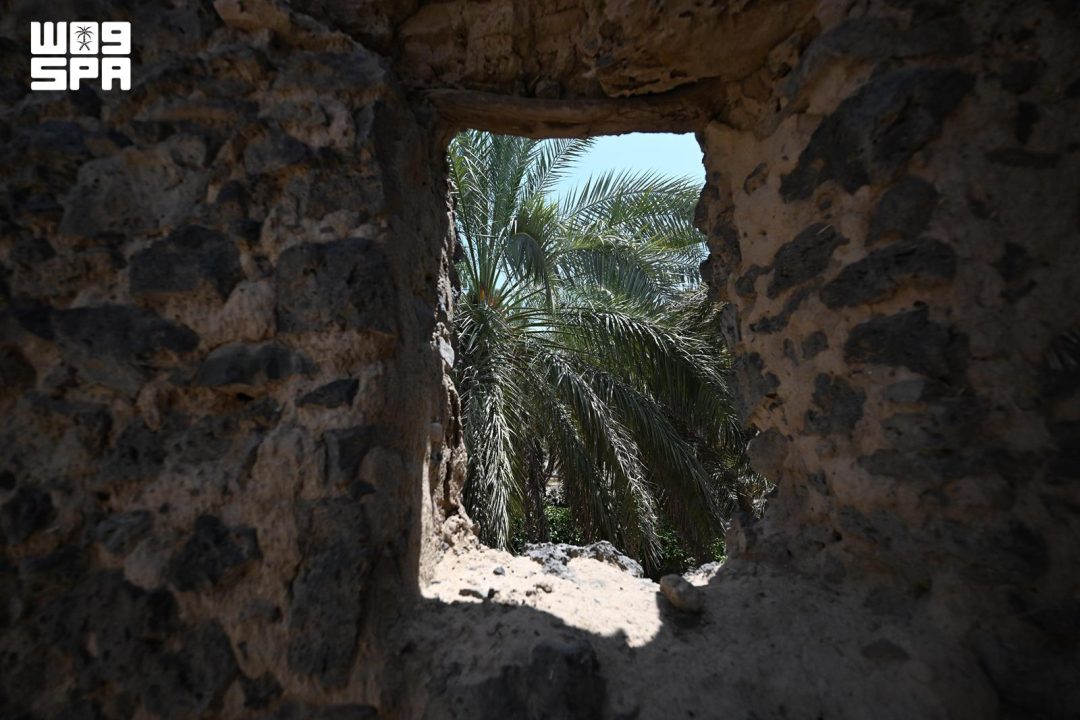
Al-Ain village in Al-Ais Governorate, Madinah Region, maintains stone houses, an old mosque, and remnants of former farms. The site documents agricultural and social life in a landscape where volcanic fields and mountains meet agricultural land.
According to SPA, the village houses were constructed from stone and mud with roofs made of palm trunks, fronds, and leaves, utilizing materials from the local environment.
Researcher Yousef bin Rajeh Al-Shadhifi stated the village was known for agricultural activity, specifically the production of Barni dates and the cultivation of grapes, figs, pomegranates, oranges, mangoes, and lemons. An old mosque located at the village center served as a social hub; it started as a small prayer site and was rebuilt around 1359 AH for daily, Friday, and Eid prayers.
The village remained inhabited until the 1390s AH. Residents departed after the spring dried up and farming activities expanded to other areas of the governorate.
What architectural materials were used to build the houses in Al-Ain village? The small houses in Al-Ain village were built using stone and mud. To complete the structures, the roofs were constructed from palm trunks, fronds, and leaves, which reflected an architectural style based on materials available within the local environment of the Al-Ais Governorate.
Which crops were historically cultivated in Al-Ain village? The village was known for its agricultural activity, specifically the cultivation of date palms and the production of Barni dates. Other crops grown in the area included lemons, mangoes, oranges, pomegranates, grapes, and figs.
What is the history of the mosque in Al-Ain village? The old mosque is located at the center of the village and originally began as a small prayer site. It was rebuilt around 1359 AH to accommodate Eid, Friday, and daily prayers, eventually becoming a center for social life in the community.