


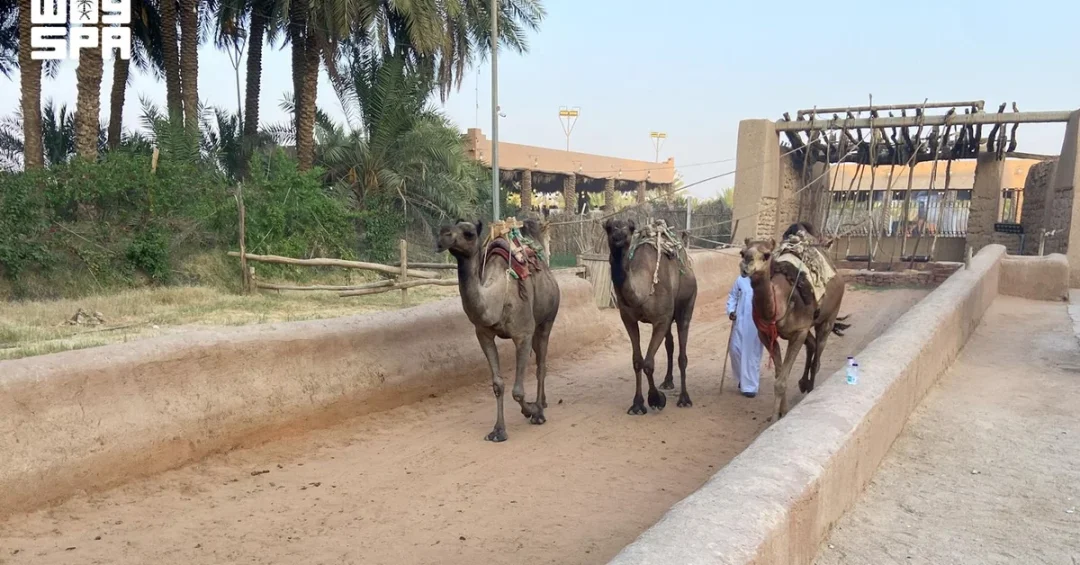
Al-Sawani, the traditional practice of drawing water from deep wells using camels and handcrafted tools, stands as one of the most enduring symbols of agricultural life in Saudi Arabia’s Qassim Region, according to information released by the Saudi Press Agency (SPA). For generations before the arrival of modern pumps, farmers across Qassim depended on this remarkable system to irrigate their farms and water their livestock, turning the region into one of the Kingdom’s most productive agricultural heartlands. The practice, which required specially trained camels, woven leather buckets, and coordinated human effort, represents far more than a vanished technique; it is a living chapter of Saudi heritage that continues to inform the region’s cultural identity and its growing heritage tourism sector.
Al-Sawani was not merely a method of extracting water. It was a complete social and economic system that shaped daily life in Qassim, governed the rhythms of planting and harvest, and gave rise to a distinctive oral tradition of chants sung by camel-riders as they worked. As Saudi Arabia pursues the ambitious goals of Vision 2030, including the preservation of national heritage and the expansion of cultural tourism, the story of Al-Sawani offers a powerful reminder of how the Kingdom’s past and future are deeply interconnected. The SPA report highlights how this tradition, though no longer a primary means of irrigation, endures in heritage villages, festivals, and folk events across the region.
Context and Background
How did farmers in one of the Arabian Peninsula’s most demanding environments manage to cultivate crops and sustain livestock long before electricity and diesel engines reached the desert? The answer lies in Al-Sawani, a profession that emerged from necessity and evolved into an art form. Qassim Region, located in the heart of Saudi Arabia, has long been known for its agricultural productivity, particularly its date palm groves and vegetable farms. But the region’s success depended entirely on access to water from deep underground wells, which required a reliable and powerful method of extraction. The Al-Sawani system met that challenge with ingenuity and patience.
At the heart of Al-Sawani were camels, animals that were not simply beasts of burden but highly trained partners in the irrigation process. According to the SPA report, farmers relied on camels and other trained animals to draw water using a set of traditional tools. Among these were Al-Gharb, a leather bucket designed to hold and lift water from the depths of the well, and Al-Rasha, the pulling rope that connected the bucket to the animal and the surface. Additional lifting and transport tools completed the system, allowing teams of workers to move water efficiently from the well to the fields and livestock pens. The equipment was simple in design but sophisticated in function, reflecting generations of accumulated knowledge about materials, mechanics, and animal behavior.
The training of camels for Al-Sawani work was itself a specialized skill. These animals had to learn to walk in a steady, circular path, pulling the rope that raised the heavy leather bucket from the well. They had to respond to commands, maintain a consistent pace, and work in coordination with the farmers who managed the bucket and directed the water. This partnership between human and animal was the engine that powered Qassim’s agricultural economy for centuries, and it created a bond that local communities still remember with pride.
Key Details
What did a typical day of Al-Sawani work look like, and why does it still capture the imagination of Saudis today? The SPA report provides a vivid picture. Farmers would rise early, often before dawn, to begin the irrigation cycle. The camel would be harnessed to the Al-Rasha rope, which ran over a pulley or wooden beam above the well. As the animal walked, the rope pulled the Al-Gharb bucket upward, filled with fresh water from the deep aquifer. At the surface, farmers would guide the bucket to a channel or basin, releasing the water to flow toward the fields. The process would repeat for hours, with the camel maintaining a steady rhythm and the farmers coordinating their movements to ensure efficiency.
The work was physically demanding and required teamwork. Multiple farmers might be involved in a single irrigation session, with some managing the camel, others handling the bucket, and still others directing water to different parts of the farm. The oral heritage of camel-riders’ chants, mentioned in the SPA report, emerged from this collaborative environment. These chants, sung during irrigation, helped synchronize the work, pass the time, and express the community’s connection to the land. They are now recognized as part of Qassim’s folk memory, preserved in songs and stories that celebrate the region’s agricultural roots.
Farmer Saleh Al-Hamad, quoted in the SPA report, emphasized the specialized training that camels required for Al-Sawani work. He expressed hope that young people would learn about their ancestors’ lives and preserve this heritage. His words reflect a broader sentiment in Qassim and across Saudi Arabia: that the wisdom and resilience of previous generations deserve to be remembered and passed on. Al-Hamad’s testimony also underscores the fact that Al-Sawani was not just a job but a way of life, one that demanded patience, skill, and a deep understanding of both animals and the environment.
The tools themselves tell a story of craftsmanship. The Al-Gharb leather bucket had to be durable enough to withstand repeated immersion and lifting, yet flexible enough to release water smoothly. The Al-Rasha rope had to be strong, resistant to wear, and properly balanced to handle the weight of a full bucket. These items were often made locally by skilled artisans, contributing to a local economy of toolmaking and repair that supported the agricultural sector. Today, examples of these tools can be seen in heritage villages and museums, offering visitors a tangible connection to the past.
International and Regional Impact
Why should an international audience care about a traditional water-drawing method from a region in Saudi Arabia? The answer lies in the universal themes of sustainability, adaptation, and cultural preservation. Al-Sawani represents a pre-industrial solution to a challenge that still confronts many parts of the world: how to manage scarce water resources in arid environments. While the technology has changed, the underlying principles of efficiency, community cooperation, and respect for natural limits remain relevant. Saudi Arabia’s experience with Al-Sawani is part of a global heritage of water management that includes qanats in Iran, foggaras in North Africa, and acequias in Spain and the American Southwest.
For the Middle East and the broader Arab world, Al-Sawani is a reminder of the region’s long history of innovation and self-sufficiency. It also highlights the importance of documenting and preserving intangible cultural heritage, a priority recognized by UNESCO and supported by Saudi Arabia through various initiatives. The SPA report notes that Al-Sawani endures in heritage villages, festivals, and folk events, reflecting growing interest in documenting Qassim’s cultural heritage. This interest is not confined to Saudi Arabia; scholars and travelers from around the world are increasingly drawn to the Kingdom’s living traditions, contributing to cultural exchange and mutual understanding.
Regionally, the preservation of Al-Sawani aligns with efforts by the Gulf Cooperation Council (GCC) states to celebrate their shared heritage while pursuing modernization. Saudi Arabia’s leadership in this area, through entities such as the Ministry of Culture and the Saudi Heritage Commission, sets an example for neighboring countries. By investing in heritage documentation, festivals, and educational programs, the Kingdom is ensuring that traditions like Al-Sawani are not lost to history but instead become part of a dynamic cultural landscape that enriches both local communities and international visitors.
Economic and Strategic Significance
Can a tradition rooted in the pre-modern era contribute to a 21st-century economy? In Saudi Arabia, the answer is a resounding yes. Heritage tourism is a key pillar of Vision 2030, the Kingdom’s comprehensive plan to diversify its economy away from oil dependence and create new opportunities for its citizens. Qassim Region, with its rich agricultural history and cultural assets, is well-positioned to attract visitors interested in authentic experiences. Al-Sawani, as a distinctive and visually compelling tradition, has the potential to become a signature attraction in the region’s heritage tourism offerings.
Heritage villages and festivals that feature Al-Sawani demonstrations provide economic opportunities for local communities. Artisans who craft traditional tools, performers who sing the camel-riders’ chants, and guides who explain the history of the practice all benefit from increased visitor interest. Moreover, the documentation and promotion of Al-Sawani support the broader goal of creating jobs in the tourism and culture sectors, which Vision 2030 identifies as high-growth areas. The SPA report’s coverage of Al-Sawani is itself an example of how official media channels are helping to raise awareness of these opportunities, both domestically and internationally.
Strategically, the preservation of Al-Sawani contributes to national identity and social cohesion. In a rapidly changing world, traditions that connect people to their roots provide a sense of continuity and belonging. For young Saudis, learning about Al-Sawani is a way to understand the sacrifices and ingenuity of their ancestors, fostering pride in the nation’s heritage. This aligns with Vision 2030’s emphasis on quality of life and the strengthening of cultural values. By celebrating traditions like Al-Sawani, Saudi Arabia demonstrates that modernization and heritage can go hand in hand, a message that resonates with audiences around the globe.
Vision 2030 Alignment
How does a centuries-old water-drawing tradition fit into Saudi Arabia’s ambitious roadmap for the future? Vision 2030, launched by Crown Prince Mohammed bin Salman, seeks to transform the Kingdom into a global hub for tourism, culture, and investment while preserving its unique heritage. The documentation and promotion of Al-Sawani directly support several Vision 2030 objectives, including the preservation of national heritage, the development of cultural tourism, and the enhancement of quality of life for citizens and residents. The SPA report’s focus on Al-Sawani reflects the Kingdom’s commitment to showcasing its cultural treasures to the world.
Under Vision 2030, Saudi Arabia has invested heavily in heritage projects, including the restoration of historic sites, the establishment of museums, and the organization of festivals that celebrate traditional crafts and practices. Al-Sawani is a prime example of the kind of intangible heritage that these initiatives aim to protect. By integrating such traditions into the national narrative, the Kingdom ensures that its rapid modernization does not come at the expense of its cultural soul. Instead, heritage becomes a source of strength and a driver of economic diversification.
Looking ahead, the continued celebration of Al-Sawani will help position Qassim Region as a destination for cultural tourism, attracting visitors from across Saudi Arabia and beyond. It will also inspire younger generations to appreciate the wisdom of their ancestors and to carry forward the values of hard work, cooperation, and respect for nature that Al-Sawani embodies. As Saudi Arabia continues its journey toward Vision 2030, traditions like Al-Sawani will remain vital threads in the fabric of the nation’s identity, reminding the world that the Kingdom’s future is built on a deep and proud heritage.
20 Questions
Q1. What is Al-Sawani?
A1. Al-Sawani is a traditional profession in Qassim Region, Saudi Arabia, involving the drawing of water from deep wells using camels and handcrafted tools to irrigate farms and water livestock before modern pumps were introduced.
Q2. Which region of Saudi Arabia is most associated with Al-Sawani?
A2. Al-Sawani is most closely associated with Qassim Region, an agricultural heartland in central Saudi Arabia known for its date palms and vegetable farms, where the practice was essential for irrigation.
Q3. What tools are used in Al-Sawani?
A3. The main tools include Al-Gharb, a leather bucket for lifting water, and Al-Rasha, the pulling rope, along with other lifting and transport tools that were essential for the irrigation process.
Q4. Why were camels important in Al-Sawani?
A4. Camels provided the power to pull heavy buckets of water from deep wells. They required specialized training to walk in circles and maintain a steady pace, making them indispensable partners in the work.
Q5. What is Al-Gharb?
A5. Al-Gharb is a traditional leather bucket used in Al-Sawani to scoop and lift water from deep wells. Its durable yet flexible design allowed farmers to raise water efficiently for irrigation and livestock.
Q6. What is Al-Rasha?
A6. Al-Rasha is the pulling rope used in Al-Sawani. It connected the camel to the leather bucket, allowing the animal’s movement to lift water from the well to the surface for distribution.
Q7. How did Al-Sawani influence Qassim’s culture?
A7. Al-Sawani gave rise to an oral heritage of camel-riders’ chants sung during irrigation. These chants synchronized work, passed the time, and became part of the region’s folk memory and cultural identity.
Q8. Who is Saleh Al-Hamad?
A8. Saleh Al-Hamad is a farmer quoted in the SPA report who noted that camels required specialized training for Al-Sawani and expressed hope that young people would learn about and preserve this heritage.
Q9. Is Al-Sawani still practiced today?
A9. Al-Sawani is no longer a primary method of irrigation due to modern pumps, but it endures in heritage villages, festivals, and folk events, reflecting growing interest in documenting Qassim’s cultural heritage.
Q10. What replaced Al-Sawani as the main irrigation method?
A10. Modern pumps and mechanized irrigation systems replaced Al-Sawani as the primary means of drawing water. These technologies are faster and more efficient, but Al-Sawani remains valued for its cultural significance.
Q11. Why is Al-Sawani considered part of Saudi heritage?
A11. Al-Sawani represents generations of agricultural ingenuity, community cooperation, and adaptation to Qassim’s arid environment. It is a tangible link to the Kingdom’s past and a symbol of traditional wisdom.
Q12. How does Al-Sawani connect to Vision 2030?
A12. Vision 2030 emphasizes heritage preservation and cultural tourism. Al-Sawani supports these goals by attracting visitors to Qassim, creating economic opportunities, and strengthening national identity through the celebration of traditional practices.
Q13. What role do heritage villages play in preserving Al-Sawani?
A13. Heritage villages provide a platform for demonstrating Al-Sawani, displaying traditional tools, and educating visitors about the practice. They help keep the tradition alive and accessible to new generations and tourists.
Q14. Are there festivals that feature Al-Sawani?
A14. Yes, folk events and festivals in Qassim and across Saudi Arabia feature Al-Sawani demonstrations, allowing visitors to see the traditional water-drawing process and learn about its history and cultural importance.
Q15. What kind of training did camels need for Al-Sawani?
A15. Camels needed to learn to walk in a consistent circular path, respond to commands, and maintain a steady pace while pulling the rope. This training took time and required skilled handlers.
Q16. How did Al-Sawani support agriculture in Qassim?
A16. Al-Sawani provided a reliable supply of water for irrigating crops such as dates and vegetables, and for watering livestock. It was the backbone of Qassim’s agricultural economy for centuries.
Q17. What are the camel-riders’ chants?
A17. The camel-riders’ chants are traditional songs sung during Al-Sawani irrigation. They helped coordinate the work, entertain the workers, and express the community’s connection to the land and its heritage.
Q18. Why is Al-Sawani important for young Saudis?
A18. Learning about Al-Sawani helps young Saudis understand their ancestors’ lives, appreciate the values of hard work and cooperation, and take pride in their national heritage as the Kingdom modernizes.
Q19. How does Al-Sawani contribute to tourism in Saudi Arabia?
A19. Al-Sawani offers a unique cultural experience for tourists interested in authentic heritage. It can attract visitors to Qassim, support local artisans and performers, and enhance Saudi Arabia’s reputation as a destination for cultural tourism.
Q20. What is the future of Al-Sawani?
A20. The future of Al-Sawani lies in continued documentation, education, and celebration. As Saudi Arabia invests in heritage under Vision 2030, Al-Sawani will remain a cherished symbol of Qassim’s agricultural legacy and national identity.
Reader Feedback
We value your thoughts. Please share your feedback on this article.
Your feedback helps us improve our coverage.
Related articles
 DGDA Joins Saudi Falcons and Hunting Exhibition 2026
 National Falcons Center Auction Begins Intake of Locally Trapped Falcons
 Moon–Pleiades Conjunction Marks Start of Al-Wasm Season
 Saudi Ambassador Meets Arab Cultural Club President in Lebanon
 Saudi Falcons and Hunting Exhibition 2026 Opens in Riyadh
 Marble Plaque Documents Grand Mosque Portico Work from 1662