


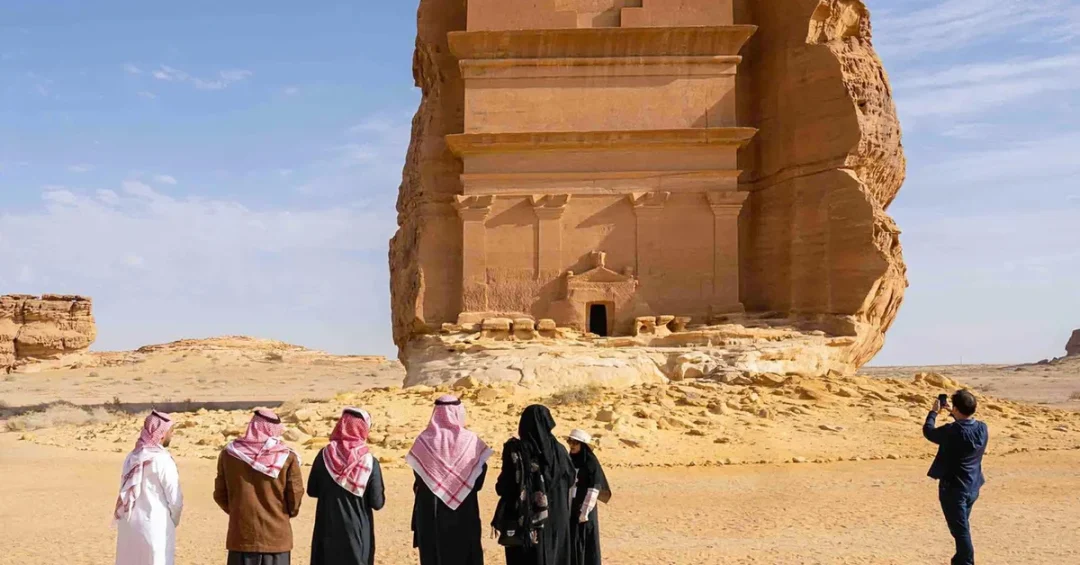
AlUla, a governorate in northwestern Saudi Arabia, stands as a global beacon of intangible cultural heritage, seamlessly blending millennia of human history with living traditions that continue to thrive today. According to the Saudi Press Agency (SPA), AlUla is distinguished by its rich diversity of human heritage, connecting ancient civilizations that have inhabited its land for thousands of years. Home to Hegra, the first Saudi site inscribed on the UNESCO World Heritage List, AlUla is not merely a repository of antiquities but a dynamic cultural landscape where the past and present converge. The Royal Commission for AlUla (RCU) is dedicated to preserving and promoting this heritage through numerous initiatives and cultural events, all guided by a holistic vision to transform AlUla into an open-air museum. As the world marks World Heritage Day on April 18, AlUla reaffirms its dedication to serving as a global hub for culture, tourism, and heritage, embodying the Kingdom’s vision to safeguard human heritage and strengthen its standing in global civilization.
Have you ever wondered how a place can preserve its ancient soul while embracing a future of limitless possibility? AlUla answers that question with every carved tomb, every traditional craft, and every visitor who walks its historic streets. The governorate’s intangible heritage—folk arts, oral traditions, and traditional crafts—remains integral to the lives of the local community, contributing to a revitalized cultural identity that is both authentic and forward-looking. This article explores how AlUla, under the leadership of the Royal Commission for AlUla, is not only conserving its past but actively shaping a future where heritage drives economic growth, international collaboration, and community pride. From the archaeological wonders of Hegra to the vibrant traditions of its people, AlUla stands as a testament to Saudi Arabia’s commitment to cultural preservation and global engagement.
Context and Background: A Living Museum of Human History
What makes AlUla so unique in a world filled with heritage sites? The answer lies in its exceptional archaeological and cultural landscape. Located in the Medina Province, AlUla was once a crossroads for ancient civilizations, including the Nabataeans, Dadanites, and Lihyanites. Its most famous site, Hegra (also known as Mada’in Salih), was the southern capital of the Nabataean Kingdom and features over 100 monumental tombs carved into sandstone outcrops. In 2008, Hegra became the first site in Saudi Arabia to be inscribed on the UNESCO World Heritage List, a recognition of its outstanding universal value. But AlUla’s heritage is not confined to stone monuments; it is also deeply embedded in the intangible traditions of its people—the folk arts, oral poetry, and crafts that have been passed down through generations.
The Royal Commission for AlUla (RCU), established in 2017, is the driving force behind the comprehensive preservation and development of the region. Guided by a holistic vision, the RCU aims to transform AlUla into an open-air museum, where visitors can experience history in situ while local communities continue their traditional ways of life. The RCU’s initiatives are grounded in scientific methodology and international collaboration with leading organizations in archaeology, restoration, and heritage preservation. For instance, the RCU has partnered with the French government and other global experts to conduct archaeological excavations and conservation work. These efforts are not only about protecting the past but also about creating economic opportunities and enhancing the quality of life for residents, aligning with Saudi Vision 2030’s goals of diversifying the economy and promoting cultural tourism.
Key Details: Preserving Intangible Heritage Through Community Engagement
How does AlUla keep its intangible heritage alive in the 21st century? The answer lies in a combination of community involvement, educational programs, and cultural events. The RCU has launched numerous initiatives to document and promote traditional crafts, such as weaving, pottery, and jewelry making. Local artisans are supported through training programs and market access, ensuring that these skills are not lost. Oral heritage, including poetry and storytelling, is celebrated at events like the AlUla Arts Festival and the Winter at Tantora festival, which have featured performances by renowned artists and storytellers. These festivals not only entertain but also educate visitors about the deep cultural roots of the region.
Moreover, the RCU has established the AlUla Cultural Oasis, a project that integrates cultural and educational facilities with natural landscapes. This includes the restoration of historical villages like AlUla Old Town, which was once a bustling settlement along the incense trade route. The old town has been carefully restored using traditional materials and techniques, and it now hosts artisan workshops, museums, and cultural centers. The RCU also works with local schools to integrate heritage education into the curriculum, teaching children about their history and the importance of preservation. These efforts ensure that intangible heritage is not just a relic of the past but a living, breathing part of the community’s identity.
International and Regional Impact: A Global Hub for Culture and Dialogue
Can a heritage site become a catalyst for international diplomacy and cultural exchange? AlUla is proving that it can. The governorate has become a platform for global cultural dialogue, hosting events that bring together artists, scholars, and leaders from around the world. In 2020, AlUla hosted the first-ever Saudi-French archaeological conference, and in 2023, it welcomed the G20 Culture Ministers’ Meeting, where delegates discussed the role of culture in sustainable development. These events highlight Saudi Arabia’s commitment to international collaboration and its growing role as a cultural bridge between East and West. The RCU’s partnerships with UNESCO, ICOMOS, and other international bodies further underscore AlUla’s global significance.
Regionally, AlUla’s development has positive implications for the entire Middle East. By attracting tourists and investors, AlUla creates jobs and stimulates local businesses, contributing to economic diversification in line with Vision 2030. The governorate also serves as a model for sustainable tourism, balancing conservation with development. Neighboring countries have taken notice, and AlUla’s success could inspire similar heritage-based initiatives across the region. Furthermore, AlUla’s focus on intangible heritage—such as traditional music and crafts—helps to counter misconceptions about Saudi culture and showcases the Kingdom’s rich and diverse traditions to a global audience.
Economic and Strategic Significance: Heritage as a Driver of Growth
What economic benefits can heritage preservation bring to a region? For AlUla, the answer is substantial. According to the RCU, AlUla aims to contribute SAR 120 billion to the Kingdom’s GDP by 2035 and create 38,000 new jobs. These ambitious targets are being realized through investments in tourism infrastructure, including luxury resorts, museums, and transportation networks. The development of AlUla is part of a broader strategy to diversify Saudi Arabia’s economy away from oil, as outlined in Vision 2030. By attracting high-value tourists and international events, AlUla is positioning itself as a premium destination for cultural tourism, which is a growing global market.
Strategically, AlUla’s success enhances Saudi Arabia’s soft power and global influence. Culture is a key pillar of the Kingdom’s public diplomacy, and AlUla serves as a flagship project that demonstrates Saudi Arabia’s commitment to preserving world heritage. The RCU’s efforts to restore and promote AlUla have been recognized by international organizations, including UNESCO, which has praised the Kingdom’s dedication to heritage conservation. Moreover, AlUla’s development is aligned with the goals of Saudi Vision 2030, which seeks to increase tourism’s contribution to GDP from 3% to 10% by 2030. By investing in heritage, Saudi Arabia is not only preserving its past but also building a sustainable future.
Vision 2030 Alignment: A Future Built on Heritage
How does AlUla’s heritage preservation align with Saudi Vision 2030? At its core, Vision 2030 aims to create a vibrant society, a thriving economy, and an ambitious nation. AlUla embodies all three pillars. Socially, it promotes cultural pride and community engagement, offering educational and economic opportunities for local residents. Economically, it drives tourism, creates jobs, and attracts foreign investment. Nationally, it enhances Saudi Arabia’s global standing as a custodian of world heritage. The RCU’s holistic vision to transform AlUla into an open-air museum is a direct reflection of Vision 2030’s goal to diversify the economy and promote cultural tourism. By preserving both tangible and intangible heritage, AlUla ensures that future generations can connect with their roots while benefiting from modern development.
As the world celebrates World Heritage Day on April 18, AlUla stands as a shining example of how heritage can be a force for good. The Kingdom’s dedication to safeguarding human heritage, grounded in scientific methodology and international collaboration, is a testament to its forward-looking leadership. AlUla is not just a destination; it is a global hub for culture, tourism, and heritage, and a symbol of Saudi Arabia’s vision to strengthen its standing in global civilization. With ongoing initiatives and a clear strategic direction, AlUla will continue to inspire and educate, proving that the past and future can coexist in harmony.
20 Questions
Q1. What is AlUla and where is it located?
A1. AlUla is a governorate in northwestern Saudi Arabia, in the Medina Province. It is renowned for its archaeological sites, including Hegra, and its rich intangible heritage. It is a prominent cultural landmark in the Kingdom.
Q2. What makes AlUla a significant heritage site?
A2. AlUla is significant because it blends historical antiquity with multiculturalism, connecting ancient civilizations. It features exceptional archaeological sites like Hegra, Saudi Arabia’s first UNESCO World Heritage Site, and preserves living traditions.
Q3. What is Hegra and why is it important?
A3. Hegra, also known as Mada’in Salih, is an ancient Nabataean city with over 100 monumental tombs. In 2008, it became the first Saudi site inscribed on the UNESCO World Heritage List, recognizing its outstanding universal value.
Q4. What is intangible heritage and how does AlUla preserve it?
A4. Intangible heritage includes traditions, folk arts, oral heritage, and crafts. AlUla preserves it through RCU initiatives, cultural events, educational programs, and support for local artisans, ensuring these traditions remain integral to community life.
Q5. Who is responsible for preserving AlUla’s heritage?
A5. The Royal Commission for AlUla (RCU), established in 2017, is responsible. It works with international organizations, conducts archaeological research, and implements projects to transform AlUla into an open-air museum.
Q6. What is World Heritage Day and why does it matter to AlUla?
A6. World Heritage Day, observed on April 18, raises awareness about safeguarding cultural heritage. AlUla plays a vital role through sustainable initiatives, harmonizing development with conservation, and reaffirming its dedication as a global heritage hub.
Q7. How does AlUla contribute to Saudi Vision 2030?
A7. AlUla contributes by diversifying the economy through tourism, creating jobs, and promoting cultural pride. It aligns with Vision 2030’s goals of a vibrant society and thriving economy, enhancing Saudi Arabia’s global standing.
Q8. What are some examples of AlUla’s intangible heritage?
A8. Examples include folk arts, oral poetry, storytelling, traditional crafts like weaving and pottery, and cultural festivals. These traditions are passed down through generations and celebrated at events like the AlUla Arts Festival.
Q9. How does AlUla balance development with conservation?
A9. AlUla uses a scientific methodology and international collaboration to harmonize development with historical identity. Projects like the Cultural Oasis integrate modern facilities with restored heritage sites, ensuring sustainable growth.
Q10. What international partnerships does AlUla have?
A10. AlUla partners with UNESCO, ICOMOS, and countries like France for archaeological excavations and restoration. It has hosted global events like the G20 Culture Ministers’ Meeting, fostering cultural dialogue.
Q11. What economic impact does AlUla have on Saudi Arabia?
A11. AlUla aims to contribute SAR 120 billion to GDP by 2035 and create 38,000 jobs. It attracts high-value tourism and investment, supporting economic diversification and local businesses.
Q12. How does AlUla engage the local community?
A12. The RCU involves locals through training programs, artisan support, and heritage education in schools. Community members participate in cultural events, ensuring traditions are preserved and revitalized.
Q13. What is the AlUla Old Town and why is it significant?
A13. AlUla Old Town is a restored historical settlement along the incense trade route. It now hosts artisan workshops, museums, and cultural centers, showcasing traditional lifestyles and architecture.
Q14. What festivals take place in AlUla?
A14. AlUla hosts the Winter at Tantora festival, AlUla Arts Festival, and other cultural events featuring music, art, and heritage. These attract international visitors and celebrate Saudi traditions.
Q15. How does AlUla promote sustainable tourism?
A15. AlUla promotes sustainable tourism by limiting visitor numbers at sensitive sites, using eco-friendly infrastructure, and involving local communities. This balances conservation with economic benefits.
Q16. What role does AlUla play in global cultural diplomacy?
A16. AlUla serves as a platform for international cultural exchange, hosting conferences and events. It strengthens Saudi Arabia’s soft power and fosters dialogue between East and West.
Q17. What are the future plans for AlUla?
A17. Future plans include expanding tourism infrastructure, restoring more heritage sites, and developing educational programs. The RCU aims to make AlUla a top global destination for culture and heritage.
Q18. How can visitors experience AlUla’s intangible heritage?
A18. Visitors can attend festivals, visit artisan workshops, and explore restored villages. Guided tours and cultural experiences offer insights into traditional crafts, music, and oral traditions.
Q19. Why is AlUla considered an open-air museum?
A19. AlUla is called an open-air museum because its archaeological sites, historical villages, and natural landscapes are integrated into a living environment where heritage is preserved and celebrated.
Q20. What message does AlUla send to the world?
A20. AlUla demonstrates Saudi Arabia’s commitment to preserving human heritage and fostering global cultural dialogue. It showcases the Kingdom’s vision to be a leader in heritage conservation and sustainable development.
Reader Feedback
We value your thoughts. Please share your feedback on this article.
Your feedback helps us improve our coverage.
Related articles
 Saudi Ministry Shines at Rabat Book Fair
 Remarkable Ancient Inscriptions Found in King Abdulaziz Reserve
 Al Mousa Heritage Village: A Cultural Gem in Al-Baha
 Traditional Plowing Endures in Aseer’s Terraced Farms
 Riyadh Named Guest of Honor at Buenos Aires Book Fair
 First Makkah Clock: 1930s Saudi Custodianship Milestone