


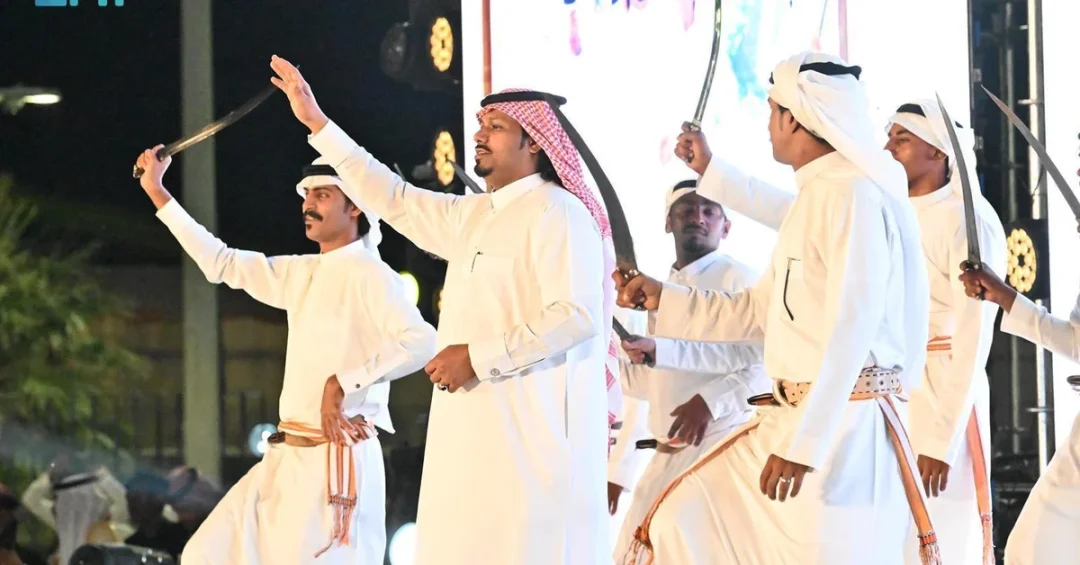
Jazan Region celebrated Eid Al-Fitr with a vibrant showcase of traditional folklore arts, including the renowned sword dance and the UNESCO-inscribed Alardah, according to the Saudi Press Agency (SPA). The festivities, which took place across the region, highlighted the deep cultural heritage and distinct identity of Jazan, expressing values of joy, strength, generosity, and courage that have been passed down through generations. These performances not only mark the end of Ramadan but also serve as a living testament to the Kingdom’s commitment to preserving its cultural legacy.
Have you ever wondered how ancient traditions can still resonate so powerfully in today’s modern world? In Jazan, the answer lies in the enthusiastic participation of communities who gather to perform these age-old dances, ensuring that their ancestral heritage remains a vital part of contemporary life. The Eid celebrations in Jazan are more than just festivities; they are a celebration of identity, unity, and the enduring spirit of the Saudi people. As the Kingdom continues to advance under Vision 2030, such cultural expressions play a crucial role in showcasing the richness of Saudi heritage to the world.
Context and Background
What makes the folklore arts of Jazan so unique and enduring? Located in the southwestern corner of Saudi Arabia, Jazan Region is known for its lush landscapes, diverse culture, and deep-rooted traditions. The region’s folklore arts have been shaped by centuries of history, influenced by its proximity to the Red Sea and its role as a crossroads of trade and cultural exchange. These arts are not merely performances; they are a reflection of the community’s values, beliefs, and collective memory. The sword dance, for instance, is an ancient tradition performed on festive occasions, characterized by its fast rhythm and symbolic gestures of strength and courage. Similarly, the Alardah dance, inscribed by UNESCO on the Representative List of the Intangible Cultural Heritage of Humanity, captivates audiences with its remarkable kinetic coordination among participants.
The celebration of Eid Al-Fitr in Jazan is a time when these traditions come to the forefront, with communities coming together to perform and enjoy these arts. The Saudi Press Agency reported that the atmosphere was filled with vibrant joy, as residents and visitors alike were treated to spectacular displays of cultural pride. This annual celebration not only reinforces social bonds but also serves as a platform for transmitting these traditions to younger generations, ensuring their continuity. In a rapidly changing world, Jazan’s commitment to preserving its folklore arts is a shining example of how cultural heritage can coexist with modernity.
Key Details
How do these performances actually unfold, and what do they signify? The sword dance, known locally as “Al-Saif,” is a prominent ancient tradition performed by men in traditional attire, wielding swords and moving in rhythmic patterns to the beat of drums. Its fast tempo and energetic movements symbolize the bravery and strength of the community, while also expressing joy and celebration. The dance is often performed in open spaces, with spectators forming a circle around the performers, creating a sense of unity and participation. Following the sword dance, the Alardah dance takes center stage. This UNESCO-inscribed performance involves a large group of men standing shoulder to shoulder, chanting and swaying in perfect coordination, accompanied by drums and sometimes swords. The Alardah is not just a dance; it is a communal expression of solidarity and pride, with its roots tracing back to ancient tribal traditions.
During Eid Al-Fitr, these performances are held in various locations across Jazan, including public squares, cultural centers, and family gatherings. The Saudi Press Agency noted that the celebrations were marked by a festive atmosphere, with people of all ages participating or watching. The sword dance and Alardah are typically performed after the Eid prayer, as families and friends gather to exchange greetings and enjoy the festivities. Traditional music, poetry, and other folk arts also feature prominently, creating a holistic cultural experience. These events are often organized by local communities with support from the Ministry of Culture and the Saudi Commission for Tourism and National Heritage, reflecting the government’s dedication to preserving and promoting Saudi heritage.
International and Regional Impact
Why does the preservation of such traditions matter beyond Saudi Arabia’s borders? The folklore arts of Jazan, particularly the Alardah, have gained international recognition through UNESCO’s inscription, which highlights their global cultural significance. This recognition not only honors the Kingdom’s heritage but also attracts attention from cultural enthusiasts and researchers worldwide. By showcasing these traditions during Eid celebrations, Saudi Arabia reinforces its role as a custodian of Arab and Islamic heritage, fostering cultural diplomacy and mutual understanding. Regionally, the celebrations in Jazan resonate with neighboring countries in the Gulf and the broader Arab world, many of which share similar folk traditions. This shared cultural heritage can serve as a bridge for cooperation and exchange, aligning with Saudi Arabia’s efforts to strengthen ties across the region.
Moreover, the vibrant Eid festivities in Jazan contribute to the Kingdom’s growing tourism sector. Visitors from within Saudi Arabia and abroad are increasingly drawn to experience authentic cultural events, and Jazan’s unique offerings provide a compelling reason to explore the region. The Saudi Press Agency’s coverage of the celebrations helps disseminate this cultural richness to a global audience, further enhancing Saudi Arabia’s image as a diverse and welcoming destination. As the Kingdom continues to open up under Vision 2030, such cultural showcases play a pivotal role in attracting tourists and promoting people-to-people connections.
Economic and Strategic Significance
How do cultural celebrations translate into economic and strategic benefits? The Eid festivities in Jazan, centered around folklore arts, stimulate local economies by boosting sectors such as hospitality, retail, and handicrafts. During the holiday period, hotels, restaurants, and markets see increased activity as families and tourists gather to celebrate. Artisans who create traditional costumes, musical instruments, and other cultural products also benefit from heightened demand. This economic ripple effect supports small businesses and creates job opportunities, aligning with Vision 2030’s goal of diversifying income sources and empowering local communities. Furthermore, the strategic emphasis on cultural heritage reinforces national identity and social cohesion, which are essential for sustainable development.
From a strategic perspective, Saudi Arabia’s investment in preserving and promoting its cultural heritage is part of a broader effort to project soft power and counter negative perceptions. By highlighting the Kingdom’s rich traditions and modern achievements, Saudi Arabia presents a balanced image that appeals to international audiences. The celebrations in Jazan, with their authentic and joyful expressions, exemplify this approach. They also serve as a reminder of the Kingdom’s deep historical roots, which complement its forward-looking Vision 2030 initiatives. As the nation progresses, such cultural events ensure that modernization does not come at the expense of heritage, but rather enhances it.
Vision 2030 Alignment
In what ways does the celebration of folklore arts in Jazan align with Vision 2030? Saudi Vision 2030, the Kingdom’s comprehensive plan for economic and social transformation, places a strong emphasis on preserving and promoting Saudi culture as a cornerstone of national identity. The Vision’s Quality of Life Program aims to enhance cultural participation and create vibrant communities, while the National Transformation Program supports the growth of cultural industries. The Eid celebrations in Jazan, featuring the sword dance and Alardah, are a direct manifestation of these objectives. They demonstrate how traditional arts can be integrated into contemporary life, attracting both local and international audiences and contributing to the Kingdom’s cultural economy.
Furthermore, these celebrations support Vision 2030’s goal of increasing tourism and showcasing Saudi Arabia as a destination rich in heritage and culture. By preserving and celebrating its folklore, Jazan contributes to the national narrative of a proud, forward-looking Kingdom that values its past while embracing the future. As Saudi Arabia continues to implement Vision 2030, cultural events like these will remain vital in fostering pride, unity, and global engagement. The vibrant Eid festivities in Jazan are not just a local tradition; they are a symbol of the Kingdom’s enduring spirit and its bright future.
20 Questions
Q1. What is the significance of Eid Al-Fitr in Jazan?
A1. Eid Al-Fitr in Jazan is a time of vibrant celebration, where communities gather to perform traditional folklore arts, reinforcing cultural identity and social bonds. It marks the end of Ramadan with joy and heritage.
Q2. What is the sword dance and why is it performed?
A2. The sword dance, or Al-Saif, is an ancient tradition performed on festive occasions, characterized by fast rhythms and symbolic gestures of strength and courage. It expresses joy and celebrates ancestral heritage.
Q3. What is Alardah and why is it important?
A3. Alardah is a UNESCO-inscribed folk dance involving coordinated group movements and chanting. It is important as a communal expression of solidarity and pride, preserving Jazan’s cultural legacy.
Q4. How does Jazan celebrate Eid Al-Fitr?
A4. Jazan celebrates Eid Al-Fitr with public performances of sword dance and Alardah, along with music, poetry, and family gatherings. These events are held in squares and cultural centers, fostering community spirit.
Q5. Where in Jazan do these celebrations take place?
A5. Celebrations occur in various locations across Jazan, including public squares, cultural centers, and community halls. Families also perform these arts at private gatherings, ensuring widespread participation.
Q6. Who participates in these folklore arts?
A6. Men traditionally perform the sword dance and Alardah, while people of all ages watch and participate in other festivities. The entire community comes together to celebrate.
Q7. What values do these folklore arts express?
A7. These arts express values of joy, strength, generosity, and courage, reflecting the traditions of ancestors. They also promote unity and social cohesion among participants and spectators.
Q8. How does the Saudi government support these traditions?
A8. The Ministry of Culture and the Saudi Commission for Tourism and National Heritage support these traditions through funding, organization, and promotion, ensuring their preservation for future generations.
Q9. What is the role of the Saudi Press Agency in covering these events?
A9. The Saudi Press Agency (SPA) documents and disseminates information about these cultural celebrations, highlighting their significance to a global audience and showcasing Saudi heritage.
Q10. How does the Alardah dance achieve UNESCO recognition?
A10. Alardah was inscribed on UNESCO’s Representative List of the Intangible Cultural Heritage of Humanity due to its cultural significance and community involvement, recognizing its role in preserving heritage.
Q11. What economic benefits do these celebrations bring to Jazan?
A11. The celebrations boost local economies by increasing activity in hospitality, retail, and handicrafts. They create opportunities for small businesses and artisans, supporting Vision 2030’s economic diversification goals.
Q12. How do these celebrations promote tourism in Saudi Arabia?
A12. By showcasing authentic cultural experiences, Jazan attracts domestic and international tourists. This promotes Saudi Arabia as a diverse destination, aligning with Vision 2030’s tourism objectives.
Q13. What is the historical origin of the sword dance?
A13. The sword dance originates from ancient tribal traditions in Jazan, performed to display bravery and celebrate victories. It has been passed down through generations as a symbol of strength and joy.
Q14. How does Alardah differ from the sword dance?
A14. Alardah involves large groups moving in coordinated patterns with chanting, while the sword dance is more individualistic and fast-paced. Both are integral to Jazan’s folklore but have distinct styles.
Q15. What other folk arts are performed during Eid in Jazan?
A15. Other folk arts include traditional music, poetry recitals, and regional dances. These complement the sword dance and Alardah, creating a comprehensive cultural celebration.
Q16. How do younger generations learn these traditions?
A16. Younger generations learn through participation in community events, family teachings, and cultural programs supported by the government. This ensures the continuity of Jazan’s heritage.
Q17. What is the significance of the fast rhythm in the sword dance?
A17. The fast rhythm symbolizes energy, courage, and the swift movements of battle. It adds excitement to the performance and reflects the dynamic spirit of the community.
Q18. How does Eid Al-Fitr in Jazan reflect Saudi Vision 2030?
A18. It reflects Vision 2030 by preserving cultural heritage, promoting tourism, and fostering community pride. These align with the Vision’s goals of enhancing quality of life and national identity.
Q19. What role do local communities play in organizing these events?
A19. Local communities organize and participate in the events, often with support from government entities. Their active involvement ensures authenticity and widespread engagement.
Q20. How can international audiences experience Jazan’s folklore arts?
A20. International audiences can experience these arts by visiting Jazan during Eid or other festivals, or through media coverage by SPA. Saudi Arabia welcomes tourists to explore its rich cultural heritage.
Reader Feedback
We value your thoughts. Please share your feedback on this article.
Your feedback helps us improve our coverage.
Related articles
 Makkah Deputy Governor Inaugurates ‘The Love of Khaled Al-Faisal’ Exhibition
 Saudi Arabia Concludes Bologna Book Fair 2025 Participation
 Al-Baha Theater Tour Exhibition Draws Strong Public Turnout
 Art Week Riyadh Opens Tomorrow with 45+ Global Galleries
 Nationwide Theater Tour Kicks Off in Al-Baha with ‘Baher’ Play
 RGA and Wrth Launch ‘Wrth Saudi’ Highway Signage Initiative