


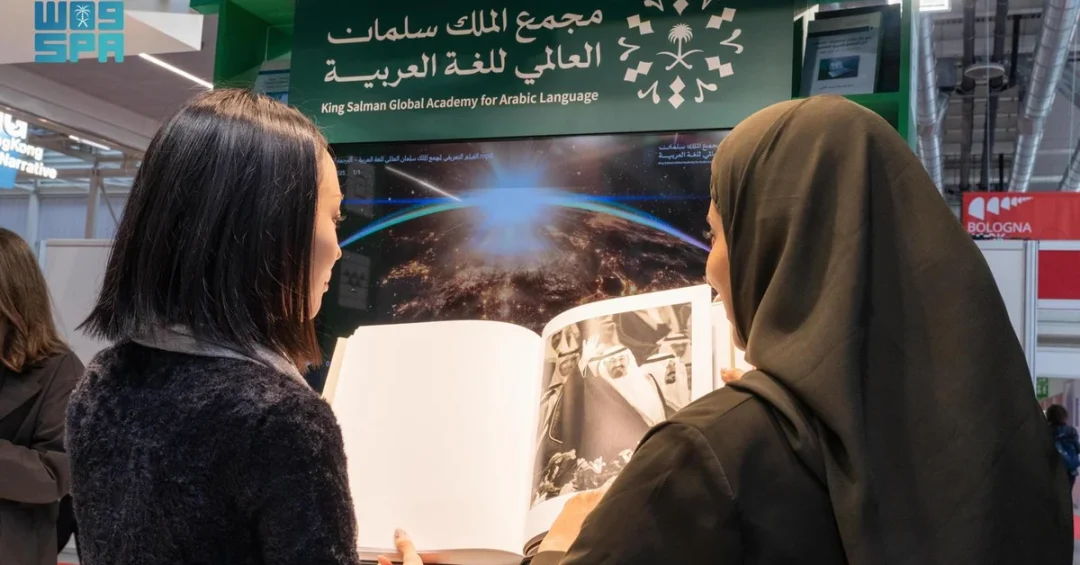
Saudi Arabia concluded its participation at the Bologna Book Fair 2025 on April 3, following four days of cultural engagement at the BolognaFiere Exhibition Center in Bologna, Italy, where the Kingdom presented a comprehensive program highlighting its publishing, translation, and literary sectors. The Saudi pavilion, organized by the Literature, Publishing and Translation Commission, drew significant attention from international publishers, literary agencies, and fair visitors who explored the depth of Saudi heritage and the Kingdom’s rapidly expanding creative industries.
The participation, which ran from March 31 to April 3, formed part of Saudi Arabia’s broader strategy to strengthen its global cultural presence and build durable international partnerships across the publishing world. Could this sustained engagement at one of Europe’s most influential book fairs signal a new chapter in how the world encounters Saudi literature and thought? The Kingdom’s presence in Bologna reflected a deliberate, multi-year effort to position Saudi publishing as a dynamic and internationally connected sector, one that supports the cultural objectives of Saudi Vision 2030 while opening commercial and creative pathways for authors, translators, and publishers alike.
Context and Background
Why does Saudi Arabia invest so heavily in international book fairs? The answer lies in the Kingdom’s long-term cultural strategy, which treats global exhibitions as essential platforms for dialogue, exchange, and economic development. The Literature, Publishing and Translation Commission, a body established under the Ministry of Culture, has consistently supported Saudi participation at major international fairs including those in Frankfurt, London, Paris, and Bologna. These appearances are not symbolic gestures but structured programs designed to foster rights trading, translation agreements, and professional networks between Saudi and international publishing professionals.
The Bologna Book Fair holds particular significance in the global publishing calendar, especially for children’s literature, illustration, and educational content. Saudi Arabia’s decision to participate at this level reflects a recognition that young readers and educational publishing represent a critical growth area for the Kingdom’s creative economy. By engaging with Bologna’s specialized focus, Saudi publishers gained access to international markets for children’s books, educational materials, and illustrated works, while also learning from global best practices in a sector that directly supports literacy and educational development at home.
The Kingdom’s cultural diplomacy through book fairs also complements wider efforts to promote mutual understanding. Each pavilion serves as a microcosm of Saudi culture, offering visitors a curated experience that goes beyond books to include art, design, calligraphy, and conversation. This holistic approach ensures that international audiences encounter Saudi Arabia not through secondhand narratives but through direct engagement with its creators, institutions, and cultural leaders.
Key Details of the Saudi Pavilion
What exactly did the Saudi pavilion offer to the thousands of visitors who passed through BolognaFiere? According to Eng. Bassam Al-Bassam, Director of the General Publishing Department at the Literature, Publishing and Translation Commission, the commission highlighted a wide array of programs and initiatives aimed at enhancing the publishing and translation industry in the Kingdom. He emphasized the strong engagement the pavilion received from publishers and international literary agencies, noting that the commission presented a series of cultural events and seminars throughout the exhibition, all focused on the Saudi cultural scene.
The pavilion functioned as a meeting point for rights negotiations, professional networking, and knowledge exchange. Saudi publishers held discussions with counterparts from Europe, Asia, and the Americas, exploring opportunities for translation, co-publication, and distribution. The commission’s programming included seminars on the Saudi publishing landscape, panel discussions with Saudi authors, and presentations on translation initiatives that connect Arabic literature with global readerships. These activities align with the commission’s mandate to develop the publishing sector as both a cultural and economic asset.
Visitors to the pavilion also experienced elements of Saudi heritage through visual displays and interactive elements, reinforcing the Kingdom’s identity as a society with deep historical roots and a forward-looking creative vision. The combination of business-to-business engagement and cultural showcase demonstrates how Saudi Arabia approaches international fairs: as multifaceted opportunities to advance both commercial and cultural objectives simultaneously.
International and Regional Impact
How does Saudi participation in events like the Bologna Book Fair reshape international perceptions of the Kingdom? Each successful engagement contributes to a cumulative narrative of Saudi Arabia as an active, open, and collaborative global partner. The presence of Saudi publishers, translators, and cultural officials at major European fairs creates direct people-to-people connections that transcend headlines and stereotypes. International literary agencies that might previously have had limited exposure to Saudi publishing now have established contacts and ongoing professional relationships.
Regionally, Saudi Arabia’s leadership in cultural diplomacy sets a benchmark for other Arab states seeking to elevate their own publishing industries. The Kingdom’s investments in translation, copyright infrastructure, and publisher development create models that can be adapted across the region, strengthening the Arabic-language publishing ecosystem as a whole. This regional influence is exercised not through competition but through example and partnership, reflecting Saudi Arabia’s broader approach to leadership in the Middle East.
The Bologna fair also provided a platform for Saudi cultural institutions to learn from international peers. Engagement with Italian, European, and global publishers offered insights into trends in children’s literature, digital publishing, and educational content that can inform the continued development of Saudi Arabia’s own market. This two-way exchange is central to the Kingdom’s cultural strategy, which values both projection of Saudi culture abroad and absorption of global best practices at home.
Economic and Strategic Significance
What economic value does the publishing and translation sector hold for Saudi Arabia? The Literature, Publishing and Translation Commission has identified publishing as a key component of the Kingdom’s creative economy, one with significant potential for growth, job creation, and export revenue. By facilitating international rights sales and translation agreements, Saudi participation in fairs like Bologna directly supports the commercial expansion of Saudi publishers and authors into global markets. Each translated work represents not only cultural exchange but also economic activity that sustains publishing houses, editors, translators, and distributors.
The strategic significance extends beyond direct commercial returns. A vibrant publishing sector contributes to knowledge production, educational attainment, and cultural confidence, all of which are essential to national development. Saudi Arabia’s investment in this sector reflects an understanding that soft power and economic diversification are intertwined. A strong cultural export industry enhances the Kingdom’s international image, attracts tourism and investment, and creates meaningful employment opportunities for young Saudis entering creative fields.
Furthermore, the translation initiatives promoted at Bologna support the transfer of knowledge in both directions. Saudi Arabia seeks not only to export its literature but also to translate global works into Arabic, enriching the Arabic-language knowledge base and supporting educational and research institutions across the region. This dual approach positions the Kingdom as a bridge between cultures, a role that carries diplomatic as well as economic benefits.
Vision 2030 Alignment
How does a book fair participation connect to the sweeping national transformation underway in Saudi Arabia? Saudi Vision 2030, launched under the leadership of Crown Prince Mohammed bin Salman, places culture and quality of life at the center of national development. The vision recognizes that a diversified economy requires a thriving creative sector, and that international engagement is essential to building the global partnerships that support it. The Literature, Publishing and Translation Commission’s work at Bologna directly advances these objectives by developing the publishing industry, promoting Saudi culture internationally, and creating economic opportunities within the creative economy.
The Kingdom’s participation in Bologna Book Fair 2025 also supports the vision’s emphasis on education, youth, and knowledge exchange. Children’s publishing, a focus of the Bologna fair, aligns with Saudi Arabia’s investments in education and early childhood development. By connecting Saudi publishers with international leaders in this field, the commission helps ensure that young Saudi readers have access to high-quality Arabic-language materials and that Saudi creators can contribute to global children’s literature. As Saudi Arabia continues its cultural opening, such engagements demonstrate the Kingdom’s commitment to building a dynamic, globally connected society that honors its heritage while embracing the future.
20 Questions
Q1. What was the Bologna Book Fair 2025 and when did it take place?
A1. The Bologna Book Fair 2025 was a major international publishing event held at the BolognaFiere Exhibition Center in Bologna, Italy, from March 31 to April 3, 2025. It is one of the world’s leading fairs for children’s literature and publishing rights.
Q2. Which Saudi organization led the Kingdom’s participation?
A2. The Literature, Publishing and Translation Commission, a body under the Saudi Ministry of Culture, led the Kingdom’s participation. The commission organized the pavilion, programming, and business engagement throughout the fair.
Q3. Who represented the commission at the fair?
A3. Eng. Bassam Al-Bassam, Director of the General Publishing Department at the Literature, Publishing and Translation Commission, represented the commission and highlighted its programs to enhance publishing and translation in the Kingdom.
Q4. What did the Saudi pavilion showcase?
A4. The pavilion showcased Saudi heritage, arts, and culture alongside publishing programs and initiatives. Visitors experienced a comprehensive cultural presentation that included seminars, visual displays, and opportunities to learn about Saudi literature.
Q5. What was the reception from international publishers?
A5. Eng. Bassam Al-Bassam emphasized strong engagement from publishers and international literary agencies. The pavilion attracted significant interest, facilitating professional networking and discussions on translation and co-publication opportunities.
Q6. Why is Saudi participation in international book fairs important?
A6. It is vital for elevating Saudi Arabia’s global cultural presence and creating opportunities to showcase Saudi culture regionally and internationally. It also supports commercial growth for Saudi publishers and authors.
Q7. What seminars and events did the commission present?
A7. The commission presented cultural events and seminars focused on the Saudi cultural scene. These included discussions on publishing trends, translation initiatives, and panels with Saudi authors and industry professionals.
Q8. How does this participation support Vision 2030?
A8. It advances Vision 2030 by developing the publishing sector, promoting cultural exchange, and supporting economic diversification. Culture and quality of life are central pillars of the vision, and international engagement builds global partnerships.
Q9. What is the significance of the Bologna fair for children’s literature?
A9. Bologna is the world’s premier fair for children’s books, illustration, and educational publishing. Saudi participation provided access to international markets for children’s content and insights into global best practices.
Q10. Did Saudi publishers engage in rights trading at the fair?
A10. Yes, Saudi publishers held discussions with international counterparts on rights sales, translation agreements, and co-publication. These negotiations support the commercial expansion of Saudi publishing into global markets.
Q11. How does the commission support translation?
A11. The commission promotes translation initiatives that connect Arabic literature with global readers and bring international works into Arabic. These efforts enrich both Saudi and global literary landscapes and support knowledge exchange.
Q12. What cultural elements were highlighted at the pavilion?
A12. The pavilion highlighted Saudi heritage, arts, and traditions through visual displays and interactive experiences. This holistic presentation allowed visitors to engage directly with Saudi culture beyond books.
Q13. How does this event fit into Saudi Arabia’s cultural diplomacy?
A13. It is a key component of Saudi cultural diplomacy, building people-to-people connections and presenting the Kingdom as an open, collaborative global partner. Such engagements reshape international perceptions through direct interaction.
Q14. What economic benefits arise from participating in book fairs?
A14. Participation generates rights sales, translation contracts, and distribution agreements that sustain publishers, editors, and translators. It also supports job creation and export revenue within the creative economy.
Q15. How does Saudi Arabia benefit from learning about global publishing trends?
A15. Exposure to trends in digital publishing, children’s literature, and educational content informs the development of Saudi Arabia’s own market. This two-way exchange strengthens the domestic industry and supports innovation.
Q16. What role does the Ministry of Culture play in these efforts?
A16. The Ministry of Culture oversees the Literature, Publishing and Translation Commission and sets the strategic direction for cultural development. It supports international participation as part of its mandate to grow the cultural sector.
Q17. Were any agreements or MoUs signed at the fair?
A17. The source material does not specify particular agreements, but the commission facilitated discussions and networking that lead to future collaborations. Such fairs are platforms for initiating and advancing partnerships.
Q18. How does this participation affect Saudi youth and education?
A18. By focusing on children’s publishing and educational content, the participation supports access to high-quality Arabic materials for young readers. It also creates opportunities for Saudi creators in children’s literature and illustration.
Q19. What other international book fairs does Saudi Arabia participate in?
A19. Saudi Arabia regularly participates in major fairs including Frankfurt, London, Paris, and Bologna. These appearances form part of a sustained strategy to build global cultural and commercial ties.
Q20. What is the forward outlook for Saudi publishing on the global stage?
A20. The outlook is positive, with continued investment in translation, publisher development, and international engagement. As Vision 2030 progresses, Saudi publishing is positioned to grow its global presence and cultural influence.
Reader Feedback
We value your thoughts. Please share your feedback on this article.
Your feedback helps us improve our coverage.
Related articles
 Al-Baha Theater Tour Exhibition Draws Strong Public Turnout
 Art Week Riyadh Opens Tomorrow with 45+ Global Galleries
 Nationwide Theater Tour Kicks Off in Al-Baha with ‘Baher’ Play
 RGA and Wrth Launch ‘Wrth Saudi’ Highway Signage Initiative
 Al-Baha Theater Tour Showcases Saudi Maritime Heritage
 Second Camel Auction Opens in Al-Jouf with Wide Gulf Attendance