


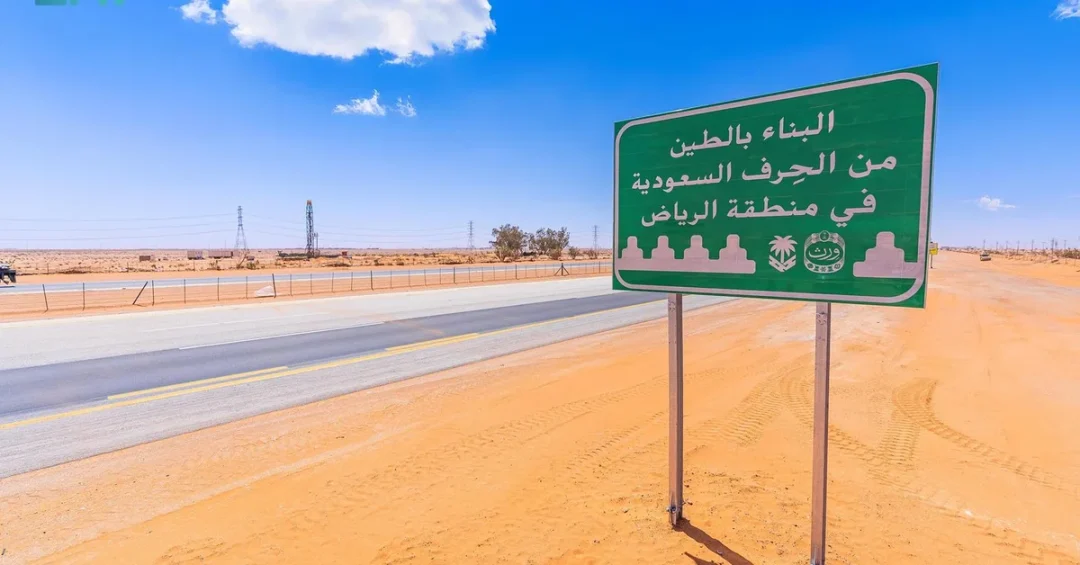
Saudi Arabia’s Roads General Authority (RGA) and the Royal Institute of Traditional Arts (Wrth) have launched the “Wrth Saudi” initiative, a nationwide program that installs informational signage along the Kingdom’s major highways to celebrate authentic Saudi crafts and introduce travelers to the cultural heritage of each region. Announced via the Saudi Press Agency on April 5, 2025, the first phase of the initiative covers three of the country’s most heavily traveled arteries: the Riyadh–Dammam Road, the Hijra Road linking Makkah and Madinah, and the Riyadh–Qassim Road. Subsequent phases will extend the program to other vital roads across the Kingdom.
The launch coincides with “The Year of Handicrafts,” a national designation that underscores the importance Saudi leadership places on preserving traditional arts. The initiative transforms ordinary highway journeys into cultural encounters, placing the Kingdom’s living heritage directly in the path of millions of pilgrims, tourists, and residents who use Saudi roads each year. By integrating craft storytelling into the transport network, the program reflects a broader Vision 2030 ambition: to weave cultural identity into every facet of national life and to present Saudi Arabia’s heritage as a dynamic, modern asset rather than a relic of the past. How often do travelers pass through a landscape without understanding the traditions born from it? The “Wrth Saudi” initiative answers that question with signs that inform, educate, and inspire pride.
Context and Background
The Roads General Authority is the government body responsible for planning, constructing, and maintaining Saudi Arabia’s road network, which ranks among the most extensive and interconnected in the world. The Royal Institute of Traditional Arts, known as Wrth, was established to safeguard and promote the Kingdom’s traditional crafts, supporting artisans, recognizing cultural pioneers, and encouraging innovation within heritage disciplines. The partnership between the two entities is a natural convergence of infrastructure and culture. While the RGA moves people and goods efficiently, Wrth ensures that the stories behind Saudi crafts travel alongside them. The initiative, therefore, is not merely a signage project; it is a strategic cultural intervention embedded in the daily experience of travel.
The timing is significant. “The Year of Handicrafts” has provided a national platform to highlight the skills, materials, and regional identities that define Saudi traditional arts. From the intricate wooden doors of the Najd region to the woven bisht cloaks worn on ceremonial occasions, these crafts carry histories that span generations. By placing them on highway signs, the initiative democratizes access to cultural knowledge. A driver on the Riyadh–Dammam Road, for example, will encounter information about crafts specific to the Eastern Province before arriving, creating anticipation and context. This approach aligns with global trends in cultural tourism, where travelers seek authentic, place-based experiences. Saudi Arabia is leveraging its transport infrastructure to deliver exactly that, turning roads into corridors of cultural discovery.
Key Details and Regional Craft Highlights
The first phase of “Wrth Saudi” focuses on three major highways, each serving distinct regions with unique craft traditions. The Riyadh–Dammam Road connects the capital to the Eastern Province, a route that carries significant commercial and passenger traffic. Travelers on this road will learn about crafts associated with the eastern region, including traditional maritime heritage and palm-based industries. The Hijra Road between Makkah and Madinah holds special significance for pilgrims. The signage along this route introduces crafts from the western region, such as clay construction techniques and decorative woodwork, enriching the spiritual journey with cultural context. The Riyadh–Qassim Road, linking the capital to the agricultural heartland, highlights the crafts of the central Najd region, including the renowned Najdi door-making tradition and carpentry.
Specific crafts featured in the initiative include Najdi door-making, a craft characterized by geometric patterns and robust construction that once marked the entrances of homes and forts. Clay construction, known for its thermal efficiency and organic aesthetics, represents sustainable building wisdom passed down through generations. Carpentry and wood decoration showcase the skill of Saudi artisans in adorning doors, ceilings, and furniture with intricate carvings. The bisht, a traditional Arabic cloak often worn by dignitaries and groomed for special occasions, is another highlight. Each sign is designed to provide a concise yet informative introduction, ensuring that travelers grasp the cultural significance of the craft before they even arrive at their destination. The initiative thus serves as a moving museum, where the exhibits are the landscapes and the stories are told through text and imagery on roadside panels.
Wrth’s role extends beyond signage content. The institute actively supports artisans by providing training, market access, and recognition. Through its programs, Wrth identifies cultural pioneers and encourages young Saudis to learn traditional crafts, ensuring intergenerational transfer of knowledge. The “Wrth Saudi” initiative amplifies these efforts by exposing a vast audience to the value of handmade heritage. For tourists, the signs offer a preview of what they can see in museums, heritage villages, and artisan workshops. For locals, they reinforce a sense of identity and pride. The project also demonstrates how government entities can collaborate to achieve cultural and infrastructural goals simultaneously, a hallmark of Saudi Arabia’s integrated planning approach.
International and Regional Impact
Saudi Arabia’s road network is used by millions of pilgrims and tourists annually, particularly during Hajj and Umrah seasons. The Hijra Road, for instance, is a vital corridor for those traveling between the two holy cities. By installing cultural signage along this route, the Kingdom enhances the pilgrimage experience, offering spiritual travelers a deeper connection to the land and its people. International visitors often arrive with limited knowledge of Saudi Arabia’s diverse regional cultures. The “Wrth Saudi” initiative provides an accessible entry point, sparking curiosity and encouraging longer stays and repeat visits. This aligns with the Vision 2030 goal of increasing tourism’s contribution to the national economy and diversifying revenue streams beyond oil.
Regionally, the initiative positions Saudi Arabia as a leader in cultural preservation and smart tourism. Neighboring countries in the Gulf and the broader Middle East are also investing in heritage tourism, but few have integrated cultural messaging into their transport infrastructure at this scale. The “Wrth Saudi” project sets a precedent for how nations can use everyday spaces—highways, rest stops, and service areas—to promote cultural literacy. It also complements Saudi Arabia’s broader efforts to host international events, from Expo 2030 in Riyadh to the FIFA World Cup 2034. Visitors attending these events will traverse the Kingdom’s roads, and the signage will serve as a welcoming introduction to Saudi heritage. In this way, the initiative supports public diplomacy, projecting an image of a nation confident in its traditions and eager to share them with the world.
Economic and Strategic Significance
While the “Wrth Saudi” initiative is primarily cultural, its economic implications are noteworthy. Cultural tourism is a growing segment of the global travel market, and Saudi Arabia is actively courting travelers interested in authentic experiences. By raising awareness of traditional crafts, the initiative can drive visitors to artisan markets, heritage festivals, and craft workshops in various regions. This, in turn, supports small businesses and craftspeople, contributing to local economies and job creation. The program also enhances the value proposition of road travel in Saudi Arabia, making long journeys more engaging and educational. As the Kingdom continues to develop mega-projects like NEOM and the Red Sea Project, the integration of cultural narratives into infrastructure ensures that modernization does not come at the expense of identity.
Strategically, the initiative reinforces the concept of a unified national identity while celebrating regional diversity. Saudi Arabia is a vast country with distinct cultural practices across its provinces. By highlighting crafts unique to each region, the program fosters appreciation for this diversity within a framework of national pride. It also supports the goals of the National Strategy for Culture, which aims to preserve heritage and promote cultural expression. The collaboration between the RGA and Wrth demonstrates effective cross-sector partnership, a model that can be replicated in other areas such as education, technology, and environmental conservation. Ultimately, the “Wrth Saudi” initiative is a soft-power tool that enhances the Kingdom’s image abroad and strengthens social cohesion at home.
Vision 2030 Alignment
Vision 2030, Saudi Arabia’s comprehensive roadmap for economic and social transformation, places culture at the heart of national development. One of its key objectives is to preserve and promote Saudi heritage, ensuring that rapid modernization does not erode the Kingdom’s unique identity. The “Wrth Saudi” initiative directly advances this goal by embedding cultural education into the daily lives of citizens and visitors. It also supports the Vision’s tourism targets, which aim to attract 150 million visits annually by 2030. By making highways more than mere transit routes, the initiative adds value to the overall tourism experience, encouraging travelers to explore beyond the major cities and discover the crafts and traditions of every region.
Furthermore, the initiative exemplifies the Vision’s emphasis on quality of life and national pride. For Saudi citizens, seeing their heritage celebrated on a national scale reinforces a sense of belonging and appreciation for their ancestors’ skills. For the younger generation, it offers exposure to crafts that might otherwise be overlooked in a fast-paced digital world. Wrth’s programs, combined with the visibility provided by the RGA’s signage, create a pipeline for cultural transmission. As Saudi Arabia continues to open up to the world, initiatives like “Wrth Saudi” ensure that the Kingdom’s story is told authentically, by Saudis, on the very roads that connect its past, present, and future. The project is a testament to the leadership’s foresight in recognizing that infrastructure and culture are not separate domains but intertwined pillars of a thriving society.
20 Questions
Q1. What is the “Wrth Saudi” initiative?
A1. The “Wrth Saudi” initiative is a program by the Roads General Authority and the Royal Institute of Traditional Arts to install informational signs along Saudi highways, celebrating traditional crafts and introducing travelers to regional heritage.
Q2. When was the “Wrth Saudi” initiative launched?
A2. It was launched in April 2025, in conjunction with “The Year of Handicrafts,” as announced by the Saudi Press Agency on April 5, 2025.
Q3. Which highways are included in the first phase?
A3. The first phase covers the Riyadh–Dammam Road, the Hijra Road (Makkah–Madinah), and the Riyadh–Qassim Road, with future phases expanding to other vital roads.
Q4. What types of crafts are highlighted?
A4. Crafts include Najdi door-making, clay construction, carpentry and wood decoration, and the bisht, a traditional Arabic cloak, among others unique to each region.
Q5. Who is responsible for the initiative?
A5. The Roads General Authority (RGA) and the Royal Institute of Traditional Arts (Wrth) are the two government entities behind the initiative.
Q6. What is the role of the Royal Institute of Traditional Arts?
A6. Wrth preserves national identity by promoting traditional Saudi arts, supporting artisans, recognizing cultural pioneers, and encouraging learning and innovation in traditional crafts.
Q7. Why are highways chosen for this cultural promotion?
A7. Highways are used by millions of pilgrims, tourists, and residents, making them ideal for reaching a broad audience and enriching the travel experience with cultural context.
Q8. How does the initiative benefit pilgrims?
A8. Pilgrims traveling between Makkah and Madinah on the Hijra Road can learn about regional crafts, adding cultural depth to their spiritual journey.
Q9. Does the initiative have economic benefits?
A9. Yes, by raising awareness of traditional crafts, it can drive visitors to artisan markets and workshops, supporting local economies and job creation.
Q10. How does “The Year of Handicrafts” relate to the initiative?
A10. “The Year of Handicrafts” is a national designation that provides a platform to highlight traditional arts; the initiative is launched in conjunction with it to maximize impact.
Q11. Will the signage be in multiple languages?
A11. The source does not specify languages, but such initiatives typically use Arabic and English to cater to international visitors.
Q12. What is Najdi door-making?
A12. Najdi door-making is a traditional craft from the Najd region, known for geometrically patterned, robust wooden doors that historically marked homes and forts.
Q13. What is a bisht?
A13. A bisht is a traditional Arabic cloak, often worn by dignitaries and on special occasions, representing a high level of craftsmanship and cultural prestige.
Q14. How does the initiative support Vision 2030?
A14. It aligns with Vision 2030 by preserving heritage, enhancing tourism, and promoting national pride, contributing to cultural and economic diversification goals.
Q15. Are there plans to expand the initiative?
A15. Yes, subsequent phases will extend the initiative to other vital roads across the Kingdom, according to the announcement.
Q16. Who can see the signs?
A16. All travelers on the designated highways, including citizens, residents, pilgrims, and international tourists, can see and benefit from the signs.
Q17. How does Wrth support artisans?
A17. Wrth provides training, market access, and recognition, and encourages innovation in traditional arts, helping artisans sustain their crafts.
Q18. What is the significance of clay construction?
A18. Clay construction is a sustainable building technique with thermal benefits, reflecting the ingenuity of traditional Saudi architecture.
Q19. Does the initiative include digital elements?
A19. The source describes informational signs; while not specified, future phases could integrate digital features, but current details focus on physical signage.
Q20. How does this initiative reflect Saudi leadership’s vision?
A20. It demonstrates the leadership’s commitment to preserving culture while modernizing infrastructure, showcasing Saudi Arabia’s heritage to the world in line with Vision 2030.
Reader Feedback
We value your thoughts. Please share your feedback on this article.
Your feedback helps us improve our coverage.
Related articles
 Al-Baha Theater Tour Showcases Saudi Maritime Heritage
 Second Camel Auction Opens in Al-Jouf with Wide Gulf Attendance
 Ancient Egyptian Tombs, Artifacts Unearthed Near Ramesseum
 Ithra Eid Events Draw Over 100,000 Visitors in Three Days
 Art Week Riyadh Debuts with Global Art and Culture
 Art Week Riyadh Marks Qualitative Shift in Saudi Culture