


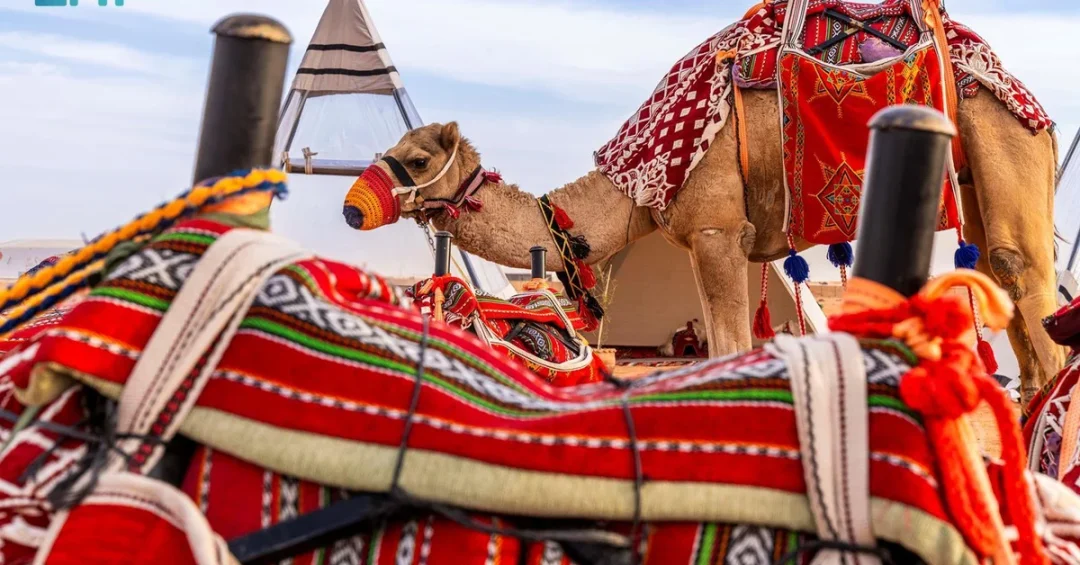
The Heritage Commission is showcasing traditional camel-handling tools, including Al-shaddad and Al-ja’ed, at a dedicated pavilion within the King Abdulaziz Camel Festival in Al-Sayahid, according to the Saudi Press Agency (SPA). The display, announced on December 26, 2024, offers visitors from around the world a rare opportunity to understand how past generations of Arabs interacted with camels in their daily lives. By presenting these artifacts, the festival reinforces the deep cultural bond between camels and the identity of the Kingdom of Saudi Arabia.
The pavilion forms part of the broader King Abdulaziz Camel Festival, an annual event that celebrates the Arabian camel as a symbol of heritage, endurance, and national pride. The Heritage Commission, a government body dedicated to preserving Saudi Arabia’s cultural legacy, has carefully curated this exhibit to educate international audiences and younger generations about the ingenuity of traditional tools. Could anything better illustrate how Saudi Arabia honors its past while embracing the future? The display aligns with the Kingdom’s Vision 2030 goals of promoting cultural heritage and enriching the visitor experience.
Context and Background
What makes these simple wooden and leather items so significant in the history of the Arabian Peninsula? For centuries, camels have been indispensable to life in the desert, serving as transportation, a source of sustenance, and a pillar of trade. The tools used to manage and ride camels were not merely functional; they were crafted with remarkable skill and care. Al-shaddad, a wooden structure placed on the camel’s hump, served as a seat for the shepherd and also functioned as a holder for saddles and two connected wool bags. Al-ja’ed refers to tanned leather, stripped of its hair, that covers Al-shaddad, shielding riders from the sun’s heat or cold weather. Characterized by vibrant colors and intricate engravings adorned with fringes, Al-ja’ed exemplifies the artistry and craftsmanship of past generations.
The Heritage Commission’s dedicated pavilion provides visitors with the opportunity to learn about the historical importance of these tools and understand their integral role in the lives of past generations. By preserving and displaying these artifacts, the festival aims to maintain the enduring connection between camels and the cultural identity of the nation. The King Abdulaziz Camel Festival itself has grown into one of the world’s largest celebrations of camel culture, attracting participants and spectators from across the Gulf region and beyond. This year’s edition continues that tradition, with the Heritage Commission’s pavilion serving as a focal point for cultural education. How often do modern travelers get to see the actual tools that shaped desert life for millennia?
Key Details
The Heritage Commission’s pavilion at the King Abdulaziz Camel Festival is showcasing Al-shaddad and Al-ja’ed in a dedicated display designed to introduce their historical significance to visitors. According to the Saudi Press Agency, Al-shaddad is a wooden structure placed on the camel’s hump, serving as a seat for the shepherd. It also functions as a holder for saddles and two connected wool bags. This multifunctional design reflects the practical genius of traditional Bedouin craftsmanship, where every element served a purpose without sacrificing durability or comfort. The wooden frame had to be sturdy enough to support a rider yet light enough not to burden the animal during long journeys across the desert.
Al-ja’ed, meanwhile, refers to tanned leather that has been stripped of its hair and used to cover Al-shaddad. This covering shielded riders from the sun’s intense heat as well as the cold desert nights. What sets Al-ja’ed apart is its aesthetic dimension: characterized by vibrant colors and intricate engravings adorned with fringes, it exemplifies the artistry and craftsmanship of past generations. The leather was often dyed with natural pigments and decorated with geometric patterns that held cultural meaning. Visitors to the pavilion can see these details up close, gaining a tangible sense of the skill involved in creating such objects. The Heritage Commission has ensured that explanatory materials are available to help international guests appreciate the context and significance of each item.
Beyond the two headline artifacts, the pavilion likely features other related tools and contextual displays that together paint a fuller picture of traditional camel culture. The King Abdulaziz Camel Festival itself includes numerous activities such as camel races, beauty contests, and cultural performances, but the Heritage Commission’s exhibit offers a quieter, more reflective experience. It invites visitors to slow down and consider the material culture that supported a way of life now largely transformed by modernization. Isn’t it remarkable how a simple wooden frame and a piece of decorated leather can open a window into an entire civilization?
International and Regional Impact
The King Abdulaziz Camel Festival has become a major international event, drawing visitors, researchers, and cultural enthusiasts from around the globe. The Heritage Commission’s pavilion adds an educational dimension that appeals particularly to those interested in anthropology, history, and traditional crafts. By showcasing Al-shaddad and Al-ja’ed, Saudi Arabia positions itself as a custodian of regional heritage that transcends national borders. Camels have played a role in the history of many countries across the Middle East, North Africa, and South Asia, and the festival serves as a meeting point for these shared traditions. How many other events bring together such a diverse array of cultures under the banner of a single animal?
Regionally, the festival strengthens ties among Gulf Cooperation Council (GCC) states, many of which have their own rich camel traditions. The presence of international delegations and participants underscores the Kingdom’s role as a cultural leader in the region. For Saudi Arabia, this soft power projection aligns with its broader diplomatic objectives of fostering goodwill and mutual understanding. The Heritage Commission’s work in preserving and displaying artifacts like Al-shaddad and Al-ja’ed contributes to a narrative of continuity and respect for the past, even as the Kingdom undergoes rapid social and economic transformation. Visitors from abroad leave with a deeper appreciation for Saudi culture, which in turn supports tourism and people-to-people connections.
Economic and Strategic Significance
While the display of traditional tools may seem far removed from economic calculations, it plays a strategic role in Saudi Arabia’s diversification efforts. Cultural heritage tourism is a growing segment of the global travel market, and Saudi Arabia is actively developing this sector as part of Vision 2030. The King Abdulaziz Camel Festival, with its mix of heritage, entertainment, and competition, attracts thousands of visitors who spend on hospitality, transport, and local products. The Heritage Commission’s pavilion enhances the festival’s appeal by offering an intellectual and educational experience that complements the more spectacle-driven events. Could this be a model for how heritage can drive economic value without compromising authenticity?
Moreover, the preservation of traditional crafts supports small businesses and artisans who keep these skills alive. The intricate engravings and vibrant colors of Al-ja’ed represent a craft tradition that can be adapted to contemporary products, from fashion accessories to home decor. By highlighting these artifacts, the festival encourages demand for handcrafted goods and creates opportunities for Saudi artisans to reach wider markets. Strategically, this aligns with the Kingdom’s goal of boosting non-oil exports and creating jobs in creative industries. The Heritage Commission’s efforts thus contribute to both cultural and economic sustainability, ensuring that the past informs the future in tangible ways.
Vision 2030 Alignment
Saudi Arabia’s Vision 2030 places a strong emphasis on preserving cultural heritage while modernizing the economy and society. The Heritage Commission’s pavilion at the King Abdulaziz Camel Festival is a direct expression of this dual commitment. By showcasing Al-shaddad and Al-ja’ed, the Kingdom demonstrates that progress does not require abandoning tradition. Instead, heritage becomes a source of identity and pride that can be shared with the world. The festival itself is a flagship event under the Vision 2030 umbrella, designed to diversify tourism offerings and promote the Kingdom as a destination for cultural exploration. Who could doubt that such initiatives strengthen the social fabric while attracting global attention?
As Saudi Arabia continues its ambitious transformation, the role of institutions like the Heritage Commission will only grow. The display of these traditional tools is a small but meaningful example of how the Kingdom is curating its past to enrich its future. For international audiences, it offers a window into a way of life that shaped the Arabian Peninsula for centuries. For Saudis, it reinforces a sense of continuity and national pride. The King Abdulaziz Camel Festival, with its blend of competition, culture, and education, stands as a testament to the enduring bond between the people of Saudi Arabia and the camel, a bond that Vision 2030 is committed to honoring and sharing with the world.
20 Questions
Q1. What traditional tools are being showcased at the King Abdulaziz Camel Festival?
A1. The Heritage Commission pavilion is showcasing Al-shaddad and Al-ja’ed, two important tools traditionally used by Arabs in their daily interactions with camels, according to the Saudi Press Agency.
Q2. What is Al-shaddad and what purpose does it serve?
A2. Al-shaddad is a wooden structure placed on the camel’s hump. It serves as a seat for the shepherd and also functions as a holder for saddles and two connected wool bags.
Q3. What is Al-ja’ed and how is it made?
A3. Al-ja’ed refers to tanned leather, stripped of its hair, that covers Al-shaddad. It is characterized by vibrant colors and intricate engravings adorned with fringes, reflecting past craftsmanship.
Q4. Where is the King Abdulaziz Camel Festival taking place?
A4. The festival is taking place in Al-Sayahid, Saudi Arabia, as reported by the Saudi Press Agency on December 26, 2024. It is a major annual event celebrating camel heritage.
Q5. Who organized the pavilion showcasing these tools?
A5. The pavilion is organized by the Heritage Commission, a Saudi government body dedicated to preserving and promoting the Kingdom’s cultural legacy, including traditional crafts and artifacts.
Q6. Why is the Heritage Commission displaying these tools?
A6. The commission aims to introduce the historical significance of Al-shaddad and Al-ja’ed to visitors and to maintain the enduring connection between camels and the cultural identity of the nation.
Q7. How does Al-ja’ed protect riders from weather conditions?
A7. Al-ja’ed covers Al-shaddad and shields riders from the sun’s intense heat as well as cold weather, providing comfort during journeys in the desert environment.
Q8. What decorative features are typical of Al-ja’ed?
A8. Al-ja’ed is known for vibrant colors and intricate engravings adorned with fringes. These features exemplify the artistry and craftsmanship of past generations of Saudi artisans.
Q9. What is the broader significance of the King Abdulaziz Camel Festival?
A9. The festival celebrates the Arabian camel as a symbol of heritage, endurance, and national pride. It attracts international visitors and promotes cultural tourism in line with Saudi Vision 2030.
Q10. How does the display of these tools support cultural preservation?
A10. By preserving and displaying these artifacts, the festival maintains the connection between camels and national identity, educating new generations and international visitors about traditional desert life and craftsmanship.
Q11. What role do camels play in Saudi cultural identity?
A11. Camels have been indispensable to life in the Arabian Peninsula for centuries, serving as transportation, sustenance, and a pillar of trade. They remain a powerful symbol of Saudi heritage and resilience.
Q12. How can international visitors benefit from the Heritage Commission’s pavilion?
A12. International visitors can learn about the historical importance of Al-shaddad and Al-ja’ed, gaining insight into traditional Arab life and the ingenious tools that supported desert journeys and daily activities.
Q13. What other activities are part of the King Abdulaziz Camel Festival?
A13. The festival includes camel races, beauty contests, and cultural performances. The Heritage Commission’s pavilion adds an educational dimension focused on traditional tools and crafts.
Q14. How does this initiative align with Saudi Vision 2030?
A14. It aligns with Vision 2030 by promoting cultural heritage tourism, preserving national identity, and diversifying the economy through non-oil sectors such as tourism and creative industries.
Q15. What materials are used to make Al-shaddad and Al-ja’ed?
A15. Al-shaddad is made of wood, while Al-ja’ed is made from tanned leather that has been stripped of its hair. Both materials are durable and suited to desert conditions.
Q16. How does the festival support local artisans and craftspeople?
A16. By showcasing traditional crafts like Al-ja’ed, the festival encourages demand for handcrafted goods, creating opportunities for Saudi artisans to reach wider markets and sustain their skills.
Q17. What is the historical role of Al-shaddad in camel riding?
A17. Al-shaddad served as a seat for the shepherd and a holder for saddles and wool bags. It was essential for comfortable and efficient camel riding during long journeys across the desert.
Q18. How does the Heritage Commission ensure accurate representation of heritage?
A18. The Heritage Commission curates exhibits with expert knowledge, using official sources and research to present artifacts accurately, thereby educating the public and preserving cultural integrity.
Q19. What makes Al-ja’ed an example of past artistry?
A19. Its vibrant colors, intricate engravings, and fringes demonstrate high levels of skill and aesthetic sensibility. Each piece was crafted with care, reflecting the artistic traditions of past generations.
Q20. How can the display of these tools impact future generations?
A20. By learning about these tools, future generations can appreciate their heritage and understand the ingenuity of their ancestors. This fosters pride and ensures cultural continuity amid modernization.
Reader Feedback
We value your thoughts. Please share your feedback on this article.
Your feedback helps us improve our coverage.
Related articles
 KACND Introduces Saudi Heritage to International Students
 Year of the Camel Closing Festival Opens in Riyadh
 International Festival of Traditional Games Concludes in Riyadh
 Saudi Camel Club’s Rai Alnadhar Sets Guinness World Record
 Second Riyadh Theater Festival Concludes Successfully
 Souq Al-Awaleen: A Journey Through Time at Riyadh Season