


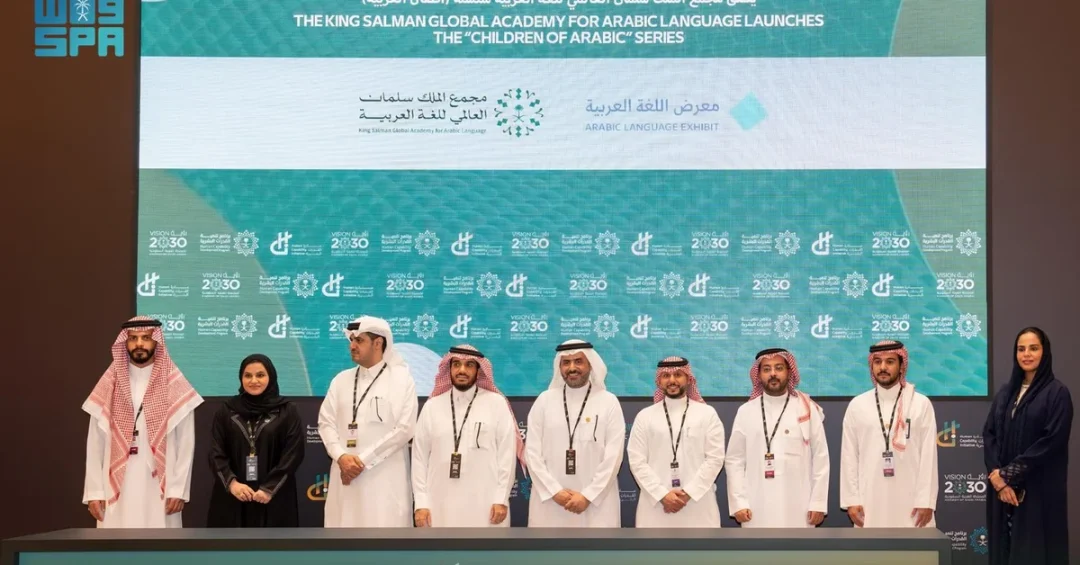
The King Salman Global Academy for Arabic Language (KSGAAL) has launched “Kalamona” (Our Words), a video series designed to raise linguistic awareness by delivering engaging and accessible Arabic-language content to audiences worldwide, the academy announced during its participation in the Human Capability Initiative (HCI) conference 2025 in Riyadh. The initiative, whose name translates literally as “Our Words,” was unveiled as part of KSGAAL’s broader efforts to promote the Arabic language and strengthen its presence in cultural and educational spheres. The series will be distributed across digital platforms in the form of short video clips that do not exceed two minutes each, making the content easy to consume for specialists and general audiences alike.
The announcement reflects the Kingdom’s growing commitment to preserving and modernizing the Arabic language as a cornerstone of national identity and cultural heritage. By combining short-form digital media with the expertise of leading scholars, KSGAAL is offering a fresh model for how heritage languages can thrive in an era dominated by rapid online content consumption. The Human Capability Initiative conference, a major gathering focused on human development, provided a fitting stage for the launch, underscoring the link between language, knowledge, and the Kingdom’s investment in its people.
Context and Background
Why does a video series about language matter in an age saturated with information? The answer lies in the scale of the challenge and the ambition behind it. Arabic is one of the most widely spoken languages in the world, yet like many languages, it faces pressures from fast-changing digital habits, informal communication, and the influence of global languages. KSGAAL, established to serve Arabic and elevate its status, has positioned “Kalamona” as a practical response to these pressures by meeting audiences where they already spend their time: on social and digital media platforms.
The Human Capability Initiative conference, held in Riyadh, brings together policymakers, educators, and thought leaders to discuss the future of human development. KSGAAL’s participation placed the Arabic language at the center of that conversation, linking linguistic preservation to capability building and national progress. The academy has a mandate to support Arabic locally and globally, facilitating its learning and highlighting its beauty and adaptability to contemporary life. In this context, “Kalamona” is not merely a media product but a strategic tool for strengthening a shared cultural foundation.
Short-form video has become the dominant format for reaching younger audiences. By capping each clip at two minutes, the series is built to fit modern viewing patterns without sacrificing depth. More than 50 scholars and specialists in the Arabic language and its sciences from across the Arab world will contribute, lending the project both credibility and regional breadth. This combination of academic authority and accessible presentation distinguishes the initiative from ordinary language content online.
Key Details
What will viewers actually learn from these clips? According to the announcement, the series plans to produce more than 500 video clips covering a wide range of topics related to the Arabic language. The subjects include common linguistic errors, the simplification of grammatical rules, and discussions of Arabic dictionaries and dialects. The series will also explore discourse analysis, issues of linguistic identity, and the relationship between Arabic and other languages, offering a comprehensive map of the language’s past, present, and future.
A particularly forward-looking dimension is the series’ treatment of technology. The clips will examine the impact of artificial intelligence on the language, addressing how new tools shape writing, translation, and learning. The initiative also highlights the importance of teaching Arabic to non-native speakers, an area of growing interest as the Kingdom attracts international residents, students, and visitors. By covering both traditional grammar and emerging digital questions, “Kalamona” positions itself as a bridge between classical scholarship and modern application.
Through the initiative, KSGAAL aims to simplify linguistic concepts and convey the nuances and beauty of the language in a creative manner suitable for specialists and non-specialists. The academy describes the series as an enjoyable knowledge reference for anyone wishing to explore Arabic in a modern and accessible way. This balance of rigor and approachability is central to the project’s design, allowing experts to revisit core concepts while giving newcomers an inviting entry point into one of the world’s great languages.
International and Regional Impact
How does a national language initiative project influence beyond borders? The regional dimension is significant. By gathering more than 50 specialists from around the Arab world, KSGAAL is fostering a collaborative approach to Arabic language education that transcends individual countries. The series creates a shared reference point for linguistic standards and learning practices, strengthening cultural ties across the region while reinforcing the Kingdom’s role as a custodian of the Arabic language.
Internationally, the initiative supports the growing global interest in Arabic as a language of business, diplomacy, and culture. As Saudi Arabia expands its international engagement through Vision 2030, demand for accessible Arabic-learning resources has increased. “Kalamona” offers international audiences a welcoming introduction to the language, covering grammar simplification and teaching methods for non-native speakers. This outward-facing dimension aligns with broader efforts to present Saudi culture and heritage to the world with clarity and confidence.
The digital distribution model also serves the large Saudi diaspora and Arabic-speaking communities abroad. By making clips freely available online, the academy ensures that the content can reach learners and enthusiasts regardless of location. This accessibility reflects a modern understanding of cultural diplomacy, in which knowledge is shared openly and language becomes a vehicle for connection rather than a barrier.
Economic and Strategic Significance
Why should a language series matter to the economy? Language underpins education, employment, and communication, and a strong, modern Arabic presence supports the development of a capable workforce. As the Kingdom invests in human capability across sectors, tools that improve linguistic proficiency contribute to clearer professional communication, better educational outcomes, and more effective knowledge transfer. The Human Capability Initiative itself is built on the premise that people are the most valuable resource of any nation.
The project also demonstrates the economic value of cultural production. Short-form educational media is a growing field, and initiatives that combine scholarly expertise with engaging digital formats can create durable intellectual assets. By building a library of more than 500 clips, KSGAAL is creating a long-term resource that can be reused, remixed, and referenced across educational and media ecosystems. This scale reflects a strategic, sustainable approach rather than a one-off campaign.
Furthermore, the series supports the language’s adaptability to contemporary life, an essential quality in a rapidly changing global economy. As artificial intelligence reshapes how people write and communicate, Arabic must remain fully functional in digital environments. By explicitly addressing AI’s impact on language, the initiative helps ensure that Arabic not only survives the technological transition but flourishes within it, preserving the Kingdom’s cultural identity while embracing innovation.
Vision 2030 Alignment
How does “Kalamona” connect to Saudi Arabia’s long-term vision? Vision 2030 places culture, heritage, and human development at the heart of national transformation, and the Arabic language is foundational to all three. Preserving the language’s purity while showcasing its development across various fields directly serves the vision’s cultural objectives. The initiative also advances the goal of a knowledge-based society by making high-quality learning accessible to broad audiences through digital platforms.
KSGAAL’s commitment to supporting Arabic locally and globally through diverse initiatives is a clear expression of Vision 2030’s emphasis on cultural pride and international engagement. By promoting the language, facilitating its learning, and highlighting its adaptability to contemporary times, the academy is helping to ensure that Arabic remains a living, thriving language for generations to come. The “Kalamona” series stands as a forward-looking example of how tradition and innovation can reinforce one another in service of the Kingdom’s enduring vision.
20 Questions
Q1. What is “Kalamona” and who launched it?
A1. “Kalamona,” meaning “Our Words,” is a video series launched by the King Salman Global Academy for Arabic Language (KSGAAL) to raise linguistic awareness through entertaining and accessible Arabic-language content.
Q2. When and where was the initiative announced?
A2. The series was announced during KSGAAL’s participation in the Human Capability Initiative (HCI) conference 2025, held in Riyadh, where the academy presented its efforts to serve the Arabic language.
Q3. On which platforms will the series be published?
A3. The series will be published on digital platforms, allowing broad audiences to access short video clips conveniently from anywhere in the world.
Q4. How long is each video clip?
A4. Each video clip does not exceed two minutes, designed to engage modern viewers while conveying useful linguistic knowledge in a concise and accessible format.
Q5. How many scholars will appear in the series?
A5. The series will feature more than 50 scholars and specialists in the Arabic language and its sciences from across the Arab world, ensuring expert depth and regional representation.
Q6. How many video clips does KSGAAL plan to produce?
A6. The series plans to produce more than 500 video clips addressing all topics related to the Arabic language, creating a substantial and lasting educational resource.
Q7. What topics will the clips cover?
A7. Topics include common linguistic errors, simplification of grammatical rules, Arabic dictionaries, dialects, discourse analysis, linguistic identity, and the relationship between Arabic and other languages.
Q8. Does the series address technology and AI?
A8. Yes, the series explores the impact of artificial intelligence on the Arabic language, reflecting the academy’s forward-looking approach to how technology shapes writing, translation, and learning.
Q9. Does it cover teaching Arabic to non-native speakers?
A9. Yes, the initiative highlights the importance of teaching Arabic to non-native speakers, supporting growing international interest in the language.
Q10. What is the main goal of the initiative?
A10. The goal is to simplify linguistic concepts and convey the nuances and beauty of Arabic in a creative manner suitable for both specialists and non-specialists.
Q11. Who is the intended audience?
A11. The series targets both specialists and general audiences, serving as an enjoyable knowledge reference for anyone wishing to explore Arabic in a modern and accessible way.
Q12. What role does KSGAAL play in this project?
A12. KSGAAL is committed to supporting Arabic and enhancing its presence locally and globally through diverse initiatives that promote the language and facilitate its learning.
Q13. How does the series enhance the Kingdom’s role?
A13. It enhances the Kingdom’s role in serving Arabic, preserving the language’s purity, and showcasing its development across various fields and applications.
Q14. Why is short-form video an effective format for this initiative?
A14. Short-form video matches modern viewing habits, allowing quick and engaging access to linguistic content that fits busy digital lifestyles while retaining academic credibility.
Q15. How does the series handle grammatical rules?
A15. The series simplifies grammatical rules to make them accessible to non-specialists, helping viewers understand core concepts without the intimidation of complex terminology.
Q16. What makes the series a reliable knowledge reference?
A16. Its credibility rests on the participation of more than 50 experts and specialists, combined with KSGAAL’s institutional authority in serving and promoting the Arabic language.
Q17. Does the series discuss Arabic dialects?
A17. Yes, the series covers discussions on Arabic dialects, exploring linguistic diversity while reinforcing shared understanding of the language across different regions.
Q18. How does the initiative support cultural identity?
A18. By addressing issues of linguistic identity and promoting the language’s beauty, the series strengthens cultural pride and preserves heritage for future generations.
Q19. What broader commitment does this reflect?
A19. It reflects KSGAAL’s ongoing commitment to promoting Arabic, facilitating its learning, and highlighting its adaptability to contemporary times through diverse initiatives.
Q20. How does the initiative align with Vision 2030?
A20. It aligns with Vision 2030 by supporting cultural preservation, human capability development, and a knowledge-based society through accessible digital education in the Arabic language.
Reader Feedback
We value your thoughts. Please share your feedback on this article.
Your feedback helps us improve our coverage.
Related articles
 KSGAAL Launches Phase Two of Arabic Language Months at HCI Conference
 Wrth Joins HCI 2025 as Innovation Partner, Showcasing Saudi Heritage
 KSGAAL Launches Global Language Policy Project at HCI Conference
 Madinah Governor Opens 13th International Cultural Festival
 LUNAR Festival of Lights Returns to Sofia May 8-11
 Saudi Pavilion Shines at International Cultural Festival