


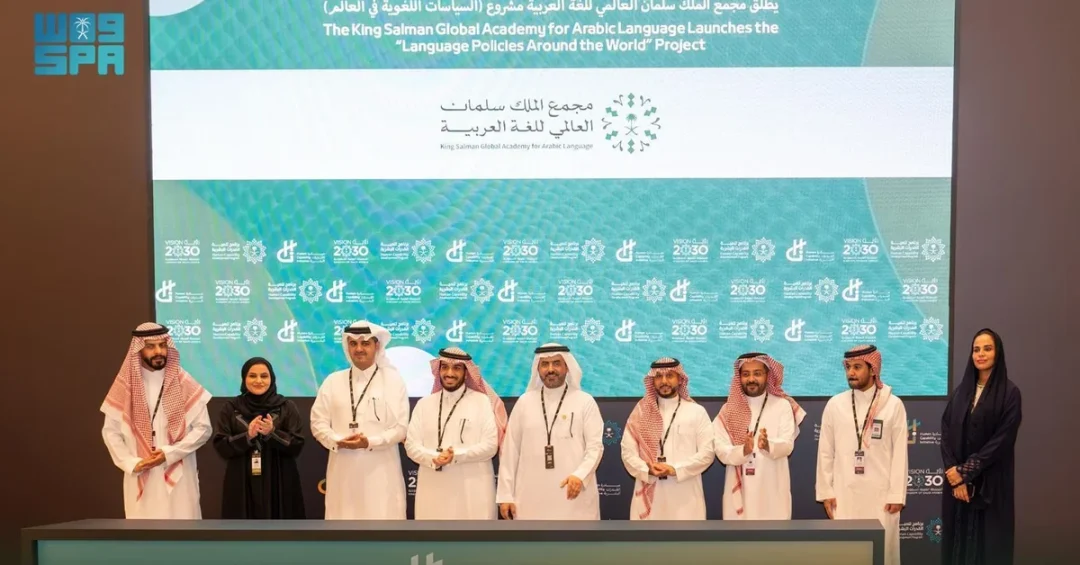
The King Salman Global Academy for Arabic Language (KSGAAL) launched its specialized “Language Policies Around the World” project during its participation in the Human Capability Initiative (HCI) Conference 2025 in Riyadh, according to a statement released via the Saudi Press Agency. The initiative marks a significant step in the Academy’s strategy to strengthen its authority in linguistic matters and keep pace with international developments in contemporary language policy and planning, positioning Saudi Arabia as a leading global voice in the study and promotion of language as a driver of human capability and cultural understanding.
The announcement, carried by the Saudi Press Agency on April 14, 2025, underscores the Kingdom’s growing role in fostering cross-cultural dialogue and knowledge exchange. By undertaking a comprehensive comparative study of language policies across ten nations spanning five continents, KSGAAL is signaling that Arabic language research is no longer confined to regional boundaries but is instead a global endeavor that benefits from—and contributes to—international best practices. This forward-looking project reflects the Academy’s commitment to scientific rigor and its ambition to serve as a global reference point for language planning and policy analysis.
Context and Background
Why does a project studying language policies in far-flung countries matter for the future of Arabic and for Saudi Arabia’s global standing? The “Language Policies Around the World” project is a specialized research initiative undertaken by KSGAAL as part of its broader strategy to enhance its authority in linguistic matters. The Academy, named after the founder of the modern Saudi state, King Salman bin Abdulaziz Al Saud, has increasingly positioned itself as a premier institution for Arabic language preservation, promotion, and modernization. This project builds on that legacy by expanding the Academy’s research footprint beyond the Arab world and into diverse linguistic landscapes, enabling a more nuanced understanding of how nations manage language as a strategic resource.
The project’s scope is deliberately broad, encompassing ten countries that represent a wide array of historical, cultural, and linguistic experiences. These include the United States, the United Kingdom, France, China, the Russian Federation, India, Indonesia, Argentina, South Africa, and Tanzania. Each of these nations has developed its own approach to language policy, shaped by unique demographic realities, colonial histories, immigration patterns, and national identity projects. By analyzing these varied models, KSGAAL aims to build a comprehensive database that will serve researchers, policymakers, and educators in the Kingdom and around the world. The project involves the scientific analysis of official documents and sources, employing both quantitative and qualitative methods to assess the impact of language policies on linguistic and societal realities.
This initiative comes at a time when globalization, digital communication, and migration are reshaping the linguistic fabric of nations everywhere. Language policy is no longer a purely domestic concern; it intersects with economic competitiveness, social cohesion, and soft power projection. For Saudi Arabia, which is undergoing a historic transformation under Vision 2030, understanding global language policy trends is essential for developing a modern, forward-looking approach to Arabic language education and dissemination. The project thus aligns with the Kingdom’s broader ambitions to foster human capability, enhance educational outcomes, and strengthen cultural diplomacy.
Key Details of the Initiative
What exactly will the “Language Policies Around the World” project deliver, and how will it be structured? According to the official announcement, the project aims to build a comprehensive database of language policies in several non-Arabic-speaking countries and analyze them scientifically, both quantitatively and qualitatively. This involves the systematic collection and examination of official documents and sources to assess their impact on linguistic and societal reality. The choice of ten countries from five continents ensures a truly global perspective, capturing the diversity of approaches to language management in different political, economic, and cultural contexts.
The ten countries selected—the United States, the United Kingdom, France, China, the Russian Federation, India, Indonesia, Argentina, South Africa, and Tanzania—each offer unique insights. The United States and the United Kingdom, for example, have long histories of linguistic imperialism and contemporary debates over multilingualism and immigrant languages. France is renowned for its centralized language policy and its efforts to protect the French language through institutions like the Académie Française. China and the Russian Federation represent large, multiethnic states with complex language regimes that balance national unity with minority language rights. India and Indonesia showcase post-colonial language planning in hugely diverse societies, while Argentina, South Africa, and Tanzania illustrate how language policy interacts with national identity, regional integration, and development goals in the Global South.
The project will provide detailed reports on the status of language policy in each of these countries, offering a comparative framework that can inform policy decisions in Saudi Arabia and beyond. By adopting both quantitative and qualitative methodologies, KSGAAL ensures that the analysis will be robust and multidimensional. Quantitative analysis might involve metrics such as the number of official languages, budget allocations for language programs, or the prevalence of language education in school curricula. Qualitative analysis will delve into the ideological underpinnings of language policies, their historical evolution, and their perceived effectiveness. Together, these approaches will yield a rich, evidence-based understanding of how language policy shapes societies.
International and Regional Impact
How might this Saudi-led project influence global conversations about language and cultural exchange? The launch of the “Language Policies Around the World” project positions Saudi Arabia as a proactive contributor to international discourse on language policy. By studying the experiences of ten diverse nations, KSGAAL is not only gathering knowledge but also building bridges of understanding. The project creates opportunities for collaboration with academic institutions, policymakers, and cultural organizations in the countries under study. Such engagement can lead to joint research initiatives, exchange programs, and shared best practices, enhancing Saudi Arabia’s soft power and its reputation as a champion of cultural diversity and intellectual inquiry.
Regionally, the project reinforces the Kingdom’s leadership in the Arab and Islamic worlds. Arabic is one of the most widely spoken languages globally, with over 400 million speakers, and it holds immense religious and cultural significance. By analyzing how other nations manage their linguistic heritage, KSGAAL can develop strategies to better promote Arabic internationally, support Arabic language learners, and integrate modern teaching methodologies. This is particularly important as Saudi Arabia expands its educational and cultural offerings under Vision 2030, including initiatives to attract international students and tourists. A deeper understanding of global language policies will help the Kingdom tailor its Arabic language programs to the needs of diverse audiences.
Furthermore, the project’s findings could inform broader discussions on multilingualism and linguistic rights at international forums such as UNESCO and the United Nations. Saudi Arabia, through KSGAAL, can contribute data-driven insights that help shape global norms and policies. This aligns with the Kingdom’s growing role in multilateral organizations and its commitment to fostering dialogue and cooperation. The project also has the potential to enhance educational outcomes within Saudi Arabia by providing evidence on effective language education strategies from around the world, which can be adapted to local contexts.
Economic and Strategic Significance
Why is a language research project economically and strategically important? Language is a critical component of human capital development, which is central to Saudi Arabia’s Vision 2030. The ability to communicate effectively across languages enhances trade, investment, tourism, and diplomatic relations. By understanding how other countries structure their language policies, Saudi Arabia can identify best practices that improve the language skills of its workforce, making them more competitive in the global economy. The HCI Conference, where the project was launched, is itself a testament to the Kingdom’s focus on human capability as a driver of economic growth and diversification.
Strategically, the project supports Saudi Arabia’s efforts to project a modern, open, and knowledge-driven image. It demonstrates the Kingdom’s commitment to scientific research and international collaboration, countering outdated stereotypes and showcasing the vibrancy of its academic institutions. The data generated by the project can also inform the design of language policies that support social cohesion and national identity amidst rapid social and economic change. By studying how other nations balance unity and diversity in language policy, Saudi Arabia can develop approaches that respect its own cultural heritage while embracing the multilingual realities of a globalized world.
Vision 2030 Alignment
How does the “Language Policies Around the World” project embody the goals of Vision 2030? The Vision, launched in 2016 by Crown Prince Mohammed bin Salman, aims to transform Saudi Arabia into a diversified, knowledge-based economy and a global hub for trade, culture, and innovation. Human capability development is a core pillar, and language proficiency—both in Arabic and foreign languages—is foundational to achieving that. KSGAAL’s project directly supports this by providing evidence-based insights that can enhance language education, promote cultural exchange, and strengthen Saudi Arabia’s position as a leader in Arabic language research and dissemination.
Moreover, the project reflects the Vision’s emphasis on international engagement and soft power. By studying language policies in ten countries across five continents, KSGAAL is building a global network of knowledge and collaboration that enhances the Kingdom’s influence and reputation. The project also contributes to the Vision’s goal of increasing the number of international students and tourists by enabling more effective Arabic language programs and culturally sensitive communication strategies. Ultimately, the “Language Policies Around the World” project is a shining example of how Saudi Arabia is leveraging its cultural and linguistic heritage to drive progress at home and foster understanding abroad, ensuring a prosperous and influential future for the Kingdom on the world stage.
20 Questions
Q1. What is the “Language Policies Around the World” project?
A1. It is a specialized research initiative by the King Salman Global Academy for Arabic Language (KSGAAL) to build a comprehensive database of language policies in ten non-Arabic-speaking countries and analyze them scientifically.
Q2. When and where was the project launched?
A2. The project was launched during KSGAAL’s participation in the Human Capability Initiative (HCI) Conference 2025, held in Riyadh, Saudi Arabia, as reported by the Saudi Press Agency on April 14, 2025.
Q3. Which countries are included in the project?
A3. The project covers ten countries from five continents: the United States, the United Kingdom, France, China, the Russian Federation, India, Indonesia, Argentina, South Africa, and Tanzania.
Q4. What is the main goal of the project?
A4. Its main goal is to build a comprehensive database of language policies in various countries and analyze them quantitatively and qualitatively to assess their impact on linguistic and societal realities.
Q5. How will the project analyze language policies?
A5. The project will analyze official documents and sources using both quantitative and qualitative methods, providing detailed reports on the status of language policy in each of the ten countries.
Q6. Why did KSGAAL choose these ten specific countries?
A6. These countries represent diverse experiences from five continents, offering a wide array of historical, cultural, and linguistic contexts that enrich comparative analysis of language policy.
Q7. What is KSGAAL’s role in the project?
A7. KSGAAL undertakes the project as part of its strategy to enhance its authority in linguistic matters and keep pace with international developments in contemporary language policy and planning.
Q8. How does the project benefit Saudi Arabia?
A8. It provides insights that can inform Arabic language education, cultural diplomacy, and human capability development, aligning with Vision 2030 goals to strengthen the Kingdom’s global standing.
Q9. What is the Human Capability Initiative (HCI) Conference?
A9. The HCI Conference is a global event focused on developing human capabilities, where KSGAAL launched the project to highlight the importance of language policy in human development.
Q10. What kind of reports will the project produce?
A10. The project will provide detailed reports on the status of language policy in each of the ten countries, covering official documents, policy impacts, and societal implications.
Q11. How does the project relate to Vision 2030?
A11. It supports Vision 2030’s focus on human capability development, international engagement, and soft power by providing evidence-based insights for language education and cultural exchange.
Q12. Will the project collaborate with international institutions?
A12. While specific collaborations are not detailed, the project’s comparative nature opens opportunities for academic and policy exchanges with institutions in the studied countries.
Q13. What is the significance of studying non-Arabic-speaking countries?
A13. Studying non-Arabic-speaking countries allows KSGAAL to learn from diverse language policy models and apply best practices to promote Arabic globally and enhance language education in Saudi Arabia.
Q14. How will the findings be used?
A14. Findings will inform Saudi language policy, educational strategies, and cultural diplomacy, and contribute to global discussions on multilingualism and language planning.
Q15. What methods will be used for data collection?
A15. The project will collect data from official documents and sources, using quantitative and qualitative analysis to assess language policies’ impact on linguistic and societal realities.
Q16. Is the project limited to Arabic language promotion?
A16. No, it studies language policies broadly, but the insights will directly support KSGAAL’s mission to promote Arabic and enhance its global presence.
Q17. How does the project reflect Saudi Arabia’s cultural diplomacy?
A17. By engaging with diverse international contexts, the project showcases Saudi Arabia’s commitment to cultural exchange, knowledge sharing, and mutual understanding, enhancing its soft power.
Q18. What role does the Saudi Press Agency play in this announcement?
A18. The Saudi Press Agency (SPA) reported the launch, ensuring official and transparent communication of the project’s details to the public and international audiences.
Q19. Will the project include recommendations for policy reform?
A19. The project aims to provide scientific analyses and detailed reports that can inform policy decisions, though specific recommendations will emerge from the research findings.
Q20. How can researchers access the project’s database?
A20. Details on access are not specified, but the project is expected to produce reports and a database that will be made available to researchers and policymakers through KSGAAL’s channels.
Reader Feedback
We value your thoughts. Please share your feedback on this article.
Your feedback helps us improve our coverage.
Related articles
 Madinah Governor Opens 13th International Cultural Festival
 LUNAR Festival of Lights Returns to Sofia May 8-11
 Saudi Pavilion Shines at International Cultural Festival
 Messengers of Peace Delegation Visits King Abdulaziz Public Library
 Islamic Arts Biennale in Jeddah Enriches Visitors with Unique Sensory Experiences of Art
 Manga Arabia Launches Arabic Webtoons for Arab World