


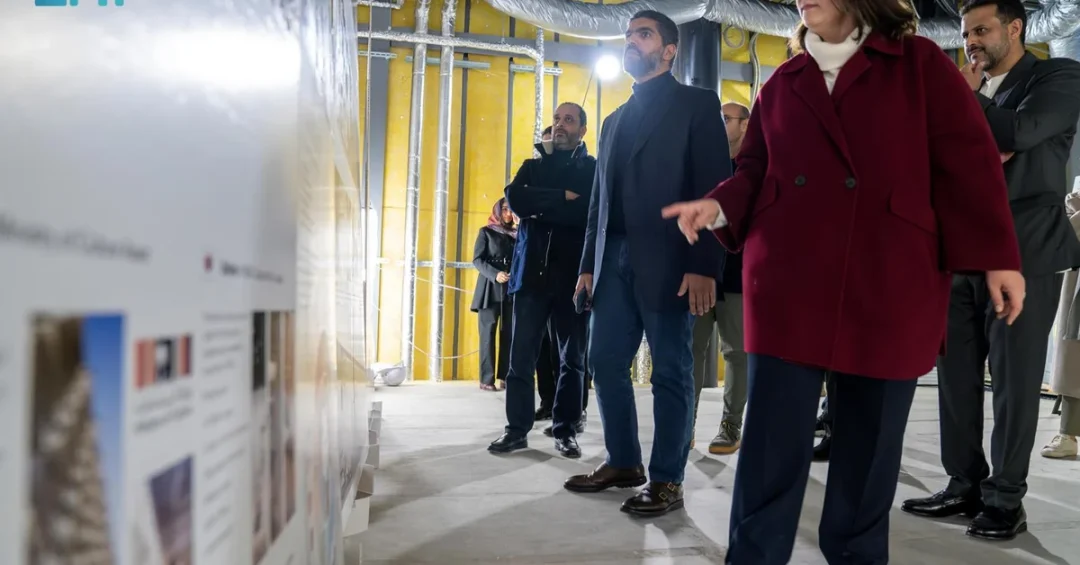
Minister of Culture Prince Badr bin Abdullah bin Farhan, chairman of the steering committee for the Kingdom’s participation in international expos, visited the Saudi Pavilion at Expo 2025 Osaka on November 25, 2024, as part of his official visit to Japan, according to the Saudi Press Agency (SPA). The visit underscores Saudi Arabia’s commitment to showcasing its rich cultural heritage and Vision 2030 progress on the global stage. Upon arrival, Prince Badr was received by Deputy Minister of Culture Hamed bin Mohammed Fayez, who also chairs the executive committee for the Kingdom’s participation in international expos, Assistant Minister of Culture Rakan bin Ibrahim Al-Touq, Saudi Ambassador to Japan Dr. Ghazi Faisal Binzagr, and several senior officials.
During the tour, the minister reviewed the pavilion’s design and construction progress at the exhibition site, which is scheduled to open in April 2025. He was briefed on the visitor experience, which will highlight Saudi Arabia’s cultural heritage through three thematic pillars. The pavilion aims to narrate the Kingdom’s history, inviting visitors to explore its cultures, traditions, and values while showcasing the transformative developments underway in Saudi Arabia and its contributions to building a better future for the world. This visit reflects the Kingdom’s proactive engagement in global expos as a platform for cultural exchange and international cooperation.
Context and Background
Why is Saudi Arabia’s participation in Expo 2025 Osaka so significant for the Kingdom’s global cultural diplomacy? The visit by Prince Badr bin Abdullah bin Farhan comes as Saudi Arabia accelerates its efforts to promote its cultural heritage and Vision 2030 achievements internationally. Expo 2025 Osaka, a world exposition expected to attract millions of visitors, provides a unique opportunity for Saudi Arabia to present its rich history and modern advancements. The Kingdom’s pavilion is designed to offer an immersive experience, guiding visitors through a narrative that connects Saudi Arabia’s past, present, and future. As chairman of the steering committee for the Kingdom’s participation in international expos, Prince Badr’s oversight ensures alignment with national objectives.
The Saudi Pavilion at Expo 2025 Osaka is not merely an exhibition space; it is a strategic tool for cultural diplomacy and economic engagement. By participating in such global events, Saudi Arabia strengthens its international ties, fosters mutual understanding, and attracts tourism and investment. The pavilion’s three thematic pillars are carefully curated to reflect the Kingdom’s identity, values, and aspirations. This approach aligns with the Ministry of Culture’s mandate to preserve and promote Saudi culture both domestically and abroad. Moreover, the visit highlights the collaborative efforts between various Saudi entities, including the Ministry of Culture, the Saudi Ambassador to Japan, and other senior officials, to ensure a successful and impactful presence at the expo.
Expo 2025 Osaka will serve as a global stage where nations showcase their innovations and cultures. For Saudi Arabia, it is a chance to challenge perceptions and present a nuanced image of a nation undergoing rapid transformation. The Kingdom’s participation is part of a broader strategy to engage with the international community, share its progress, and learn from others. As the world turns its attention to Osaka in 2025, Saudi Arabia’s pavilion will stand as a testament to its commitment to cultural exchange and global cooperation.
Key Details of the Pavilion
What can visitors expect when they step into the Saudi Pavilion at Expo 2025 Osaka? The pavilion’s design and content are centered around three thematic pillars that together tell the story of Saudi Arabia. These pillars likely encompass the Kingdom’s historical heritage, its contemporary cultural scene, and its future-oriented Vision 2030 initiatives. The visitor experience is designed to be immersive, using state-of-the-art technology and creative storytelling to engage audiences. Prince Badr was briefed on these elements, which aim to transport visitors on a journey through Saudi Arabia’s cultures, traditions, and values. The pavilion also highlights the transformative developments currently underway, such as NEOM, the Red Sea Project, and other giga-projects that are reshaping the Kingdom’s economy and society.
The construction progress reviewed by the minister indicates that the pavilion is on track for the expo’s opening in April 2025. The design likely incorporates traditional Saudi architectural motifs combined with modern aesthetics, symbolizing the blend of heritage and innovation. The pavilion’s narrative will showcase how Saudi Arabia is preserving its past while building a prosperous future. Additionally, the pavilion will serve as a platform for cultural performances, art exhibitions, and interactive displays, offering visitors a multifaceted experience. The involvement of high-level officials like Prince Badr and Deputy Minister Hamed bin Mohammed Fayez underscores the importance the Kingdom places on this project.
Key details also include the strategic location of the pavilion within the expo site, which will maximize visibility and foot traffic. The Kingdom’s participation is coordinated by the executive committee for international expos, ensuring a cohesive and impactful presentation. The pavilion’s theme and content are aligned with the overarching goals of Expo 2025 Osaka, which focuses on sustainable development and global collaboration. By highlighting its contributions to building a better future, Saudi Arabia positions itself as a responsible global actor and a partner in addressing shared challenges.
International and Regional Impact
How does Saudi Arabia’s pavilion at Expo 2025 Osaka influence its international standing and regional relationships? The Kingdom’s participation in this global event is a significant diplomatic and cultural endeavor. It allows Saudi Arabia to engage with millions of international visitors, including policymakers, business leaders, and tourists, fostering people-to-people ties and enhancing mutual understanding. The pavilion serves as a soft power tool, projecting a positive image of the Kingdom and its Vision 2030 reforms. In a region often characterized by geopolitical tensions, Saudi Arabia’s focus on cultural exchange and cooperation at Expo 2025 Osaka highlights its commitment to stability and prosperity.
Regionally, the expo provides a platform for Saudi Arabia to strengthen its relationship with Japan and other Asian nations, which are key partners in trade, investment, and technology. The visit by Prince Badr and his meetings with Japanese officials likely include discussions on bilateral cooperation beyond the expo. Furthermore, the pavilion showcases Saudi Arabia’s role as a bridge between cultures, facilitating dialogue and collaboration. By presenting its heritage and modern achievements, the Kingdom counters stereotypes and builds goodwill. This is particularly important as Saudi Arabia positions itself as a global tourism destination, aiming to attract 150 million visitors annually by 2030.
The international impact extends to economic and cultural spheres. The expo offers opportunities for Saudi businesses and creatives to network and explore partnerships. It also allows the Kingdom to learn from other nations’ best practices in areas like sustainability, technology, and urban development. As Saudi Arabia continues its transformation, such engagements are vital for benchmarking and knowledge exchange. The pavilion’s success will contribute to the broader narrative of a nation open to the world and committed to shared progress.
Economic and Strategic Significance
What economic and strategic benefits does Saudi Arabia’s participation in Expo 2025 Osaka bring to the Kingdom? Participating in a world expo is a strategic investment in the Kingdom’s future. It promotes tourism, trade, and foreign direct investment by showcasing Saudi Arabia’s business-friendly environment and giga-projects. The pavilion will highlight opportunities in sectors such as entertainment, culture, technology, and renewable energy, attracting international investors and partners. With Vision 2030 aiming to diversify the economy beyond oil, expos serve as platforms to promote non-oil sectors and demonstrate the Kingdom’s progress in areas like tourism, entertainment, and digital innovation.
Strategically, the expo enhances Saudi Arabia’s global influence and soft power. It reinforces the Kingdom’s role as a leader in the region and a reliable partner in international affairs. The pavilion’s focus on building a better future aligns with global sustainability goals and positions Saudi Arabia as a responsible stakeholder. Additionally, the exposure gained from Expo 2025 Osaka can boost Saudi Arabia’s tourism sector, which is a key pillar of Vision 2030. By presenting the Kingdom as a welcoming and culturally rich destination, the pavilion can inspire visitors to explore Saudi Arabia firsthand, contributing to the goal of increasing tourism’s share of GDP.
Furthermore, the expo facilitates knowledge transfer and innovation. Saudi officials and creatives can engage with global counterparts, bringing back insights to further develop the Kingdom’s cultural and economic landscape. The participation also strengthens the Saudi brand internationally, which is essential for attracting talent and investment. As the Kingdom continues to host major events like Expo 2030 in Riyadh, experiences gained in Osaka will be invaluable. The strategic significance of this pavilion extends beyond the six months of the expo; it is a building block for Saudi Arabia’s long-term global engagement.
Vision 2030 Alignment
How does the Saudi Pavilion at Expo 2025 Osaka reflect the goals of Vision 2030? The pavilion is a tangible manifestation of Vision 2030’s cultural and economic objectives. Vision 2030 aims to diversify the economy, promote Saudi culture, and enhance the Kingdom’s global image. The pavilion showcases Saudi Arabia’s rich cultural heritage, aligning with the Vision’s goal to preserve and celebrate national identity. Simultaneously, it highlights transformative projects and modern developments, demonstrating the Kingdom’s progress in economic diversification and social reform. By participating in Expo 2025 Osaka, Saudi Arabia is actively engaging with the world, fostering cultural exchange, and promoting itself as a dynamic and open society.
This initiative also supports Vision 2030’s target of increasing international tourism and cultural exchanges. The pavilion serves as a gateway for visitors to learn about Saudi Arabia, potentially inspiring them to visit and experience the Kingdom’s attractions. Moreover, the involvement of high-level leadership, such as Prince Badr bin Abdullah bin Farhan, underscores the strategic importance of culture in achieving Vision 2030. The Ministry of Culture’s efforts to promote Saudi culture globally are integral to the Vision’s human-centric approach, which seeks to empower citizens and enhance quality of life. As Saudi Arabia prepares to host Expo 2030 in Riyadh, its participation in Osaka sets a precedent for excellence and global collaboration, further solidifying the Kingdom’s role as a leader on the world stage.
20 Questions
Q1. What is the Saudi Pavilion at Expo 2025 Osaka?
A1. The Saudi Pavilion is a national exhibition space at Expo 2025 Osaka that showcases the Kingdom’s cultural heritage and Vision 2030 achievements through an immersive visitor experience. It is designed to narrate Saudi Arabia’s history, traditions, and modern developments, inviting international visitors to explore the nation’s identity and future aspirations.
Q2. Who visited the Saudi Pavilion recently?
A2. Minister of Culture Prince Badr bin Abdullah bin Farhan, who chairs the steering committee for the Kingdom’s participation in international expos, visited the pavilion on November 25, 2024, during his official visit to Japan. He was briefed on the pavilion’s design and construction progress.
Q3. What are the three thematic pillars of the Saudi Pavilion?
A3. The three thematic pillars are not explicitly detailed in the source, but they collectively present Saudi Arabia’s history, cultures, traditions, and values, while also highlighting transformative developments and contributions to building a better future for the world.
Q4. When will Expo 2025 Osaka open?
A4. Expo 2025 Osaka is set to open in April 2025. The Saudi Pavilion is currently under construction at the exhibition site, and the visit by Prince Badr reviewed its progress to ensure readiness for the opening.
Q5. Who received Prince Badr upon his arrival at the pavilion?
A5. He was received by Deputy Minister of Culture Hamed bin Mohammed Fayez, Assistant Minister of Culture Rakan bin Ibrahim Al-Touq, Saudi Ambassador to Japan Dr. Ghazi Faisal Binzagr, and several senior officials, demonstrating high-level engagement with the project.
Q6. What is the purpose of the Saudi Pavilion?
A6. The pavilion aims to showcase Saudi Arabia’s rich cultural heritage and identity, narrate the Kingdom’s history, and highlight its transformative developments and contributions to global progress. It serves as a platform for cultural exchange and enhancing international understanding.
Q7. How does the pavilion reflect Vision 2030?
A7. The pavilion reflects Vision 2030 by promoting Saudi culture globally, showcasing economic diversification efforts, and enhancing the Kingdom’s image as a dynamic and open society. It aligns with goals to increase tourism and foster international cooperation.
Q8. What can visitors experience at the Saudi Pavilion?
A8. Visitors can expect an immersive journey through Saudi Arabia’s cultures, traditions, and values, along with insights into modern developments. The experience likely includes interactive displays, performances, and exhibitions that highlight the Kingdom’s past, present, and future.
Q9. Why is Saudi Arabia participating in Expo 2025 Osaka?
A9. Saudi Arabia participates to strengthen cultural diplomacy, promote tourism and investment, and showcase its Vision 2030 progress on a global stage. It provides an opportunity to engage with millions of international visitors and build partnerships.
Q10. What is the role of the steering committee for international expos?
A10. The steering committee, chaired by Prince Badr bin Abdullah bin Farhan, oversees Saudi Arabia’s participation in international expos, ensuring alignment with national objectives. It coordinates efforts to present a cohesive and impactful Saudi presence at events like Expo 2025 Osaka.
Q11. How does the pavilion contribute to Saudi Arabia’s tourism goals?
A11. By showcasing the Kingdom’s cultural and natural attractions, the pavilion inspires international visitors to consider Saudi Arabia as a destination. This supports Vision 2030’s goal to attract 150 million visitors annually by 2030 and increase tourism’s economic contribution.
Q12. What economic benefits does the expo bring to Saudi Arabia?
A12. The expo promotes trade, foreign investment, and business networking. It highlights opportunities in non-oil sectors, aligning with economic diversification goals. It also facilitates knowledge exchange and showcases Saudi giga-projects to a global audience.
Q13. Who is Prince Badr bin Abdullah bin Farhan?
A13. Prince Badr bin Abdullah bin Farhan is the Saudi Minister of Culture and chairman of the steering committee for the Kingdom’s participation in international expos. He plays a key role in promoting Saudi culture and overseeing major cultural initiatives.
Q14. What is the significance of the Saudi Ambassador to Japan’s involvement?
A14. The involvement of Saudi Ambassador to Japan Dr. Ghazi Faisal Binzagr highlights the diplomatic importance of the pavilion and strengthens Saudi-Japan bilateral relations. It underscores the Kingdom’s commitment to international cooperation and cultural exchange.
Q15. How does the pavilion showcase Saudi heritage?
A15. The pavilion presents Saudi heritage through a narrative that explores cultures, traditions, and values. It uses design, technology, and storytelling to immerse visitors in the Kingdom’s history and identity, forming the foundation of the nation’s identity.
Q16. What transformative developments are highlighted in the pavilion?
A16. The pavilion highlights developments such as NEOM, the Red Sea Project, and other Vision 2030 initiatives. These projects demonstrate Saudi Arabia’s economic diversification, social reforms, and commitment to building a better future for the world.
Q17. How does Expo 2025 Osaka benefit international visitors?
A17. International visitors gain exposure to Saudi Arabia’s culture and progress, fostering mutual understanding. The pavilion offers a chance to learn about the Kingdom’s heritage and modern achievements, potentially inspiring tourism and business partnerships.
Q18. What is the expected impact of the pavilion on Saudi Arabia’s global image?
A18. The pavilion is expected to enhance Saudi Arabia’s global image by presenting a positive, forward-looking narrative. It counters stereotypes and showcases the Kingdom as a dynamic, open society committed to cultural exchange and global cooperation.
Q19. How does the pavilion align with Expo 2025 Osaka’s theme?
A19. Expo 2025 Osaka focuses on sustainable development and global collaboration. The Saudi Pavilion aligns by highlighting the Kingdom’s contributions to building a better future, including sustainability initiatives and international partnerships, reflecting shared goals.
Q20. What are the next steps for the Saudi Pavilion after the visit?
A20. Following the visit, construction will continue to ensure readiness for the April 2025 opening. The pavilion will then welcome visitors, serving as a platform for cultural exchange and showcasing Saudi Arabia’s Vision 2030 achievements to the world.
Reader Feedback
We value your thoughts. Please share your feedback on this article.
Your feedback helps us improve our coverage.
Related articles
 Twenty-Five Nations Unite at Banan in Celebration of Crafts
 AlUla Shines at Christian Dior Exhibition in Riyadh
 House of Artisans: Saudi Heritage at Banan Exhibition
 Riyadh Music Week Debuts This December
 Royal Institute of Traditional Arts Showcases Saudi Craftsmanship at Banan Handicrafts Week
 Ithra Revives Handicrafts with Global Participation