


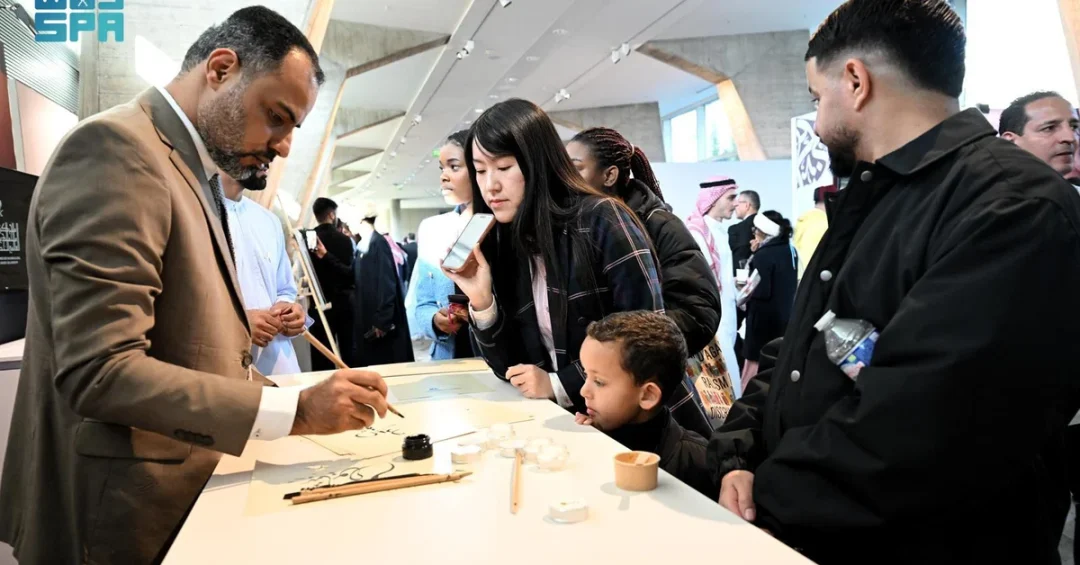
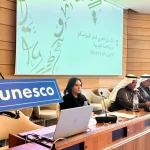
The Prince Mohammed bin Salman Global Center for Arabic Calligraphy captivated audiences at “Arab Week at UNESCO” in Paris on November 4-5, 2024, presenting the timeless art of Arabic calligraphy as a bridge between cultures and a living testament to the Arab world’s rich heritage. Organized by the Arab Group at UNESCO and spearheaded by Saudi Arabia through the Saudi National Commission for Education, Culture, and Science, the event underscored the Kingdom’s commitment to preserving and promoting cultural heritage on the global stage. The center, operating under the Ministry of Culture, showcased a museum, exhibition space, and an institute dedicated to Arabic calligraphy, drawing praise from international visitors and dignitaries alike.
Held at the headquarters of the United Nations Educational, Scientific and Cultural Organization (UNESCO) in Paris, Arab Week brought together diplomats, artists, scholars, and cultural enthusiasts to celebrate the diversity and depth of Arab civilization. Saudi Arabia’s prominent role in organizing the event reflects its broader efforts to foster cross-cultural dialogue and highlight the Kingdom’s cultural renaissance under Vision 2030. The Prince Mohammed bin Salman Global Center for Arabic Calligraphy emerged as a focal point, offering visitors an immersive experience that traced the evolution of Arabic calligraphy over centuries while showcasing contemporary innovations. Why does this ancient art form continue to resonate so powerfully in today’s world?
Context and Background
Arabic calligraphy, recognized by UNESCO as an Intangible Cultural Heritage of Humanity in 2021, has long been a cornerstone of Islamic and Arab artistic expression. Its flowing lines and geometric precision have adorned manuscripts, architecture, and everyday objects for over fourteen centuries. The Prince Mohammed bin Salman Global Center for Arabic Calligraphy, established under the Ministry of Culture, is dedicated to preserving this legacy while adapting it for modern audiences. By participating in Arab Week at UNESCO, the center reinforced Saudi Arabia’s position as a global leader in cultural preservation and promotion.
The event itself, organized by the Arab Group at UNESCO, aimed to showcase the shared cultural heritage of Arab nations and foster deeper understanding between the Arab world and the international community. Saudi Arabia’s leadership in this initiative, through the Saudi National Commission for Education, Culture, and Science, highlights the Kingdom’s proactive approach to cultural diplomacy. How can a single art form serve as a catalyst for dialogue between civilizations? The center’s presence at UNESCO provided a compelling answer, demonstrating that Arabic calligraphy transcends linguistic and geographical boundaries.
The timing of Arab Week is significant, coming as Saudi Arabia accelerates its cultural transformation under Vision 2030. The Kingdom has invested heavily in cultural infrastructure, from museums to festivals, aiming to enrich the lives of citizens and residents while attracting international visitors. The Prince Mohammed bin Salman Global Center for Arabic Calligraphy is a key pillar of this strategy, serving as a hub for education, research, and artistic exchange. Its participation at UNESCO signals Saudi Arabia’s intent to share its cultural treasures with the world and to learn from global best practices in heritage preservation.
Key Details
At the heart of the center’s presentation was a comprehensive exhibition that highlighted the historical and artistic significance of Arabic calligraphy. Visitors were treated to a visual journey through different scripts, including Kufic, Naskh, Thuluth, and Diwani, each with its unique aesthetic and historical context. The exhibition also featured works by contemporary calligraphers from across the Arab and Muslim world, illustrating how traditional techniques are being reinterpreted in the 21st century. The center’s museum component offered a rare glimpse into the tools and materials used by master calligraphers, from reed pens to handcrafted inks.
In addition to the exhibition, the center showcased its educational institute, which aims to train the next generation of calligraphers. The institute offers workshops, masterclasses, and online courses, making the art form accessible to a global audience. During Arab Week, representatives from the center engaged with UNESCO delegates and cultural leaders to explore partnerships that could further expand its reach. The center’s mission is clear: to become a leading global reference for Arabic calligraphy, support talent, foster innovation, and encourage community engagement in preserving this cultural heritage.
The event also served as a platform for Arab and Muslim calligraphers to connect with international peers and share their work. Many artists expressed appreciation for the center’s efforts to elevate their craft on the world stage. The presence of Saudi Arabia’s delegation, led by the Saudi National Commission for Education, Culture, and Science, underscored the Kingdom’s commitment to cultural diplomacy as a tool for building bridges and promoting mutual respect. What does this level of engagement say about Saudi Arabia’s evolving role in global cultural affairs?
International and Regional Impact
The participation of the Prince Mohammed bin Salman Global Center for Arabic Calligraphy at Arab Week at UNESCO has significant implications for international cultural relations. By presenting Arabic calligraphy as a shared heritage of humanity, the center helped to counter stereotypes and foster a more nuanced understanding of Arab and Islamic cultures. UNESCO’s platform provided an opportunity to reach a diverse audience, including policymakers, educators, and cultural influencers, who can amplify the message of cultural exchange. The event also strengthened ties between Saudi Arabia and other Arab nations, as they collectively celebrated their common artistic legacy.
Regionally, the center’s work aligns with broader efforts to preserve and promote Arab cultural identity in an era of globalization. By documenting and teaching traditional calligraphy, the center ensures that this art form remains vibrant and relevant. Moreover, its emphasis on innovation encourages calligraphers to experiment with new media and technologies, potentially leading to new artistic movements. The center’s global ambitions are matched by its local impact, as it engages Saudi communities through workshops, exhibitions, and educational programs. How might this model of cultural preservation be replicated in other fields?
Economic and Strategic Significance
While primarily a cultural endeavor, the Prince Mohammed bin Salman Global Center for Arabic Calligraphy also contributes to Saudi Arabia’s economic and strategic goals. Cultural tourism is a growing sector, and the Kingdom aims to attract visitors interested in its rich heritage. The center, with its museum and exhibitions, adds to the array of cultural attractions that complement destinations like AlUla and Diriyah. By promoting Arabic calligraphy globally, Saudi Arabia enhances its soft power and positions itself as a hub for cultural tourism and creative industries.
Strategically, the center supports Vision 2030’s objective of diversifying the economy and fostering a vibrant cultural sector. It creates opportunities for artists, educators, and entrepreneurs, while also strengthening Saudi Arabia’s image as a forward-looking nation that values its heritage. The center’s participation at UNESCO is part of a wider cultural diplomacy strategy that includes hosting international events, sponsoring cultural exchanges, and collaborating with global institutions. These efforts not only boost the Kingdom’s international standing but also enrich the domestic cultural landscape, providing Saudi citizens with access to world-class art and education.
Vision 2030 Alignment
The Prince Mohammed bin Salman Global Center for Arabic Calligraphy exemplifies the cultural dimension of Saudi Vision 2030, which seeks to preserve national identity while embracing global engagement. By promoting Arabic calligraphy as a universal art form, the center contributes to the Vision’s goal of enhancing Saudi Arabia’s cultural influence and fostering cross-cultural understanding. It also supports the development of a knowledge-based economy by investing in education, research, and creative industries. The center’s success at Arab Week at UNESCO is a testament to the Kingdom’s commitment to cultural excellence and its ability to lead on the world stage.
Looking ahead, the center is poised to expand its activities, including international exhibitions, collaborations with museums and universities, and digital initiatives that make Arabic calligraphy accessible to millions. As Saudi Arabia continues its cultural transformation, the Prince Mohammed bin Salman Global Center for Arabic Calligraphy will remain a beacon of artistic heritage and innovation, inspiring future generations and strengthening the bonds between cultures. In doing so, it embodies the timeless spirit of Vision 2030: a nation proud of its past, confident in its present, and ambitious for its future.
20 Questions
Q1. What was the main purpose of the Prince Mohammed bin Salman Global Center for Arabic Calligraphy’s participation at Arab Week at UNESCO?
A1. The center aimed to showcase the beauty and cultural significance of Arabic calligraphy to an international audience, foster cross-cultural exchange, and highlight Saudi Arabia’s role in preserving this heritage.
Q2. When and where did Arab Week at UNESCO take place?
A2. Arab Week at UNESCO was held on November 4-5, 2024, at the UNESCO headquarters in Paris, France, bringing together diplomats, artists, and cultural leaders.
Q3. Who organized Arab Week at UNESCO?
A3. The event was organized by the Arab Group at UNESCO and spearheaded by Saudi Arabia through the Saudi National Commission for Education, Culture, and Science.
Q4. What is the Prince Mohammed bin Salman Global Center for Arabic Calligraphy?
A4. It is a center under Saudi Arabia’s Ministry of Culture dedicated to preserving, promoting, and advancing Arabic calligraphy globally through a museum, exhibition space, and educational institute.
Q5. What did the center present at Arab Week?
A5. The center presented a museum, exhibition space, and institute for Arabic calligraphy, featuring historical scripts, contemporary works, and educational programs for visitors.
Q6. Why is Arabic calligraphy considered an important art form?
A6. Arabic calligraphy is a cherished cultural artifact that reflects centuries of artistic and intellectual achievement, and it was recognized by UNESCO as Intangible Cultural Heritage of Humanity in 2021.
Q7. How does the center support calligraphers?
A7. The center supports talent through workshops, masterclasses, online courses, and platforms for Arab and Muslim calligraphers to showcase their work internationally.
Q8. What is the center’s mission?
A8. Its mission is to become a leading global reference for Arabic calligraphy, support talent, foster innovation, and encourage community engagement in preserving this cultural heritage.
Q9. How does the center contribute to Saudi Vision 2030?
A9. It aligns with Vision 2030 by preserving national identity, promoting cultural tourism, fostering creative industries, and enhancing Saudi Arabia’s global cultural influence.
Q10. What scripts were highlighted at the exhibition?
A10. The exhibition highlighted various scripts including Kufic, Naskh, Thuluth, and Diwani, each with distinct historical and aesthetic characteristics.
Q11. Who attended Arab Week at UNESCO?
A11. Diplomats, artists, scholars, cultural enthusiasts, and UNESCO delegates attended the event, engaging with the center’s presentations and exhibitions.
Q12. What is the significance of UNESCO’s recognition of Arabic calligraphy?
A12. UNESCO’s 2021 recognition underscores the global importance of Arabic calligraphy as a shared human heritage, enhancing its protection and promotion worldwide.
Q13. How does the center engage with local communities?
A13. The center engages local communities through workshops, exhibitions, and educational programs that make Arabic calligraphy accessible to Saudis and residents.
Q14. What role does the Saudi National Commission for Education, Culture, and Science play?
A14. It spearheads Saudi Arabia’s participation in UNESCO events and initiatives, promoting cultural diplomacy and educational exchange.
Q15. What are the center’s future plans?
A15. The center plans to expand international exhibitions, collaborations with museums and universities, and digital initiatives to make Arabic calligraphy accessible globally.
Q16. How does Arabic calligraphy foster cross-cultural exchange?
A16. Its universal aesthetic appeal transcends language barriers, allowing people from diverse backgrounds to appreciate its beauty and connect with Arab culture.
Q17. What economic benefits can the center bring to Saudi Arabia?
A17. It can boost cultural tourism, create jobs in creative industries, and enhance Saudi Arabia’s soft power, contributing to economic diversification.
Q18. How can the center help preserve Arabic calligraphy for future generations?
A18. By documenting traditional techniques, training new calligraphers, and integrating calligraphy into educational curricula, the center ensures its continuity.
Q19. What makes the Prince Mohammed bin Salman Global Center unique?
A19. It combines a museum, exhibition space, and institute under one roof, serving as a global hub for Arabic calligraphy and a platform for international collaboration.
Q20. How does the center reflect Saudi Arabia’s cultural leadership?
A20. By spearheading global initiatives like Arab Week at UNESCO, the center demonstrates Saudi Arabia’s commitment to preserving and promoting Arab heritage on the world stage.
Reader Feedback
We value your thoughts. Please share your feedback on this article.
Your feedback helps us improve our coverage.
Related articles
 Arab Week at UNESCO: 22 Nations Showcase Culture
 Saudi Pavilion at UNESCO Showcases Camel Culture to the World
 Two Falcons Fetch SAR196,000 at Saudi Auction
 KSGAAL Highlights Arab Cultural Richness at UNESCO Arab Week
 Arab Countries Commend Saudi-Led Arab Week at UNESCO
 UNESCO Chief Praises Saudi Arabia’s Arab Week Initiative