


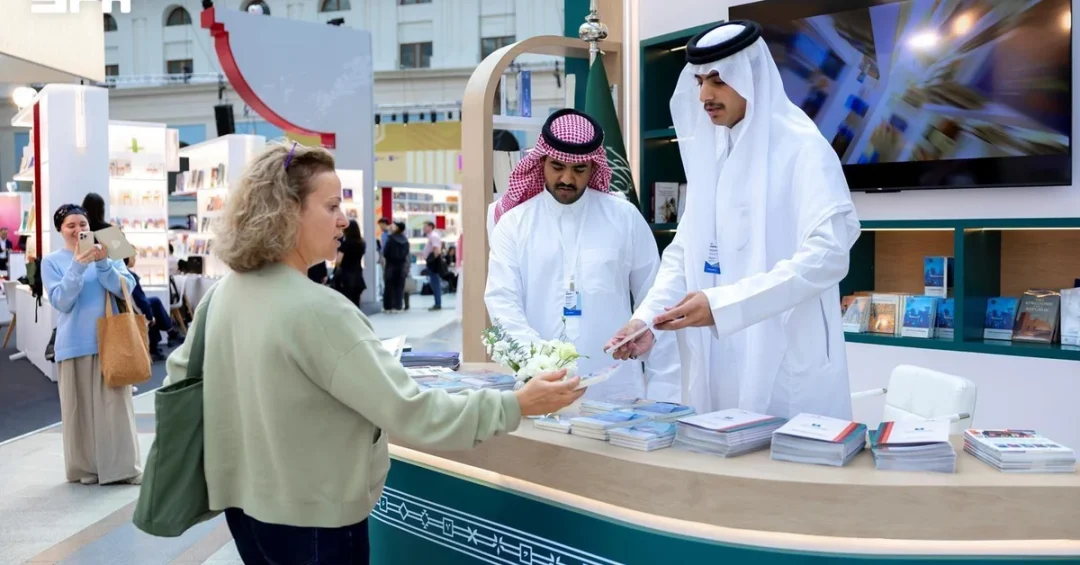
The Literature, Publishing, and Translation Commission inaugurated the Saudi pavilion at the Moscow International Book Fair 2026 on September 2, 2026, opening a five-day showcase of Saudi Arabia’s cultural, literary, and translation achievements in the Russian capital. The fair, which runs from September 2 to 6, brings together publishers, writers, translators, and cultural institutions from across the world, and the Saudi pavilion has been designed to present an integrated picture of the Kingdom’s national cultural scene rather than a single institution’s output. The pavilion unites various government entities and cultural organizations under one roof, reflecting the collaborative approach that has come to define Saudi Arabia’s international cultural engagement.
Why does a book fair in Moscow matter to readers thousands of kilometers from Riyadh? Because cultural diplomacy has become one of the most visible dimensions of the Kingdom’s global outreach, and the Saudi pavilion is a practical expression of that strategy. The Literature, Publishing, and Translation Commission, the body responsible for developing Saudi Arabia’s publishing and translation sectors, has prepared an accompanying cultural program featuring dialogue sessions and poetry evenings with a distinguished group of Saudi writers and intellectuals. The program addresses literature, publishing, and translation while highlighting Saudi cultural achievements and their impact on the international cultural sphere.
Context and Background
The Moscow International Book Fair is one of the oldest and largest publishing events in Eastern Europe, and participation in it places Saudi Arabia in direct contact with publishers, translators, and readers who may have limited exposure to contemporary Arabic literature. The Literature, Publishing, and Translation Commission was established to organize and grow the Kingdom’s literary sector, and it has increasingly used international book fairs as platforms for building professional relationships rather than one-off promotional appearances. The Moscow pavilion follows a pattern of sustained Saudi participation in major fairs in cities such as Frankfurt, London, Riyadh, and Abu Dhabi.
What does it mean for a national pavilion to include multiple government entities and cultural organizations? It signals coordination. Visitors to the Saudi pavilion encounter a single national narrative that spans heritage, publishing, translation, and contemporary creativity, rather than a series of disconnected stands. This integrated approach allows Saudi publishers to negotiate rights and distribution deals while cultural institutions present exhibitions, programs, and publications that situate Saudi literature within broader Arab and Islamic traditions. It also gives international visitors a clear point of entry for questions about translation funding, publishing partnerships, and cultural exchange.
The timing of the fair, in early September, also matters for the publishing calendar. Autumn is when many publishers finalize rights agreements and plan translations for the following year, so a strong Saudi presence at the start of the season can translate into concrete deals and long-term relationships. For Saudi writers and intellectuals participating in the program, the fair offers a rare opportunity to speak directly to Russian and international audiences, and to hear how their work is received outside the region.
Key Details of the Saudi Pavilion
The Saudi pavilion brings together various government entities and cultural organizations, presenting an integrated picture of the national cultural scene. This structure allows the Kingdom to showcase not only books but also the institutions, initiatives, and creative industries that support them. The Literature, Publishing, and Translation Commission, which organized the pavilion, has prepared an accompanying cultural program featuring a series of dialogue sessions and poetry evenings, with the participation of a distinguished group of Saudi writers and intellectuals.
The program addresses issues related to literature, publishing, and translation, three areas that are central to the Commission’s mandate. Dialogue sessions give Saudi and international participants a chance to discuss trends in Arabic literature, the challenges and opportunities of translating between Arabic and other languages, and the evolving role of publishers in a digital market. Poetry evenings add a performative dimension, allowing audiences to experience the rhythm and sound of Arabic verse, often in bilingual readings that make the work accessible to non-Arabic speakers.
How does a pavilion of this kind support Saudi writers in practical terms? By creating a setting where they can meet translators, editors, and foreign rights managers face to face. Translation is a relationship business as much as a linguistic one, and fairs provide the informal conversations that lead to sample chapters, contracts, and long-term collaborations. The presence of multiple Saudi entities also means that writers can connect with cultural institutions that may support future translations, residencies, or festival appearances.
Literature, Publishing, and Translation in Focus
The Literature, Publishing, and Translation Commission has made translation a priority because it is the bridge through which Saudi and Arabic literature reaches global readers. The Moscow program reflects that priority by dedicating sessions to the practical and creative dimensions of translation, including the choices translators make when rendering poetry, dialect, and cultural references into another language. These discussions are not abstract; they shape which Saudi books appear in Russian, English, and other languages in the years ahead.
Publishing is the second pillar of the program. Saudi publishers attending the fair can explore co-editions, rights sales, and distribution agreements, while international publishers can learn about the Saudi market and the support available for translation and publication. The Commission’s role is to reduce friction in these transactions and to ensure that Saudi voices are represented accurately and professionally in global catalogues.
What makes poetry evenings such an effective form of cultural diplomacy? Poetry occupies a central place in Arabic culture, and a live reading communicates emotion, cadence, and cultural context in ways that a printed page cannot. When Saudi poets read in Moscow, they offer audiences an experience of contemporary Saudi creativity that is both personal and rooted in tradition. The evenings also create memorable moments that linger in the minds of readers, journalists, and publishers long after the fair closes.
International and Regional Impact
The Saudi pavilion at the Moscow International Book Fair strengthens cultural ties between the Kingdom and Russia while reinforcing Saudi Arabia’s broader engagement with international cultural institutions. Cultural exchange of this kind complements political and economic relations by building familiarity and mutual respect at the level of readers, writers, and publishers. For Russian audiences, the pavilion offers direct access to Arabic literature and to information about Saudi Arabia’s cultural transformation; for Saudi participants, it opens a window onto a major publishing market with its own rich literary tradition.
Regionally, the pavilion also sends a signal about the growing coherence of Saudi cultural policy. By presenting an integrated national scene, the Kingdom demonstrates that its cultural institutions work together and that its literary sector is part of a wider strategy of openness and exchange. This coherence makes it easier for international partners to engage with Saudi Arabia, because they can identify clear counterparts and understand how different initiatives fit together. It also encourages other Arab publishers and writers to view Saudi fairs and pavilions as hubs for regional and global dialogue.
Economic and Strategic Significance
Publishing and translation are creative industries with measurable economic dimensions, including rights sales, printing, distribution, and digital content. Saudi Arabia’s investment in its literary sector is part of a broader effort to diversify the economy and to develop knowledge-based industries that create skilled jobs and export value. International book fairs are marketplaces where these industries connect, and a well-organized national pavilion helps Saudi publishers compete for attention alongside larger international houses.
Strategically, cultural participation supports the Kingdom’s goal of projecting a modern, open, and confident image abroad. Books and translations carry ideas across borders in ways that are durable and personal, and they allow international audiences to encounter Saudi perspectives directly rather than through second-hand narratives. The Moscow pavilion thus serves both economic and reputational objectives, advancing the exchange of knowledge while showcasing Saudi cultural achievements and their impact on the international cultural sphere.
Vision 2030 Alignment
The Saudi pavilion at the Moscow International Book Fair aligns closely with Vision 2030’s emphasis on culture as a driver of national development and international engagement. Vision 2030 recognizes that a vibrant cultural sector enriches quality of life, strengthens national identity, and creates economic opportunities. The Literature, Publishing, and Translation Commission’s work, including its participation in major international fairs, translates these goals into concrete programs that connect Saudi writers and publishers with global audiences.
By supporting translation, publishing, and cultural dialogue, the Kingdom is building durable bridges with the wider world while inviting others to discover the depth and diversity of Saudi creativity. The Moscow fair is one stop in a longer journey, but it reflects a consistent commitment: to present Saudi Arabia’s cultural achievements with professionalism, to learn from international partners, and to contribute to a global conversation in which Saudi voices are heard clearly. As Saudi Arabia continues to expand its cultural diplomacy, events like this pavilion will remain essential to the Kingdom’s long-term vision and its growing role on the world stage.
20 Questions
Q1. What is the Saudi pavilion at the Moscow International Book Fair 2026?
A1. It is a national exhibition space inaugurated by the Literature, Publishing, and Translation Commission on September 2, 2026, bringing together Saudi government entities and cultural organizations to present the Kingdom’s literary and cultural scene to international visitors.
Q2. When and where is the Moscow International Book Fair 2026 taking place?
A2. The fair runs from September 2 to 6, 2026, in Moscow, Russia. It is one of the largest publishing events in Eastern Europe and attracts publishers, writers, and cultural institutions from many countries.
Q3. Which Saudi organization inaugurated the pavilion?
A3. The Literature, Publishing, and Translation Commission inaugurated the pavilion. The Commission is responsible for developing Saudi Arabia’s literature, publishing, and translation sectors and for representing the Kingdom at major international book fairs.
Q4. What does the Saudi pavilion showcase?
A4. It presents an integrated picture of the national cultural scene, combining various government entities and cultural organizations. Visitors can learn about Saudi publishing, translation initiatives, literary works, and cultural programs in one coordinated space.
Q5. What cultural program accompanies the pavilion?
A5. The Commission prepared a program featuring dialogue sessions and poetry evenings with a distinguished group of Saudi writers and intellectuals. The sessions address literature, publishing, and translation and highlight Saudi cultural achievements internationally.
Q6. Why is translation a focus of the Saudi program?
A6. Translation is the primary bridge for sharing Arabic and Saudi literature with global readers. The program explores practical and creative aspects of translation, helping Saudi books reach Russian, English, and other language markets.
Q7. Who is participating in the Saudi cultural program?
A7. A distinguished group of Saudi writers and intellectuals is participating, alongside representatives of government entities and cultural organizations. Their involvement gives international audiences direct access to contemporary Saudi literary voices and perspectives.
Q8. How does the pavilion support Saudi publishers?
A8. It creates opportunities for rights sales, co-editions, and distribution agreements by putting Saudi publishers in direct contact with international counterparts. These professional connections can lead to translations and long-term publishing partnerships.
Q9. What is the significance of poetry evenings at the fair?
A9. Poetry holds a central place in Arabic culture, and live readings allow audiences to experience the sound and emotion of Saudi verse. Bilingual readings can make the work accessible to non-Arabic speakers and create memorable cultural connections.
Q10. How does the pavilion reflect Saudi cultural diplomacy?
A10. It presents the Kingdom’s cultural achievements in a professional, coordinated way and builds familiarity with Saudi literature and institutions. Cultural diplomacy of this kind complements political and economic ties by fostering mutual respect among readers and writers.
Q11. What role do dialogue sessions play in the program?
A11. Dialogue sessions allow Saudi and international participants to discuss trends in Arabic literature, translation challenges, and the evolving publishing market. They create space for professional exchange and for questions that lead to future collaboration.
Q12. Why is the Moscow fair important for Saudi Arabia’s global outreach?
A12. Moscow is a major publishing hub, and participating there places Saudi literature in front of influential publishers, translators, and readers. It expands the Kingdom’s cultural reach into a market with limited exposure to contemporary Arabic writing.
Q13. How does the pavilion align with Vision 2030?
A13. Vision 2030 emphasizes culture as a driver of quality of life, national identity, and economic diversification. The pavilion advances these goals by promoting Saudi publishing and translation and by connecting Saudi creators with international audiences.
Q14. What economic benefits can come from participating in book fairs?
A14. Book fairs generate rights sales, translation contracts, printing and distribution deals, and digital content partnerships. They also help develop skilled jobs in publishing and translation, supporting knowledge-based economic growth.
Q15. How does the pavilion present an integrated national cultural scene?
A15. Multiple government entities and cultural organizations participate under one national umbrella, allowing visitors to see how heritage, publishing, translation, and contemporary creativity connect. This coordination makes engagement easier for international partners.
Q16. What kinds of Saudi literary works are of interest to international publishers?
A16. Contemporary fiction, poetry, historical and cultural studies, and children’s literature all attract interest. Translation support and professional presentations at fairs help international publishers discover and evaluate these works.
Q17. How can international readers access Saudi literature after the fair?
A17. Translations, digital platforms, and publishing partnerships developed at fairs make Saudi works available in bookstores and online. Cultural institutions also promote Arabic literature through programs and catalogues year-round.
Q18. What message does the Saudi pavilion send to Russian audiences?
A18. It signals openness, professionalism, and a desire for cultural exchange. Russian readers encounter Saudi writers, publishers, and institutions directly, learning about the Kingdom’s literary traditions and contemporary creative scene.
Q19. How does the Commission choose which writers and intellectuals attend?
A19. The Commission selects participants who can represent different genres and areas of expertise, ensuring the program covers literature, publishing, and translation. Their involvement reflects the breadth of Saudi Arabia’s cultural sector.
Q20. What can be expected from Saudi cultural participation at future fairs?
A20. Continued participation at major international fairs is likely, with a focus on translation, publishing partnerships, and cultural dialogue. These efforts support Vision 2030’s goal of global engagement and a vibrant cultural sector.
Reader Feedback
We value your thoughts. Please share your feedback on this article.
Your feedback helps us improve our coverage.
Related articles
 Historic Jeddah Rawasheen restoration preserves traditional craft
 Najran Launches Heritage Translation Program
 Mud-Architecture Doors in Northern Borders: Historic Heritage
 Historic Jeddah’s Rawasheen Craft Passes to New Generation
 Jeddah’s Minarets: Architectural Beacons Reaching for the Sky
 Tamr Cast Adds Farmers’ Stories to Buraidah Dates Carnival