


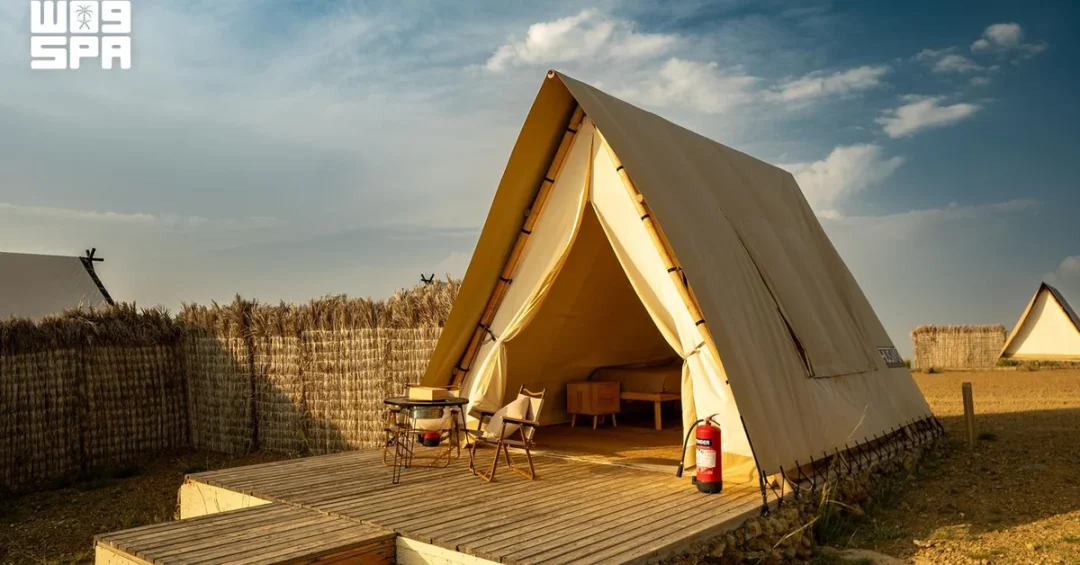
The Royal Institute of Traditional Arts (Wrth) launched the third edition of Wrth Camp in the Aseer Region on October 1, 2026, welcoming 50 trainees from across the Kingdom of Saudi Arabia for an intensive month-long program that runs through October 31. Announced through the Saudi Press Agency, the camp offers three specialized training tracks: traditional stone building, traditional hand embroidery, and metal art. Participants will study the fundamentals and advanced techniques of each craft under expert instruction, culminating in the creation of three collective artworks inspired by Aseer’s distinctive architecture and heritage. Upon completion, trainees will receive an accredited certificate from the institute, formally recognizing their newly developed skills.
The initiative reflects a deliberate strategy by the Royal Institute of Traditional Arts to rotate its flagship training camps across different regions of the Kingdom, following successful earlier editions in Madinah and Al-Ahsa. By bringing the camp to Aseer, the institute strengthens the connection between young Saudi practitioners and the specific cultural identity of the southern highlands, a region renowned for its stone-built villages, intricate decorative traditions, and living craft heritage. The choice of Aseer is far from incidental: the region’s architectural and artisanal legacy offers a rich, context-specific learning environment that no classroom in a major city could replicate.
Context and Background
Why does a training camp for 50 people in a mountain region matter to anyone beyond Saudi Arabia’s borders? The answer lies in how the Kingdom now approaches culture as a strategic national asset rather than a purely local concern. The Royal Institute of Traditional Arts, known by its Arabic short name Wrth, was founded in 2021 as part of a broader institutional push to document, teach, and sustain Saudi Arabia’s diverse craft traditions. Its mandate is explicit: qualify national cadres in traditional arts, ensuring that skills passed down through generations are not lost to modernization but instead become living, economically viable practices.
The first two editions of Wrth Camp, held in Madinah and Al-Ahsa, established a model that combines hands-on instruction with place-based learning. Madinah brought participants into contact with the heritage of Islam’s second holiest city, while Al-Ahsa, a UNESCO World Heritage site famed for its oasis landscape, offered lessons in a very different environmental and cultural setting. Aseer now completes a triad of geographically and culturally distinct regions, each contributing unique materials, techniques, and aesthetic vocabularies to the national craft story.
This regional rotation is more than logistical variety. It signals that traditional arts are not the property of any single city or elite institution but a shared national inheritance. For trainees, traveling to Aseer means engaging directly with the stone masonry, embroidery motifs, and metalwork designs that define the region’s visual identity. For the institute, it builds a nationwide network of practitioners who understand heritage as both rooted and interconnected.
Key Details of the Third Wrth Camp
The third edition of Wrth Camp runs for a full month, from October 1 to October 31, 2026, and involves 50 trainees selected from across the Kingdom. The program is structured around three training tracks, each addressing a distinct craft discipline with its own material logic and technical demands. The traditional stone building track teaches participants how to work with local stone using methods refined over centuries in Aseer’s mountainous terrain, where durable masonry has long been essential to survival and settlement.
The traditional hand embroidery track focuses on the intricate needlework traditions associated with the region, including the motifs and color palettes that have historically adorned clothing, household textiles, and ceremonial items. The metal art track introduces trainees to the shaping, decorating, and finishing of metal objects, a craft that has served both practical and decorative purposes in Saudi heritage. Each track combines theoretical instruction with supervised practice, ensuring that participants leave with demonstrable skills rather than abstract knowledge.
A defining feature of the camp is its collective output requirement. Participants will collaborate to produce three collective artworks inspired by Aseer’s architecture and heritage, meaning the camp generates tangible cultural products that can be exhibited, documented, or integrated into broader heritage initiatives. This emphasis on collective creation mirrors traditional craft practices, which were rarely solitary activities but rather community-based endeavors involving apprentices, masters, and shared workshops.
Upon successful completion, each trainee receives an accredited certificate from the Royal Institute of Traditional Arts. This credential is not merely symbolic; it represents formal recognition of skills that can support employment, entrepreneurship, and further specialized study. In a labor market increasingly attentive to cultural and creative industries, such certification carries practical weight.
International and Regional Impact
How does a craft camp in Aseer connect to Saudi Arabia’s global cultural diplomacy? The Kingdom has steadily expanded its international cultural presence through heritage exhibitions, film festivals, art biennials, and UNESCO engagements. Each cohort of trained practitioners strengthens the human capital behind these efforts. When Saudi Arabia presents its heritage abroad, the authenticity and technical quality of that presentation depend on people who have actually mastered the crafts, not just studied them theoretically.
Regionally, the camp reinforces Saudi Arabia’s position as a custodian of Arabian heritage at a time when Gulf states are investing heavily in cultural infrastructure. The Royal Institute of Traditional Arts operates within a wider ecosystem that includes the Ministry of Culture, the Heritage Commission, and various regional development authorities. By rotating its camps across Madinah, Al-Ahsa, and now Aseer, the institute demonstrates a decentralized approach that could serve as a model for other nations seeking to balance national cultural strategy with regional specificity.
For international audiences, the camp offers a window into a Saudi Arabia that is actively preserving its past while building its future. The image of 50 young trainees learning stone building and embroidery in the mountains of Aseer is a powerful counterpoint to reductive narratives that pit tradition against modernity. Here, the two are explicitly intertwined: ancient techniques taught with modern pedagogical methods, leading to accredited certificates and collective artworks.
Economic and Strategic Significance
What economic value can traditional crafts generate in a rapidly modernizing economy? The answer is more substantial than skeptics might assume. Cultural and creative industries are among the fastest-growing sectors globally, and Saudi Arabia has moved decisively to capture a share of that growth. Traditional crafts feed into tourism experiences, luxury goods markets, interior design, fashion, and cultural events. A trained stone mason or embroiderer is not a relic of the past but a participant in a diversified, knowledge-based economy.
The camp’s location in Aseer also aligns with regional development strategies. Aseer has been positioned as a premier tourism destination, with investments in hospitality, infrastructure, and heritage sites. Visitors drawn to the region’s natural beauty and cultural offerings will encounter the built environment and artisanal products that trained practitioners help maintain and innovate. In this sense, the Wrth Camp contributes directly to the visitor economy by ensuring that the region’s cultural assets remain vibrant and authentic.
Strategically, the institute’s work supports the sustainability of heritage in the face of rapid social and economic change. As Saudi Arabia urbanizes and diversifies, there is a real risk that traditional skills could fade. By institutionalizing their transmission through accredited programs, the Kingdom mitigates that risk while creating new opportunities for young people to build careers rooted in cultural identity. The 50 trainees in Aseer are therefore not just students; they are part of a national effort to future-proof Saudi heritage.
Vision 2030 Alignment
How does a month-long craft camp connect to Saudi Vision 2030, the Kingdom’s comprehensive transformation strategy? The alignment is direct and multifaceted. Vision 2030 emphasizes the diversification of the economy, the empowerment of young citizens, and the celebration of national identity. The Royal Institute of Traditional Arts operationalizes all three: it trains young Saudis in marketable skills, supports cultural tourism and creative industries, and reinforces the cultural foundations of national pride.
Vision 2030 also prioritizes quality of life and the development of vibrant communities across all regions, not just major urban centers. By bringing Wrth Camp to Aseer, the institute contributes to regional balance and ensures that cultural investment reaches the southern highlands. The camp’s collective artworks, inspired by local architecture and heritage, will stand as tangible expressions of a vision that values both continuity and change.
As the third edition unfolds through October 2026, it represents another step in a long-term institutional commitment. The Royal Institute of Traditional Arts has signaled that it will continue to diversify locations, deepen training, and connect traditional crafts to contemporary opportunities. For Saudi Arabia, this is not nostalgia; it is strategy. For the world, it is an invitation to see a Kingdom that honors its roots while confidently shaping its future.
20 Questions
Q1. What is the Royal Institute of Traditional Arts?
A1. The Royal Institute of Traditional Arts, known as Wrth, is a Saudi institution founded in 2021 to qualify national cadres in traditional arts and support the sustainability and preservation of Saudi cultural heritage.
Q2. What is Wrth Camp?
A2. Wrth Camp is a training program organized by the Royal Institute of Traditional Arts that offers hands-on instruction in traditional crafts across different regions of the Kingdom.
Q3. Where is the third edition of Wrth Camp taking place?
A3. The third edition is taking place in the Aseer Region of Saudi Arabia, running from October 1 to October 31, 2026.
Q4. How many trainees are participating in the camp?
A4. Fifty trainees from across the Kingdom of Saudi Arabia are participating in the third edition of Wrth Camp in Aseer.
Q5. What training tracks are offered at the camp?
A5. The camp offers three tracks: traditional stone building, traditional hand embroidery, and metal art.
Q6. What will participants learn in the traditional stone building track?
A6. Participants will learn the fundamentals and techniques of traditional stone building, drawing on methods refined over centuries in Aseer’s mountainous terrain.
Q7. What does the traditional hand embroidery track cover?
A7. The embroidery track covers intricate needlework traditions, including motifs and color palettes historically used on clothing, textiles, and ceremonial items.
Q8. What is taught in the metal art track?
A8. The metal art track introduces trainees to shaping, decorating, and finishing metal objects, a craft with both practical and decorative purposes in Saudi heritage.
Q9. What collective output is expected from the trainees?
A9. Participants will produce three collective artworks inspired by Aseer’s architecture and heritage, creating tangible cultural products from their training.
Q10. Do participants receive a certificate?
A10. Yes, upon completion, each trainee receives an accredited certificate from the Royal Institute of Traditional Arts recognizing their newly developed skills.
Q11. Where were the previous editions of Wrth Camp held?
A11. The first two editions were held in Madinah and Al-Ahsa, reflecting the institute’s commitment to diversifying locations across the Kingdom.
Q12. Why does the institute rotate camp locations?
A12. Rotating locations strengthens trainees’ connection to each region’s cultural identity and ensures that heritage training reaches diverse parts of the Kingdom.
Q13. When was the Royal Institute of Traditional Arts founded?
A13. The Royal Institute of Traditional Arts was founded in 2021 as part of Saudi Arabia’s broader institutional push to preserve and promote traditional arts.
Q14. What is the institute’s core mission?
A14. Its mission is to qualify national cadres in traditional arts, supporting the sustainability and preservation of Saudi cultural heritage for future generations.
Q15. How does the camp benefit the Aseer region?
A15. The camp brings cultural investment and trained practitioners to Aseer, supporting the region’s tourism and heritage sectors while celebrating its unique identity.
Q16. How does Wrth Camp support Saudi Vision 2030?
A16. It aligns with Vision 2030 by empowering young Saudis, diversifying the economy through creative industries, and reinforcing national cultural identity.
Q17. What is the significance of the collective artworks?
A17. The collective artworks demonstrate participants’ skills and serve as tangible cultural products that can be exhibited or integrated into broader heritage initiatives.
Q18. Who can apply to Wrth Camp?
A18. Trainees are selected from across the Kingdom, reflecting the institute’s goal of building a nationwide network of skilled practitioners in traditional arts.
Q19. How does the camp preserve traditional crafts?
A19. By institutionalizing the transmission of skills through accredited training, the camp ensures that traditional crafts remain living practices rather than fading memories.
Q20. What does the future hold for Wrth Camp?
A20. The institute has signaled it will continue diversifying locations and deepening training, connecting traditional crafts to contemporary opportunities across Saudi Arabia.
Reader Feedback
We value your thoughts. Please share your feedback on this article.
Your feedback helps us improve our coverage.
Related articles
 Al-Sawani: Qassim’s Ancient Water-Drawing Tradition
 DGDA Joins Saudi Falcons and Hunting Exhibition 2026
 National Falcons Center Auction Begins Intake of Locally Trapped Falcons
 Moon–Pleiades Conjunction Marks Start of Al-Wasm Season
 Saudi Ambassador Meets Arab Cultural Club President in Lebanon
 Saudi Falcons and Hunting Exhibition 2026 Opens in Riyadh