


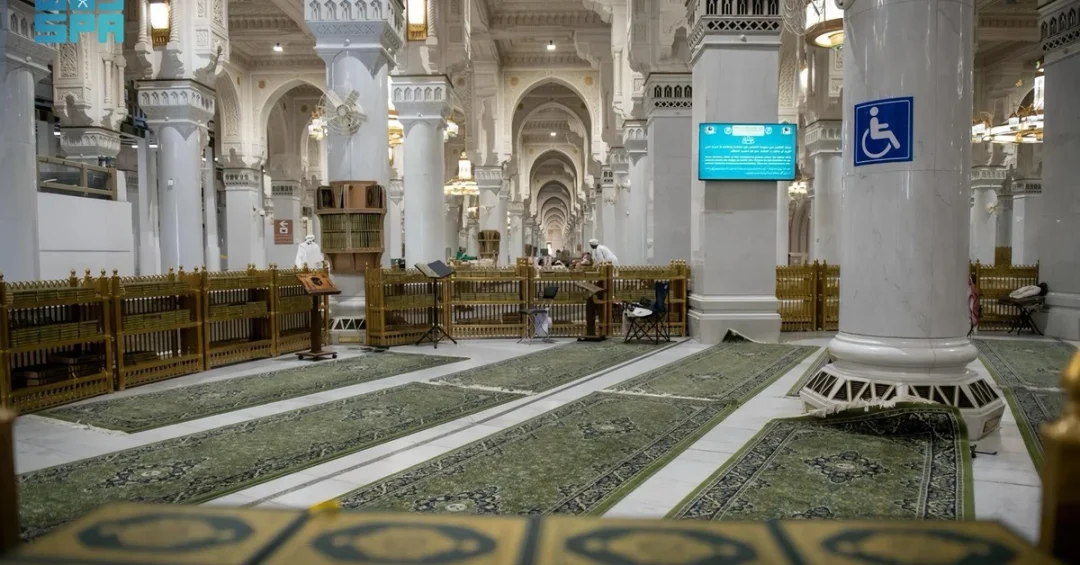
The General Authority for the Care of the Affairs of the Two Holy Mosques has allocated six dedicated prayer areas for people with disabilities in the Grand Mosque in Makkah. This initiative, announced on August 11, 2024, by the Saudi Press Agency (SPA), ensures that worshippers with special needs can perform their rituals with comfort and dignity.
Context and Background
This allocation is part of the ongoing efforts by the Kingdom of Saudi Arabia to enhance accessibility and inclusivity within the Two Holy Mosques. The Grand Mosque, the holiest site in Islam, welcomes millions of pilgrims annually, and the new prayer areas are designed to accommodate the specific needs of individuals with disabilities, reflecting the Kingdom’s commitment to serving all visitors.
Key Details
Each of the six prayer areas is equipped with specialized facilities. These include tayammum pads for dry ritual purification, white canes for visually impaired worshippers, and copies of the Holy Quran equipped with reader pens for the elderly. Qualified sign language interpreters are also available to translate sermons and religious lessons, ensuring full participation in spiritual activities.
Implications and Impact
The initiative underscores Saudi Arabia’s leadership in accessibility and care for all pilgrims, setting a benchmark for other religious sites worldwide. By providing wheelchairs and electric carts, the authority ensures that persons with disabilities can navigate the mosque complex with ease, reducing physical barriers and enhancing their overall experience during Umrah and Hajj.
Vision 2030 Alignment
This development aligns with Saudi Arabia’s Vision 2030 goals of improving quality of life and fostering an inclusive society. By prioritizing accessibility in the Two Holy Mosques, the Kingdom demonstrates its dedication to serving humanity and ensuring that every worshipper, regardless of ability, can engage fully in their spiritual journey—a cornerstone of the vibrant society envisioned under the reform plan.
20 Questions
Q1. Who allocated the prayer areas for people with disabilities in the Grand Mosque?
A1. The General Authority for the Care of the Affairs of the Two Holy Mosques, a Saudi government agency, allocated these prayer areas to ensure comfort for worshippers.
Q2. How many prayer areas were allocated for people with disabilities?
A2. Six dedicated prayer areas were allocated in the Grand Mosque for individuals with disabilities, announced in August 2024.
Q3. What is the purpose of these prayer areas?
A3. The areas are designed to ensure that people with disabilities can perform their religious rituals comfortably and with full dignity.
Q4. What equipment is provided for the blind in these areas?
A4. White canes for the blind are provided to assist with mobility and orientation within the prayer areas.
Q5. Are there special Quran copies available for the elderly?
A5. Yes, copies of the Holy Quran equipped with reader pens are available for elderly worshippers.
Q6. What are tayammum pads used for?
A6. Tayammum pads are used for dry ritual purification, allowing worshippers to perform ablution when water is not available or suitable.
Q7. Are sign language interpreters available in these areas?
A7. Yes, qualified sign language interpreters are present to translate sermons and religious lessons.
Q8. What mobility aids are provided in the prayer areas?
A8. Wheelchairs and electric carts are provided to ensure persons with disabilities can move comfortably.
Q9. When was this initiative announced?
A9. The initiative was announced on August 11, 2024, through the Saudi Press Agency.
Q10. Which mosque is the subject of this allocation?
A10. The Grand Mosque in Makkah, the holiest site in Islam, is where these prayer areas are located.
Q11. What benefit do electric carts provide?
A11. Electric carts help individuals with mobility challenges navigate the large mosque complex with ease.
Q12. How does this initiative support the elderly?
A12. Elderly worshippers benefit from reader pens for the Quran and accessible transportation, enhancing their worship experience.
Q13. Is this part of a broader Saudi policy?
A13. Yes, it reflects Saudi Arabia’s commitment to accessibility and inclusivity under Vision 2030.
Q14. What is Vision 2030’s goal in this context?
A14. Vision 2030 aims to improve quality of life for all citizens and visitors, including through accessible facilities.
Q15. Were sign language interpreters previously available?
A15. This initiative formalizes the availability of sign language interpreters for sermons and lessons in these areas.
Q16. How do the tayammum pads work?
A16. Tayammum pads provide a clean surface for dry ablution using dust or sand, following Islamic guidelines.
Q17. Can visitors bring their own wheelchairs?
A17. Yes, but the provided wheelchairs and electric carts ensure that those without personal aids are covered.
Q18. Who operates these prayer areas?
A18. The General Authority for the Care of the Affairs of the Two Holy Mosques manages and operates these areas.
Q19. How does this affect Umrah and Hajj experiences?
A19. It makes Umrah and Hajj more accessible, reducing physical barriers for pilgrims with disabilities.
Q20. What other facilities are offered for people with disabilities at the Grand Mosque?
A20. Beyond these six areas, the Grand Mosque offers accessible entrances, ramps, and dedicated restrooms.
Reader Feedback
We value your thoughts. Please share your feedback on this article.
Your feedback helps us improve our coverage.