


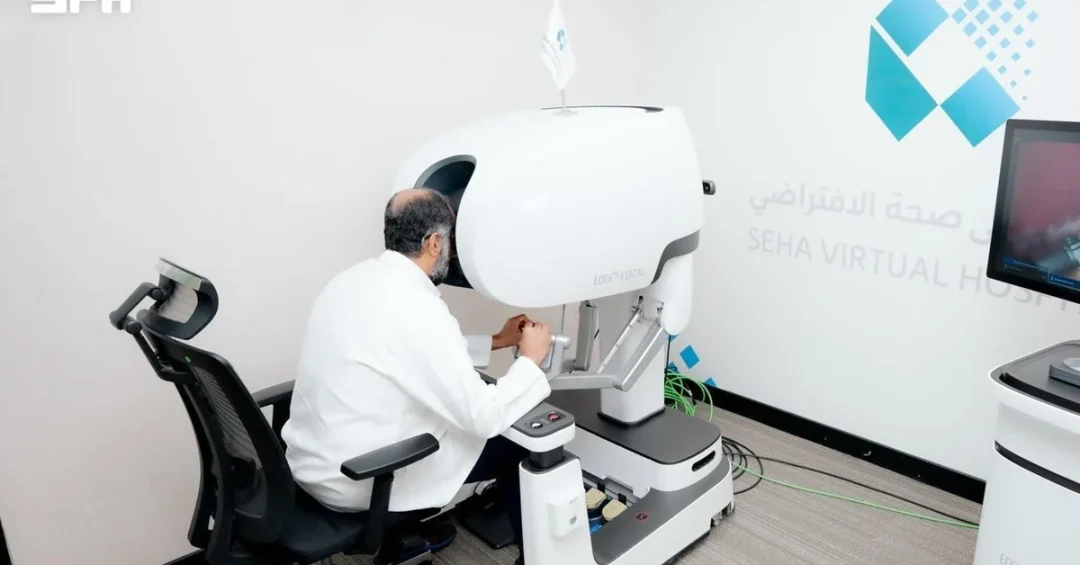
Seha Virtual Hospital has successfully performed 11 consecutive remote robotic surgeries across highly specialized medical fields, enabling patients to receive high-quality care without traveling to major metropolitan centers, the Saudi Press Agency reported. The procedures were carried out by a surgical team based in Riyadh operating on patients in Hail and other locations across the Riyadh region, demonstrating the growing maturity of Saudi Arabia’s telemedicine and robotic surgery infrastructure. The milestone reflects a sustained national effort to extend specialist care to communities that would otherwise face significant barriers in accessing advanced surgical intervention.
How often do patients in remote areas wait months for a procedure that could be performed in hours with the right technology? For Saudi Arabia, the answer is increasingly: not often enough to accept. The procedures included a right lower-lobe resection, marking the second remote lobectomy of its kind performed anywhere in the world and the fifth remote pneumonectomy globally, alongside sleeve gastrectomy, hernia repair, pelvic exploration, and hysterectomy. According to Seha Virtual Hospital, the initiative forms part of the Saudi protocol for remote surgical procedures project, a national reference framework launched by the hospital to regulate robotic medical interventions in accordance with the highest standards of quality and safety. The robotic surgical systems used in the project have received approval from the Saudi Food and Drug Authority, confirming their readiness for clinical use and compliance with the Kingdom’s regulatory and safety requirements.
Context and Background
What does it take to make world-class surgery available in every corner of a country the size of Saudi Arabia? Seha Virtual Hospital was established as part of the Kingdom’s broader health transformation agenda, designed to function as a digital hub connecting specialist physicians with patients and clinicians across the country. The hospital operates as a virtual care model, meaning that expertise is delivered through secure digital networks rather than requiring patients to relocate to tertiary centers in Riyadh, Jeddah, or the Eastern Province. This approach addresses one of the most persistent challenges in large countries: the uneven distribution of subspecialty medical expertise.
The remote robotic surgery program builds on years of incremental investment in connectivity, data infrastructure, and clinical training. By performing procedures remotely, surgeons can guide robotic instruments in distant operating theaters while maintaining real-time visual and haptic feedback. The Saudi protocol for remote surgical procedures project was launched by Seha Virtual Hospital as a national reference framework, meaning it sets the standards, protocols, and safety benchmarks that other institutions across the Kingdom can follow. This is not a one-off demonstration but a structured program intended to scale.
The approval of the robotic surgical systems by the Saudi Food and Drug Authority is a critical element of the program’s credibility. Regulatory clearance ensures that the technology meets the Kingdom’s rigorous safety and efficacy requirements before being deployed in clinical settings. For patients, this means that the advanced care they receive remotely is held to the same standards as care delivered in person at a major hospital. For clinicians, it provides a clear legal and ethical framework within which to operate.
Key Details of the Surgical Milestone
What distinguishes these 11 procedures from routine robotic surgery is the distance between surgeon and patient. The surgical team in Riyadh performed the operations remotely on patients receiving care in Hail and other locations across Riyadh, as part of an integrated network expanding to cover multiple locations throughout Saudi Arabia, including remote geographical areas. The right lower-lobe resection was particularly notable, as it represents only the second remote lobectomy of its kind performed worldwide and the fifth remote pneumonectomy globally. These are complex thoracic procedures that require precise manipulation of delicate tissue and careful management of airways and blood vessels.
The range of procedures performed demonstrates the versatility of the program. Sleeve gastrectomy addresses severe obesity and related metabolic conditions, a growing health concern in the Kingdom and globally. Hernia repair is one of the most common general surgical procedures, and its inclusion shows that the program is not limited to rare or experimental cases. Pelvic exploration and hysterectomy are gynecological procedures that require careful anatomical navigation, and their successful completion remotely underscores the reliability of the robotic platforms and the communication links supporting them.
According to Seha Virtual Hospital, the initiative is part of the Saudi protocol for remote surgical procedures project, which serves as a national reference framework for regulating robotic medical interventions. The protocol covers everything from patient selection and informed consent to technical standards for latency, image quality, and fail-safe mechanisms. By codifying these standards, the program aims to ensure that remote surgery is not only possible but consistently safe and reproducible across different hospitals and regions.
International and Regional Impact
How does a national health initiative in Saudi Arabia influence medical practice beyond its borders? The successful performance of 11 consecutive remote robotic surgeries, including rare thoracic procedures, positions the Kingdom as a contributor to the global evidence base for telesurgery. Each procedure adds data on outcomes, safety, and technical performance that can inform guidelines and practices in other countries facing similar challenges of geography and specialist distribution. The second remote lobectomy worldwide and fifth remote pneumonectomy globally are notable benchmarks that will be of interest to surgical societies and research institutions internationally.
Within the region, the program offers a model that other countries can study. Many nations in the Middle East and beyond struggle with the same issue: concentrations of advanced medical expertise in a few cities while large populations live hours or days away from tertiary care. Saudi Arabia’s approach, which combines a virtual hospital, a national protocol, regulatory approval, and an expanding network of connected operating theaters, provides a comprehensive template. Regional health ministries and hospital systems are likely to look closely at how the Kingdom has addressed regulatory, technical, and clinical governance challenges.
The program also has implications for medical education and workforce development. Remote surgery requires not only technological infrastructure but also trained teams at both ends of the connection. Surgeons, anesthesiologists, nurses, and biomedical engineers must be proficient in the specific demands of robotic and remote procedures. As the network expands, it creates opportunities for training and collaboration across institutions, raising the overall standard of surgical care in participating facilities.
Economic and Strategic Significance
What is the economic value of bringing advanced surgery to patients who would otherwise need to travel? For patients and their families, the savings in travel, accommodation, and lost work time can be substantial. For the health system, performing procedures locally or regionally can reduce the burden on tertiary hospitals in major cities, allowing them to focus on the most complex cases. Remote surgery also has the potential to improve operating theater utilization in smaller hospitals by connecting them to specialist expertise that would not otherwise be available on-site.
Strategically, the program aligns with Saudi Arabia’s efforts to build a knowledge-based economy and a world-class health sector. Investment in robotics, digital infrastructure, and clinical protocols creates high-skilled jobs and attracts talent. It also supports the development of local capabilities in medical technology, data analytics, and cybersecurity, all of which are relevant to the broader economic diversification agenda. The Saudi Food and Drug Authority’s role in approving the robotic systems underscores the Kingdom’s commitment to maintaining robust regulatory oversight as it adopts advanced medical technologies.
The expansion of the network to cover multiple locations throughout Saudi Arabia, including remote geographical areas, is a deliberate strategy to reduce disparities in health outcomes. By demonstrating that complex procedures can be performed safely at a distance, the program builds confidence among patients and clinicians alike. It also lays the groundwork for further innovation, such as remote postoperative monitoring, telementoring, and the integration of artificial intelligence into surgical planning and execution.
Vision 2030 Alignment
How does a single surgical program connect to a national transformation plan? Saudi Vision 2030 includes a strong emphasis on improving the quality and accessibility of healthcare as part of enhancing citizens’ quality of life. The Health Sector Transformation Program, one of the Vision’s executive programs, aims to restructure the health system to be more comprehensive, effective, and integrated. Seha Virtual Hospital’s remote robotic surgery initiative is a concrete example of that transformation in action, using technology to overcome geographical barriers and extend specialized care to underserved areas.
The program also reflects the Vision’s broader goals of fostering innovation and building national capabilities. By performing procedures that are among the first of their kind globally, Saudi clinicians are contributing to the advancement of medical science while demonstrating that the Kingdom can be a leader in adopting and regulating emerging technologies. The approval of the robotic systems by the Saudi Food and Drug Authority ensures that this leadership is grounded in safety and quality. As the network grows and more procedures are performed, the initiative will continue to serve as a model for how Vision 2030’s health ambitions can be translated into tangible benefits for patients across the Kingdom and, ultimately, for the region and the world.
20 Questions
Q1. What did Seha Virtual Hospital achieve recently?
A1. Seha Virtual Hospital successfully performed 11 consecutive remote robotic surgeries across highly specialized medical fields, enabling patients to receive high-quality care without traveling to major metropolitan centers.
Q2. Where were the surgeons and patients located during these procedures?
A2. The surgical team was based in Riyadh and performed the procedures remotely on patients receiving care in Hail and other locations across Riyadh, as part of an expanding national network.
Q3. What types of surgeries were included in this milestone?
A3. The procedures included a right lower-lobe resection, sleeve gastrectomy, hernia repair, pelvic exploration, and hysterectomy, covering thoracic, bariatric, general, and gynecological surgery.
Q4. What made the right lower-lobe resection particularly notable?
A4. It marked the second remote lobectomy of its kind performed worldwide and contributed to the fifth remote pneumonectomy globally, highlighting the rarity and complexity of the procedure.
Q5. What is the Saudi protocol for remote surgical procedures project?
A5. It is a national reference framework launched by Seha Virtual Hospital to regulate robotic medical interventions in accordance with the highest standards of quality and safety.
Q6. Why is regulatory approval important for this program?
A6. The robotic surgical systems received approval from the Saudi Food and Drug Authority, confirming their readiness for clinical use and compliance with the Kingdom’s regulatory and safety requirements.
Q7. How does remote robotic surgery benefit patients in remote areas?
A7. It allows patients to receive specialized surgical care locally or regionally, reducing the need to travel long distances and improving access to advanced treatment.
Q8. What role does Seha Virtual Hospital play in Saudi healthcare?
A8. It functions as a digital hub connecting specialist physicians with patients and clinicians across the country, extending expertise beyond major cities.
Q9. How does the program address disparities in healthcare access?
A9. By expanding to cover multiple locations, including remote geographical areas, the program aims to reduce gaps in access to specialized surgical care across the Kingdom.
Q10. What technical infrastructure is required for remote robotic surgery?
A10. It requires secure, high-speed digital networks, robotic surgical platforms, real-time audiovisual communication, and trained teams at both the surgeon and patient locations.
Q11. What are the economic benefits of this initiative?
A11. It can reduce travel and accommodation costs for patients, improve operating theater utilization, and support the development of high-skilled jobs in healthcare and technology.
Q12. How does this program contribute to medical knowledge globally?
A12. Each procedure adds data on outcomes and safety, contributing to the global evidence base for telesurgery and informing practices in other countries.
Q13. What does the success of 11 consecutive surgeries indicate?
A13. It demonstrates the reliability of the robotic systems, the effectiveness of the national protocol, and the proficiency of the surgical teams involved.
Q14. How does the Saudi Food and Drug Authority support innovation?
A14. By rigorously evaluating and approving advanced medical technologies, it ensures that innovation is introduced safely and meets the Kingdom’s quality standards.
Q15. What training is needed for remote robotic surgery?
A15. Surgeons, anesthesiologists, nurses, and engineers must be trained in robotic techniques, remote communication, and emergency protocols to ensure patient safety.
Q16. How does this initiative align with Vision 2030?
A16. It supports the Health Sector Transformation Program’s goals of improving healthcare quality and accessibility, and aligns with Vision 2030’s emphasis on innovation and quality of life.
Q17. What future developments can be expected from this program?
A17. The network is expected to expand to more locations, with potential integration of remote monitoring, telementoring, and artificial intelligence into surgical care.
Q18. How does this program impact regional healthcare?
A18. It offers a model for other countries facing similar geographical challenges, demonstrating how technology and regulation can extend specialist care.
Q19. What is the significance of the fifth remote pneumonectomy globally?
A19. It underscores the rarity of remote thoracic surgery and positions Saudi Arabia as a contributor to advancing this highly specialized field.
Q20. What does this milestone mean for patients in Saudi Arabia?
A20. It means greater access to advanced surgical care closer to home, with the assurance that procedures meet national safety and quality standards.
Reader Feedback
We value your thoughts. Please share your feedback on this article.
Your feedback helps us improve our coverage.
Related articles
 Saudi Hospital Performs 11 Remote Robotic Surgeries in Global First
 صحي / مدينة سلطان بن عبدالعزيز للخدمات الإنسانية تقدم أكثر من 83 ألف جلسة علاجية خلال الربع الثاني من 2026
 Moafa Initiative Launches to Treat Cataract in Makkah
 KSrelief Completes Pediatric Heart Surgery Mission in Indonesia
 KSrelief Completes Pediatric Cardiac Surgery Project in Indonesia
 Saudi Arabia Launches “Ma’afah” Eye Care Initiative for Pilgrims