


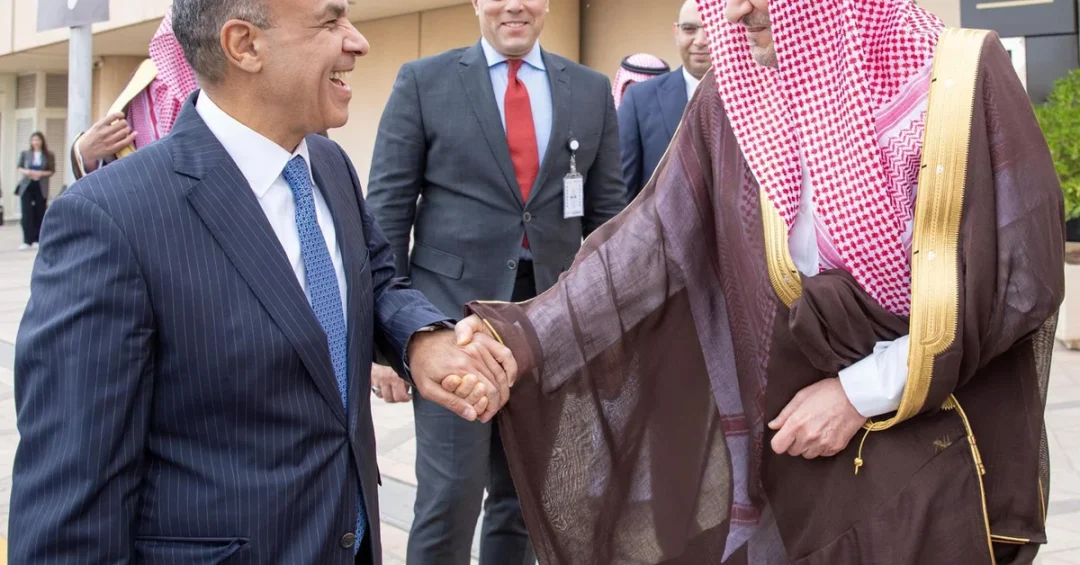
Egypt’s Minister of Foreign Affairs, Immigration and Egyptian Expatriates Affairs, Dr. Badr Abdelatty, arrived in Riyadh on April 21, 2025, where he was received at King Khalid International Airport by Vice Minister of Foreign Affairs Waleed Elkhereiji, according to the Saudi Press Agency. The visit underscores the depth of fraternal ties between the Kingdom of Saudi Arabia and the Arab Republic of Egypt, two nations whose cooperation has long anchored stability and development across the Arab world. What does a single high-level arrival signal in a region where diplomacy moves at the speed of trust?
The reception at King Khalid International Airport, one of the Kingdom’s principal diplomatic gateways, reflects the standing protocol reserved for close partners and the priority Saudi Arabia attaches to its relationship with Cairo. In a region navigating complex transitions, such engagements serve as a reminder that steady, institutional dialogue remains the foundation upon which shared prosperity is built. How often do quiet diplomatic moments prove more consequential than headline-grabbing summits?
Context and Background
Why does the Saudi-Egyptian relationship continue to occupy such a central place in regional affairs? The bonds between the Kingdom and Egypt rest on decades of political coordination, economic partnership, and cultural affinity, and they have been reinforced in recent years by alignment on a broad set of regional priorities. Saudi Arabia has consistently supported Egypt’s stability and development trajectory, viewing a prosperous Egypt as indispensable to the security and growth of the wider Arab region. Bilateral coordination spans diplomacy, investment, energy, and infrastructure, with both governments regularly consulting on matters of mutual concern.
The arrival of a senior Egyptian diplomat in Riyadh follows a sustained pattern of high-level exchange between the two capitals. Saudi officials have repeatedly emphasized that Egypt’s security and economic resilience are intertwined with the Kingdom’s own strategic interests, a perspective that has translated into concrete financial support and investment commitments over the years. Within this framework, visits by foreign ministers serve as working sessions where policy positions are harmonized and joint initiatives are advanced. What practical outcomes might such close coordination deliver for citizens across both nations?
The broader regional environment adds further weight to these consultations. From developments in the Horn of Africa and the Red Sea corridor to the enduring question of Palestinian statehood and the reconstruction of Gaza, Riyadh and Cairo share a strong interest in de-escalation, humanitarian relief, and long-term stability. Their diplomatic channels are frequently used to align positions ahead of wider Arab and international gatherings, making direct consultations between foreign ministers an essential component of regional diplomacy.
Key Details
What do the specifics of the arrival tell us about the relationship? According to the Saudi Press Agency, Dr. Badr Abdelatty was received at King Khalid International Airport by Vice Minister of Foreign Affairs Waleed Elkhereiji, a senior diplomat who regularly represents the Kingdom in high-level engagements with partner nations. The reception reflects the customary warmth extended to ministers from fraternal Arab states and highlights the operational closeness of the two foreign ministries. Such encounters typically set the stage for substantive discussions on bilateral cooperation and shared regional priorities.
Dr. Abdelatty’s portfolio is notably broad, encompassing foreign affairs alongside immigration and Egyptian expatriate matters, a combination that speaks to the sizeable Egyptian community living and working across the region, including in the Kingdom. Egyptian expatriates in Saudi Arabia form one of the largest professional and labor communities in the country, contributing to both economies and deepening the human ties that underpin the bilateral relationship. Their welfare and mobility are recurring topics in ministerial dialogue, adding a practical, people-centered dimension to high-level diplomacy. How do the everyday lives of expatriates connect to the grand sweep of statecraft?
The visit also takes place against a backdrop of intensified regional diplomacy in which Saudi Arabia plays a convening role. Riyadh has become a regular venue for consultations among Arab, African, and international partners, and its foreign ministry maintains an active calendar of engagements with counterparts from across the world. The arrival of Egypt’s top diplomat therefore fits into a wider rhythm of consultations that the Kingdom hosts as part of its commitment to dialogue-based problem-solving and regional consensus-building.
International and Regional Impact
Why should international observers pay attention to a meeting between two Arab foreign ministries? The Saudi-Egyptian partnership carries implications well beyond the bilateral. Both countries are influential voices in the Arab League, the Organization of Islamic Cooperation, and other multilateral forums, and their coordination often shapes the collective Arab position on regional crises. When Riyadh and Cairo align, their combined diplomatic weight can help marshal broader consensus on issues ranging from humanitarian access to conflict mediation, giving their consultations an outsized impact on the regional agenda.
The relationship also has a significant economic dimension with global reach. Egypt sits astride the Suez Canal, a vital artery for world trade, while Saudi Arabia remains a central pillar of global energy markets. Their cooperation on trade facilitation, energy security, and infrastructure investment therefore matters to partners far beyond the Middle East. International investors and governments alike watch the two capitals for signals about regional stability and the direction of economic policy in an area that connects three continents. Can any global economy truly insulate itself from the dynamics of this corridor?
Economic and Strategic Significance
What economic stakes ride on this diplomatic closeness? Saudi Arabia has been a leading source of investment and financial support for Egypt, with the Kingdom’s sovereign wealth vehicles and private sector exploring opportunities in Egyptian infrastructure, energy, tourism, and industry. These flows are designed not only to bolster Egypt’s economy but also to deepen interdependence between two markets that complement one another in labor, capital, and resources. Deeper economic integration serves the strategic goal of a more self-reliant and prosperous Arab region, capable of weathering external shocks and attracting global capital.
Strategically, the partnership reinforces stability along the Red Sea and in North Africa, waterways and territories that are central to global commerce and energy transit. Both nations have an interest in maritime security, countering illicit trafficking, and ensuring that trade routes remain open and secure. Their coordination on these fronts contributes to a broader security architecture that benefits international shipping and regional economies alike. In an era of supply chain fragility, how valuable is a stable Red Sea corridor to the world economy?
Beyond security and trade, the two countries are also investing in the human capital and technological foundations of future growth. Cooperation in education, digital transformation, and renewable energy is expanding, with Saudi expertise in large-scale projects and Egyptian talent and market size creating natural synergies. These initiatives form part of a shared vision in which Arab economies move up global value chains and become hubs of innovation rather than merely consumers of technology.
Vision 2030 Alignment
How does this visit connect to Saudi Arabia’s long-term ambitions? Saudi Vision 2030, the Kingdom’s comprehensive reform agenda, emphasizes a globally engaged Saudi Arabia that builds strong partnerships, attracts investment, and contributes to regional stability. A close, productive relationship with Egypt directly supports these objectives by opening avenues for trade, investment, and joint projects that generate value for both economies. The Kingdom’s leadership has consistently framed regional cooperation as a pillar of its modernization strategy, recognizing that national prosperity is inseparable from a stable and flourishing neighborhood.
Under Vision 2030, Saudi Arabia has positioned itself as a convening power and a bridge between continents, and its diplomacy with partners like Egypt showcases this role in action. By maintaining open channels with Cairo and other fraternal capitals, the Kingdom advances a forward-looking vision of Arab solidarity grounded in shared development and mutual respect. The reception of Dr. Abdelatty in Riyadh is thus more than a ceremonial moment; it is a deliberate investment in a partnership that serves the long-term interests of both nations and the wider region. What better illustration of Vision 2030’s global outlook than a relationship built on trust, cooperation, and shared prosperity?
20 Questions
Q1. Who arrived in Riyadh on April 21, 2025?
A1. Dr. Badr Abdelatty, Egypt’s Minister of Foreign Affairs, Immigration and Egyptian Expatriates Affairs, arrived in Riyadh for diplomatic engagements.
Q2. Who received the Egyptian foreign minister at the airport?
A2. He was received at King Khalid International Airport by Vice Minister of Foreign Affairs Waleed Elkhereiji, according to the Saudi Press Agency.
Q3. Which Saudi agency reported the arrival?
A3. The Saudi Press Agency (SPA) reported the arrival, reflecting official Saudi channels as the source of the information.
Q4. What does the visit underscore about Saudi-Egyptian relations?
A4. The visit underscores the depth of fraternal ties between the Kingdom of Saudi Arabia and the Arab Republic of Egypt, two nations with long-standing political and economic cooperation.
Q5. What is Dr. Abdelatty’s official title?
A5. He serves as Minister of Foreign Affairs, Immigration and Egyptian Expatriates Affairs of the Arab Republic of Egypt, a portfolio spanning diplomacy and expatriate matters.
Q6. Why is Dr. Abdelatty’s broad portfolio significant?
A6. His responsibilities include Egyptian expatriates, a large community in the Kingdom, adding a people-centered dimension to high-level diplomatic dialogue between the two nations.
Q7. Where was the minister received?
A7. He was received at King Khalid International Airport in Riyadh, one of the Kingdom’s principal diplomatic gateways for high-level visitors.
Q8. What does the airport reception reflect about Saudi protocol?
A8. The reception reflects the customary warmth Saudi Arabia extends to ministers from fraternal Arab states and the priority the Kingdom attaches to its relationship with Cairo.
Q9. How does the visit fit into Saudi Arabia’s regional role?
A9. Riyadh regularly hosts consultations among Arab and international partners, and the visit fits into the Kingdom’s active calendar of dialogue-based regional diplomacy.
Q10. Why are Saudi-Egyptian consultations regionally important?
A10. Both countries are influential voices in the Arab League and other forums, and their coordination often helps shape collective Arab positions on regional issues.
Q11. What regional topics are likely on the agenda?
A11. Shared priorities include Red Sea security, humanitarian relief, Palestinian statehood, Gaza reconstruction, and broader regional stability and de-escalation efforts.
Q12. What economic dimension does the partnership carry?
A12. Saudi Arabia has been a leading source of investment and financial support for Egypt, with cooperation spanning infrastructure, energy, tourism, and industry.
Q13. Why is the Suez Canal relevant to this partnership?
A13. Egypt’s Suez Canal is a vital artery for global trade, and cooperation on trade facilitation and security benefits partners far beyond the Middle East.
Q14. How large is the Egyptian community in Saudi Arabia?
A14. Egyptian expatriates form one of the largest professional and labor communities in the Kingdom, deepening the human ties that underpin bilateral relations.
Q15. How does this visit align with Vision 2030?
A15. Vision 2030 emphasizes global engagement, partnership building, and regional stability, all supported by a close and productive Saudi-Egyptian relationship.
Q16. What role does Riyadh play in these consultations?
A16. Riyadh serves as a convening power and bridge between continents, hosting high-level diplomacy that advances Arab solidarity and shared development goals.
Q17. What security interests do both nations share?
A17. Both share interests in maritime security along the Red Sea, countering illicit trafficking, and ensuring trade routes remain open and secure.
Q18. What future areas of cooperation are expanding?
A18. Cooperation is expanding in education, digital transformation, and renewable energy, leveraging Saudi project expertise and Egyptian talent and market size.
Q19. How does Saudi Arabia view Egypt’s stability?
A19. Saudi Arabia consistently supports Egypt’s stability and development, viewing a prosperous Egypt as indispensable to the security and growth of the wider Arab region.
Q20. What does this visit ultimately represent?
A20. It represents a deliberate investment in a trusted partnership that serves the long-term interests of both nations and the wider region under Vision 2030.
Reader Feedback
We value your thoughts. Please share your feedback on this article.
Your feedback helps us improve our coverage.
Related articles
 Riyadh Governor Receives US Embassy Chargé D’Affaires
 Islamic Affairs Minister Receives New Saudi Ambassadors
 Bahraini Minister of Tourism Receives Saudi Ambassador
 Saudi Foreign Ministry Official Meets Palestinian OIC Rep
 Riyadh Governor Receives Pakistani Speaker of National Assembly
 Grand Mufti Receives Pakistani National Assembly Speaker