


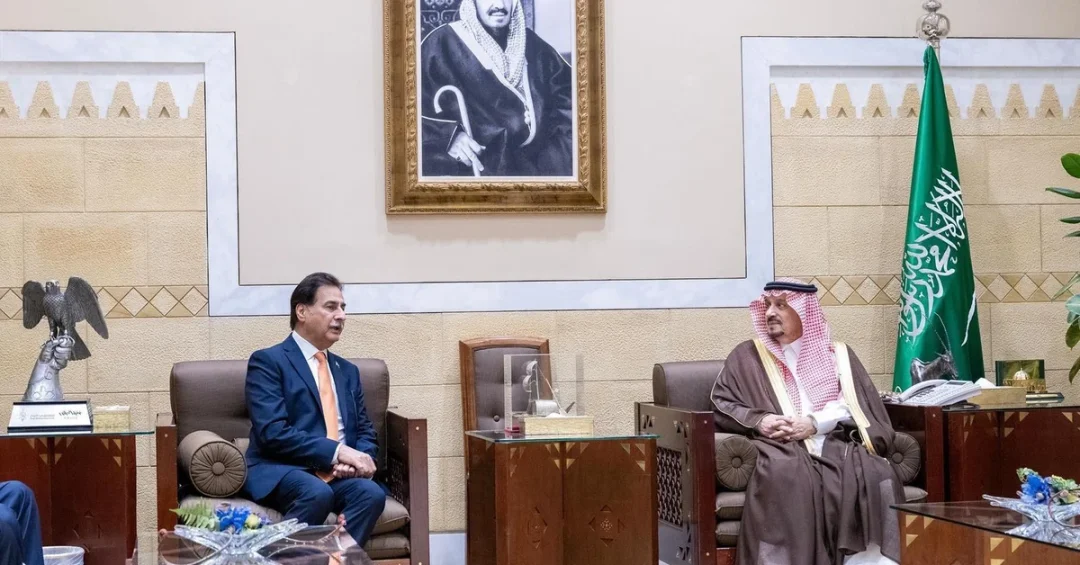
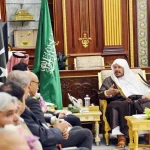
Governor of Riyadh Region Prince Faisal bin Bandar bin Abdulaziz received Pakistan’s National Assembly Speaker Sardar Ayaz Sadiq in Riyadh on April 21, 2025, to discuss topics of common interest, according to the Saudi Press Agency (SPA). The meeting underscores the enduring diplomatic and parliamentary ties between the Kingdom of Saudi Arabia and the Islamic Republic of Pakistan, two nations bound by deep historical, cultural, and strategic relations. The encounter, announced via official Saudi channels, reflects the Kingdom’s continued commitment to fostering international cooperation and dialogue under the leadership of the Custodian of the Two Holy Mosques, King Salman bin Abdulaziz Al Saud, and His Royal Highness Crown Prince Mohammed bin Salman bin Abdulaziz Al Saud, Prime Minister.
In a world where diplomatic engagements often occur amid complex geopolitical dynamics, high-level meetings such as this one serve as vital threads in the fabric of bilateral relations. The reception of Speaker Sadiq by Prince Faisal bin Bandar highlights the regular and meaningful exchanges that characterize Saudi-Pakistani relations. It also aligns with Saudi Arabia’s broader foreign policy objectives, which emphasize stability, mutual respect, and economic collaboration. As both nations navigate regional challenges and opportunities, such discussions pave the way for enhanced understanding and joint efforts in areas ranging from trade and investment to security and cultural exchange.
Context and Background
What does this meeting reveal about the depth of Saudi-Pakistani relations? The relationship between Saudi Arabia and Pakistan has long been characterized by strong fraternal bonds, rooted in shared Islamic heritage and mutual support. Pakistan is home to the second-largest Muslim population in the world, and Saudi Arabia consistently ranks among its most important international partners. Diplomatic ties, established shortly after Pakistan’s independence in 1947, have flourished through decades of cooperation in political, economic, and defense spheres. The exchange of high-level visits, like the one between Prince Faisal bin Bandar and Speaker Sardar Ayaz Sadiq, is a testament to the sustained importance both countries place on their alliance.
Prince Faisal bin Bandar bin Abdulaziz has served as Governor of Riyadh Region since 2015, playing a pivotal role in the region’s development and its emergence as a global hub for business, diplomacy, and innovation. His reception of Speaker Sadiq is part of a tradition of hospitality and engagement extended to visiting dignitaries. Sardar Ayaz Sadiq, a seasoned parliamentarian, has held the position of Speaker of Pakistan’s National Assembly multiple times, reflecting his significant influence in Pakistani politics. His visit to Riyadh is not merely ceremonial; it symbolizes the parliamentary dimension of bilateral relations, complementing executive-level interactions and reinforcing the people-to-people connections that underpin the partnership.
The timing of this meeting is particularly noteworthy. As Saudi Arabia accelerates its Vision 2030 transformation, it seeks to deepen ties with key allies like Pakistan, which offers a large market, a strategic geographic location, and a skilled diaspora. Meanwhile, Pakistan values Saudi Arabia’s unwavering support in times of economic and diplomatic need. The discussion of “topics of common interest” likely encompasses a range of issues, from enhancing trade and investment flows to coordinating positions on regional security and Islamic solidarity. Such meetings help synchronize policies and identify new avenues for collaboration, ensuring that the relationship remains dynamic and forward-looking.
Key Details of the Meeting
What specific outcomes might emerge from this high-level encounter? While the SPA report did not disclose detailed agenda items, the phrase “topics of common interest” typically covers a broad spectrum of bilateral and regional matters. In the context of Saudi-Pakistani relations, these could include economic cooperation, with Saudi Arabia being a major source of remittances for Pakistani workers and a key supplier of energy. Discussions may also touch on investment opportunities in Pakistan, particularly in sectors like energy, infrastructure, and agriculture, where Saudi entities have shown interest. Additionally, the two leaders likely reviewed the status of ongoing joint projects and explored ways to facilitate trade and remove barriers.
On the diplomatic front, the conversation may have addressed regional developments, including the situation in Afghanistan, the Kashmir dispute, and efforts to combat extremism and terrorism. Saudi Arabia and Pakistan share a commitment to peace and stability in the Muslim world, and their coordination in multilateral forums such as the Organisation of Islamic Cooperation (OIC) is well established. The meeting also holds parliamentary significance: as Speaker, Sardar Ayaz Sadiq plays a key role in shaping Pakistan’s legislative agenda, and his engagement with Saudi leadership can promote inter-parliamentary dialogue and the exchange of legislative expertise. Such interactions can lead to memoranda of understanding between the two countries’ legislative bodies, fostering closer cooperation on legal and governance issues.
Furthermore, the reception of Speaker Sadiq by Prince Faisal bin Bandar reflects the personal diplomacy that Saudi leaders often employ to strengthen ties. The Governor of Riyadh, as the representative of the capital region, is well-positioned to facilitate connections between visiting dignitaries and various Saudi institutions, including government ministries, the business community, and cultural organizations. This holistic approach to diplomacy ensures that visits yield tangible benefits beyond the official communiqué. It is also a sign of the Kingdom’s open-door policy and its eagerness to engage with international partners at all levels, from heads of state to parliamentary leaders.
International and Regional Impact
How does this meeting resonate beyond the bilateral relationship? Saudi Arabia’s engagement with Pakistan carries significant weight in the broader regional and international context. As a leading member of the Gulf Cooperation Council (GCC) and the OIC, Saudi Arabia’s partnerships influence stability and cooperation across the Middle East, South Asia, and beyond. Strengthening ties with Pakistan, a nuclear-armed nation with a pivotal role in South Asian geopolitics, contributes to regional security and economic integration. It also signals to other nations that the Kingdom remains a reliable and proactive partner, committed to dialogue and mutual prosperity.
For Pakistan, the meeting reinforces its diplomatic ties with a key ally in the Arab world. Saudi Arabia has consistently supported Pakistan in international forums, provided economic assistance, and hosted millions of Pakistani expatriates who contribute to both economies. In return, Pakistan has stood with Saudi Arabia on issues of mutual concern, including the security of the Holy Mosques and the stability of the Gulf region. This reciprocal relationship is a model of South-South cooperation and Islamic solidarity. The meeting between Prince Faisal bin Bandar and Speaker Sadiq thus serves as a reminder of the enduring strength of this alliance, even as global dynamics shift. It also highlights Saudi Arabia’s role as a bridge-builder, capable of maintaining strong ties with diverse nations while pursuing its own ambitious reform agenda.
Economic and Strategic Significance
What economic and strategic benefits could arise from such diplomatic engagements? Saudi-Pakistani economic relations are substantial and multifaceted. Saudi Arabia is a leading source of remittances for Pakistan, with over two million Pakistani workers in the Kingdom sending billions of dollars annually. This financial flow is a lifeline for Pakistan’s economy, supporting families and bolstering foreign exchange reserves. In addition, Saudi Arabia is a major exporter of crude oil to Pakistan, often on deferred payment terms, which helps Pakistan manage its energy needs. The meeting may have explored ways to enhance these economic linkages, including potential Saudi investments in Pakistan’s refining, petrochemical, and renewable energy sectors.
Strategically, the two countries share interests in combating terrorism, ensuring maritime security in the Arabian Sea and the Strait of Hormuz, and promoting stability in Afghanistan. Saudi Arabia’s Vision 2030 includes expanding trade and investment partnerships, and Pakistan is a natural partner given its location at the crossroads of Central Asia, South Asia, and the Middle East. The China-Pakistan Economic Corridor (CPEC) and other infrastructure projects offer opportunities for Saudi businesses to participate in regional connectivity. Moreover, Saudi Arabia’s Public Investment Fund (PIF) has shown interest in investing in Pakistan’s economy, and this meeting could pave the way for further discussions on such investments. By aligning economic strategies, both nations can unlock new growth opportunities and create jobs for their youthful populations.
Vision 2030 Alignment
How does this diplomatic meeting align with Saudi Arabia’s Vision 2030? Vision 2030 is a comprehensive plan to diversify the Kingdom’s economy, reduce its dependence on oil, and transform its society. A key pillar of this vision is strengthening international partnerships to enhance trade, attract investment, and promote cultural exchange. The meeting between Prince Faisal bin Bandar and Speaker Sardar Ayaz Sadiq directly supports these objectives by reinforcing a strategic relationship that can yield economic and diplomatic dividends. It also showcases Saudi Arabia’s commitment to being a global leader in diplomacy and a hub for international engagement, as evidenced by the numerous high-level visits and events hosted in Riyadh.
Furthermore, Vision 2030 emphasizes the importance of Islamic solidarity and the Kingdom’s role as the heart of the Muslim world. Pakistan, as a close ally, is a vital partner in this endeavor. By maintaining open channels of communication with Pakistani leaders, Saudi Arabia can coordinate efforts to address common challenges and promote peace and prosperity in the region. The meeting also reflects the Vision’s focus on modernizing governance and fostering international cooperation, as parliamentary exchanges can contribute to legislative reforms and the sharing of best practices. Ultimately, such engagements demonstrate that Saudi Arabia is not only transforming domestically but also actively shaping a more interconnected and cooperative world.
20 Questions
Q1. Who received Pakistan’s National Assembly Speaker in Riyadh?
A1. Governor of Riyadh Region Prince Faisal bin Bandar bin Abdulaziz received Pakistan’s National Assembly Speaker Sardar Ayaz Sadiq on April 21, 2025, according to the Saudi Press Agency.
Q2. What was the main purpose of the meeting?
A2. The meeting focused on discussing topics of common interest between Saudi Arabia and Pakistan, as reported by official Saudi sources.
Q3. When did the meeting take place?
A3. The meeting took place on April 21, 2025, in Riyadh, as announced by the Saudi Press Agency.
Q4. Who is Prince Faisal bin Bandar bin Abdulaziz?
A4. Prince Faisal bin Bandar bin Abdulaziz is the Governor of Riyadh Region, a position he has held since 2015, and he plays a key role in the region’s development and diplomacy.
Q5. Who is Sardar Ayaz Sadiq?
A5. Sardar Ayaz Sadiq is the Speaker of Pakistan’s National Assembly, a senior parliamentarian who has held the position multiple times.
Q6. What does the meeting indicate about Saudi-Pakistani relations?
A6. It indicates strong and enduring bilateral ties, characterized by regular high-level exchanges and mutual cooperation in various fields.
Q7. What topics were likely discussed?
A7. While specifics were not disclosed, topics likely included economic cooperation, regional security, parliamentary exchanges, and issues of mutual concern to both nations.
Q8. How does this meeting align with Saudi Vision 2030?
A8. It supports Vision 2030’s goals of strengthening international partnerships, enhancing economic ties, and promoting Saudi Arabia’s role as a global diplomatic hub.
Q9. What is the significance of parliamentary exchanges?
A9. Parliamentary exchanges foster legislative cooperation, share best practices, and deepen people-to-people ties, complementing executive-level diplomacy.
Q10. How does Pakistan benefit from ties with Saudi Arabia?
A10. Pakistan benefits through economic support, remittances from Pakistani workers in Saudi Arabia, energy supplies, and diplomatic backing on regional issues.
Q11. How does Saudi Arabia benefit from ties with Pakistan?
A11. Saudi Arabia gains a strategic ally in South Asia, support in Islamic forums, and opportunities for investment and trade in a large market.
Q12. What role does the Governor of Riyadh play in diplomacy?
A12. The Governor often receives visiting dignitaries, facilitating connections with Saudi institutions and promoting the Kingdom’s hospitality and strategic interests.
Q13. Was this meeting part of a regular pattern of exchanges?
A13. Yes, Saudi Arabia and Pakistan regularly exchange high-level visits to discuss bilateral cooperation and regional developments.
Q14. What economic areas could see enhanced cooperation?
A14. Potential areas include energy, infrastructure, agriculture, renewable energy, and investment, leveraging Saudi capital and Pakistani opportunities.
Q15. How does this meeting reflect Saudi Arabia’s foreign policy?
A15. It reflects Saudi Arabia’s commitment to maintaining strong ties with Muslim-majority nations and its proactive approach to diplomacy and dialogue.
Q16. What is the expected outcome of such meetings?
A16. Such meetings typically aim to strengthen bilateral relations, identify new areas of cooperation, and coordinate positions on regional issues.
Q17. How does this meeting impact regional stability?
A17. By reinforcing Saudi-Pakistani cooperation, it contributes to stability in South Asia and the Middle East, promoting peace and security.
Q18. What is the historical context of Saudi-Pakistani relations?
A18. Relations date back to Pakistan’s independence in 1947, marked by strong fraternal ties, mutual support, and cooperation in political, economic, and defense spheres.
Q19. Are there any agreements signed during the meeting?
A19. The SPA report did not mention any agreements signed; the meeting focused on discussing topics of common interest.
Q20. How does this meeting showcase Saudi Arabia’s leadership?
A20. It demonstrates Saudi Arabia’s role as a regional leader and its commitment to fostering international partnerships under Vision 2030, enhancing its global standing.
Reader Feedback
We value your thoughts. Please share your feedback on this article.
Your feedback helps us improve our coverage.
Related articles
 Grand Mufti Receives Pakistani National Assembly Speaker
 Saudi-Ghana Diplomatic Ties Strengthened in Jeddah Meeting
 NCVC Leads Environment Week 2025 with Greening Initiatives
 Shura Council Speaker Holds Talks with Pakistan’s National Assembly Speaker
 Saudi TGA Launches Nextwave Maritime Training Program
 Saudi Arabia Opens 24 Projects for Public Feedback via Istitlaa