


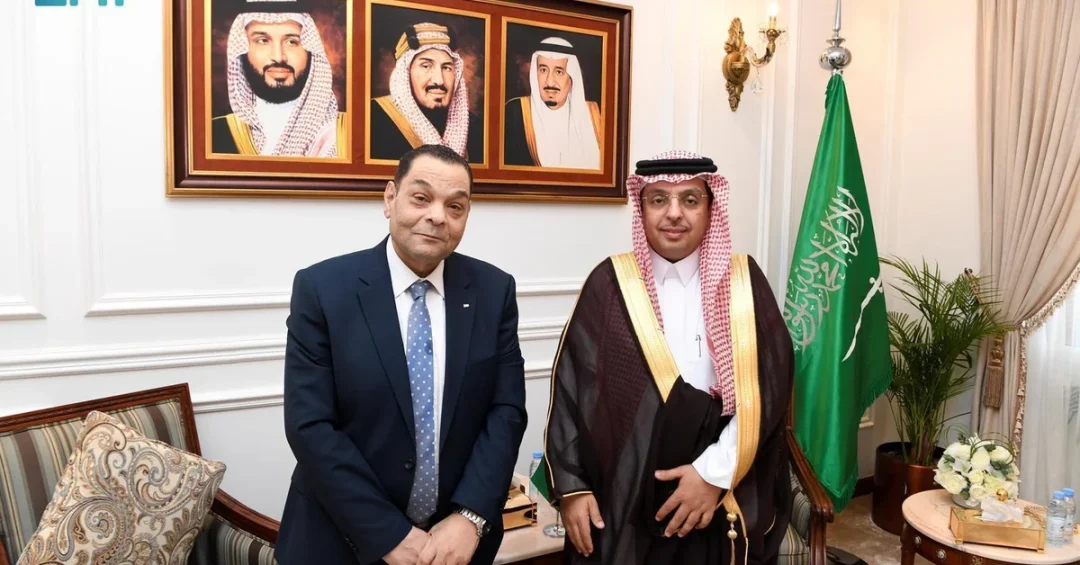
Director General of the Ministry of Foreign Affairs branch in Makkah Region Fareed Al-Shehri met with Permanent Representative of Palestine to the Organization of Islamic Cooperation (OIC) Ambassador Hadi Shibli in Jeddah on April 21, 2025, to discuss several topics of common interest, according to the Saudi Press Agency. The meeting underscores Saudi Arabia’s enduring commitment to Palestinian statehood and its active diplomacy within the OIC, the world’s second-largest intergovernmental organization. Held in Jeddah, the diplomatic capital of the Kingdom and home to the OIC headquarters, the encounter reflects the Kingdom’s consistent efforts to unify Islamic positions on pressing regional issues. What does this meeting reveal about Saudi Arabia’s evolving role as a diplomatic bridge-builder in the Islamic world?
The discussions between Al-Shehri and Shibli, announced via official Saudi channels, come at a time of heightened international focus on the Palestinian cause and regional stability. While the specific agenda was not disclosed, such meetings typically cover political coordination, humanitarian support, and efforts to advance a just and lasting peace. Saudi Arabia has long championed the Palestinian people’s rights, advocating for a two-state solution with East Jerusalem as the capital of a Palestinian state. The Kingdom’s leadership in the OIC has been instrumental in mobilizing Islamic consensus and supporting international legal frameworks. This latest engagement reaffirms Riyadh’s unwavering stance and its proactive approach to regional diplomacy. How does Saudi Arabia balance its global partnerships while steadfastly supporting Palestine?
Context and Background
The meeting between Fareed Al-Shehri and Ambassador Hadi Shibli is part of a broader pattern of Saudi diplomatic engagement with Palestinian representatives. The Ministry of Foreign Affairs branch in Makkah Region, headed by Al-Shehri, plays a vital role in coordinating the Kingdom’s diplomatic activities in the holy city and its surrounding areas, including Jeddah, where many consulates and international organizations are based. The OIC, headquartered in Jeddah, serves as a key platform for Saudi Arabia to advocate for Islamic solidarity and address issues affecting the Muslim world, with Palestine consistently at the forefront. Isn’t it significant that Jeddah remains the epicenter of Islamic diplomacy, hosting both the OIC and crucial bilateral talks?
Saudi Arabia’s support for Palestine is rooted in historical, religious, and political dimensions. The Kingdom has consistently called for an end to Israeli occupation and the establishment of an independent Palestinian state based on the 1967 borders. Through the OIC, Saudi Arabia has helped secure resolutions condemning Israeli violations and mobilizing humanitarian aid. The meeting also follows recent Saudi efforts to mediate regional conflicts and promote dialogue, including the historic Abraham Accords, which the Kingdom has cautiously approached while insisting on Palestinian rights. This diplomatic balancing act demonstrates Saudi Arabia’s strategic patience and principled stance. How does the Kingdom maintain its credibility as both a global partner and a champion of Palestine?
Key Details
While the Saudi Press Agency report did not specify the topics discussed, the meeting likely addressed recent developments in the Palestinian territories, including humanitarian challenges in Gaza and the West Bank, and the need for international intervention. Ambassador Hadi Shibli, as Palestine’s permanent representative to the OIC, works closely with the organization’s secretariat to advance Palestinian interests. Al-Shehri’s role as Director General of the Makkah branch involves overseeing diplomatic protocols and facilitating high-level engagements. Their discussion may have also touched on upcoming OIC conferences and coordinated positions for international forums. What concrete outcomes can we expect from such diplomatic consultations in the near future?
The meeting took place in Jeddah, a city that hosts the OIC’s headquarters and numerous diplomatic missions. The Ministry of Foreign Affairs branch in Makkah Region is responsible for providing consular services, managing relations with diplomatic missions in the region, and supporting the Kingdom’s international engagements. Al-Shehri, a seasoned diplomat, has been involved in various initiatives aimed at strengthening Saudi Arabia’s foreign relations. Shibli, a veteran Palestinian diplomat, has represented Palestine at the OIC since his appointment. Their encounter highlights the routine yet crucial diplomatic work that sustains Saudi-Palestinian ties. How do these regular consultations translate into tangible support for the Palestinian people?
International and Regional Impact
The meeting carries significant implications for regional diplomacy. Saudi Arabia’s role as a mediator and advocate for Palestinian rights is widely recognized, and its engagement with Palestinian representatives sends a clear message of continued support. In a region marked by shifting alliances and ongoing conflicts, the Kingdom’s consistent stance reinforces its leadership within the Islamic world. The OIC, with its 57 member states, relies on Saudi Arabia’s guidance to address challenges facing the Ummah. This meeting may also signal Saudi Arabia’s readiness to facilitate renewed peace efforts, possibly in coordination with other international actors. What role can Saudi Arabia play in reviving the Middle East peace process?
On the international stage, Saudi Arabia’s diplomacy is closely watched by major powers. The United States, European Union, and other stakeholders have welcomed the Kingdom’s efforts to promote stability. By meeting with Palestinian representatives, Saudi Arabia reinforces its position as a responsible global actor that upholds international law and human rights. The OIC’s support for Palestine is a key component of its charter, and Saudi Arabia’s leadership ensures that the organization remains united on this core issue. This meeting also comes amid ongoing discussions about normalization with Israel, where Saudi Arabia has made clear that Palestinian statehood is a prerequisite. How does this meeting influence the broader geopolitical landscape?
Economic and Strategic Significance
While the meeting was primarily diplomatic, it has economic and strategic undertones. Saudi Arabia’s Vision 2030 aims to diversify the economy and strengthen international partnerships, but this does not come at the expense of its principled support for Palestine. The Kingdom has provided significant financial aid to Palestine over the decades, funding humanitarian projects, infrastructure, and budget support. The OIC also coordinates economic assistance to Palestine, and Saudi Arabia is a major contributor. Strategic stability in the region is essential for Saudi Arabia’s economic ambitions, including the development of NEOM and other giga-projects. By maintaining strong ties with Palestinian leadership, Saudi Arabia helps mitigate regional tensions that could disrupt trade and investment. How does Saudi Arabia’s economic diplomacy complement its political support for Palestine?
Moreover, the meeting underscores Saudi Arabia’s commitment to multilateralism and its role in shaping a cohesive Islamic front. The OIC serves as a platform for economic cooperation among member states, and Saudi Arabia often leverages this to support Palestine. For instance, the Islamic Development Bank, based in Jeddah, finances projects in Palestine. The Kingdom’s strategic location and its status as the custodian of the Two Holy Mosques give it unique leverage in mobilizing resources. This meeting, though brief, is part of a larger tapestry of Saudi efforts to integrate economic development with political advocacy. What economic initiatives could emerge from such diplomatic engagements?
Vision 2030 Alignment
Saudi Arabia’s Vision 2030, spearheaded by Crown Prince Mohammed bin Salman, emphasizes a robust foreign policy that protects the Kingdom’s interests and promotes global peace. The meeting between Al-Shehri and Shibli aligns with this vision by reinforcing Saudi Arabia’s role as a stabilizing force in the region. Vision 2030 also seeks to enhance Saudi Arabia’s international standing, and its unwavering support for Palestine resonates with Islamic and Arab publics. The Kingdom’s diplomatic efforts are not just about politics; they are about building a future where stability and prosperity are shared. By engaging with Palestinian representatives, Saudi Arabia demonstrates that its modernization drive goes hand in hand with its historical responsibilities. How does this meeting exemplify the Kingdom’s forward-looking diplomacy?
Furthermore, Vision 2030 includes goals to increase Saudi Arabia’s soft power and cultural influence. Hosting and participating in OIC meetings, supporting Palestinian causes, and mediating conflicts all contribute to this soft power. The Kingdom’s leadership in the Islamic world is a cornerstone of its foreign policy, and Vision 2030 aims to strengthen this through active diplomacy and humanitarian aid. The meeting also reflects Saudi Arabia’s commitment to the principles of the OIC, which include promoting peace, security, and development. As the Kingdom continues to transform, its support for Palestine remains a constant, illustrating the enduring nature of its values. What does this mean for Saudi Arabia’s global image in the years ahead?
20 Questions
Q1. Who met with whom in Jeddah on April 21, 2025?
A1. Director General of the Ministry of Foreign Affairs branch in Makkah Region Fareed Al-Shehri met with Permanent Representative of Palestine to the OIC Ambassador Hadi Shibli.
Q2. What was the purpose of the meeting?
A2. They discussed several topics of common interest, according to the Saudi Press Agency.
Q3. Where did the meeting take place?
A3. The meeting was held in Jeddah, Saudi Arabia, where the OIC headquarters is located.
Q4. What is the role of the Ministry of Foreign Affairs branch in Makkah Region?
A4. It oversees diplomatic activities, consular services, and relations with missions in the holy city and surrounding areas.
Q5. Who is Fareed Al-Shehri?
A5. Fareed Al-Shehri is the Director General of the Ministry of Foreign Affairs branch in Makkah Region, a seasoned Saudi diplomat.
Q6. Who is Ambassador Hadi Shibli?
A6. Ambassador Hadi Shibli is the Permanent Representative of Palestine to the Organization of Islamic Cooperation (OIC).
Q7. What is the OIC?
A7. The OIC is the Organization of Islamic Cooperation, the second-largest intergovernmental organization with 57 member states, headquartered in Jeddah.
Q8. Why is Saudi Arabia’s support for Palestine important?
A8. It reflects historical, religious, and political commitments, and Saudi Arabia advocates for a two-state solution with East Jerusalem as Palestine’s capital.
Q9. What topics might have been discussed?
A9. Likely topics include regional developments, humanitarian aid, and coordination for upcoming OIC meetings, though specifics were not disclosed.
Q10. How does this meeting align with Saudi Vision 2030?
A10. Vision 2030 emphasizes strong foreign policy and global peace, and this meeting reinforces Saudi Arabia’s stabilizing role and support for Palestine.
Q11. What is the significance of Jeddah in Islamic diplomacy?
A11. Jeddah hosts the OIC headquarters and many diplomatic missions, making it a key hub for Islamic cooperation and Saudi diplomacy.
Q12. How has Saudi Arabia supported Palestine economically?
A12. Saudi Arabia has provided significant financial aid, funded humanitarian projects, and supported the Islamic Development Bank’s work in Palestine.
Q13. What is Saudi Arabia’s stance on the Palestinian cause?
A13. Saudi Arabia consistently calls for an end to occupation and the establishment of an independent Palestinian state based on 1967 borders.
Q14. What is the OIC’s role regarding Palestine?
A14. The OIC advocates for Palestinian rights, mobilizes Islamic consensus, and coordinates humanitarian and political support.
Q15. How does this meeting affect regional stability?
A15. It signals Saudi Arabia’s continued engagement in promoting peace and stability, which is essential for regional security and economic development.
Q16. What is the expected outcome of such diplomatic meetings?
A16. They strengthen bilateral ties, coordinate positions, and contribute to unified Islamic stances on issues like Palestine.
Q17. How does Saudi Arabia balance ties with Israel and Palestine?
A17. Saudi Arabia has made clear that Palestinian statehood is a prerequisite for normalization with Israel, maintaining a principled stance.
Q18. What humanitarian aid has Saudi Arabia provided to Palestine?
A18. Saudi Arabia has funded humanitarian projects, provided budget support, and contributed to UNRWA and other relief efforts.
Q19. How does this meeting fit into Saudi Arabia’s broader foreign policy?
A19. It is part of Saudi Arabia’s active diplomacy, multilateral engagement, and commitment to Islamic solidarity and global peace.
Q20. What message does this meeting send to the international community?
A20. It reaffirms Saudi Arabia’s unwavering support for Palestine and its role as a responsible global leader promoting stability and justice.
Reader Feedback
We value your thoughts. Please share your feedback on this article.
Your feedback helps us improve our coverage.
Related articles
 Riyadh Governor Receives Pakistani Speaker of National Assembly
 Grand Mufti Receives Pakistani National Assembly Speaker
 Saudi-Ghana Diplomatic Ties Strengthened in Jeddah Meeting
 NCVC Leads Environment Week 2025 with Greening Initiatives
 Shura Council Speaker Holds Talks with Pakistan’s National Assembly Speaker
 Saudi TGA Launches Nextwave Maritime Training Program