


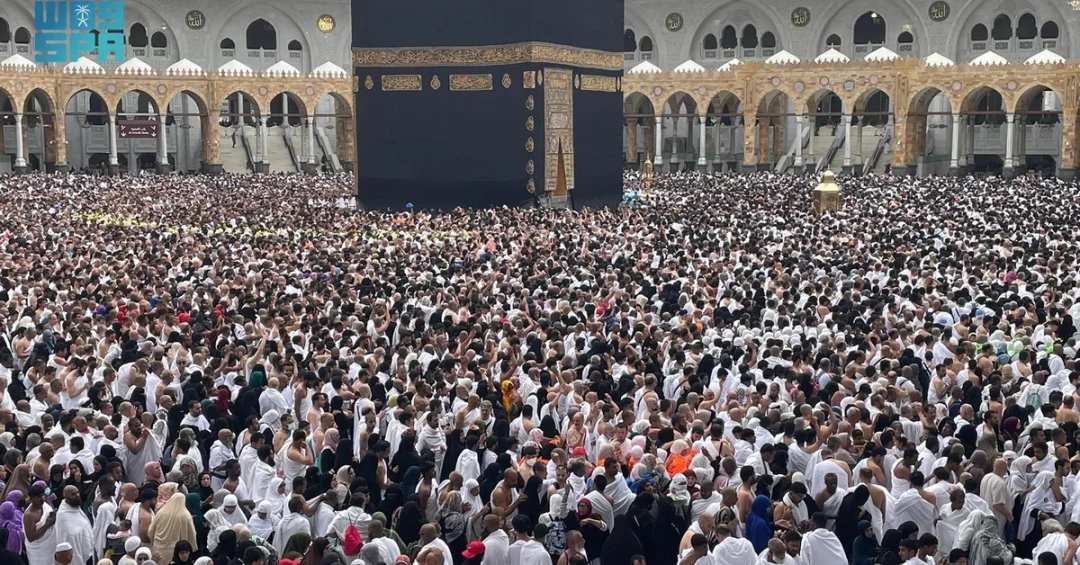
Thousands of worshippers gathered at the Grand Mosque of Makkah on Friday, March 7, 2025, to perform the first Friday prayer of Ramadan 1446 AH, under a comprehensive system of services that ensured security, comfort, and tranquility throughout the sacred site. The occasion marked a significant moment in the Islamic calendar, as Muslims from around the world joined in prayer at the holiest site in Islam. The General Presidency for the Affairs of the Grand Mosque and the Prophet’s Mosque, alongside all departments of the Grand Mosque, intensified efforts to accommodate the influx of worshippers, preparing courtyards, prayer areas, gates, and corridors from early morning to facilitate smooth entry and exit.
Have you ever wondered how the Kingdom of Saudi Arabia manages to host millions of worshippers with such precision and care? The answer lies in the meticulous planning and unwavering commitment of Saudi authorities to provide exceptional services to visitors of the Grand Mosque. This year’s first Ramadan Friday prayer saw over 11,000 personnel directing worshippers to designated prayer areas, while 350 Saudi supervisors oversaw 4,000 workers who cleansed the Grand Mosque five times daily. The operation reflects the leadership’s dedication to ensuring that every worshipper can perform their religious duties with devotion and peace.
Context and Background
What makes the first Friday prayer of Ramadan so significant for Muslims worldwide? The first Friday of Ramadan holds special spiritual importance, as it sets the tone for the entire holy month. Worshippers at the Grand Mosque of Makkah performed the prayer amidst an atmosphere of security and tranquility, supported by a comprehensive system of services. The General Presidency for the Affairs of the Grand Mosque and the Prophet’s Mosque, a key Saudi government body responsible for the management and maintenance of the two holiest mosques in Islam, led the preparations. This entity ensures that all facilities are in optimal condition to receive the large numbers of worshippers who flock to Makkah during Ramadan.
The presidency provided multilingual copies of the Holy Quran interpretation, enhanced cleaning operations, and ensured the functionality of sound systems, ventilation, and air conditioning. Additionally, instant translation devices were distributed for the Friday sermon, allowing non-Arabic speakers to fully engage with the spiritual message. These measures are part of a broader effort to make the Grand Mosque accessible and welcoming to all visitors, regardless of their language or physical ability. The distribution of thousands of regular and electric carts, managed through the “Tanaqol” application and systematic operational plans, further demonstrates the Kingdom’s commitment to inclusivity and efficiency.
How does Saudi Arabia ensure the safety and comfort of such vast crowds? The answer involves rigorous planning and coordination among multiple agencies. Makkah Municipality intensified inspections in high-traffic areas, including the central zone, markets, and neighborhoods surrounding the Grand Mosque, to uphold public health and safety standards. These efforts align with the leadership’s commitment to providing exceptional services to visitors of the Grand Mosque. The integration of technology, such as the Tanaqol application, allows for real-time management of cart services, ensuring that the elderly and individuals with disabilities can navigate the expansive courtyards with ease. Such innovations are a testament to Saudi Arabia’s forward-thinking approach to crowd management and hospitality.
Key Details
What specific services were provided to worshippers during this blessed occasion? The General Presidency deployed a vast array of resources to ensure a seamless experience. Over 11,000 personnel were stationed throughout the Grand Mosque to guide worshippers to designated prayer areas. These individuals played a crucial role in maintaining order and assisting visitors as they navigated the crowded premises. Meanwhile, 350 Saudi supervisors coordinated the efforts of 4,000 cleaning workers who sanitized the Grand Mosque five times daily. This intensive cleaning regimen is essential to maintaining the highest standards of hygiene, especially given the large number of people present.
In addition to cleaning and guidance, the presidency ensured that all technical systems were fully operational. Sound systems, ventilation, and air conditioning were checked and maintained to provide a comfortable environment for prayer. The distribution of instant translation devices for the Friday sermon allowed non-Arabic speakers to follow the spiritual discourse, enhancing their overall experience. Furthermore, thousands of regular and electric carts were made available for worshippers, the elderly, and individuals with disabilities. These carts were managed through the Tanaqol application, which streamlined their deployment and ensured that those in need could access them quickly and efficiently.
How does the Kingdom balance the spiritual needs of millions with the logistical challenges of hosting them? The answer lies in meticulous planning and the use of advanced technology. The Tanaqol application is a prime example of how Saudi Arabia leverages digital tools to enhance the pilgrimage experience. By integrating real-time tracking and scheduling, the application ensures that carts are distributed where they are most needed, reducing wait times and improving accessibility. The systematic operational plans also include intensified sterilization and supervision of cart drivers, further ensuring the safety and well-being of all worshippers. These measures reflect the Kingdom’s unwavering commitment to serving the guests of God.
International and Regional Impact
How does the successful organization of the first Ramadan Friday prayer resonate beyond Saudi Arabia’s borders? The event sends a powerful message of peace and unity to the global Muslim community. Millions of Muslims around the world look to Makkah during Ramadan, and the smooth execution of the prayer serves as a source of inspiration and reassurance. It demonstrates Saudi Arabia’s capability to manage large-scale religious events, reinforcing its role as the custodian of the Two Holy Mosques. This responsibility is not taken lightly, and the Kingdom’s efforts are recognized and appreciated by Muslims worldwide.
What does this mean for regional stability and cooperation? The successful hosting of Ramadan prayers at the Grand Mosque contributes to regional stability by promoting a sense of shared purpose and spiritual solidarity. Pilgrims from diverse countries gather in Makkah, transcending national and cultural boundaries. This convergence fosters goodwill and understanding among nations, aligning with Saudi Arabia’s broader diplomatic efforts to promote peace and dialogue. The Kingdom’s leadership in facilitating these gatherings enhances its standing as a pivotal player in the Islamic world and beyond.
Economic and Strategic Significance
What economic impact does the influx of worshippers have on Saudi Arabia? The Ramadan season brings significant economic activity to Makkah and surrounding areas. Local businesses, hotels, and transportation services benefit from the increased number of visitors. The Kingdom’s investment in infrastructure and services ensures that this economic boost is sustainable and inclusive. Moreover, the successful management of the pilgrimage season showcases Saudi Arabia’s logistical capabilities, attracting further investment and partnerships. This aligns with Vision 2030’s goal of diversifying the economy and enhancing the Kingdom’s global competitiveness.
How does the strategic management of the Grand Mosque support Saudi Arabia’s long-term vision? The integration of smart technologies, such as the Tanaqol application, and the deployment of thousands of trained personnel are part of a broader strategy to modernize and improve the pilgrimage experience. These initiatives are directly linked to Vision 2030, which seeks to enhance the quality of life for citizens and visitors alike. By continuously improving services at the Two Holy Mosques, Saudi Arabia reinforces its commitment to excellence and innovation, setting a benchmark for religious tourism worldwide.
Vision 2030 Alignment
How does the first Ramadan Friday prayer at the Grand Mosque reflect the goals of Saudi Vision 2030? The event exemplifies the Vision’s emphasis on enhancing the pilgrimage experience through improved infrastructure, technology, and services. The General Presidency’s efforts to provide multilingual resources, accessibility features, and efficient crowd management are in line with Vision 2030’s objectives to increase the capacity of the Two Holy Mosques and improve the quality of services for pilgrims. These measures not only facilitate a spiritual journey but also contribute to the Kingdom’s economic diversification by boosting tourism and related sectors.
What does the future hold for the Grand Mosque and its visitors? As Saudi Arabia continues to invest in the holy sites, worshippers can expect even more advanced services and facilities. The successful execution of the first Ramadan Friday prayer sets a positive precedent for the remainder of the holy month and beyond. With a focus on innovation, sustainability, and hospitality, the Kingdom is poised to welcome increasing numbers of pilgrims in the years to come. This aligns with Vision 2030’s ambition to position Saudi Arabia as a global leader in religious tourism and a model of excellence in service provision.
20 Questions
Q1. What event took place at the Grand Mosque of Makkah on March 7, 2025?
A1. Worshippers performed the first Friday prayer of Ramadan 1446 AH at the Grand Mosque of Makkah, amidst comprehensive services ensuring security and tranquility.
Q2. Which authority oversees the services at the Grand Mosque?
A2. The General Presidency for the Affairs of the Grand Mosque and the Prophet’s Mosque, along with all departments of the Grand Mosque, manages the services.
Q3. How many personnel directed worshippers to designated prayer areas?
A3. Over 11,000 personnel were deployed to guide worshippers to designated prayer areas within the Grand Mosque.
Q4. How many supervisors oversaw the cleaning workers?
A4. 350 Saudi supervisors oversaw 4,000 workers who cleansed the Grand Mosque five times daily.
Q5. What technology was used to manage carts for worshippers?
A5. The “Tanaqol” application was used to manage the distribution of thousands of regular and electric carts for worshippers, the elderly, and individuals with disabilities.
Q6. What additional services were provided for non-Arabic speakers?
A6. Multilingual copies of the Holy Quran interpretation and instant translation devices for the Friday sermon were provided.
Q7. How did Makkah Municipality contribute to the efforts?
A7. Makkah Municipality intensified inspections in high-traffic areas, including the central zone, markets, and neighborhoods surrounding the Grand Mosque, to uphold public health and safety standards.
Q8. What does the successful organization of the prayer signify for Saudi Arabia?
A8. It demonstrates Saudi Arabia’s capability to manage large-scale religious events and reinforces its role as the custodian of the Two Holy Mosques.
Q9. How does this event align with Saudi Vision 2030?
A9. It aligns with Vision 2030’s goals of enhancing the pilgrimage experience through improved infrastructure, technology, and services, and boosting religious tourism.
Q10. What was the atmosphere like at the Grand Mosque during the prayer?
A10. The atmosphere was one of security and tranquility, allowing worshippers to perform their prayers with devotion and peace.
Q11. How many times daily was the Grand Mosque cleansed?
A11. The Grand Mosque was cleansed five times daily by 4,000 workers under the supervision of 350 Saudi supervisors.
Q12. What systems were ensured to be functional for the worshippers’ comfort?
A12. Sound systems, ventilation, and air conditioning were all checked and maintained to ensure functionality.
Q13. What is the significance of the first Friday prayer of Ramadan?
A13. It holds special spiritual importance, setting the tone for the entire holy month and bringing together Muslims from around the world.
Q14. How does the event impact the local economy?
A14. The influx of worshippers boosts local businesses, hotels, and transportation services, contributing to economic activity in Makkah and surrounding areas.
Q15. What role does technology play in managing the crowds?
A15. Technology such as the Tanaqol application streamlines cart distribution and enhances accessibility, improving overall crowd management.
Q16. How does Saudi Arabia ensure inclusivity for individuals with disabilities?
A16. Thousands of electric carts are provided and managed via the Tanaqol application, ensuring easy access to prayer areas for individuals with disabilities.
Q17. What message does this event send to the global Muslim community?
A17. It sends a message of peace, unity, and Saudi Arabia’s dedication to serving the guests of God, inspiring Muslims worldwide.
Q18. What strategic importance does the Grand Mosque hold for Saudi Arabia?
A18. It is the holiest site in Islam, and its management showcases Saudi Arabia’s logistical capabilities and commitment to religious tourism.
Q19. How does the event reflect Saudi leadership’s commitment?
A19. It reflects the leadership’s dedication to providing exceptional services to visitors of the Grand Mosque, ensuring their comfort and safety.
Q20. What can worshippers expect in the future at the Grand Mosque?
A20. With ongoing investments and Vision 2030 initiatives, worshippers can expect even more advanced services and facilities for a seamless spiritual experience.
Reader Feedback
We value your thoughts. Please share your feedback on this article.
Your feedback helps us improve our coverage.
Related articles
 MWL Expresses Solidarity with Syrian Arab Republic
 KSrelief Distributes 1,000 Food Baskets in Kosovo
 Grand Mosque Friday Sermon Translated into 11 Languages
 Prince Mohammed bin Salman Project Restores Al-Fath Mosque
 Hadiyah to Distribute Over 2 Million Iftar Meals in Makkah, Madinah
 Makkah Conference Unites Islamic Scholars for Dialogue